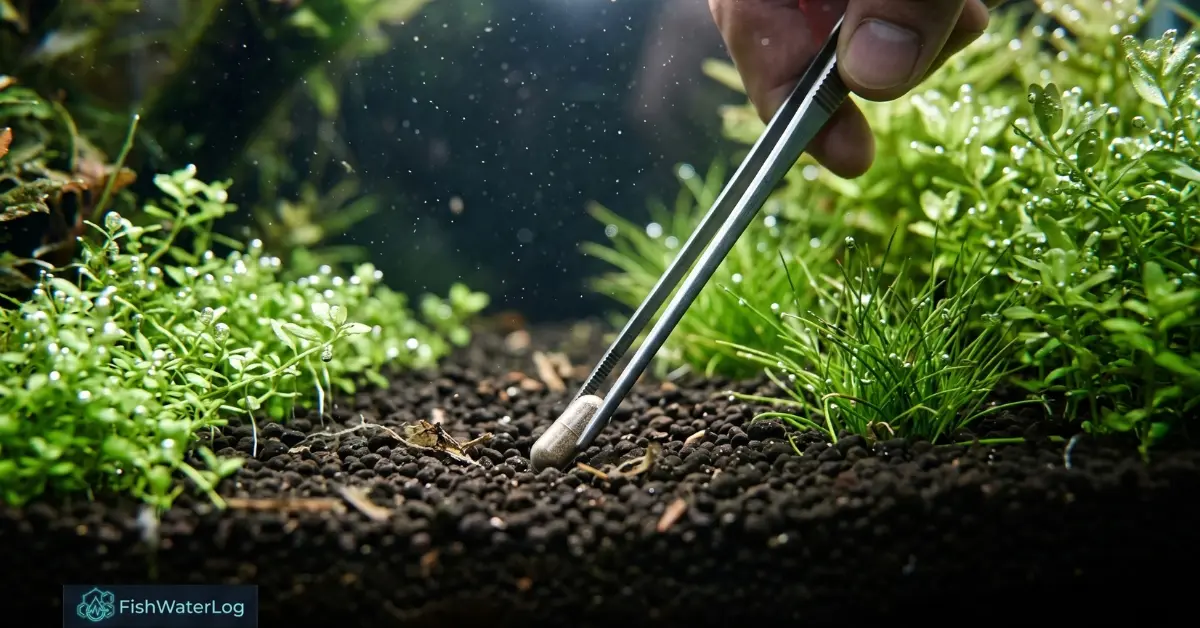
The modern freshwater planted aquarium operates as a highly sophisticated, closed biogeochemical ecosystem reliant on the perpetual exchange of energy, dissolved gases, and bioavailable macronutrients. At the foundation of this aquatic environment lies the substrate bed. Unlike terrestrial agriculture, where soils are tilled, aerated, and amended with organic matter, an aquatic substrate functions under continuous … Read more
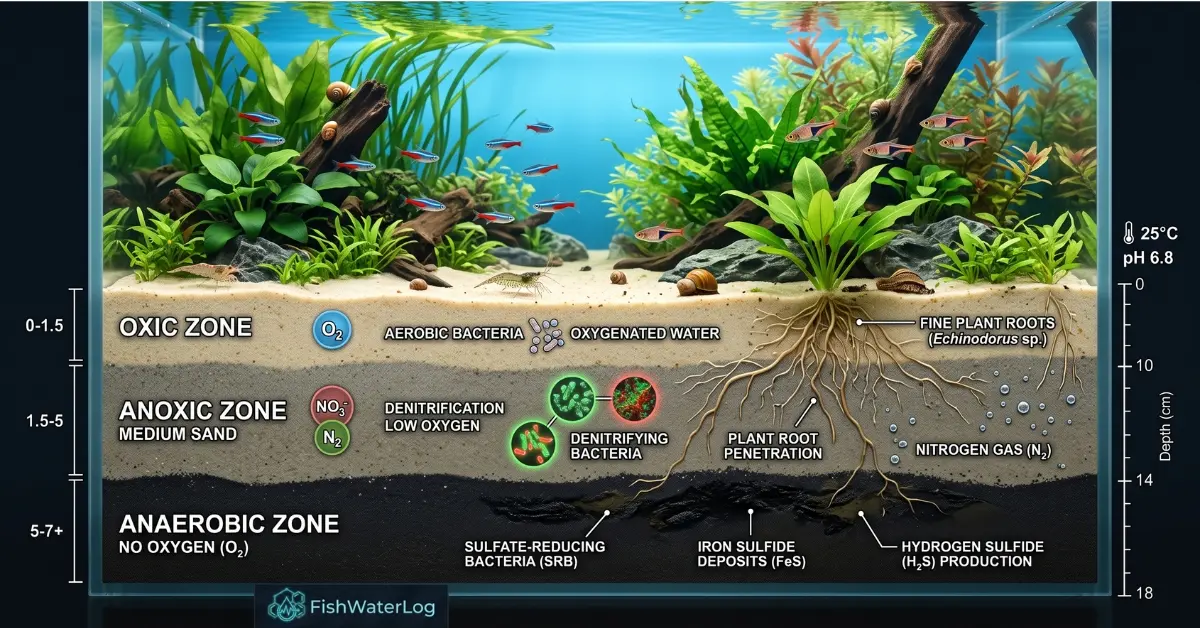
Life within a closed aquatic ecosystem is governed by a continuous biogeochemical balancing act, where the benthic substrate operates not as an inert gravel bed, but as a living thermodynamic engine. While long considered the exclusive domain of marine reef tanks, mastering freshwater deep sand bed denitrification provides the ultimate biological mechanism to permanently reduce … Read more
Within the discipline of freshwater aquatic botany and aquascaping, the bottom material of an aquarium represents far more than a decorative anchor. The substrate for planted tanks serves as the biochemical engine of the entire closed ecosystem. It binds essential nutrients within the reach of the rhizosphere, provides the vast microscopic surface area necessary for … Read more