
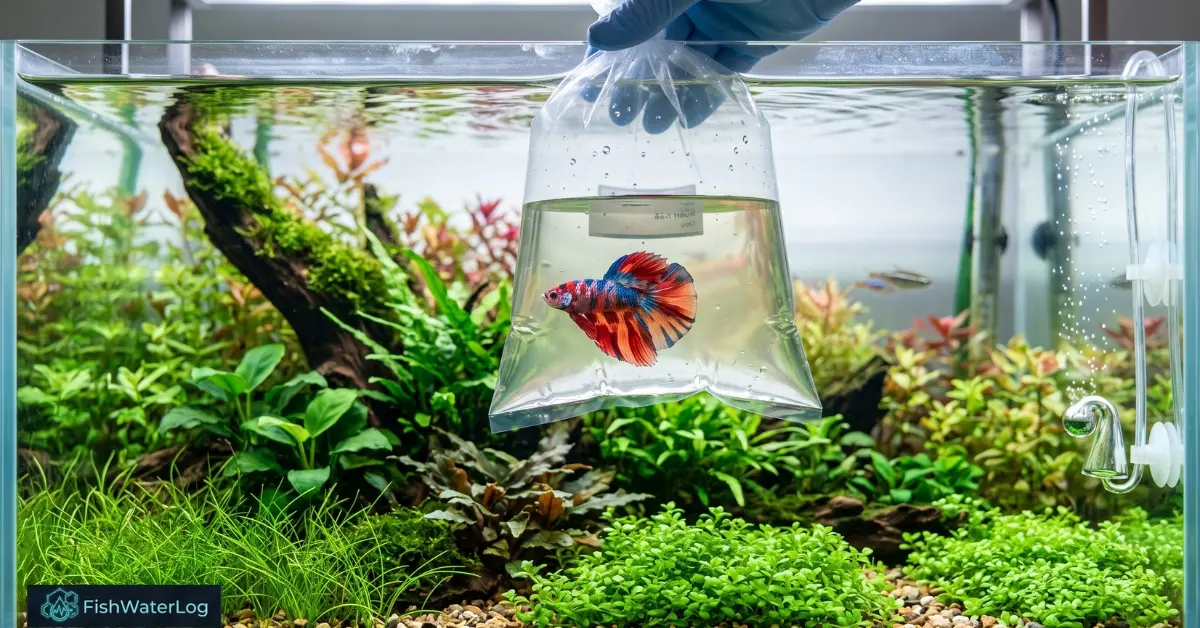
The global ornamental fish trade has undergone a massive structural shift over the last two decades. Historically, acquiring live fish was strictly limited by the regional footprint of local pet stores, restricting aquarists from accessing rare, vibrant, or specialized species. Today, the rapid rise of the reputable online fish store has completely transformed the hobby, making it straightforward to buy aquarium fish directly from dedicated aquaculture facilities and professional breeders worldwide.
However, transit stress and closed-system chemistry present significant hurdles during courier transit. Learning how to buy live fish online safely requires more than browsing a livestock catalog; it demands a clear understanding of animal physiology, water parameter stability, and logistics. Navigating livestock health guarantees, courier thermal packaging, and correct unboxing acclimation protocols ensures your new specimens survive transit and thrive in your aquarium.
This comprehensive guide details everything required to buy live fish online safely. From evaluating vendor packing practices and understanding in-transit ammonia chemistry to executing a safe acclimation protocol, you will gain the practical tools needed to protect your investment and maintain healthy livestock from doorstep to display tank.
Competitive Content Gap Analysis: What the Industry Overlooks
An exhaustive analysis of high-authority websites dominating the digital livestock sector reveals distinct patterns in content delivery alongside glaring informational gaps. Industry leaders such as LiveAquaria, Aquarium Co-Op, and Saltwaterfish.com focus heavily on visual merchandising and customer confidence mechanisms. Their primary content pillars emphasize “Arrive Alive, Stay Alive” guarantees, categorical livestock breakdowns (such as freshwater, marine, corals, and invertebrates), and What You See Is What You Get (WYSIWYG) retail galleries.
While these commercial platforms excel at driving transactional conversions, they consistently bypass the critical biochemical education and transport physiology required to buy live fish online safely. Standard retail websites rarely explain the extreme physiological stress teleost species endure during 24 to 72 hours of courier confinement, nor do they demystify the complex water chemistry shifts occurring inside a sealed shipping bag. Furthermore, most conventional seller guidelines promote outdated, one-size-fits-all drip acclimation methods without warning aquarists about the lethal interaction between dissolved carbon dioxide off-gassing and acute ammonia toxicity.
To safely bridge the gap between commercial logistics and long-term livestock survival, modern aquarists must understand the scientific realities overlooked by conventional online fish stores:
- Closed-System Carbonic Acid Dynamics: How dissolved respiratory carbon dioxide naturally acidifies transport water and temporarily suppresses ammonia toxicity during transit.
- The Drip Acclimation Paradox: Why traditional slow water mixing turns harmless ammonium into lethal free ammonia within minutes of opening a sealed shipping bag.
- Cortisol-Induced Immunosuppression: The biological impact of transport vibrations and temperature shifts on fish immune barriers, making dedicated post-arrival quarantine non-negotiable.
- In-Transit Bioremediation Advances: How modern aquaculture utilizes encapsulated nitrifying consortia and microalgae matrices to neutralize metabolic waste inside courier packaging.
By prioritizing the foundational biochemistry behind aquatic transport rather than superficial retail claims, you can evaluate vendor shipping practices with precision, eliminate post-transit mortality, and integrate healthy live fish into your home aquarium with complete confidence.
Critical Industry Misconceptions & Fatal Advice to Avoid
Most entry-level care guides and hobbyist forums perpetuate dangerous shipping advice that compromises livestock health due to a misunderstanding of basic water chemistry:
- Blanket Drip Acclimation Advice: Recommending hours of slow drip acclimation for courier-shipped fish is often fatal. While ideal for local short-distance moves, prolonged dripping in shipped water causes acute gill damage as pH rises.
- Ignoring Closed-System Bag Biochemistry: Traditional advice routinely tells hobbyists to mix tank water with bag water without accounting for the volatile relationship between carbon dioxide off-gassing, sudden pH spikes, and un-ionized ammonia toxicity.
- Mishandling Gas-Permeable Breather Bags: Treating microporous breather bags like standard polyethylene bags—specifically floating them in the aquarium to equalize temperature—halts essential gas exchange and rapidly suffocates the enclosed specimens.
Pre-Shipment Physiology and Vendor Preparation
The ability to buy live fish online safely begins long before your order is packed into a styrofoam box. Professional breeders and top-tier online fish store operators enforce rigorous pre-transit regimens to ensure livestock enters the distribution network at peak physiological strength. Transport induces acute osmotic, thermal, and respiratory stress; mitigating these stressors requires strict control over metabolic load, pathogen screening, and water conditioning before shipping.
Fasting and Gut Evacuation Protocols
The single most critical step prior to bagging aquarium fish is strict fasting. Before adding new species, ensure your community tank maintenance schedule is up to date to handle any minor shifts in bioload. Teleost metabolism converts dietary protein into ammonia, which is continually excreted across the gill lamellae and through fecal matter.
To prevent rapid water fouling, professional suppliers implement a mandatory 48 to 72-hour fasting period based on species biomass:
- Elimination of Solid Particulates: Complete gut evacuation stops the accumulation of solid organic waste inside the transport bag.
- Bacterial Bloom Prevention: Undigested waste fuels heterotrophic bacteria, which consume precious dissolved oxygen and cause fatal hypoxic crashes in transit.
- Suppressed Excretion Rates: An empty digestive system significantly lowers baseline ammonia production, keeping water clean throughout courier delivery.
Prophylaxis, Pathogen Screening, and Water Quality
High-standard facilities perform systematic health audits on all holding systems prior to bagging. Specimens displaying clamped fins, fin rot, excess mucus secretion, torn rays, or lethargic swimming patterns are immediately isolated from customer shipments.
Furthermore, vendors carefully prepare holding water chemistry. Deep-well water is degassed with heavy surface aeration to strip out toxic levels of carbon dioxide (CO2) and hydrogen sulfide (H2S) while replenishing oxygen levels. In municipal supply setups, advanced commercial conditioners break persistent chloramine bonds, neutralizing both chlorine and toxic free ammonia. Mild water conditioners and natural stress-reducing agents are frequently added to holding systems to stabilize mucosal slime coats and temper handling-induced cortisol spikes before transit.
Harvesting, Grading, and Holding Protocols
Understanding how livestock transitions from breeding ponds and raceways into holding systems reveals the baseline physical resilience of the specimens you receive. For anyone looking to buy live fish online safely, vendor harvesting methods dictate whether livestock arrives robust or compromised by physical micro-trauma.
Commercial Seining and Pond Extraction
In high-volume aquaculture facilities, fish are corralled using large seine nets. To eliminate abrasive injuries, reputable hatcheries employ knotless nylon or polyester netting treated with smooth rubberized coatings. Rather than lifting dense, heavy masses of fish out of the water—which crushes underlying specimens and strips delicate epidermal mucus—technicians make partial pulls and gently hand-dip smaller clusters into aerated transfer vats.
Mechanical Sorting vs. Manual Hand-Grading
Once harvested, specimens must be sorted by size, color uniformity, and market readiness:
- Mechanical Graders: Box graders with floating bar inserts rapidly separate juvenile batches. While efficient for hardy schooling species, crowding in mechanical bins can cause slight scale damage or split fins.
- Manual Hand-Grading: Delicate ornamental species, such as rainbowfish, fancy guppies, and dwarf gouramis, require individualized hand-grading. Technicians work on lubricated sorting tables treated with synthetic slime-coat protectants to quickly sort fish without stripping epidermal barriers.
Any physical handling event triggers a significant surge in blood cortisol, accelerating heart rate, respiration, and cellular energy consumption. Because elevated cortisol temporarily depresses the immune system—leaving fish vulnerable to opportunistic pathogens like Flavobacterium columnare or systemic viral agents—reputable online vendors hold livestock in dedicated stabilization systems for several days post-grading before packaging them for courier transit.
Packaging Engineering and Thermal Logistics
The physical transport of an aquatic organism requires the artificial construction of a temporary, self-sustaining biosphere. The packaging engineering utilized by a vendor dictates the thermal stability, osmotic balance, and gas exchange potential of this closed environment, directly determining your ability to buy live fish online safely.
Containment Vessels and Pure Oxygenation
Aquatic livestock is conventionally packaged inside heavy-gauge linear low-density polyethylene (LLDPE) bags. To prevent small or slender specimens from becoming trapped and crushed in folded plastic corners, high-standard suppliers utilize square-bottom or round-seal bags.
When sealing the bag, vendors balance the ratio of water to gas:
- Water-to-Oxygen Ratio: Bags are filled with roughly 25% to 33% holding water and 67% to 75% pure medical-grade gaseous oxygen.
- Diffusion Gradient: This pressurized headspace maintains a continuous partial pressure gradient, driving dissolved oxygen into the water throughout transit times spanning 24 to 72 hours.
- Breather Bags for Nano Species: For small schooling tetras or dwarf shrimp, specialized micro-porous polymer “breather bags” allow carbon dioxide egress and ambient oxygen ingress without requiring an internal gas pocket.
Thermal Regulation and the Q10 Temperature Coefficient
Because teleost fish are poikilothermic (cold-blooded), ambient water temperature dictates their basal metabolic rate. Under aquatic physiological and water quality principles indexed by the Food and Agriculture Organization (FAO AGRIS), managing water temperature during transport drastically cuts oxygen consumption, carbon dioxide expiration, and nitrogenous waste excretion.
Lowering the metabolic rate is a deliberate shipping strategy because it drastically cuts oxygen consumption, carbon dioxide expiration, and ammonia excretion. To maintain a stable thermal window during transit across variable regional climates, professional vendors implement strict insulated packaging standards:
- Expanded Polystyrene (EPS) Coolers: Thick-walled styrofoam coolers nested inside heavy-duty corrugated cardboard cartons provide structural rigidity and thermal insulation against external temperature swings.
- Chemical Heat Packs: Iron-powder oxidation heat packs provide controlled warmth during winter transport. Proper ventilation spacing is maintained so the oxidizing pack does not starve the outer carton of oxygen.
- Phase-Change Gel Ice Packs: Specially formulated cold packs prevent dangerous overheating during peak summer deliveries, preventing thermal shock and metabolic stress.
As you prepare your quarantine station and home systems to receive these insulated shipping boxes, you can refer to our Freshwater Aquarium Checklist: Equipment & Testing Audit to prepare your tank and ensure every piece of environmental control equipment is calibrated.
Domestic Logistics & Courier Cold Chains (US Transit Realities)
While mainstream online fish retailers promote transactional convenience, they routinely overlook the critical vulnerabilities of standard express delivery routes. In North American distribution channels, managing transit temperature windows dictates survival:
- The Hazard of the Last-Mile Delivery Truck: Standard priority delivery loads insulated boxes onto dispatch parcel vans for final neighborhood runs. During severe summer heatwaves or freezing sub-zero cold snaps, an insulated carton sitting inside an unconditioned step-van cargo bay for 6 to 8 hours undergoes dangerous thermal drift, rapidly exhausting heat or ice packs and inducing fatal temperature shock.
- The “Hold for Pickup” Advantage: Experienced aquarists circumvent the risky last mile by requesting shipments be routed directly to local carrier hubs (such as a staffed FedEx Ship Center or UPS Customer Center) using their “Hold for Pickup” service. Consignments remain within climate-regulated sorting facilities rather than baking or freezing on a delivery vehicle route.
- Early Hub Interception: By tracking airbills closely, buyers can retrieve livestock early in the morning the moment the hub opens for pickup, cutting hours of unnecessary vehicle transport and eliminating porch exposure.
Water Chemistry Degradation Inside Sealed Shipping Vessels
The following physiological and chemical shifts illustrate the severe degradation occurring over 24 to 48 hours of transit, underscoring why rapid intervention is mandatory upon delivery:
| Water Parameter | Baseline Aquarium Range | Typical Range After 24–48h Transit | Physiological Impact on Shipped Livestock |
|---|---|---|---|
| Dissolved Oxygen (DO) | 6.0 – 8.0 mg/L | >10.0 mg/L (with pure O2) | Pure compressed oxygen maintains supra-saturation to prevent hypoxia; drops precipitously if seals leak. |
| pH Level | 6.5 – 7.5 (Neutral) | 5.8 – 6.4 (Acidic) | Dissolved respiratory CO2 forms carbonic acid, depressing pH and stabilizing un-ionized ammonia. |
| Total Ammonia Nitrogen (TAN) | 0.0 mg/L | 12.0 – 50.0+ mg/L | Massive accumulation of metabolic waste, safely neutralized only by in-transit acidification. |
| Un-ionized Ammonia (NH3) | 0.0 mg/L | 0.015 – 0.045 mg/L | The lethal form of ammonia remains suppressed in acidic water, but spikes rapidly the instant the bag seal is cut open. |
| Temperature Window | 22°C – 28°C (72°F – 82°F) | 20°C – 26°C (68°F – 79°F) | Governed by insulation quality; rapid thermal shifts exceeding 3°C to 4°C trigger acute stress and osmotic disruption. |
The Biochemistry of Closed-System Transport
Understanding how to buy live fish online safely requires an appreciation of the invisible chemical dynamics occurring inside a sealed shipping bag over a 24 to 72-hour transit window. Once the container is hermetically sealed and handed to a courier, a biological countdown begins, governed by cellular respiration, carbon dioxide buildup, acidification, and nitrogenous waste excretion.
Respiration and the Carbonic Acid Pathway
As fish respire within the confined water volume, they continuously consume dissolved oxygen (O2) and release carbon dioxide (CO2) across their gills. In an enclosed environment without gas exchange, expelled CO2 rapidly dissolves into the water column, forming carbonic acid (H2CO3). This weak acid dissociates into bicarbonate ions (HCO3–) and free hydrogen ions (H+):
CO2 + H2O ⇌ H2CO3 ⇌ HCO3– + H+
The continuous generation of free hydrogen ions drives the pH downward. It is common for shipping water to plummet from a neutral pH of 7.5 down to 6.0 or lower during transit. In source water with poor carbonate hardness (KH under 100 ppm), unbuffered water can experience an extreme pH crash, leading professional vendors to lightly buffer their transport water to prevent fatal metabolic acidosis.
The Ammonia Equilibrium
Concurrently, fish excrete nitrogenous metabolic waste across their branchial membranes primarily as Total Ammonia Nitrogen (TAN). According to aquatic toxicity benchmarks established by the United States Environmental Protection Agency (EPA), the equilibrium between toxic un-ionized ammonia (NH3) and non-toxic ammonium (NH4+) is strictly governed by ambient pH and temperature.
NH3 + H2O ⇌ NH4+ + OH–
This equilibrium is governed primarily by ambient pH and temperature:
- The Acidic Buffer Effect: As accumulated carbonic acid drives the pH down, excess hydrogen ions force the chemical reaction to the right, converting virtually all toxic NH3 into non-toxic NH4+.
- The In-Transit Paradox: Paradoxically, the very CO2 that degrades overall water quality serves as a primary survival mechanism. Total ammonia levels inside a courier bag can reach extreme concentrations—often exceeding 10 to 14 ppm—yet the livestock remains unharmed because the acidic environment keeps toxic free ammonia well below the lethal threshold of 0.05 ppm.
Recognizing this biochemical protective bubble is critical for the unboxing phase, as breaking the seal instantly destabilizes this delicate equilibrium.
Advanced In-Transit Bioremediation Technologies
While the natural carbon dioxide and pH equilibrium provides a temporary chemical shield against acute ammonia toxicity, modern aquaculture engineering is pushing beyond passive water chemistry to make ordering from an online fish store safer than ever before. Recent scientific innovations actively extract and neutralize metabolic waste while packages move through courier networks, representing a significant leap forward for aquarists who want to buy live fish online safely.
Pre-Activated Nitrifying Consortia
One of the most promising packaging breakthroughs involves dosing shipping water with dense, pre-activated consortia of nitrifying archaea and bacteria. In controlled trials with sensitive marine ornamentals (such as the Yellowtail blue damselfish, Chrysiptera parasema), these live microbial suspensions successfully metabolized excreted ammonia directly within the sealed shipping vessel. By actively initiating nitrification in-transit, these consortia prevent dangerous spikes in total ammonia without requiring larger volumes of heavy transport water, drastically reducing post-transit gill lamellae damage and delayed mortality.
Encapsulated Microalgae Matrices
Biological bioremediation using photosynthetic microalgae represents another sustainable transport breakthrough. Recent aquaculture trials utilize native microalgae species (such as Ankistrodesmus and Scenedesmus) immobilised within calcium alginate bead matrices:
- Continuous Gas and Waste Assimilation: During simulated 15-day transport trials with fancy guppies (Poecilia reticulata), encapsulated microalgae continually assimilated respiratory dissolved carbon dioxide while driving ammonium uptake for cellular biosynthesis.
- Suppressed Ammonia Concentrations: This biopolymer system maintained time-weighted average toxic un-ionized ammonia concentrations at an astonishingly low 0.036 mg/L throughout extended confinement.
- Physical Containment: The porous calcium alginate matrix allows unrestricted molecular diffusion of waste and nutrients while preventing direct contact between the algae and the livestock, achieving transport survival rates as high as 97.8%.
As progressive vendors integrate these microbial and algal bioremediation technologies into their commercial packing workflows, the biological hazards of long-distance transport will continue to drop, ensuring healthier aquarium fish upon delivery.
Acclimation Paradigms: Osmotic Shock vs. Ammonia Toxicity
The most critical, high-risk moment in the entire logistical journey occurs the precise instant you open the transport bag. The biochemical protection created by acidic, carbon-dioxide-saturated water collapses immediately upon exposure to room air. Understanding this chemical shift has triggered a massive overhaul in acclimation protocols, disproving long-standing retail advice for hobbyists looking to buy live fish online safely.
The Danger of Drip Acclimation for Shipped Fish
Traditional hobby guidance frequently advises aquarists to drip acclimate all incoming livestock by slowly siphoning tank water into the shipping bag over 45 to 120 minutes. The intent is to ease the specimen through shifts in pH, general hardness (GH), and osmotic pressure.
However, when livestock has been confined in transit for 24 hours or longer, standard drip acclimation can be fatal:
- Rapid Carbon Dioxide Off-Gassing: Opening the sealed bag allows trapped dissolved carbon dioxide to off-gas rapidly into the ambient atmosphere.
- Immediate pH Rebound: As carbonic acid disappears, water pH spikes rapidly within minutes.
- Lethal Ammonia Conversion: This acute surge in pH forces harmless ionized ammonium (NH4+) back into lethal, un-ionized free ammonia (NH3).
- Branchial Burning and Organ Failure: Leaving fish inside this newly toxic, high-ammonia slurry causes severe chemical burns to gill filaments and systemic organ damage, frequently causing unexplained mortality 48 to 72 hours later. Drip acclimation is only viable for shipped stock if a heavy dose of an ammonia binder is added to the bag the exact second it is opened.
The “Plop and Drop” Protocol
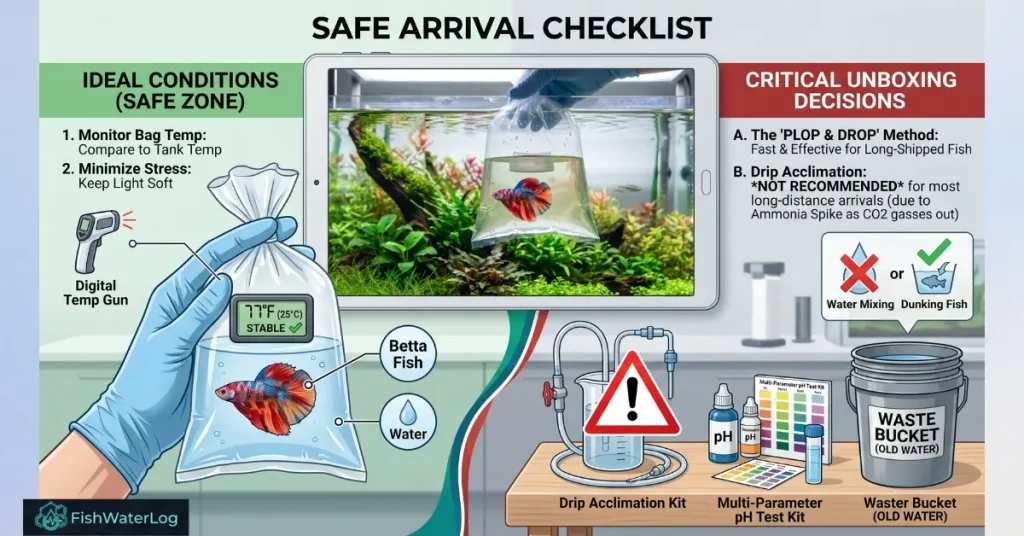
Because acute ammonia exposure causes far more immediate damage than minor osmotic shifts, commercial suppliers and experienced aquarists strongly advocate the “Plop and Drop” method for overnight courier shipments:
- Thermal Equalization: Float the unopened, hermetically sealed bag in your quarantine tank for 15 to 20 minutes to equalize water temperature. Because the bag remains sealed, carbon dioxide cannot escape, keeping the pH low and ammonia safely locked in its non-toxic ionized form.
- Rapid Separation: Remove the bag from the water, cut it open, and pour the contents through a soft net positioned over a waste bucket. Discard all foul transport water entirely.
- Immediate Introduction: Gently transfer the netted fish directly into your clean, pre-cycled quarantine aquarium. Never allow courier shipping water to enter your display setup.
The In-Transit Ammonia Shield and Bag-Opening Toxicity Spike
Understanding the physiological and chemical shifts inside a sealed transport bag explains why conventional acclimation fails after extended transit:
- The Carbonic Acid Survival Shield: During 24 to 48 hours of transit, teleost respiration saturates the closed water column with dissolved CO2, forming carbonic acid (H2CO3) that drives pH down into acidic territory (often below 6.0). While total ammonia nitrogen accumulates to alarming levels, the depressed pH chemically forces toxic un-ionized ammonia (NH3) into harmless, ionized ammonium (NH4+), keeping livestock alive inside the sealed bag.
- The Bag-Opening Toxicity Trap: The moment the bag is cut open, trapped CO2 off-gasses into ambient air within minutes, causing a rapid rebound in pH. This sudden alkalinization instantly converts non-toxic ammonium back into caustic free ammonia, causing irreversible branchial burns to gill lamellae if the fish remains in that water.
- The Plop and Drop Solution: Float the unopened, sealed bag for 15 to 20 minutes to equalize temperature without breaking the acidic CO2 seal. Cut the bag open over a waste bucket, catch the fish in a soft net, and immediately introduce it into clean quarantine water, discarding 100% of the foul shipping water.
- Crucial Invertebrate Exception: For ultra-sensitive species (such as Caridina shrimp or wild-caught micro-fish) that risk lethal osmotic shock from rapid TDS transitions, drip acclimation remains necessary. However, you must dose an ammonia-detoxifying binder (such as Seachem Prime) the instant the seal is broken to neutralize free ammonia throughout the slow drip cycle.
Acclimation Methodology Matrix
| Acclimation Method | Primary Threat Mitigated | Primary Risk Introduced | Optimal Biological Use Case |
|---|---|---|---|
| Drip Acclimation | Osmotic & pH Shock | Acute Ammonia Toxicity | Short transit times (local store drives), delicate marine invertebrates |
| Plop and Drop | Acute Ammonia Toxicity | Transient Osmotic Stress | Long-distance courier transit (24+ hours from an online fish store) |
Dead on Arrival (DOA) Logistics and Claim Mechanisms
Whenever you choose to buy aquarium fish through digital platforms, carrier transit introduces unavoidable logistical variables. To build customer confidence and offset transit risks, reputable suppliers back their shipments with Dead on Arrival (DOA) and Live Arrival Guarantees. Understanding the contractual and photographic requirements of these policies is critical to protecting your investment when ordering live fish.
DOA policies are structured to prevent fraudulent claims and protect vendors from poor post-delivery acclimation practices, while ensuring buyers receive fair compensation for shipping delays or packaging failures. Adhering to vendor guidelines requires attention to several standard policy parameters:
- Strict Submission Windows: Most livestock sellers enforce a tight claim window—typically between 2 and 12 hours from the courier’s official delivery timestamp. Submissions made outside this timeframe are almost universally rejected, as vendors cannot verify post-arrival handling conditions.
- First-Attempt Delivery Rule: Guarantees require the recipient to accept the parcel on the first delivery attempt. If a package is missed, delayed due to incorrect address information, or left sitting on an exposed porch in extreme weather, the guarantee is immediately voided.
Mandatory Dead on Arrival (DOA) Claim Evidence Protocols
Because aquatic retailers face significant risks of consumer fraud, strict evidentiary standards govern all Live Arrival Guarantees. Understanding these parameters ensures legitimate losses are promptly honored:
- Continuous, Uncut Unboxing Video: The golden standard for claims requires a continuous, single-take video recording starting before the box is opened. You must clearly capture the unopened shipping label with tracking details visible, followed immediately by slicing the tape and inspecting each bag. If the box is opened first and filming begins only after finding a dead fish, sellers will universally reject the claim.
- Intact Bag Verification: If a fish arrives deceased, never cut the bag open or transfer it into your aquarium. Vendors mandate clear photographic and video evidence of the expired specimen floating inside the original, hermetically sealed transport bag with factory seals intact. Breaking the seal or introducing home water alters chemical variables and automatically voids all warranties.
- The 1-to-2 Hour Claim Window: Time is critical once courier tracking logs status as “Delivered” or “Ready for Pickup.” Most reputable vendors require formal claim submissions with media evidence within 1 to 2 hours of delivery. Allowing a parcel to sit outside or filing claims hours later results in immediate claim disqualification.
- Unopened Bag Photographic Evidence: Almost all claims require clear, high-resolution photos or videos showing the deceased specimen inside the original, unopened shipping bag with the metal clamp or heat seal intact. Opening the bag releases trapped carbon dioxide, alters water chemistry, and nullifies the claim. Some vendors also require follow-up photos of the specimen placed on a white paper towel, or with the tail fin severed, to prevent duplicate or recycled claims.
- Exclusion of Tank Mortality: Sellers do not cover losses that occur after livestock enters your aquarium. Once a fish is placed into home water, variables such as cycling status, aggression from existing tank mates, and parameter swings are beyond the seller’s control.
- Compensation Structure: Commercial sellers rarely issue direct cash refunds for deceased livestock. Approved claims typically result in replacement fish sent with a subsequent order or digital store credit. Packaging and courier express shipping fees remain strictly non-refundable.
Before placing an order with any online fish store, read their specific livestock warranty page carefully, plan your delivery day around your schedule, and have a smartphone ready to document the unboxing process immediately upon arrival.
Post-Arrival Quarantine and Water Telemetry
The process to buy live fish online safely does not conclude once the shipping box is emptied and specimens are acclimated. Proper fish health management starts with a strict quarantine protocol for every online order. Every single specimen received from an online fish store must spend time in a dedicated quarantine tank before ever entering an established community aquarium.
The Physiology of Post-Transit Immunosuppression
Extended confinement, mechanical vehicle vibrations, thermal fluctuations, and packaging confinement induce severe physiological stress in teleost species. This sustained stress triggers an intense endocrine response, causing blood cortisol levels to surge. Elevated systemic cortisol acts as a potent immunosuppressive agent, degrading the animal’s mucosal skin barrier and white blood cell defense mechanisms.
Under these compromised conditions, latent or environmental pathogens find an open window to multiply rapidly:
- External Parasites: Ciliated protozoans like Ichthyophthirius multifiliis (Ich) and Epistylis exploit weakened mucus layers, proliferating before visual symptoms emerge.
- Bacterial Pathogens: Stressed epidermal tissue is prime target territory for opportunistic bacteria such as Flavobacterium columnare.
- Internal Flagellates: Gut parasites multiply unchecked when digestive immunity is depressed by travel stress.
Introducing unquarantined, stressed specimens directly into a display setup risks exposing established livestock to opportunistic disease outbreaks that are far harder to treat in planted or community displays.
Precision Quarantine Water Telemetry
A bare-bottom quarantine tank equipped with a fully cycled sponge filter, a reliable heater, and PVC pipe fittings for shelter provides an easily monitored environment. Because new arrivals are biologically vulnerable, daily parameter telemetry is mandatory:
- Total Ammonia Nitrogen (TAN) & Nitrite (NO2–): Both values must remain strictly at 0.0 ppm. Even trace spikes in uncycled quarantine water can prove fatal to gills recovering from transport acidification.
- pH and Carbonate Hardness (KH): Check your water parameter bounds to ensure they match the requirements of the specific fish you purchased. Rapid swings in osmotic pressure or pH must be prevented while the fish re-establishes internal ionic homeostasis.
- Dissolved Oxygen (DO): Provide active surface agitation. Adequate oxygenation facilitates gill tissue repair and supports the heightened metabolic demand of immune recovery.
Maintain this clinical isolation for a minimum of two to four weeks. Once the livestock demonstrates enthusiastic feeding responses, full fin extension, vibrant coloration, and clear skin surfaces, your newly acquired aquarium fish can safely migrate into their permanent home.
Conclusion
The ability to buy live fish online safely represents a remarkable triumph of modern logistical engineering, packaging technology, and aquatic biology. Sourcing livestock through digital storefronts grants aquarists unprecedented access to rare specimens, dedicated breeders, and healthy bloodlines that local stores simply cannot stock. However, bridging the gap between an aquaculture facility and your aquarium requires moving beyond basic hobby habits and mastering the biological realities of live animal transport.
Safe livestock acquisition relies on understanding the complete transport cycle:
- Pre-Shipment Preparation: Partnering with reputable sellers who enforce strict 48 to 72-hour fasting and thorough pathogen screening before packing.
- In-Transit Chemistry: Recognizing how dissolved carbon dioxide protects your fish from lethal ammonia toxicity by shifting the chemical equilibrium toward harmless ammonium during transit.
- Science-Backed Acclimation: Abandoning dangerous drip acclimation for shipped orders in favor of the rapid “Plop and Drop” protocol to prevent immediate free ammonia poisoning.
- Strict Isolation: Establishing a clinical quarantine tank and maintaining rigorous water telemetry to buffer against travel-induced immunosuppression.
By pairing vendor DOA protections with sound physiological care upon arrival, you remove the guesswork from ordering online, ensuring your newly acquired live fish not only arrive alive but thrive for years to come.
Frequently Asked Questions (FAQs)
Is it safe to buy aquarium fish online during extreme winter or summer months?
Yes, provided the online fish store utilizes professional-grade thermal packaging. High-standard vendors pack orders in thick-walled expanded polystyrene (EPS) boxes accompanied by iron-oxidation heat packs in winter or phase-change cold packs in summer. To prevent thermal packaging limits from being exceeded, always select express overnight shipping during temperature extremes, or hold shipments if severe weather causes transit delays.
Why do vendors require photos of deceased fish inside the unopened bag for DOA claims?
Opening the transport bag immediately releases trapped carbon dioxide, spiking water pH and converting harmless ammonium into toxic free ammonia. Furthermore, once livestock is added to a home aquarium, the vendor cannot verify your water quality, cycling status, or existing tank mate aggression. Photographs or videos taken of the specimen inside the unopened, original sealed bag provide undisputed proof that mortality occurred during courier transit rather than from post-delivery handling.
Should I use the “Plop and Drop” method or drip acclimate my new arrivals?
For fish that have spent 24 hours or more in transit, the “Plop and Drop” protocol is scientifically superior. Prolonged drip acclimation off-gasses carbon dioxide, raises pH, and exposes stressed fish to acute free ammonia toxicity. The “Plop and Drop” method rapidly removes the specimen from foul, ammonia-laden transport water. Reserve drip acclimation strictly for short local store trips or delicate marine invertebrates where water fouling is minimal.
How long can live fish safely survive inside a sealed shipping box?
Under optimal packaging standards—where fish are properly fasted for 48 to 72 hours, packed in pure medical oxygen, and thermally stabilized—most freshwater and marine species can survive 48 to 72 hours in transit. However, transport-induced stress, cortisol spikes, and mucosal degradation escalate significantly after the initial 24-hour window, making overnight priority shipping the safest choice.
