
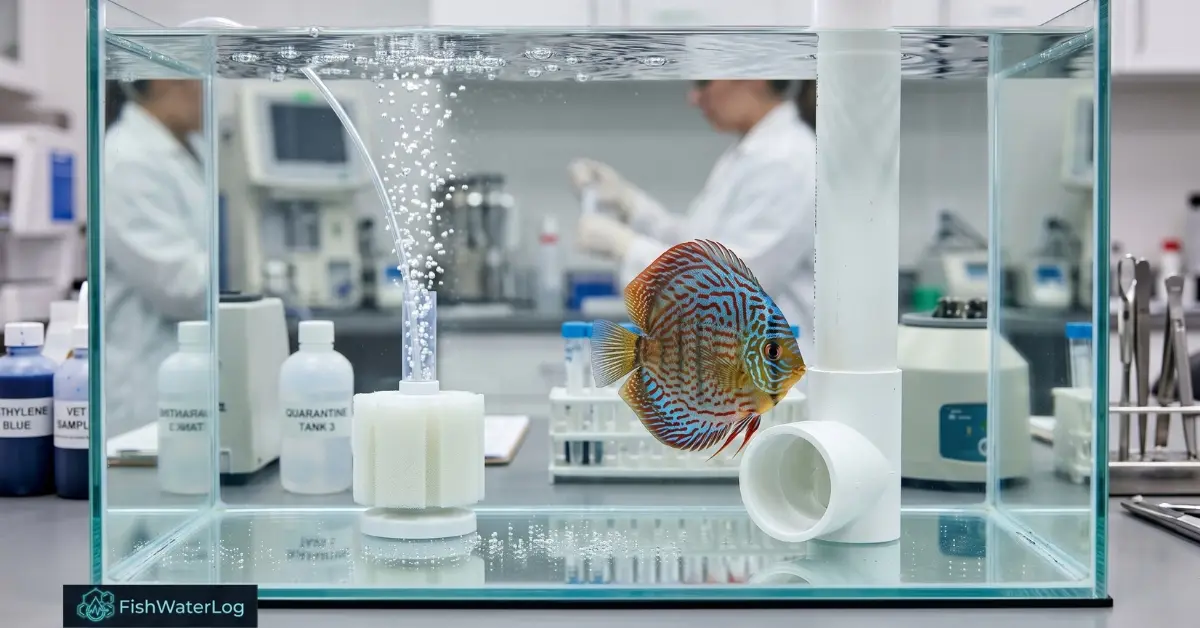
Setting up a dedicated fish quarantine tank is the single most critical biosecurity measure an aquarist can take to protect an established community aquarium. Introducing unquarantined livestock directly into a display tank frequently brings in virulent pathogens—ranging from stubborn protozoans like Ichthyophthirius multifiliis to devastating viral and bacterial infections—that can decimate an entire biological system within days.
Whether you are designing a budget-friendly quarantine tank setup using a simple bare-bottom glass aquarium or configuring a specialized aquarium hospital tank to treat sick fish, isolation provides complete environmental control. A properly managed quarantine aquarium allows you to monitor new arrivals for behavioral distress, accurately dose targeted medications without harming delicate biofiltration or live plants, and observe critical biosecurity protocols. Below is our step-by-step framework to help you establish a reliable, fully functional quarantine environment from day one.
Why a Dedicated Isolation System is Essential
Acquiring new aquatic life is an exciting milestone, yet bypassing a structured quarantine protocol remains the leading cause of preventable system collapses. Pathogens rarely announce themselves immediately; latent external parasites, systemic bacteria, and internal helminths frequently hitchhike unnoticed in transit water or within asymptomatic carriers. Establishing a separate, controlled environment serves as an indispensable biosecurity buffer, ensuring that opportunistic infections are identified, contained, and neutralized before they compromise your display tank.
Beyond mere pathogen containment, a fish quarantine tank offers acute physiological benefits:
- Stress Mitigation and Acclimation: Freshly shipped specimens suffer from severe transport shock, osmotic disruption, and elevated cortisol levels. A low-stress quarantine aquarium lets weakened arrivals regain metabolic equilibrium, adapt to baseline water chemistry, and feed without competition from territorial tank mates.
- Preservation of Display Tank Biofiltration: Dosing therapeutic agents—such as formalin, broad-spectrum antibiotics, or copper-based treatments—directly into a display tank often wipes out nitrifying autotrophs in biological media and stains porous hardscapes. An isolated aquarium hospital tank confines harsh pharmaceuticals to a bare, easily disinfected system.
- Controlled Diagnostics and Dosing Precision: Determining exact active water volume in a heavily decorated display tank is virtually impossible due to substrate and hardscape displacement. In a bare-bottom quarantine tank setup, net water volume is precise, allowing targeted, therapeutically effective medication dosages without risk of chronic underdosing or toxic overdosing.
Essential Equipment for a Bare-Bottom Quarantine Setup
Building an effective quarantine environment does not require an expensive or elaborate display system. Functionality, rapid sanitation, and biological stability take precedence over aesthetics.
| Component | Recommended Specification | Primary Function & Strategic Advantage |
|---|---|---|
| Tank / Vessel | 10 to 20-gallon bare glass tank or food-grade polyethylene bin | Non-porous surfaces ensure medications do not absorb into silicone or plastic, enabling complete post-quarantine sterilization. |
| Biological Filtration | Mature air-driven sponge filter | Delivers robust biological conversion of toxic total ammonia nitrogen (TAN) without turbulent currents that exhaust weakened fish. |
| Thermal Regulation | Fully submersible heater with external controller | Maintains stable temperatures (e.g., 25–28°C) to prevent immune depression and accelerate parasite lifecycles for faster eradication. |
| Environmental Cover | Inert PVC pipe fittings (elbows/tees) | Provides non-absorbent, dark hiding shelters that alleviate stress while remaining simple to bleach and sterilize. |
| Aeration Support | Dedicated air pump and micro-pore air stone | Counters oxygen depletion caused by elevated water temperatures and oxygen-scavenging medications like formalin. |
| Monitoring Tools | Liquid titration test kits and ammonia alert badge | Ensures real-time tracking of un-ionized free ammonia (NH3) and nitrite spikes during high-density isolation. |
Step-by-Step Guide: How to Setup a Fish Quarantine Tank
Executing a successful quarantine involves establishing stable water parameters and maintaining strict biosecurity from start to finish. Follow this structured procedure:
1. Position and Sanitize the Vessel
Place the bare-bottom tank away from direct sunlight, drafty windows, and the main display aquarium to prevent aerosol transmission of pathogens. Wipe down all interior surfaces with a clean, unmedicated damp cloth or a diluted chlorine solution (thoroughly neutralized with sodium thiosulfate before filling). Never add gravel, sand, or porous rocks, as substrate traps debris and absorbs active compounds like copper ions.
2. Establish Seeded Biological Filtration
Do not attempt to cycle a quarantine tank from scratch while fish are in transit. Instead, pull a pre-seeded sponge filter or a mesh bag of ceramic biomedia directly from your display tank’s sump or canister filter. This provides an instant colony of Nitrosomonas and Nitrobacter autotrophs capable of converting incoming metabolic waste into harmless nitrates ($NO_3^-$).
3. Match Environmental Water Chemistry
Fill the isolation vessel with conditioned water matching the display tank’s baseline parameters—specifically matching temperature, pH, and general hardness (GH). Equilibrating these values eliminates osmotic shock when transferring livestock between systems.
4. Provide Non-Reactive Shelter and Subdued Lighting
Insert smooth, food-grade PVC elbows or couplings across the tank bottom. These inert fixtures create instant territorial boundaries and defensive hiding zones, which dramatically lowers cortisol-induced immune suppression. Keep overhead lighting turned off or minimal for the first 48 hours to ease sensory stress.
This provides an instant colony of Nitrosomonas and Nitrobacter autotrophs capable of sustaining the aquarium nitrogen cycle and biofiltration
, converting incoming metabolic waste into harmless nitrates (NO3–).
Observation vs. Prophylactic Treatment Protocol
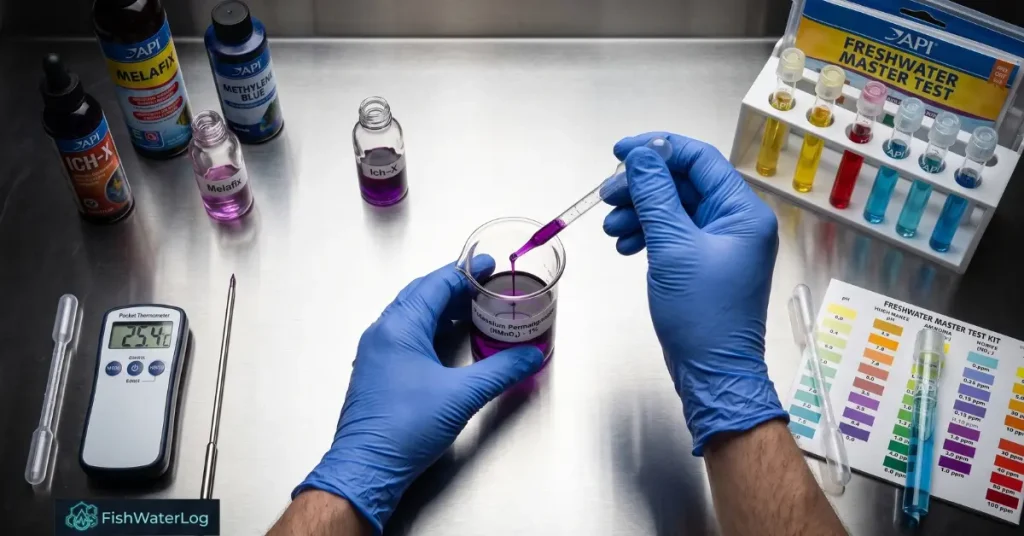
Aquarists generally select between two proven methodologies based on livestock sensitivity and target pathogens:
- The Observation-Only Approach: The fish remain in untreated, clean water for a minimum of 30 to 45 days while being closely monitored for flashing, clamped fins, white cysts, or rapid respiration. Medications are administered exclusively if clinical symptoms manifest. This method avoids chemical stress on delicate or copper-sensitive species.
- The Prophylactic Treatment Regimen: Livestock undergo predetermined, preventative medicinal baths or low-dose treatments regardless of visual presentation. This typically entails a standardized copper or formalin regimen for cryptocaryon/ich, paired with praziquantel-based baths for gill and body flukes. This method guarantees pathogen elimination before entry into display setups.
Instead, pull a pre-seeded sponge filter or a mesh bag of established filter media directly from your display tank’s sump or canister filter.
Biosecurity & Maintenance Best Practices
To prevent cross-contamination between your isolation system and established display tanks, adhere to strict equipment partitioning:
- Dedicated Utensils: Maintain separate nets, siphons, buckets, and feeding pipettes labeled exclusively for the quarantine tank. Never submerge equipment used in quarantine into the main display aquarium without complete desiccation or bleach disinfection.
- Strict “All-In, All-Out” Protocol: The quarantine clock resets to day one if new livestock is introduced into an active quarantine cycle. Mixing batches guarantees cross-exposure and undermines containment integrity.
- Diligent Siphoning: Remove uneaten food and fecal matter daily using a narrow rigid siphon tube. Since bare-bottom systems lack detritus-consuming benthic microfauna, mechanical export prevents premature biofilter overload and sustains pristine dissolved oxygen levels.
Managing Common Diseases in a Fish Quarantine Tank
When clinical signs of fish diseases manifest during the isolation period, an established fish quarantine tank provides the precise environment needed to administer targeted, therapeutic regimens without endangering the main aquarium display. For advanced diagnostics on virulent strains, referencing veterinary extension data such as the UF/IFAS Fish Health Management Protocols or studies on Betanodavirus (Viral Nervous Necrosis) ensures your treatment pharmacology aligns with current aquaculture standards.
1. External Parasites: Ich, Velvet, and Monogenean Flukes
Protozoan and dinoflagellate infections rank among the most common threats encountered during initial acclimation.
- Ichthyophthirius multifiliis (White Spot Disease / Ich): Characterized by macroscopic white cysts scattered across the epidermis, fins, and gills, accompanied by flashing against PVC decor. In a bare-bottom quarantine aquarium, copper-based formulations (such as chelated copper or ionic copper sulfate maintained strictly at 0.15–0.20 ppm) break the free-swimming theront stage. Alternatively, formalin-malachite green combinations work effectively for scaleless fish that cannot tolerate copper.
- Amyloodinium / Piscinoodinium (Velvet Disease): Appears as a fine, golden or rust-colored dust across the body with severe gill irritation and lethargy. Velvet demands immediate therapeutic intervention; maintain targeted ionic copper concentrations continuously for 14 to 30 days while completely dimming overhead illumination to reduce photo-induced dinoflagellate proliferation.
- Monogeneans (Gill and Body Flukes): Microscopic flatworms (Dactylogyrus and Gyrodactylus) cause rapid respiration, flared opercula, and localized dermal excess mucus. Administering pure praziquantel baths at 2.0 to 2.5 mg/L provides rapid relief. Because praziquantel does not kill unhatched eggs, repeat the treatment on day 5 to 7 depending on water temperature.
2. Systemic and Superficial Bacterial Infections
Gram-negative pathogens (such as Flavobacterium columnare and Aeromonas spp.) frequently exploit shipping abrasions and osmoregulatory fatigue.
- Columnaris (Cotton Wool Disease): Often mistaken for a fungus, this virulent bacterial infection presents as saddle-like lesions, pale fin margins, and mouth decay. Lower water temperatures below 24°C (75°F) immediately to decelerate bacterial enzyme replication, and dose a broad-spectrum, synergistic combination of nitrofurazone and kanamycin directly into the aquarium hospital tank.
- Fin Rot and Septicemia: Manifesting as ragged, fraying fin tissue or red hemorrhagic streaks through the vascular system. Treat in isolation with bio-encapsulated medicated feeds or dissolved broad-spectrum antibiotics to safeguard nitrifying bacteria while preventing water-borne re-infection.
3. Internal Helminths and Flagellates
Internal parasites slowly deplete the host’s nutritional reserves, leading to severe emaciation and secondary organ failure.
- Hexamita / Spironucleus (Hole-in-the-Head / Cavity Erosion): Characterized by white, stringy feces, appetite loss, and deep dermal pitting along the lateral line. Ingested metronidazole remains the gold standard; mix therapeutic metronidazole directly into high-protein pellets using an unflavored gelatin or commercial agar binder to ensure direct gut delivery.
- Nematodes (Camallanus Cotti): Red, needle-like worms protruding from the vent indicate advanced nematode colonization. Dose levamisole hydrochloride into the water column at 2 mg/L under subdued light for 24 hours, followed by a thorough bottom siphon to remove paralyzed parasites before they recover.
Critical Water Parameter Benchmarks for Isolation Systems
Water stability in a closed fish tank setup dictates therapeutic success. Therapeutic chemicals frequently interact with inorganic ions and alter dissolved oxygen saturation, making strict parameter maintenance imperative.
| Water Metric | Target Quarantine Range | Parameter Significance & Chemical Interaction |
|---|---|---|
| Total Ammonia Nitrogen (TAN) | 0.0 ppm (Alarm at >0.25 ppm) | Medications like copper suppress biofiltration; zero ammonia prevents irreversible gill necrosis. |
| Nitrite (NO2–) | 0.0 ppm | Prevents the conversion of hemoglobin into methemoglobin (brown blood disease), which impairs cellular oxygen transport. |
| Nitrate (NO3–) | < 20.0 ppm | Low chronic nitrate levels reduce osmotic stress and support baseline immune recovery. |
| Dissolved Oxygen (DO) | > 6.5 mg/L (>80% saturation) | Essential buffer; medications (formalin, antibiotics) deplete chemical oxygen demand rapidly. |
| pH Stability | 7.0 – 7.8 (Species-dependent) | Toxicity shifts drastically with pH; free, toxic ammonia (NH3) exponentially increases as pH surpasses 8.0. |
Water stability in a closed fish tank setup dictates therapeutic success. Therapeutic chemicals frequently interact with inorganic ions and alter dissolved oxygen saturation, making strict aquarium water parameter testing and maintenance imperative.
Post-Quarantine Transition and Display Tank Introduction
Completing the quarantine period successfully culminates in a systematic, stress-free transfer into your main community tank. Bypassing proper post-isolation procedures risks late-stage osmotic shock.
- Active Carbon and Water Cleansing: Once the observation or treatment period concludes, conduct a consecutive 50% water exchange and insert premium activated carbon or a chemical-sorbent resin into the filtration line for 48 hours to scrub residual medications, dyes, and chemical intermediates.
- Pre-Transfer Fasting: Withhold food for 24 hours prior to introduction. This minimizes ammonia excretion in transit containers and lowers metabolic waste during handling.
- Gentle Acclimation: Match the destination display water temperature and pH using a slow drip-acclimation method over a 45-minute span. Never pour water from the isolation setup directly into the main display aquarium; net or cup the specimen gently, allowing excess fluid to drain off before release.
- Display Observation: Release the fish into the display tank under extinguished lighting to avoid aggressive territorial behavior from established residents. Monitor feeding response and lateral fin posture over the following 72 hours.
Equipment Sanitization and Teardown Between Batches
Once fish have completed their holding period and transitioned into the main display, sterilizing your fish quarantine tank prevents cross-contamination across successive batches. Because hardy pathogens like protozoan cysts, fungal spores, and bacterial biofilms linger on acrylic, glass, and filter housings, a full operational teardown is standard practice.
| Protocol Phase | Active Agent & Exposure Window | Biocidal Efficacy & Systemic Impact |
|---|---|---|
1
Drain Vessel
Mechanical Evacuation | 100% Water Column Siphon Full removal of benthic waste & films | Eliminates particulate biological reservoirs. Evacuating suspended organic debris prevents raw detritus from prematurely neutralizing oxidizing sterilants in subsequent phases. |
2
Bleach Soak
High-Level Oxidation | 10% Sodium Hypochlorite (NaOCl) 15 – 20 Minutes full immersion | Penetrates viral protein capsids, rapidly lyses fungal membranes, and dissolves persistent protozoan cysts (including encysted *Ichthyophthirius* tomonts) on glass and inert equipment. |
3
Neutralization
Chemical Quenching | Sodium Thiosulfate (Na2S2O3) Heavy 4x–5x dechlorinator rinse | Rapidly reduces toxic hypochlorite and free chlorine radicals into harmless sodium chloride (table salt) and sulfates, preventing accidental gill damage or livestock poisoning upon next use. |
4
Ambient Desiccation
Environmental Purge | 48-Hour Complete Air-Dry Full sunlight or dry ambient airflow | Acts as an absolute failsafe against obligate aquatic micro-organisms. Total lack of moisture fatally desiccates any surviving flagellates, bacteria, or residual microscopic encystments. |
Complete Chemical Sterilization Protocol
- Drain the Vessel: Disconnect electrical hardware and siphon out all residual water. Dispose of disposable filter floss or heavily fouled foam inserts.
- Bleach Bath: Refill the tank with a 10% sodium hypochlorite solution (one part household, non-scented chlorine bleach to nine parts tap water). Circulate this solution through your air lines, sponge fixtures, and PVC fittings for 15 to 20 minutes to eliminate bacterial colonies and resistant parasitic trophonts.
- Dechlorination and Neutralization: Drain the bleach solution and rinse all surfaces thoroughly with clean freshwater. Refill the vessel and apply a quadruple dose of a standard sodium thiosulfate water conditioner to break down trace chlorine residuals into inert salts.
- Complete Desiccation: Empty the tank completely and wipe down interior surfaces. Allow the entire quarantine tank setup—including nets, siphons, PVC hides, and heaters—to air-dry under ambient air for a minimum of 48 to 72 hours. Total desiccation eliminates vulnerable aquatic micro-pathogens that require moisture to survive.
Final Thoughts: Protecting Your Aquatic Investment
Establishing a routine fish quarantine tank protocol is the dividing line between reactive problem-solving and proactive aquarium husbandry. While dedicating time, floor space, and equipment to a separate quarantine tank setup requires initial discipline, it remains insignificant compared to the emotional and financial toll of treating an infected display system. By providing a calm acclimation period, monitoring physiological markers, and intervening early in an aquarium hospital tank, you safeguard your established community and give every new specimen the best foundation to thrive long-term. Incorporate quarantine into your regular acquisition workflow, and your primary aquarium will remain stable, healthy, and pathogen-free.
Frequently Asked Questions (FAQ)
Can I run a quarantine tank without a biological filter?
Running an unfiltered quarantine vessel is feasible only if you perform 50% to 100% daily water changes using parameter-matched water alongside an active ammonia neutralizer. However, relying on a mature, seeded sponge filter in a designated aquarium hospital tank remains far safer, preventing rapid chemical swings that cause toxic ammonia (NH3) spikes between water exchanges.
How long should new arrivals stay in an isolation system?
For an observation-only routine, maintain fish in a bare quarantine aquarium for a minimum of 30 to 45 days. This extended window accounts for the life cycles of encysted parasites and latent bacterial incubation periods. If using targeted prophylactic protocols, the timeframe may range from 14 to 28 days depending on the specific medication active periods and therapeutic dosing schedules.
Is substrate ever necessary in a fish quarantine tank?
Substrate should be omitted from clinical setups. Gravel and fine sand trap detritus, harbor encysted parasite tomites, and chemically bind active pharmaceutical ions like ionic copper, preventing therapeutic saturation. A bare-bottom layout ensures easy siphon cleanup and precise chemical dosing.
What should I do if a single fish shows disease symptoms during group isolation?
Treat the entire group within the isolation vessel. In a closed water volume, airborne droplets, shared equipment, and communal swimming space expose all inhabitants to waterborne pathogens. Additionally, reset the quarantine countdown clock back to day one following the final dose of medication.

1 thought on “How to Setup a Fish Quarantine Tank: Complete Guide (2026)”