
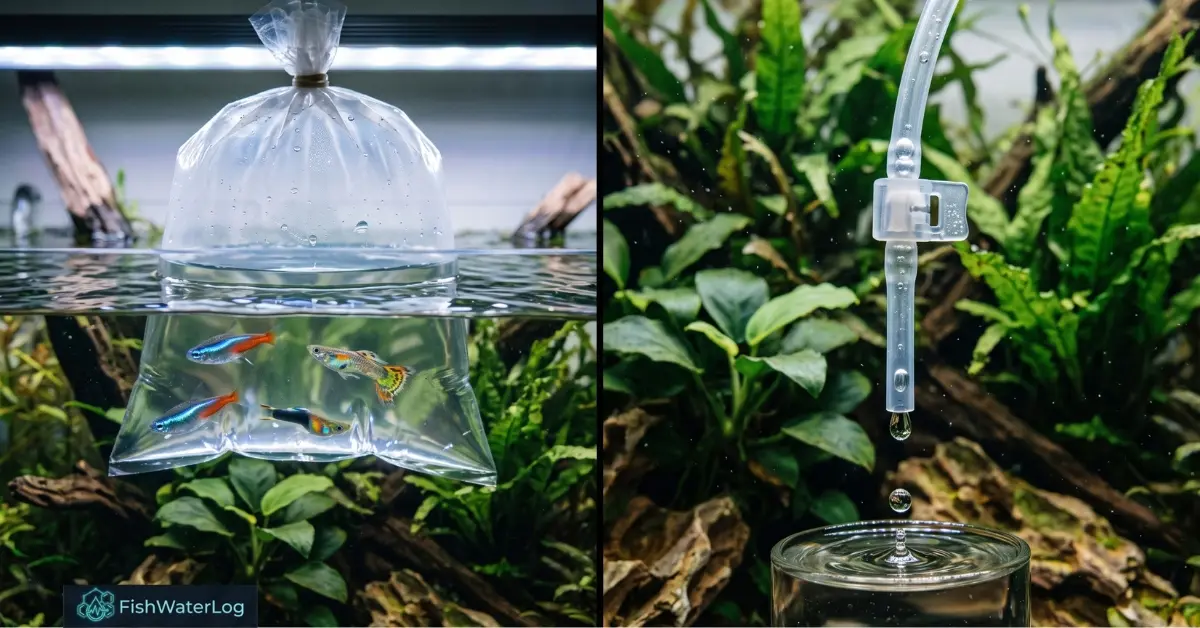
The introduction of newly acquired aquatic livestock into a localized aquarium system represents the single most dangerous physiological event in an aquatic organism’s lifecycle. Mortality rates during this critical transitional window are predominantly driven by severe physicochemical divergences between bagged shipping water and the destination tank. For decades, aquaculturists, aquatic veterinarians, and hobbyists have debated the optimal protocol for introducing livestock: the methodical drip acclimation vs plop and drop method. Determining the safest procedure requires moving beyond anecdotal husbandry rules and evaluating the precise biological demands of your livestock.
Selecting the right acclimation protocol requires balancing two competing physiological threats: systemic branchial osmotic shock versus acute un-ionized ammonia toxicity. While slow mineral adjustment protects delicate cellular ion exchange, prolonged confinement in opened shipping bags can trigger lethal chemical spikes as ambient carbon dioxide off-gasses. Whether you are introducing wild-caught teleosts, sensitive dwarf shrimp, or hardy community specimens, understanding the physiological mechanics of drip acclimation vs plop and drop enables you to prevent osmotic shock, bypass toxic transport water dynamics, and ensure a shock-free transition into your freshwater aquarium.
Table of Contents
The Physiology of Fish Transition and Osmoregulation
To evaluate the scientific validity of the drip acclimation vs plop and drop debate, aquarists must first understand how freshwater teleosts maintain internal chemical equilibrium. In aquatic husbandry, osmoregulation is the foundational physiological mechanism governing fish survival. When newly acquired specimens are introduced into water with unfamiliar chemical parameters, their internal balance is pushed to its limits. Navigating this delicate dynamic requires a clear understanding of cellular transport mechanisms to prevent irreversible systemic trauma.
Branchial Ionocytes and Transepithelial Transport
Freshwater fishes exist in a state of continuous hyperosmotic stress relative to their environment. Their internal bodily fluids maintain a much higher concentration of electrolytes and minerals than the surrounding dilute water. Consequently, they face an ongoing biological challenge: water passively invades their tissues via osmosis, while essential electrolytes—primarily sodium (Na+) and chloride (Cl–)—passively diffuse outward across semi-permeable membranes.
To counteract this relentless mineral loss without dehydrating their cells, freshwater teleosts do not drink water, produce copious amounts of dilute urine, and rely heavily on specialized branchial cells located within the gill epithelium. These specialized structures, known as branchial mitochondrion-rich cells (MRCs) or ionocytes, drive active transepithelial ion uptake directly against steep concentration gradients.
This mineral extraction is powered by basolateral Na+/K+-ATPase (NKA) enzymatic pumps alongside apical Na+/H+ exchangers (NHEs) and proton-ATPase mechanisms. These molecular pathways actively pull sparse calcium, magnesium, sodium, and potassium ions from the water column into the fish’s bloodstream. The functional efficiency of these ionocytes is closely calibrated to the background water chemistry—specifically General Hardness (GH) and Total Dissolved Solids (TDS). When executing a transition using drip acclimation vs plop and drop, the speed at which these ionocytes must adapt determines whether the fish thrives or suffers cellular collapse.
The Pathophysiology of Osmotic Shock
When an aquatic organism is abruptly moved between environments with divergent mineral densities, its branchial ionocytes experience severe, acute osmotic shock. The direction and magnitude of this osmotic gradient dictate the histological damage inflicted upon the gill tissue:
- Hyper-Osmotic to Hypo-Osmotic Shifts (Hard to Soft Water): Transferring a fish from hard transport water into soft, un-remineralized aquarium water creates intense inward osmotic pressure. Water rapidly floods the branchial epithelium, causing the secondary lamellae of the gills to swell. This cellular edema can physically rupture gill membranes, destroying ion transport architecture and choking off respiratory gas exchange.
- Hypo-Osmotic to Hyper-Osmotic Shifts (Soft to Hard Water): Moving a specimen from low-mineral water into a highly mineralized tank forces branchial cells into sudden hyper-excretion. Cellular fluids rush outward to balance the external salinity gradient, resulting in rapid cellular dehydration, blood plasma concentration spikes, and systemic organ strain.
In both scenarios, the sudden collapse of osmoregulatory homeostasis triggers severe metabolic exhaustion. Because damaged lamellae can no longer diffuse oxygen efficiently, fish often exhibit delayed mortality—succumbing to respiratory failure several days after introduction. Weighing drip acclimation vs plop and drop is therefore a critical balancing act: you must determine whether your specimen requires gradual mineral adjustment to protect delicate ionocytes, or an immediate escape from degrading transport water chemistry.
When an aquatic organism is abruptly moved between environments with divergent mineral densities, its branchial ionocytes experience severe, acute osmotic shock. Understanding how mineral fluctuations disrupt cell membranes—similar to the cellular strain detailed in our osmotic shock prevention guide—reveals why the direction and magnitude of this gradient dictate histological damage.
The Endocrinology of Environmental Stress
The physical transition of an aquatic organism—encompassing netting, confinement in transport bags, temperature fluctuations, and exposure to shifting water parameters—acts as a severe environmental stressor that triggers a comprehensive neuroendocrine response. In the debate between drip acclimation vs plop and drop, evaluating cellular and hormonal fatigue is just as critical as analyzing water chemistry. When introduced into a new setup, a fish’s survival depends on how rapidly its internal endocrine system recovers from acute stress.
Cortisol Pathways and the HPI Axis
Upon encountering transit and handling stressors, the hypothalamic-pituitary-interrenal (HPI) axis in teleost fish is instantly activated. This hormonal cascade triggers the rapid secretion of primary corticosteroids, predominantly cortisol, directly into the bloodstream. Plasma cortisol elevation serves an immediate biological purpose: it mobilizes hepatic glycogen reserves, rapidly releasing glucose to provide the cellular energy required to drive basolateral Na+/K+-ATPase ion pumps during urgent osmotic adjustments.
Environmental stressors induce a severe biological alarm reaction where osmoregulation is disrupted due to shifts in mineral metabolism, requiring the organism to expend significant metabolic reserves to maintain homeostasis, as documented in University of Florida IFAS research on fish stress and disease.
However, sustained hypercortisolemia causes severe physiological harm. Prolonged cortisol elevation aggressively suppresses the fish’s immune system, blunting lymphocyte activity and halting natural anti-inflammatory defenses against opportunistic pathogens. Furthermore, circulating cortisol alters the transepithelial permeability of the branchial gill epithelium, causing increased ion leakage and forcing the fish into an exhausting metabolic feedback loop. Deciding between drip acclimation vs plop and drop requires evaluating this hormonal toll: subjecting an already stressed, hypercortisolemic fish to an extended drip protocol in fouled shipping water often prolongs endocrine distress, whereas a swift, clean transfer can terminate the primary stress cascade.
Deciding between drip acclimation vs plop and drop requires evaluating this hormonal toll: prolonged handling exposes livestock to erratic behavior and classic symptoms of stress in freshwater fish, whereas a swift, clean transfer terminates the primary endocrine cascade.
Heat Shock Proteins (Hsp70) and Cellular Exhaustion
Beyond endocrine signaling, sudden osmotic, chemical, or thermal divergence induces the immediate cellular expression of heat shock proteins—specifically the 70-kilodalton family, Hsp70—within the gills, renal tubules, and intestinal epithelium. Heat shock proteins act as critical molecular chaperones, stabilizing structural proteins, refolding damaged polypeptides, and preventing cellular denaturing during physiological trauma.
While the expression of Hsp70 demonstrates an essential survival mechanism, synthesizing these chaperones is an exceptionally energy-intensive process. When an acclimation process forces a fish to endure fluctuating pH levels, creeping ammonia concentrations, or prolonged temperature gradients, it compels constant, emergency de novo synthesis of Hsp70. This cellular demand rapidly drains the fish’s finite biochemical energy reserves. Once glycogen and cellular ATP are depleted, the fish enters complete physiological exhaustion. Under this immunosuppressed state, newly introduced livestock frequently succumb to secondary bacterial infections, such as Flavobacterium columnare or Aeromonas outbreaks, several days after introduction. Understanding how drip acclimation vs plop and drop influences this metabolic ceiling ensures you choose a protocol that minimizes cellular exhaustion and secures a stable, shock-free transition.
Under this immunosuppressed state, newly introduced livestock frequently succumb to secondary pathogens like Columnaris or Aeromonas, requiring strict clinical protocols for freshwater fish diseases to manage post-introduction outbreaks.
The Biochemical Dynamics of Transport Water
The definitive factor in resolving the drip acclimation vs plop and drop debate does not lie solely in fish anatomy, but in the rapid, volatile chemical transformations that occur inside sealed shipping bags. During transit, confined water undergoes extreme aqueous shifts under metabolic load. Deciding between prolonged adjustment and an immediate transfer requires understanding how respiration, dissolved gases, and nitrogenous waste interact once the bag seal is broken.
Hypercapnia, Carbonic Acid, and pH Depression
Inside the sealed confines of transport packaging, fish continuously consume dissolved oxygen and excrete substantial volumes of carbon dioxide (CO2) via branchial diffusion. In a closed volume with zero gas exchange, this causes severe environmental hypercapnia. The accumulating dissolved CO2 reacts directly with water (H2O) to form carbonic acid (H2CO3), which subsequently dissociates into bicarbonate (HCO3–) and free hydrogen ions (H+).
This relentless influx of hydrogen ions aggressively drives down water pH, frequently depressing it from neutral levels to highly acidic thresholds below 6.5. While this acidic drift represents an altered environment, it serves an unintended, lifesaving chemical function during shipping.
The Ammonia-Ammonium Equilibrium Shift
As the fish respires, it also excretes metabolic nitrogenous waste across the gill lamellae, causing Total Ammonia Nitrogen (TAN) to rise steadily throughout transport. In an aqueous solution, TAN exists in a dynamic chemical equilibrium between two distinct species: highly toxic, un-ionized ammonia (NH3) and relatively harmless, ionized ammonium (NH4+):
NH3 + H2O ↔ NH4+ + OH–
The balance of this equilibrium is dictated strictly by temperature and, most crucially, pH. The relationship is logarithmic: as carbonic acid drives the pH downward, excess hydrogen ions force the equilibrium heavily to the right, sequestering virtually all metabolic waste as non-toxic ammonium (NH4+). Consequently, a fish can endure several days in transit with extremely high TAN levels without suffering chemical burns.
The critical danger occurs the precise second the bag is sliced open. Trapped CO2 immediately off-gasses into the ambient atmosphere. As carbonic acid leaves the solution, the pH rebounds rapidly upward toward neutral or alkaline levels. This instantaneous pH spike reverses the equilibrium, converting massive reservoirs of safe ammonium back into lethal un-ionized ammonia (NH3) within minutes. In the context of drip acclimation vs plop and drop, this biochemical reality exposes the hidden risk of traditional dripping: unless a specialized chemical binder is added, slowly dripping water into an opened shipping bag forces the fish to sit in escalating concentrations of free ammonia, resulting in severe branchial tissue necrosis.
Nitrite Toxicity and Methemoglobinemia
If shipping water contains trace populations of active nitrifying bacteria, or if a prolonged drip container suffers localized biological instability, nitrite (NO2–) emerges as a secondary toxicological threat. Nitrite enters the fish’s vascular system across the branchial epithelium through chloride uptake pathways, where it actively oxidizes functional ferrous iron (Fe2+) inside hemoglobin into ferric iron (Fe3+), forming methemoglobin.
Unlike normal hemoglobin, methemoglobin cannot bind or transport dissolved oxygen. This reaction induces systemic methemoglobinemia—frequently diagnosed as “brown blood disease”—which causes acute cellular suffocation even in well-aerated water. Prolonged acclimation routines that trap fish in compromised transport water exacerbate both ammonia burns and nitrite absorption, making a quick, decisive protocol essential for long-term survival.
| Chemical Parameter | State in Sealed Bag | State Upon Opening Bag | Physiological Impact on Fish |
|---|---|---|---|
| Carbon Dioxide (CO2) Dissolved Gas |
⚠️
Extremely High Severe Hypercapnia | Rapidly off-gasses Vents immediately into atmosphere | Drives rapid pH rebounds Depletes carbonic acid buffer within minutes |
| pH Level Hydrogen Ion Activity |
🛡️
Acidic (< 6.5) Depressed via carbonic acid | Spikes rapidly upward Shifts toward neutral/alkaline |
⚠️
Triggers ammonia shift Reverses protective ammonium equilibrium |
| Nitrogenous Waste Total Ammonia Nitrogen |
✅
Ionized Ammonium (NH4+) Sequestered in non-toxic state |
🔥
Toxic Free Ammonia (NH3) Immediate caustic conversion | Gill necrosis & distress Severe branchial burning & respiratory failure |
| Dissolved Oxygen (O2) Gas Saturation |
⚠️
Depleted Hypoxic water column | Slowly replenishes Passive surface diffusion is gradual | Prolongs respiratory strain Elevates cellular metabolic oxygen debt |
In-Depth Analysis: The Drip Acclimation Method
When evaluating drip acclimation vs plop and drop, the slow drip method has long been regarded as the gold standard for acclimating sensitive aquatic life. Originally popularized within marine and reef systems to manage precise specific gravity variations, this controlled technique is widely utilized in freshwater aquariums housing delicate teleosts and invertebrates. However, achieving a safe transition requires understanding both the exact physical execution and the biochemical limits of the process.
Methodological Execution and Equipment
Executing an effective drip acclimation protocol requires dedicated hardware and controlled pacing to prevent physiological shock:
- Thermal Equalization: Float the unopened, sealed transport bag directly in the destination aquarium for 15 to 20 minutes to equalize water temperatures and eliminate thermal gradients.
- Container Transfer: Carefully open the bag and pour the livestock along with their transport water into a dedicated, clean plastic bucket or acclimation container positioned below tank level.
- Siphon Setup: Anchor a standard length of 4/6 mm silicone airline tubing inside the main display tank and start a gravity siphon down toward the acclimation bucket.
- Flow Rate Regulation: Restrict water flow using a plastic gang valve, adjustable airline clamp, or tight knot in the tubing to establish a steady drip rate of 2 to 4 drops per second.
- Volume Target: Maintain the siphon for 45 to 90 minutes until the initial volume of transport water has at least doubled or tripled. Once reached, net the specimens into the aquarium and completely discard all blended acclimation water.
These active ion transport mechanisms are regulated by branchial cellular pathways, as demonstrated in peer-reviewed research on branchial osmoregulatory response.
Physiological Advantages for Osmoregulation
The primary advantage of drip acclimation is the gradual adaptation of branchial ionocytes. Rather than confronting an instantaneous divergence in Total Dissolved Solids (TDS), General Hardness (GH), or electrical conductivity, the organism’s gills receive small, microscopic increments of fresh minerals. This deliberate pace grants the basolateral Na+/K+-ATPase pumps and apical exchangers the required biological window to modulate cellular volume and recalibrate transepithelial transport without triggering acute lamellar edema or cellular dehydration.
For sensitive freshwater dwarf shrimp (such as Caridina and Neocaridina species), drip acclimation is vital. Because shrimp possess a semi-rigid chitinous exoskeleton, rapid osmotic imbalances cause fluid pressure shifts that lead to fatal ecdysis complications, colloquially recognized as the “molt failure” or “white ring of death.” Similarly, wild-caught soft-water species—such as Symphysodon (Discus), Apistogramma, and wild Cardinal Tetras—benefit substantially from gradual mineral adaptation when transitioning between distinct ionic environments.
Toxicological Disadvantages and Chemical Bridging
Despite its osmoregulatory benefits, drip acclimation presents serious toxicological hazards when misapplied to shipped fish that have been confined in sealed transport bags for 12 hours or longer. As established in transport water dynamics, opening a shipping bag vents trapped carbon dioxide (CO2), causing a rapid upward surge in pH. This shifts non-toxic ionized ammonium (NH4+) back into lethal un-ionized ammonia (NH3).
A standard siphon delivering 2 to 4 drops per second is mathematically incapable of diluting toxic ammonia faster than it forms. Consequently, an unassisted 60-minute drip forces livestock to endure prolonged, escalating ammonia burns, frequently resulting in irreversible gill necrosis and delayed post-introduction mortality.
To safely bridge this biochemical hazard, aquarists must implement a chemical bridge: the moment the transport bag is cut open, dose an ammonia binder (such as sodium hydroxymethanesulfonate) directly into the shipping water container. This temporarily binds free ammonia into stable, non-toxic complexes, allowing the slow drip acclimation procedure to proceed safely without causing branchial burns. When choosing between drip acclimation vs plop and drop for mail-order livestock, implementing this chemical bridge is essential if an extended drip protocol is chosen.
In-Depth Analysis: The Plop and Drop Method
The drip acclimation vs plop and drop debate frequently categorizes rapid introduction as reckless, yet professional breeders, commercial fish importers, and aquatic veterinarians widely rely on it as a critical toxicological rescue maneuver. When livestock has endured prolonged transport, standard acclimation assumptions no longer apply. Rather than risking lethal ammonia exposure, the plop and drop technique prioritizes immediate extraction from degrading shipping water into a clean, oxygenated, and biologically balanced aquarium system.
Methodological Execution and Timing
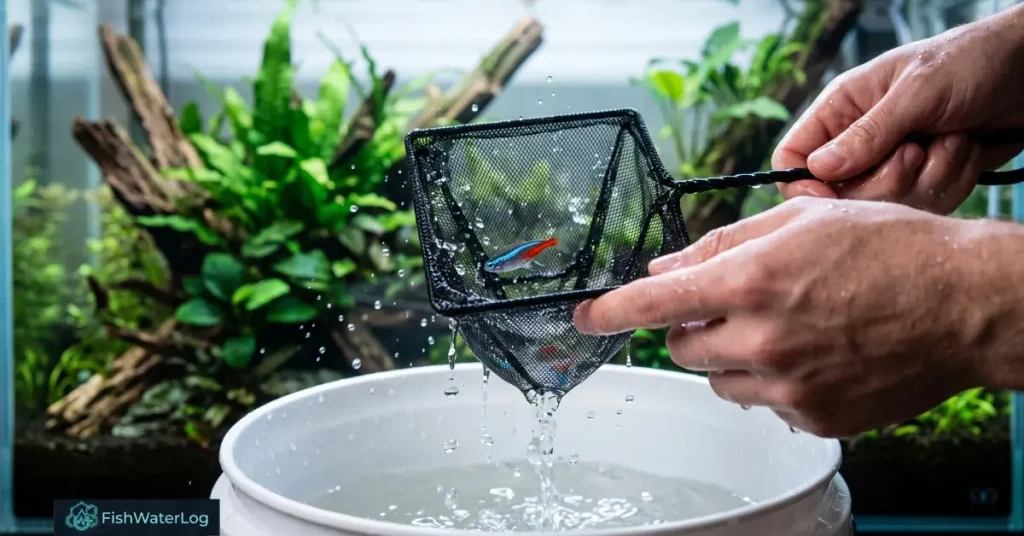
Executing the plop and drop technique: netting a fish over a wastewater bucket to eliminate contaminated shipping water before introduction.Executing the plop and drop method safely requires speed, deliberate preparation, and strict adherence to timing to prevent needless handling stress:
- Temperature Equalization: Float the sealed, unopened transport bag in the destination aquarium for 15 to 25 minutes to equalize water temperatures and eliminate thermal shock risks without altering internal gas concentrations.
- Staging Equipment: Place a clean aquarium net over a designated wastewater bucket adjacent to the tank, ensuring fresh tank water is ready to receive the specimen immediately.
- Rapid Extraction: Remove the floated bag from the tank, quickly cut the top open, and smoothly pour the water and livestock through the net over the bucket.
- Direct Introduction: Immediately transfer the netted specimen into the destination tank with minimal air exposure, completing the physical transfer from bag breach to release in under 10 to 15 seconds.
- Complete Water Disposal: Discard all transport water into the waste container; under no circumstance should any volume of shipping water enter your display aquarium or quarantine facility.
Toxicological Advantages in Shipped Specimens
The primary benefit of the plop and drop technique is that it completely circumvents post-opening ammonia toxicity. During multi-day or overnight parcel transit, accumulating dissolved carbon dioxide suppresses shipping water pH, keeping large reserves of total ammonia nitrogen sequestered as relatively safe ammonium. The primary benefit of the plop and drop technique is that it completely circumvents post-opening ammonia toxicity. When you buy live fish online safely, livestock inevitably endures extended transit hours where accumulated carbon dioxide suppresses water pH.
The exact moment a shipping bag is unsealed, carbon dioxide off-gasses rapidly into ambient air, driving an abrupt pH rebound that converts non-toxic ammonium back into free, highly caustic un-ionized ammonia. Prolonged drip procedures force already weakened fish to sit directly in this chemically converting solution. By transferring fish into fresh water in seconds, the plop and drop method prevents acute branchial burning, stops gill tissue necrosis, and shields cellular respiratory surfaces from irreversible damage.
Managing the Risk of Mineral Divergence
While the toxicological benefits for shipped livestock are undeniable, the primary physiological challenge of the plop and drop method is sudden mineral divergence. When water parameters between the transport solution and the receiving tank vary sharply in General Hardness, Carbonate Hardness, or Total Dissolved Solids, branchial ionocytes face instantaneous osmotic readjustment.
Healthy teleost fish exhibit remarkable physiological plasticity against moderate mineral shifts, provided water is pristine and free of toxic compounds. However, transferring specimens across extreme mineral gradients—such as moving soft-water species directly into exceptionally hard tap water—can induce acute cellular fluid shifts and secondary osmotic stress. Aquarists can mitigate this dynamic by testing bag water beforehand with a handheld digital TDS pen or liquid test kits, dimming ambient and tank lighting during introduction to reduce cortisol-driven handling spikes, and running quarantine environments that closely approximate baseline shipping water parameters.
Aquarists can effectively mitigate mineral shock by matching destination parameters inside a cycled setup, following our protocol on how to setup a fish quarantine tank to isolate new arrivals safely before introducing them to the display aquarium.
Transport Packaging Variables: Polyethylene vs. Breather Bags
When determining whether to utilize drip acclimation vs plop and drop, the physical packaging material of the shipment dictates the biochemical stability of the livestock. Misidentifying the bag polymer can lead to rapid hypoxia or lethal ammonia exposure during the acclimation sequence.
Standard Polyethylene Bags
Heavy-duty polyethylene bags are completely impermeable to atmospheric gases. Inside this closed system, respiratory carbon dioxide (CO2) accumulates rapidly, driving down the pH through carbonic acid dissociation. This acidification safely sequesters metabolic waste as non-toxic ammonium (NH4+). While these bags can be safely floated directly in the aquarium for 15 to 20 minutes to equalize temperature, the rapid CO2 off-gassing upon opening triggers an immediate upward pH shift and ammonia spike, making the rapid plop and drop method—or a chemically bridged drip—imperative.
Selective Gas-Permeable Breather Bags
Breather bags are constructed from semi-permeable membrane films that allow constant passive gas diffusion: atmospheric oxygen (O2) enters the bag while respiratory carbon dioxide (CO2) continuously vents out. Because CO2 never accumulates, carbonic acid cannot depress the pH, meaning transport water remains at near-neutral or alkaline levels throughout transit. Consequently, excreted nitrogenous waste exists as actively toxic un-ionized ammonia (NH3) for the duration of the shipment.
Furthermore, breather bags must never be floated submerged in an aquarium. Surrounding liquid water blocks the microscopic membrane pores, instantly halting gas exchange and causing rapid suffocation. Due to the constant baseline presence of caustic un-ionized ammonia, livestock arriving in breather bags should always undergo an immediate plop and drop procedure or an instant chemical ammonia neutralization.
| Packaging Type | Gas Permeability | Internal pH Dynamics | Ammonia State in Transit | Floating Permitted? | Optimal Protocol |
|---|---|---|---|---|---|
| Standard Polyethylene Traditional Shipping | Zero Gas-impermeable barrier | Drops sharply Acidic (< 6.5) via CO2 |
✅
Sequestered NH4+ Non-toxic ionized form |
✓
Yes
15–20 Mins Float | Plop & Drop or Chem-Bridged Drip |
| Breather Bag Membrane Gas-Permeable Film | High Exchange O2 in • CO2 vented out | Stable / Neutral No carbonic acid buffering |
⚠️
Active NH3 Present Caustic un-ionized ammonia |
✕
No
Halts respiration | Immediate Plop & Drop Never float underwater |
Taxon-Specific Acclimation Matrices
Applying the drip acclimation vs plop and drop methodology requires strict taxonomic context. Osmoregulatory capacity varies significantly between invertebrate species and teleost fish, demanding tailored transition strategies.
Sensitive Invertebrates (Caridina and Neocaridina)
Freshwater dwarf shrimp—including Caridina logemanni (Crystal Red, Taiwan Bees) and Neocaridina davidi (Cherry Shrimp)—possess an inflexible, calcium-dependent chitinous exoskeleton and lack the sophisticated branchial ion regulatory mechanisms of teleosts. Sudden shifts in Total Dissolved Solids (TDS), carbonate hardness (KH), or general hardness (GH) disrupt cellular turgor, causing premature or defective ecdysis known as the “white ring of death.
Freshwater dwarf shrimp lack the branchial osmoregulatory flexibility of teleosts. Maintaining stable Cherry Shrimp water parameters (GH, KH, and TDS) is non-negotiable; sudden ionic shifts disrupt cell turgor, resulting in failed ecdysis and fatal molting complications.
For all shrimp species, a slow, methodical drip acclimation extending over 60 to 120 minutes at 2 to 3 drops per second is biologically essential. If the shrimp were in transit overnight and exhibit signs of waste accumulation, dose a chemical ammonia binder immediately upon cutting open the shipping bag before starting the drip siphon. Never execute a raw plop and drop on freshwater invertebrates.
Wild-Caught and Soft-Water Teleosts
Specialized freshwater fishes hailing from extreme oligotrophic, acidic biotopes—such as wild Discus (Symphysodon), Ram Cichlids (Mikrogeophagus ramirezi), and wild-caught Cardinal Tetras (Paracheirodon axelrodi)—feature gill ionocytes calibrated to exceptionally low ambient ion concentrations. Transferring these specimens directly into hard or moderately alkaline tap water triggers immediate cellular dehydration and branchial lamellar trauma.
For wild and delicate soft-water fish:
- If transit time was under 4 hours (e.g., local fish store purchases), execute a standard 45-to-60-minute drip acclimation to allow gradual cellular ion adjustment.
- If specimens endured overnight shipping (exceeding 12 hours in sealed bags), treat the water immediately with sodium hydroxymethanesulfonate to lock converting ammonia, followed by a controlled 45-minute drip siphon.
- For hardy captive-bred community fish (such as Zebra Danios, Guppies, and tank-raised Tetras) arriving via overnight courier, the direct plop and drop protocol remains the most dependable method to bypass ammonia toxicity and guarantee post-shipping survival.
High-Authority Content Review and Gap Analysis
A systematic review of leading aquatic veterinary manuals, major fishkeeping forums, and high-authority aquarium resources reveals stark informational divides in livestock transition protocols. While marine reef platforms emphasize meticulous multi-hour drip acclimation due to delicate stenohaline invertebrates, freshwater literature often reduces the choice between drip acclimation vs plop and drop to an oversimplified dichotomy: dripping locally purchased stock versus dropping shipped specimens.
The primary content gap across existing resources is the complete absence of physiological threshold mapping. Standard guides rarely account for the intersection of transport bag hypercapnia, branchial ionocyte kinetics, and real-world mineral gradients:
- The Unmonitored TDS Delta: Most advice treats all water identically, ignoring the absolute divergence in Total Dissolved Solids (TDS) and General Hardness (GH). Dropping a fish across a 300+ ppm TDS delta guarantees acute branchial lamellar swelling, regardless of how quickly it was transferred out of shipping water.
- The Ammonia-pH Rebound Blindspot: Hobbyist guides frequently recommend dripping shipped fish for hours without acknowledging that atmospheric aeration off-gasses dissolved carbon dioxide, driving rapid pH rebounds that convert safe ammonium into caustic un-ionized ammonia.
- The Chemical Bridging Omission: Few mainstream guides discuss bridging the gap between osmotic protection and toxicological safety. Dosing an emergency ammonia binder (such as sodium hydroxymethanesulfonate) directly into opened transport bags neutralizes free ammonia, permitting a safe, extended drip acclimation for delicate, mail-order teleosts.
Conclusion
Resolving the debate between drip acclimation vs plop and drop comes down to a clear biochemical and physiological calculation. Neither technique serves as a universal standard; rather, each addresses entirely different biological hazards during livestock transitions.
Drip acclimation remains the definitive method for preventing severe osmotic shock, failed molting mechanics, and branchial cell trauma in sensitive freshwater shrimp, wild-caught biotopes, and stock transitioning across steep mineral divides. Conversely, the plop and drop method acts as a critical toxicological rescue maneuver, granting shipped livestock immediate refuge from lethal un-ionized ammonia spikes caused by carbon dioxide off-gassing.
By assessing transit duration, checking packaging membrane physics, measuring baseline mineral disparities, and utilizing chemical bridging when necessary, aquarists can execute deliberate, stress-free introductions that safeguard branchial integrity and ensure long-term aquarium health.
Frequently Asked Questions (FAQs)
Does the plop and drop method cause fatal pH shock in freshwater fish?
Standalone “pH shock” is largely a misconception in freshwater aquariums. Healthy freshwater fish tolerate moderate pH variations comfortably, provided the shift does not coincide with acute ammonia toxicity or extreme mineral gradients. Mortalities attributed to rapid pH changes are almost always caused by severe osmotic shock from differing mineral hardness (TDS/GH) or sudden branchial burns from un-ionized ammonia.
Can I pour transport bag water directly into my aquarium?
No, shipping water should never enter your destination tank. Transport water carries concentrated metabolic waste, sloughed epithelial mucus, elevated cortisol, and potentially dormant pathogens or parasites. Always net or transfer specimens out of their transport containers and discard all transit water completely.
What should I do if a fish starts gasping during drip acclimation?
Rapid opercular movements, gasping at the surface, or flashing behavior indicate acute hypoxia, respiratory acidosis, or rapid ammonia toxicity in the container. Immediately terminate the drip siphon, net the specimen, and transfer it into the oxygen-rich, ammonia-free environment of your receiving tank or quarantine system.
Should aquarium lights remain on after introducing new fish?
No. Aquarium and ambient room lights should be kept completely off or dimmed to minimal levels for 12 to 24 hours post-introduction. Dim conditions prevent photophobic shock, suppress acute cortisol spikes from handling, and deter territorial aggression from established tank inhabitants while the new specimen settles.
