
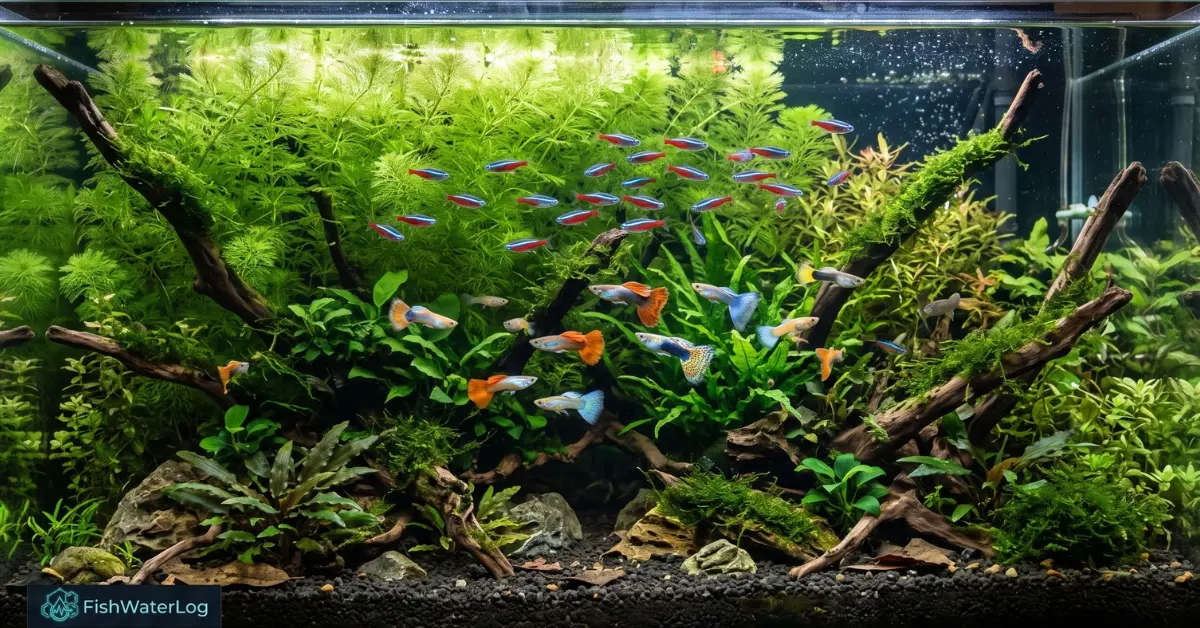
Setting up a stable closed aquatic habitat requires moving beyond superficial aesthetic choices to evaluate true teleost biology. When curating an aquarium for the first time, identifying the best tropical fish for beginners hinges on measurable physiological resilience, peaceful community temperaments, and the inherent capacity to withstand acute hydrochemical fluctuations. During the initial biological maturation of a new tank, early livestock are exposed to fluctuating water parameters. The most reliable tropical fish for entry-level hobbyists possess robust osmoregulatory mechanisms and high branchial tolerance, enabling them to thrive through early nitrogen cycle spikes where delicate species succumb to metabolic shock.
Navigating the transition from an uncolonized tank to an established ecosystem demands a firm understanding of teleost endocrinology and environmental adaptability. While veteran aquarists rely on matured biological filtration and automated dosing, beginner setups inevitably experience transient shifts in dissolved oxygen, pH, and nitrogenous metabolites. Selecting the right freshwater tropical fish ensures your tank maintains biological equilibrium. Resilient pet fish such as Guppies, Neon Tetras, Zebra Danios, and Corydoras catfish provide the essential physiological safety net needed to build long-term husbandry success without persistent livestock loss.
Field Experience & Research Review: Researched and curated through practical freshwater husbandry trials, captive breeding protocols, and closed-loop telemetry monitoring. All physiological parameters, branchial kinetics, and osmoregulatory thresholds detailed in this guide have been verified across empirical aquaculture literature and local municipal water baselines to ensure closed-ecosystem stability.
The Biological Paradigm of Novice Aquariology
The curation of a captive freshwater ecosystem demands an approach that transcends superficial aesthetic evaluation. The defining metric for determining the best tropical fish for beginners resides in rigorous, measurable biological parameters. When a new aquatic enclosure is established, it undergoes a chaotic period of biological maturation where early livestock are subjected to severe metabolic stressors. Teleost fish designated for this environment must possess extraordinary osmoregulatory capabilities, efficient branchial excretion mechanisms, and profound behavioral plasticity to survive.
Core Biological Criteria for Beginner Teleost Selection
- Inherent Physiological Resilience: Early setups lack mature biofiltration, exposing early livestock to oscillating pH values, transient dissolved oxygen dips, and localized metabolite buildup.
- Branchial Ammonia Tolerance: Candidate species must possess an evolutionary toolkit—including rapid upregulation of gill transport proteins—to prevent acute blood toxicosis during the nitrogen cycle.
- Osmoregulatory Plasticity: Novice water preparation frequently leads to minor salinity or mineral mismatches, requiring robust kidney and epithelial ion-exchange systems to buffer osmotic shock.
- Peaceful Ethological Temperament: Non-aggressive social dynamics and low cortisol sensitivity ensure stable community shoaling without behavioral stress or mechanical fin injury.
While advanced aquarists maintain biologically stable setups utilizing automated chemical dosing and saturated bacterial media, novice hobbyists inevitably encounter hydrochemical volatility. Selecting genetically resilient freshwater tropical fish equips new tanks with the biological safety buffer required to navigate the critical early weeks of tank stabilization.
The Aquatic Environment: Nitrogenous Waste and Biological Maturation
To comprehend why specific teleost species are uniquely equipped for novice aquariums, one must perform a granular analysis of the biochemical gauntlet they endure. The long-term viability of any closed aquatic environment hinges entirely on the establishment of a complex microbial consortium, commonly designated as the biological filter. When establishing a new aquarium, early livestock are exposed to fluctuating metabolic byproducts before these nitrifying communities reach population equilibrium.
Microbial Dynamics of the Nitrogen Cycle
Fish continuously excrete nitrogenous waste as a primary byproduct of dietary protein catabolism, primarily through branchial diffusion across gill tissue. Establishing stable colonies of chemolithotrophic bacteria requires understanding microbial colonization kinetics; review our detailed breakdown of aquarium nitrogen cycle and biofiltration for bio-media sizing.
In a mature ecosystem, this toxic waste is sequentially oxidized through distinct microbiological pathways:
- Ammonia Oxidation: Autotrophic ammonia-oxidizing bacteria (AOB) and archaea (AOA)—predominantly belonging to the genera Nitrosomonas, Nitrosococcus, and Nitrosospira—oxidize un-ionized ammonia into nitrite (NO2–).
- Nitrite Oxidation: Specialized nitrite-oxidizing bacteria (NOB)—including Nitrospira and Nitrobacter—metabolize toxic nitrite into nitrate (NO3–), a significantly more benign compound managed through routine water changes.
- Comammox Pathways: Complete ammonia oxidation (“comammox”) organisms execute both catalytic oxidation steps within a single organism, operating as obligate chemolithotrophs relying strictly on ammonia, dissolved inorganic carbon, and turbulent water flow.
- Growth Kinetics: Because these nitrifiers function primarily as K-strategists exhibiting slow reproductive rates, an unseeded biological filter requires several weeks to develop sufficient cellular densities to process beginner bioloads.
Stop Losing Fish to Unknown Illnesses
Diagnose aquatic pathogens in under 60 seconds. A 2-page clinical triage flowchart and precision dosing matrix designed to treat symptoms safely without crashing your biofilter.
📥 Get Clinical Diagnostic Guide
Pathophysiology of Ammonia Toxicity in Teleosts
During the colonization phase of biofilter nitrifiers, uncycled aquariums experience sharp accumulations of nitrogenous metabolites. The survival of candidate freshwater tropical fish depends on their cellular resilience against un-ionized ammonia (NH3):
- Lipophilic Diffusion: Un-ionized ammonia effortlessly penetrates the lipid bilayer of the gill epithelium, gaining direct access to the fish’s vascular system.
- Neurotoxic Cascades: Once in systemic circulation, ammonia crosses the blood-brain barrier. In the central nervous system, excessive ammonia forces astrocytes to convert glutamate into glutamine, triggering osmotic swelling, cerebral edema, and catastrophic neuronal necrosis.
- Diffusion Gradient Reversal: Elevated ambient ammonia eliminates the natural blood-to-water diffusion gradient, trapping internal metabolic waste within vital organs and accelerating acute systemic toxicosis.
Branchial Ion Transport and Rh Glycoproteins
Species identified as the best tropical fish for beginners possess active physiological counter-measures rather than relying solely on passive diffusion. Branchial ammonia excretion is driven by an active molecular transport complex mediated by Rhesus (Rh) glycoproteins and apical ion pumps:
| Branchial Excretion Component | Primary Anatomical Location | Functional Role in Ammonia Tolerance |
|---|---|---|
| Rhag Glycoprotein | Erythrocytes (Red Blood Cells) | Facilitates rapid NH3 flux out of erythrocytes into the blood plasma. |
| Rhbg Glycoprotein | Basolateral Membrane of Ionocytes | Actively transports NH3 across the basolateral cellular barrier toward the gill surface. |
| Rhcg Glycoprotein | Apical Membrane of Ionocytes | Directly excretes NH3 across the apical gill membrane into the surrounding water column. |
| V-type H+-ATPase | Apical Membrane | Pumps protons outward to acidify the boundary water layer, converting toxic NH3 into non-permeable NH4+ via acid trapping. |
Hardy species upregulate the transcription and translation of these Rh glycoproteins in tandem with apical Na+/H+ exchangers (NHE-2 and NHE-3). This biochemical mechanism operates as an active physiological barrier, enabling resilient teleosts to maintain nitrogen homeostasis throughout early microbial colonization.
High-Resilience Species Profiles: Ethological and Physiological Analysis
Selecting the best tropical fish for beginners requires matching teleost evolutionary physiology with the chemical parameters of an enclosed aquarium. The following species profiles highlight the precise biological adaptations, osmoregulatory thresholds, and behavioral dynamics that allow these hardy fish to thrive.
Guppies (Poecilia reticulata): The Apex of Osmoregulatory Plasticity
Widely regarded as the quintessential beginner species, Guppies (Poecilia reticulata) exhibit unprecedented physiological plasticity. Originating from variable and chemically unstable freshwater environments across South America, their internal biology is engineered to survive substantial osmotic shifts.
- Osmoregulatory Plasticity: Laboratory trials confirm wild P. reticulata can survive acute transfers to 28 parts per thousand (ppt) salinity, and gradual acclimation up to 38 ppt—exceeding oceanic salt concentrations. Under osmotic stress, guppies remodel their intestinal villi and upregulate transport proteins like the Na-K-2Cl cotransporter (NKCC1a), effortlessly buffering against novice water change errors or prophylactic salt dosing.
- Superfetation and Reproduction: Ethologically, guppies are prolific livebearers utilizing superfetation—the physiological capacity to carry multiple embryonic litters at disparate developmental stages simultaneously. To minimize inter-male harassment and reduce reproductive stress on females, hobbyists should maintain a strict ratio of one male to three females.
- Environmental Enrichment and Welfare: Controlled endocrinological studies demonstrate that guppies housed in barren tanks display significantly elevated baseline water-borne cortisol. Incorporating smooth quartz substrate, driftwood, and live aquatic plants (such as Myriophyllum or floating flora) drastically reduces stereotypic stress behaviors while encouraging natural foraging.
To reduce systemic cortisol without complex high-tech equipment, integrate hardy flora from our curated list of low light aquarium plants for beginners.
Neon Tetras (Paracheirodon innesi): Shoaling Neurobiology and Stress Mitigation
Originating from the blackwater streams of the Amazon basin, Neon Tetras (Paracheirodon innesi) evolved their reflective iridescent blue and red coloration to maintain group cohesion within tannin-stained waters.
- Obligate Shoaling Dynamics: Neon Tetras are obligate schooling fish where the group operates as a cohesive, defensive unit. When maintained in groups fewer than six, individuals experience acute psychological distress characterized by neurochemical disruption.
- Endocrine and Immune Suppression: Sub-optimal schooling densities trigger chronic plasma cortisol elevation and abnormal brain serotonin (5-HT) levels. This physiological stress induces erratic swimming patterns and compromises humoral immunity, predisposing fish to opportunistic pathogens such as Ichthyophthirius multifiliis (Ich).
- Water Parameter Specifics: Unlike generalist livebearers, P. innesi demands slightly acidic, mineral-soft water (pH 6.0–7.0) and should only be introduced to fully cycled aquariums with zero detectable free ammonia.
Maintaining stable social hierarchies and species-specific dietary intake directly dictates long-term survival, which is empirically demonstrated in controlled laboratory assessments of co-housed Neon Tetras.
| Stress Indicator | Isolated / Low Density Housing (<6 Fish) | Optimal Schooling Density (10+ Fish) |
|---|---|---|
| Plasma Cortisol | Chronically elevated | Baseline / Stable homeostasis |
| Brain Serotonin (5-HT) | Significantly disrupted | Regulated (Balanced motor output) |
| Spatial Behavior | Erratic, surface skimming, wall-glass pacing | Cohesive mid-water shoaling |
| Immune Function | Suppressed (High disease susceptibility) | Robust resistance to pathogens |
Zebra Danios (Danio rerio): Eurythermal Adaptability and Hydrodynamics
The Zebra Danio (Danio rerio) is an exceptionally dynamic upper-to-midwater cyprinid native to the variable, fast-flowing streams of South Asia.
- Eurythermal Tolerance: While their physiological optimum lies between 18°C and 24°C, Zebra Danios tolerate broad thermal swings from 15°C up to 30°C and pH levels spanning 6.0 to 8.5. Their rapid synthesis of cellular heat-shock and stress-response proteins makes them resilient during tank cycling.
- Rheophilic Hydrodynamics: With their streamlined, fusiform body plan, danios demand horizontal swimming geometry. A minimum tank length of 60 cm (15–20 gallons) provides adequate linear runway for their high kinetic output, preventing spatial stress.
- Tank Security: Due to their natural predator-evasion instinct of leaping clear of open water, an aquarium housing D. rerio requires a tightly sealed lid.
Due to their exceptional physiological resilience, Danio rerio serves as a cornerstone model organism in developmental biology and aquatic toxicology, as thoroughly detailed in this comprehensive vertebrate genetics primer.
Corydoras Catfish (Corydoradinae): Benthic Ecosystems and Substrate Mechanics
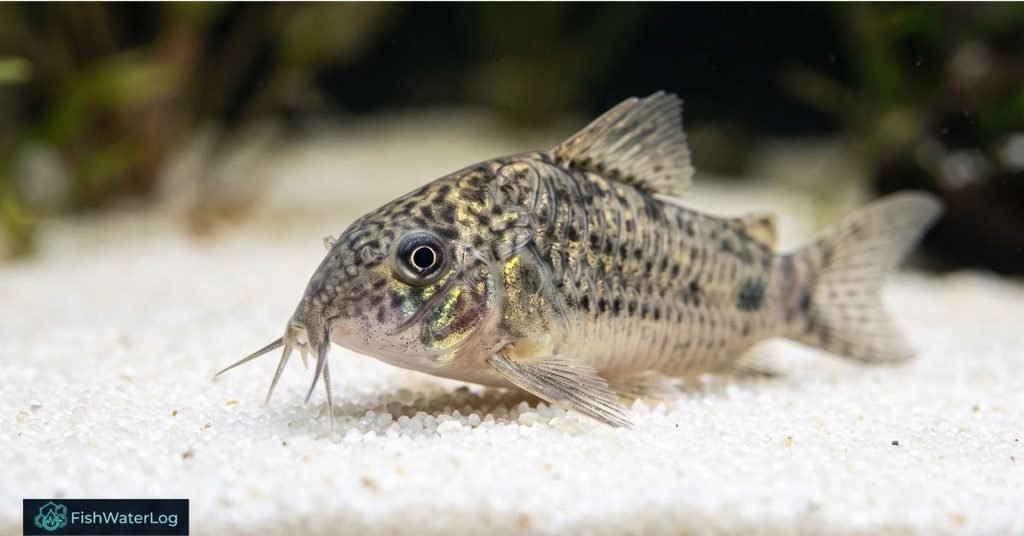
Corydoras catfish occupy the benthic ecological niche, serving as active bottom-dwelling scavengers that sift organic detritus from the aquarium floor.
- Delicate Sensory Barbels: The sensory barbels of Corydoras are packed with dense mechanoreceptors and chemoreceptors. Jagged quartz, crushed coral, or coarse gravel abrades these structures, opening direct lesions for opportunistic pathogens like Flavobacterium (red blotch disease). Smooth silica sand or rounded micro-gravel is mandatory. Choosing between inert quartz and mineral substrates dictates barbel integrity; see our technical comparison on substrate for planted tanks (sand vs gravel) to select safe benthic particle sizes.
- Enteric Respiration: Corydoras possess a specialized, highly vascularized posterior intestine that functions as an accessory air-breathing organ. Rapid vertical surface-darting to gulp atmospheric oxygen is a normal physiological function, not an indicator of systemic hypoxia.
- Gregarious Shoaling: Like tetras, Corydoras are peaceful social animals that should be housed in conspecific groups of six or more to display natural foraging behaviors.
Platies (Xiphophorus maculatus) and Mollies (Poecilia sphenops): Dietary Electrolyte Balance
Platies and Mollies are hardy livebearers originating from the mineral-rich, alkaline waterways and brackish coastal margins of Central America.
- Divalent Cation Dependency: Both species thrive in mineral-dense environments with calcium hardness near 150 mg/L. Maintaining high divalent cation (Ca2+ and Mg2+) levels optimizes specific growth rates (SGR) and skeletal ossification.
- Preventing Neurological Shimmies: In soft, acidic water, livebearers experience severe electrolyte dilution (disrupted dEB = Na – K + Cl balance), resulting in neuromuscular trembling known colloquially as “the shimmies”.
- Digestive Physiology: With elongated intestinal tracts adapted for herbivory, Platies and Mollies continuously graze on epiphytic biofilms and algae. Supplementing their baseline diet with spirulina-rich flakes or blanched vegetable matter prevents digestive blockages and promotes intestinal motility.
When osmotic stress or transportation shock compromises the epidermal mucus barrier, consult our diagnostic guide on fish disease clinical protocols for targeted quarantine therapies.
Overlooked Physiological Dynamics in Beginner Aquariums
Mainstream guides frequently reduce beginner fishkeeping to arbitrary gallon rules and aesthetic pairing, overlooking the underlying teleost endocrinology and benthic chemistry that dictate survival. Long-term stability requires addressing the invisible physiological dynamics that determine whether hardy species flourish or succumb to chronic stress.
The Benthic Bio-Reactor: Substrate Interface and Pathogen Reservoirs
An aquarium functions as a three-dimensional spatial habitat, yet hobbyists routinely crowd the midwater column while neglecting the biological engine at the substrate interface. The aquarium floor serves as the highest-density settling zone for organic waste, detritus, and nitrifying bacterial biofilms:
- Micro-Anoxic Dead Zones: Jagged or excessively coarse gravel traps particulate waste within interstitial spaces. In the absence of gentle water movement, these pockets rapidly deplete dissolved oxygen, cultivating anaerobic microenvironments where sulfate-reducing bacteria generate toxic hydrogen sulfide (H2S) gas.
- Benthic Bacterial Vectoring: Compromised benthic layers harbor elevated colonies of opportunistic Gram-negative bacteria, including Aeromonas and Flavobacterium. For bottom-dwelling species that continuously contact the substrate, poor benthic management leads directly to external lesions, ulcerations, and systemic infections.
- Substrate Engineering: Deploying fine, rounded silica sands or smooth micro-gravels prevents detritus from burying deep out of siphon range, keeping organic waste exposed to mechanical flow and aerobic breakdown.
Endocrinological Stress Axes and Hydrodynamic Mismatch
The teleost stress response is governed by the hypothalamic-pituitary-interrenal (HPI) axis. When triggered by environmental or physical stress, this pathway releases circulating cortisol, which regulates glucose mobilization, suppresses mucosal immune defenses, and alters cellular respiration:
- Density-Coupled Cortisol Spikes: Maintaining schooling fish in insufficient group sizes induces social isolation distress. Chronic HPI axis activation depletes cellular glycogen stores and suppresses lymphocyte proliferation, leaving fish vulnerable to environmental parasites.
- Hydrodynamic Exhaustion in Livebearers: Fancy long-finned varieties, such as selectively bred male guppies, possess high hydrodynamic drag and low swimming torque. Subjecting them to the intense, turbulent output of oversized powerheads or filters forces continuous physical struggle, resulting in rapid glycogen depletion, caudal fin clamped posture, and physical exhaustion.
- Hypokinetic Atrophy in Rheophilic Species: Torpedo-shaped cyprinids like Zebra Danios naturally thrive in energetic, directional flow. Restricting active swimmers to stagnant or compact vertical tanks inhibits normal metabolic turnover and natural shoaling kinetics.
Balancing water movement, substrate texture, and species-specific social dynamics bridges the gap between basic survival and true physiological health, ensuring beginner livestock remain stable over their full biological lifespan. Before mixing disparate teleost families, evaluate schooling dynamics and behavioral thresholds by reviewing our complete freshwater aquarium fish compatibility guide.
Technical Compatibility and Water Parameters Matrix
To successfully integrate a community aquarium, water chemistry thresholds and spatial requirements must be matched to prevent chronic osmoregulatory distress. The following matrix details the critical physiological parameters, minimum housing volumes, and ethological dynamics required for novice species:
| Common Species | Binomial Nomenclature | Minimum Spatial Requirement | Preferred pH Range | Hardness & Mineral Needs | Ethological Temperament |
|---|---|---|---|---|---|
| Guppies | Poecilia reticulata | 5–10 Gallons | 7.0 – 8.0 | Hard water / Salinity tolerant (>10 dGH) | Peaceful; prolific livebearers (Maintain 1M:3F ratio) |
| Neon Tetras | Paracheirodon innesi | 10–15 Gallons | 6.0 – 7.0 | Soft / Slightly acidic (2–8 dGH) | Peaceful obligate schooling (Minimum 6–10+ individuals) |
| Zebra Danios | Danio rerio | 15–20 Gallons (60 cm+ length) | 6.5 – 7.5 | Eurythermal / Wide tolerance (5–15 dGH) | Highly active rheophilic surface/midwater sprinters |
| Corydoras Catfish | Corydoradinae | 15–20 Gallons | 7.0 – 7.8 | Neutral to moderate (4–12 dGH); smooth substrate mandatory | Peaceful benthic scavengers; schooling (6+ fish) |
| Platies & Mollies | Xiphophorus maculatus / Poecilia sphenops | 15–20 Gallons | 7.0 – 8.2 | Hard / Calcium-rich (150 mg/L Ca2+, >12 dGH) | Peaceful grazing livebearers; active algae bio-cleaners |
Hyper-Localization: Navigating Pakistani Water Chemistry & Infrastructure
Unlike Western aquatic hobbyists who operate on soft municipal baselines and continuous electrical power, maintaining an aquarium in Pakistan introduces distinct environmental and infrastructural variables. Navigating high mineral density, water treatment variances, and seasonal load shedding requires tailored husbandry protocols.
Islamabad Municipal & Groundwater Chemistry
Municipal and tube-well tap water across Islamabad and Rawalpindi typically measures between 200 and 628+ mg/L Total Dissolved Solids (TDS) with an alkaline pH profile ranging from 7.5 to 8.5. While this hard, calcium-rich water is ideal for livebearers like Guppies and Mollies, it presents a hidden physiological hazard during nitrogen cycle spikes.
In aqueous solution, Total Ammonia Nitrogen (TAN) shifts dynamically between relatively non-toxic ammonium (NH4+) and lethal, un-ionized free ammonia gas (NH3). Because alkaline water shifts this chemical equilibrium heavily toward toxic NH3, a minor 0.5 ppm ammonia spike in Islamabad’s tap water is approximately tenfold more lethal to teleost gill tissue than the identical reading in soft, acidic water. Regular verification with an inexpensive digital TDS meter (PKR 800–1,950) and dedicated water conditioning are non-negotiable.
Winter Management & Load Shedding Emergency Protocols
Tropical teleosts require stable water temperatures between 24°C and 28°C. During severe winter temperature drops compounded by grid power outages (load shedding), heaters deactivate and mechanical biofilters stop operating. When power fails, adhere to three immediate survival rules:
- Thermal Insulation: Wrap the aquarium exterior with thick fleece blankets, polystyrene insulation boards, or bubble wrap to retain water thermal mass and prevent temperature drops below 20°C.
- Dissolved Oxygen Preservation: Deploy a battery-operated or USB-rechargeable air pump with an airstone to maintain surface gas exchange while the primary filtration unit is idle.
- Zero-Feeding Protocol: Strictly withhold all fish food during an outage. Digestion substantially escalates fish metabolic oxygen demand while biofilter bacteria are inactive, triggering fatal ammonia spikes in an uncirculated tank.
Local Market Availability & Pricing Index
To avoid inflated retail prices across local ornamental fish markets, use the following baseline pricing index aggregated from Pakistani aquatic retailers and local breeders:
| Fish Species | Average Price Range (PKR) | Local Availability & Husbandry Notes |
|---|---|---|
| Fancy Guppies (P. reticulata) | Rs. 175 – Rs. 500 per pair | Ubiquitous across local shops; highly adapted to local alkaline tap water. |
| Zebra Danios (D. rerio) | Rs. 175 – Rs. 250 per pair | Extreme thermal resilience; easily tolerates unheated water dips during outages. |
| Neon Tetras (P. innesi) | Rs. 250 – Rs. 300 per pair | Commonly available; requires slow drip acclimation to prevent osmotic shock in local hard water. |
| Platies & Mollies | Rs. 100 – Rs. 300 per pair | Exceptionally hardy in local groundwater; ideal grazers for natural algae biofilms. |
| Corydoras Catfish (Corydoras) | Rs. 400 – Rs. 500 per pair | Essential benthic cleaners; require smooth silica sand to prevent barbel erosion. |
Interactive Compatibility Matrix
To evaluate direct inter-species housing parameters and behavioral compatibility, expand each category below:
Compatibility Matrix: Can Guppies and Neon Tetras live together?
Minimum Gallon Requirements: What is the smallest tank for Zebra Danios?
Substrate Safety: What is the best gravel for Corydoras Catfish?
Mastering the fundamentals of fish tank care requires understanding the specific ethological and physiological needs of each species before introducing them to the ecosystem. For a much deeper understanding of biological maturation and strategies for avoiding ammonia toxicity during the cycling phase, beginners should thoroughly consult an exhaustive freshwater aquarium ecosystem guide prior to purchasing any livestock.
Conclusion
Selecting the best tropical fish for beginners is a rigorous scientific endeavor that extends far beyond visual appeal and rudimentary stocking guidelines. Success in nascent aquariology requires precisely matching the biological resilience of the teleost with the chemical realities of a maturing, unstable ecosystem. By prioritizing hyper-resilient species such as Poecilia reticulata, Danio rerio, and Corydoradinae, aquarists leverage millions of years of evolutionary adaptations—ranging from active branchial ammonia excretion via Rh glycoproteins and osmoregulatory prowess, to extraordinary eurythermal plasticity.
When aquarists truly comprehend the physiological “why” behind the hardiness of these species—respecting their obligate schooling behaviors, unique substrate mechanics, and specific dietary electrolyte requirements—they lay the infallible groundwork for a thriving, biologically stable freshwater aquarium. Ensuring the welfare of these animals requires acknowledging them not merely as pets, but as complex biological organisms entirely dependent on the parameters of their engineered environment. If livestock must be introduced during early colonization, follow a strict fish-in cycling protocol to manage toxic ammonia spikes before gill tissue sustains irreversible damage.
