
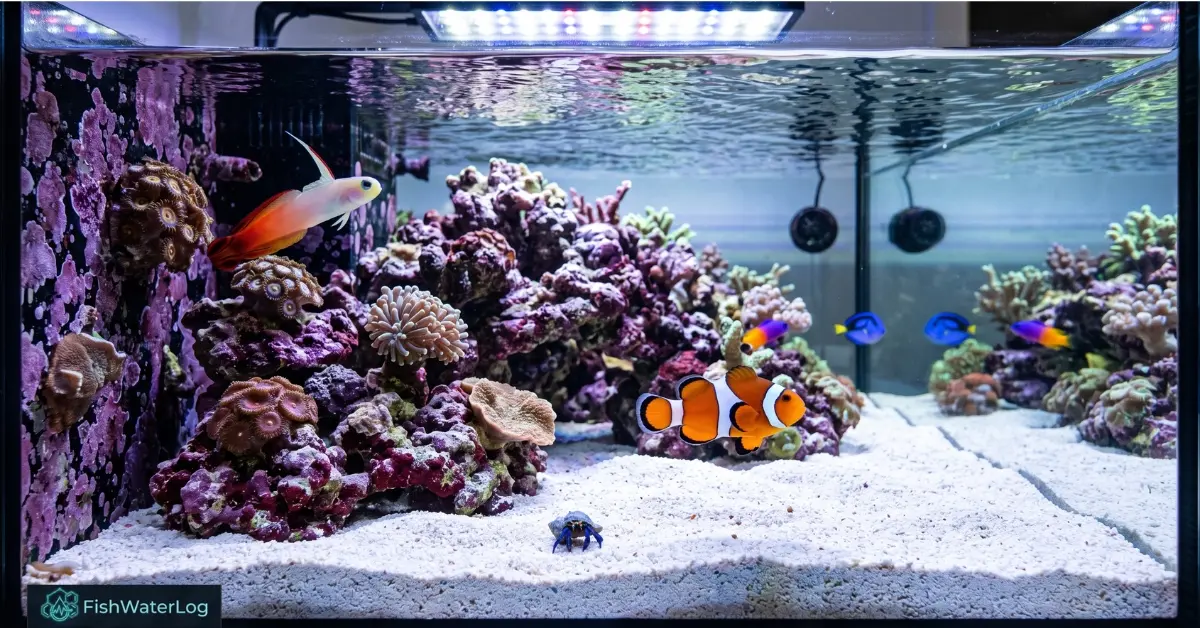
The transition from freshwater aquaria to marine ecosystems represents a monumental leap in biological complexity, chemical stability requirements, and advanced husbandry protocols. The marine environment is fundamentally unforgiving of the parameter fluctuations that freshwater teleosts routinely survive. For entry-level hobbyists, curating the best saltwater aquarium fish for beginners requires moving beyond superficial aesthetics to evaluate hypo-osmotic regulation, branchial ion secretion, and pathogen susceptibility. Establishing a thriving closed-system marine aquarium hinges on selecting resilient marine fish that tolerate early cycling transitions while avoiding delicate obligate feeders.
Navigating the diverse world of saltwater aquarium fish demands a grounded understanding of the toxicological curves of un-ionized ammonia at elevated pH levels, the mandatory use of pure RO/DI water, and strict quarantine protocols against virulent protozoan parasites like Cryptocaryon irritans. By intentionally steering beginners away from aggressive damselfish and choosing biologically hardy, reef safe fish such as the captive-bred Ocellaris Clownfish (Amphiprion ocellaris) and the peaceful Firefish Goby (Nemateleotris magnifica), the probability of long-term aquaculture success is exponentially increased.
The Fundamental Paradigm Shift: Freshwater vs. Marine Environments
Transitioning from freshwater keeping to managing a closed reef biotope demands a complete re-evaluation of cellular biology and environmental homeostasis. While freshwater aquarists frequently focus on botanical balance and low nitrates, keeping saltwater aquarium fish requires maintaining strict ionic gradients. In a marine system, minor deviations in specific gravity or alkalinity trigger rapid systemic distress that hardier freshwater teleosts rarely encounter.
Osmotic Regulation: The Cellular Divergence
The primary barrier novice hobbyists face when selecting the best saltwater aquarium fish for beginners is understanding the radical divergence in teleost osmoregulation:
- Freshwater Teleosts (Hyper-Osmotic Regulators): Maintain an internal fluid concentration of approximately 260 to 360 mOsm/kg against a virtually salt-free external environment (~0 mOsm/kg). Water constantly diffuses into their tissues across the gill epithelium, compelling them to excrete copious amounts of dilute urine while minimizing water ingestion.
- Marine Teleosts (Hypo-Osmotic Regulators): Inhabit surrounding seawater with an intense osmotic pressure of 1,000 to 1,050 mOsm/kg while sustaining an internal blood osmolality of only 300 to 400 mOsm/kg. This steep thermodynamic gradient draws water outward continuously across gill membranes, placing every marine teleost in a persistent state of physiological dehydration.
- Compensatory Ingestion Rates: To avoid fatal desiccation, marine species must ingest hypertonic seawater continuously at rates between 5 to 10 ml/kg/h, directly absorbing high concentrations of sodium (Na+), chloride (Cl–), magnesium (Mg2+), and calcium (Ca2+) into their bloodstreams.
Mechanics of Branchial Salt Secretion
To safely eliminate the overwhelming monovalent salt burden absorbed through continuous drinking, marine teleosts rely on specialized mitochondrion-rich ionocytes (chloride cells) residing in the branchial epithelium:
- Basolateral Na+/K+-ATPase Pumps: Hydrolyze ATP to export sodium while importing potassium, generating the critical electrochemical gradient required for secondary active transport.
- NKCC1 Cotransporter Activity: Leverages this sodium gradient to drive chloride inward across the basolateral membrane, accumulating intracellular chloride well beyond electrochemical equilibrium.
- Apical CFTR Channels: Function as specialized gatekeepers, enabling accumulated chloride ions to flow down their gradient directly into the hypertonic seawater.
- Paracellular Sodium Clearance: Positive transepithelial potentials push sodium out through leaky tight junctions between adjoining cells, completing monovalent salt clearance at immense metabolic cost.
Intestinal Bicarbonate Secretion & The Root Effect
While the gills excrete monovalent ions, the teleost intestine processes divalent cations like magnesium and calcium. To prevent acute toxicity and protect kidney function, the intestine continuously secretes copious amounts of bicarbonate (HCO3–):
- Chemical Precipitation: Secreted bicarbonate binds divalent ions to form insoluble calcium carbonate and magnesium carbonate crystals, which are safely purged via mucus-coated fecal pellets.
- Localized Proton Release: Massive intestinal bicarbonate secretion dumps protons (H+) into adjacent capillaries, sharply dropping the local blood pH.
- Targeted Oxygen Unloading (Root Effect): Low pH drastically suppresses the oxygen-carrying capacity of specialized Root-effect hemoglobin, dumping large volumes of oxygen directly into hardworking intestinal epithelia to sustain cellular respiration.
Because marine teleost osmoregulatory machinery operates on a fine metabolic margin, even modest salinity swings induce rapid cellular edema or vascular collapse. Selecting biologically resilient reef safe fish acclimated to captive parameters provides the safety margin necessary to master this high-performance physiology without unexpected livestock loss.
Stop Losing Fish to Unknown Illnesses
Diagnose aquatic pathogens in under 60 seconds. A 2-page clinical triage flowchart and precision dosing matrix designed to treat symptoms safely without crashing your biofilter.
📥 Get Clinical Diagnostic Guide
The Non-Negotiable Imperatives of Marine Water Chemistry
Maintaining water quality for saltwater aquarium fish is not simply an extension of freshwater routine; it is an entirely distinct chemical discipline. Because seawater teleosts rely on precise ionic concentrations to fuel basal metabolic excretion, unmanaged drift in density, source purity, or buffering capacity precipitates systemic organ failure. For hobbyists curating the best saltwater aquarium fish for beginners, mastering three foundational parameters is essential.
Specific Gravity, Salinity, and Optical Calibration
Natural coral reefs maintain an average salinity of 35 parts per thousand (ppt), translating to a specific gravity (SG) of 1.026 at 25°C. Sustaining this equilibrium requires precise measurement protocols:
- Hydrometer Flaws: Inexpensive plastic swing-arm hydrometers are vulnerable to surface tension friction, ambient thermal variation, and micro-bubble accumulation along the pivot arm, routinely producing catastrophic measurement errors.
- Refractometer Precision: An optical salinity refractometer or digital conductivity monitor provides reliable, repeatable readings required for high-welfare marine husbandry.
- The Slope-Error Trap: Calibrating a refractometer with 0 TDS pure RO/DI water introduces an acute mathematical slope error across high-salinity ranges. Marine instruments must be calibrated using a dedicated 53.0 mS/cm (35 ppt / 1.0264 SG) standard solution to prevent gradual, chronic tank hyposalinity.
Source Water Purity: The Absolute RO/DI Mandate
While chemically conditioned tap water can sustain many freshwater setups, introducing municipal tap water into a marine aquarium is a fatal error. Dechlorinated tap water carries latent concentrations of silicates, phosphates, and heavy metals that trigger severe biological imbalances:
- Diatom Blooms: Dissolved silicates supply the essential substrate needed to build siliceous cell walls (frustules) of benthic diatoms, sparking stubborn brown blooms under high-output lighting.
- Toxic Dinoflagellate Outbreaks: Residual organic compounds and erratic mineral inputs fuel blooms of toxic dinoflagellates. These pathogens blanket substrate in thick mucilage, releasing palytoxins and maitotoxins that deplete dissolved oxygen and trigger widespread teleost mortality.
- The 0 TDS Baseline: Operating a multi-stage Reverse Osmosis Deionization (RO/DI) system ensures that source water measures exactly 0 Total Dissolved Solids before synthetic marine salt is blended.
To ensure membranes maintain absolute mineral rejection without unmonitored membrane bypass, review our diagnostic guide on purification and TDS creep in RO/DI systems.
Ammonia Toxicity Dynamics in Alkaline Marine Waters
In closed aquatic systems, Total Ammonia Nitrogen (TAN) exists in a continuous equilibrium between ionized ammonium (NH4+) and un-ionized free ammonia (NH3):
NH3 + H2O ⇌ NH4+ + OH–
Because marine aquariums require an alkaline pH between 8.1 and 8.4 to support aragonite calcification, this chemical equilibrium behaves radically differently than in freshwater systems:
- Exponential Toxicity Shift: In slightly acidic freshwater (pH 6.8), over 99% of total ammonia stays locked as non-toxic ammonium. At a typical marine pH of 8.4 (25°C), the toxic un-ionized NH3 fraction surges beyond 10% to 12% of the total reading.
- Branchial Cell Penetration: Free un-ionized ammonia is lipophilic, moving unimpeded across the lipid membranes of teleost gills directly into the bloodstream.
- Neurological and Physical Impact: Even a marginal TAN spike of 0.5 mg/L in saltwater inflicts acute gill hyperplasia, hyperexcitability, respiratory asphyxiation, and permanent central nervous system trauma.
Core Parameter Bounds for Entry-Level Marine Aquariums
| Chemical Parameter | Freshwater Baseline | Marine Reef Target | Pathological Impact of Deviation |
|---|---|---|---|
| pH Level | 6.5 – 7.5 | 8.1 – 8.4 | Acidosis below 7.8; exponential surge of lethal un-ionized NH3 above 8.3. |
| Specific Gravity (SG) | 1.000 | 1.026 (35 ppt) | Cellular lysis from osmotic shock; branchial Na+/K+-ATPase pump failure. |
| Source Water Purity | Dechlorinated Tap | RO/DI (0 TDS) | Silicate-driven diatom blooms and lethal neurotoxic dinoflagellate outbreaks. |
For calibrated tolerances across diverse aquatic biotopes, consult our baseline aquarium water parameter testing directory.
Marine Biofiltration: The Shift from Canonical Bacteria to Archaea
For decades, conventional aquarium literature treated biological filtration as an exclusively bacterial pathway governed by Nitrosomonas (ammonia-oxidizing bacteria, AOB) and Nitrobacter (nitrite-oxidizing bacteria, NOB). However, modern metagenomic research and microbiological analysis demonstrate that closed marine environments operate under an entirely different microbial architecture. When establishing an ecosystem for the best saltwater aquarium fish for beginners, the primary biological barrier is not growing simple bacterial colonies, but successfully cultivating marine Archaea.
Ammonia-Oxidizing Archaea (AOA) in Closed Marine Systems
In mature reef tanks and recirculating marine aquaculture systems, autotrophic Ammonia-Oxidizing Archaea (AOA)—predominantly members of the ancient phylum Thaumarchaeota—carry out the vast majority of ammonia oxidation:
- The Key Driver (Nitrosopumilus maritimus): Originally isolated directly from marine aquaria, this chemolithoautotrophic archaeon dominates ammonia processing in oligotrophic (nutrient-poor) saltwater.
- Substrate Affinity Advantage: Nitrosopumilus maritimus exhibits an extremely high substrate affinity for ammonia, with a Michaelis constant (Km) ranging between 0.036 μM and 0.13 μM. This affinity is up to 200 times higher than that of canonical ammonia-oxidizing bacteria.
- Oligotrophic Dominance: Because high-end saltwater environments maintain negligible free nutrient levels, canonical AOB struggle to survive, allowing Thaumarchaeota to completely outcompete them across biological filter media and live rockwork.
To examine the dynamic colonization and persistence of nitrifiers across closed filtration networks, review peer-reviewed findings on ammonia-oxidizing archaea stability in aquarium biofilters.
The Secondary Pathway: Nitrospira Over Nitrobacter
Just as Archaea displace Nitrosomonas in the ammonia phase, modern microbial ecology confirms that canonical Nitrobacter plays a minimal role in oceanic nitrite oxidation:
- Nitrospira Dominance: Specialized marine strains of Nitrospira serve as the primary nitrite oxidizers in closed saltwater tanks, oxidizing nitrite (NO2–) into non-toxic nitrate (NO3–).
- Biofilm Symbiosis: A stable biofilter relies on a tightly coupled biofilm of Nitrosopumilus and Nitrospira operating in tandem to prevent intermediary nitrite spikes.
Husbandry Consequences: Why Cycling Cannot Be Rushed
Understanding this microbial paradigm explains why conventional freshwater cycling timelines fail when preparing an aquarium for saltwater aquarium fish:
- Prolonged Maturation Kinetics: Thaumarchaeota possess slower division rates and generation cycles than standard heterotrophic freshwater bacteria. Establishing a resilient archaeal biofilm requires weeks of undisturbed colonization.
- The Root of “New Tank Syndrome”: Introducing livestock before these archaeal populations reach sufficient biomass causes immediate biological collapse. The unestablished filter fails to clear ammonia, which—under elevated marine pH—shifts into lethal un-ionized NH3, causing rapid branchial burn and acute mortality.
- Patience Over Bottled Fixes: While bottled bacterial supplements can provide temporary heterotrophic waste breakdown, true closed-loop stability requires patient maturation to cultivate endogenous archaeal communities before adding early reef safe fish.
For a foundational comparison of nitrification mechanics across closed aquatic systems, explore our detailed breakdown of nitrogen cycle biofiltration kinetics.
The Pathobiology of Marine Fish Mortality and Strict Quarantine Protocols
The vast majority of teleost mortalities in novice marine systems stem not from malnutrition or water parameter swings, but from the unmitigated introduction of virulent protozoan parasites into the primary display tank. Attempting to treat an active parasite outbreak in a main aquarium containing aragonite sand and live rock is clinically counterproductive: calcareous media rapidly binds and inactivates copper medications, while therapeutic chemicals destroy the delicate archaeal biofilter, triggering secondary ammonia spikes. Establishing an independent, bare-bottom quarantine facility is mandatory when introducing the best saltwater aquarium fish for beginners.
Cryptocaryon irritans: The Marine White Spot Life Cycle
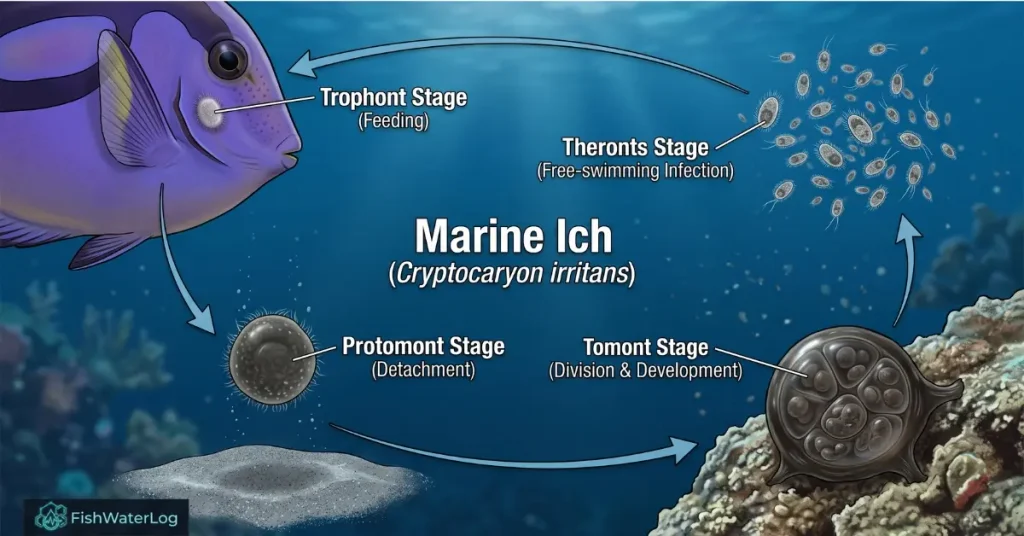
The complete biological life cycle of Marine Ich (Cryptocaryon irritans), highlighting the embedded trophont, encysted tomont, and vulnerable free-swimming theront stages.Often erroneously conflated with freshwater Ich, Cryptocaryon irritans is a vastly more resilient and destructive ciliated protozoan characterized by four distinct life stages:
- 1. Trophont (Feeding Stage): The parasite burrows beneath the mucosal epithelium of the skin, fins, and gill tissue, feeding on host cellular fluids and erythrocytes for 3 to 7 days. These appear as raised white nodules (48 to 452 µm) impervious to chemical eradication due to the protective epidermal barrier.
- 2. Protomont: Upon reaching satiation, the parasite abandons the host, sheds its external cilia, and crawls along the benthic substrate for 2 to 18 hours before secreting a dense cyst wall.
- 3. Tomont (Reproductive Stage): The cyst adheres tenaciously to rocks, sand grains, and glass surfaces, dividing internally into up to 1,000 daughter tomites. The heavily armored cyst matrix protects the dividing cells from external chemical bath treatments.
- 4. Theront (Free-Swimming Infective Stage): The cyst wall ruptures, releasing microscopic, highly motile theronts into the water column. They must locate and penetrate a teleost host within 24 to 48 hours or exhaust their finite energy reserves and perish. This brief free-swimming window is the only phase vulnerable to pharmaceutical eradication.
Establishing an isolated prophylactic system is essential; cross-reference clinical treatment guidelines in our comprehensive review of quarantine protocols and fish disease management.
The 76-Day Fallow Mandate and Copper Protocols
A primary vulnerability in standard aquarium literature is advising short 30-day quarantine observation periods. Empirical parasitological data reveals that Cryptocaryon irritans exhibits asynchronous excystment, with certain resilient tomont strains remaining dormant on benthic substrate for up to 72 days before releasing theronts.
- The 76-Day Fallow Rule: If a display tank is exposed, all teleosts must be removed, leaving the display system entirely fishless for a minimum of 76 days. In the total absence of a host, emerging theronts starve, ensuring complete biological eradication.
- Copper Sulfate Therapy: In a separate hospital tank, maintain chelated or ionic copper precisely between 0.15 and 0.20 mg/L for 30 consecutive days, verified with daily photometric testing to avoid gill tissue burn.
- Therapeutic Hyposalinity: Reducing specific gravity to 1.009 (15 ppt) exploits osmotic pressure to lyse the delicate outer membranes of free-swimming theronts.
For detailed clinical life-cycle timelines, bath treatment parameters, and diagnostic histology, consult the peer-reviewed clinical guide from the University of Florida IFAS Extension on Cryptocaryon irritans.
Uronema marinum: The Free-Living Tissue Destroyer
Unlike Cryptocaryon, Uronema marinum is an opportunistic, facultative scuticociliate that does not require an encysted stage or a living host to replicate. It survives indefinitely as a free-living detritivore, consuming excess organic waste and bacterial films within the aquarium substrate:
- Pathology & Ulceration: Once host immunity drops, the ciliate secretes proteolytic enzymes that dissolve the epidermis, invading deep into the skeletal musculature and internal visceral organs. This manifests as rapid, hemorrhagic red bands and ulcerations that strip scales away, with mortality approaching 100% within days.
- Treatment Limitations: Because Uronema burrows intercellularly beneath dermal tissue, external copper sulfate and hyposalinity treatments are completely ineffective. In fact, therapeutic hyposalinity often accelerates Uronema proliferation.
- Clinical Prophylaxis: Eradication requires early prophylactic formalin dips (25 mg/L) or targeted chloroquine phosphate regimens before systemic tissue penetration occurs.
Comparative Parasite Diagnostic & Eradication Matrix
| Parasite Profile | Clinical Pathology | Vulnerable Stage | Validated Clinical Eradication |
|---|---|---|---|
| Cryptocaryon irritans (Marine White Spot) | Raised white epidermal cysts (48–452 µm), scratching/flashing on rocks, lethargy. | Free-swimming Theronts (active 24–48 hours). | 30 days Chelated Copper (2.0–2.5 ppm verified via digital colorimeter) OR 76-day fishless display tank fallow. |
| Amyloodinium ocellatum (Marine Velvet) | Fine golden/amber dusty sheen across epithelium, severe respiratory distress, acute light avoidance. | Dinospore free-swimming phase; lethal within 24–48 hours of visual onset. | Immediate 30-day Chelated Copper or Chloroquine Phosphate (40–60 mg/gal). Emergency relief: 3% H₂O₂ bath (150 ppm for 30 min). |
| Brooklynella hostilis (Clownfish Disease) | Sloughing epithelial mucus, peeling skin lesions, rapid gill clogging, severe tachypnea. | Directly communicable across mucosal borders; rapid tissue destruction. | Prophylactic Formalin immersion baths (25–30 mg/L for 45 min) or targeted Chloroquine Phosphate; resistant to copper. |
| Uronema marinum (Scuticociliatosis) | Deep hemorrhagic red muscular lesions, ulceration, direct visceral infiltration. | Free-living water-column stage prior to deep muscular penetration. | Formalin immersion baths or Chloroquine Phosphate; resistant to copper and accelerates under hyposalinity. |
The Sequential Marine Stocking Blueprint: Establishing Hierarchy Safely
Introducing marine livestock simultaneously or in an arbitrary sequence triggers intense territorial warfare, stress-induced immunosuppression, and sudden ammonia spikes. In a closed captive biotope, fish must be introduced strictly in order of ascending territorial assertion.
The 3-Phase Chronological Introduction Schedule
| Stocking Phase | Behavioral Profile | Recommended Starter Species | Biological & Ecological Rationale |
|---|---|---|---|
| Phase 1: Foundation (Weeks 1–3) | Docile, timid, slow-moving substrate & cave dwellers. | Firefish Goby, Yellow Watchman Goby, Pajama Cardinalfish. | Allows timid teleosts to establish rock burrows, feeding confidence, and orientation without intimidation from faster swimmers. |
| Phase 2: Mid-Water Active (Weeks 4–6) | Confident mid-column swimmers; moderate temperament. | Captive-bred Ocellaris Clownfish, Tailspot Blenny, Green Chromis. | Confident open swimmers that integrate naturally into the middle water column without actively hunting or starving benthic fish. |
| Phase 3: Final Assertive (Week 8+) | Semi-aggressive, territorial cave and perimeter defenders. | Royal Gramma, Talbot’s Damselfish (Chrysiptera talboti). | Introduced last so established community residents already occupy the territory, forcing assertive late-additions to claim remaining niches rather than dominating the entire scape. |
Mitigating Conspecific Aggression via Acclimation Boxes
Directly dumping a newly arrived teleost into the display tank forces an unconditioned encounter with established residents that view the newcomer as an intruder. Deploying an internal, clear acrylic isolation box mitigates this risk:
- Visual Desensitization: Mount a perforated acrylic isolation box via magnets inside the main display tank. House the new arrival inside the box for 2 to 5 days. Established fish will inspect, flare, and display aggressive posturing against the acrylic without inflicting physical branchial damage or fin nipping.
- Target Nutritional Recovery: Shipping induces acute metabolic acidosis and hypoglycemia. The isolation box allows focused, high-density target feeding so the specimen regains caloric reserves without competing against faster swimmers.
- Dark-Cycle Release: Once existing tankmates ignore the isolation box, release the specimen into the main rockwork at night with the display lights fully powered off to facilitate calm integration.
The Best Saltwater Aquarium Fish for Beginners: Curated Species Profiles
To maximize success in an entry-level marine aquarium, species selection must be strictly prioritized by physiological hardiness, assertive captive feeding responses, and peaceful ethology. Relying on fragile, wild-collected teleosts often results in early mortality, whereas carefully chosen foundational species easily tolerate minor water chemistry fluctuations while displaying rich captive behaviors. Below are four premier recommendations for aquarists sourcing the best saltwater aquarium fish for beginners.
1. Ocellaris Clownfish (Amphiprion ocellaris)
The captive-bred Ocellaris Clownfish is the quintessential starter species for novice closed-system marine setups.
- Aquacultured Resilience: Modern commercial specimens are predominantly captive-bred, meaning they are already adapted to artificial aquarium environments, readily accept dry pelleted feeds, and carry significantly lower parasite risks than wild counterparts.
- Protandrous Hermaphroditism: Clownfish are protandrous sequential hermaphrodites. All juveniles develop initially as undifferentiated males. When kept in pairs, the socially dominant individual undergoes irreversible hormonal and physiological shifts to transition into the functional female, while the subordinate remains a breeding male.
- The Anemone Misconception: Captive-bred A. ocellaris have no biological requirement for a host sea anemone to survive or flourish. Anemones require intense Photosynthetically Active Radiation (PAR) and pristine nutrient stability that far exceed novice tank parameters.
- Carotenoid Pigmentation: The deep orange chromatic saturation of clownfish relies on dietary carotenoids acting on dermal chromatophores. Novices should provide high-quality feeds rich in natural astaxanthin (such as krill and copepod meal) to prevent chromatic fading.
2. Green Chromis (Chromis viridis)
The Green Chromis is an active, diurnal damselfish variant that occupies the open, upper water column, bringing shimmering iridescent motion to the reef structure.
- Shoaling Ethology: While peaceful toward dissimilar genera, C. viridis maintains an aggressive internal social hierarchy in restricted footprints. To prevent dominant specimens from systematically harassing subordinate members, house them in odd-numbered groups (e.g., 5 or 7) in aquaria measuring 75 gallons or larger.
- Pathogen Vulnerability: While resilient against minor ammonia swings, this species is exceptionally susceptible to Uronema marinum. Strict prophylactic quarantine featuring formalin baths is critical before introduction.
3. Firefish Goby (Nemateleotris magnifica)
The Firefish Goby is an elongated dartfish exhibiting an ivory anterior transitioning to an intense red and yellow posterior, crowned by an erect first dorsal fin.
- Temperament & Footprint: Exceedingly peaceful and disease-resistant, the Firefish thrives in modest setups of 20 gallons or more without asserting territorial dominance over tankmates.
- Mechanical Lid Requirement: In nature, their primary evolutionary defense against pelagic predation is an explosive, fast-twitch acoustic startle reflex that shoots them into reef crevices. In an aquarium, this reflex causes them to launch vertically out of the tank. A tight-fitting glass canopy or high-density mesh screen is an absolute structural necessity to prevent jump mortality.
4. Royal Gramma (Gramma loreto)
The Royal Gramma is an iconic Western Atlantic basslet defined by an intense magenta anterior and bright yellow posterior.
- Benthic Architecture: Unlike pelagic open-swimmers, the Royal Gramma relies heavily on intricate live rock architecture containing caves, crevices, and overhangs. They frequently swim inverted against rock overhangs, which is a normal stereotypic orientation behavior.
- Conspecific Defense: While entirely safe around corals and dissimilar fish, they will ferociously defend their selected cave against other basslets. Keep only a single specimen per beginner community system.
5. Pajama Cardinalfish (Sphaeramia nematoptera)
The Pajama Cardinalfish is a slow-moving, placid species that hovers motionlessly in the low-flow sectors of the rockwork.
- Low-Aggression Ethology: Unlike schooling damsels that harass conspecifics, S. nematoptera exhibits virtually zero intraspecific or interspecific aggression, making it an ideal starter for timid communities.
- Nocturnal Adaptations: Their disproportionately large red eyes reflect adaptations for crepuscular and nocturnal foraging. They transition seamlessly to captive daylight feeding, accepting standard micro-pellets and small mysis shrimp without demanding live prey.
6. Tailspot Blenny (Ecsenius stigmatura)
The Tailspot Blenny is an herbivorous benthic grazer well-suited for smaller footprints and nano-reef biotopes.
- Footprint & Micro-Perching: Requiring a minimum of only 15 to 20 gallons, this species perches directly on live rock structures, retreating backward into small calcareous crevices when startled.
- Detrital & Algal Control: E. stigmatura feeds continuously on filamentous micro-algae and organic detrital films across rockwork, filling an essential ecological niche without bothering coral polyps or invertebrates.
7. Yellow Watchman Goby (Cryptocentrus cinctus)
The Yellow Watchman Goby is an obligate bottom-dweller that anchors the lower sand substrate zone.
- Benthic Sand Dwelling: They rarely swim in the open water column, preferring to establish a sedentary post at the entrance of a rock cave.
- Alpheus Symbiosis: They readily form an interspecies mutualistic relationship with the Tiger Pistol Shrimp (Alpheus bellulus). The shrimp excavates and maintains a shared subterranean sand burrow, while the goby acts as the tactile sentry, warning the nearly blind shrimp of potential pelagic threats.
Comparative Beginner Teleost Matrix
| Species Common Name | Scientific Name | Min. Tank Size | Temperament | Key Husbandry Requirement |
|---|---|---|---|---|
| Ocellaris Clownfish | Amphiprion ocellaris | 20 Gallons | Peaceful | Provide astaxanthin-enriched diet to preserve vibrant skin chromatophores. |
| Green Chromis | Chromis viridis | 30 Gal (Solo) / 75+ Gal (Group) | Peaceful Shoaler | Keep in odd groups; mandatory formalin quarantine against Uronema. |
| Firefish Goby | Nemateleotris magnifica | 20 Gallons | Very Peaceful | Requires a securely fitted mesh lid to counter high vertical jump reflexes. |
| Royal Gramma | Gramma loreto | 30 Gallons | Semi-aggressive (Cave defender) | Provide complex caves and rocky overhangs; limit to one specimen per system. |
| Pajama Cardinalfish | Sphaeramia nematoptera | 30 Gallons | Peaceful Hoverer | Provide low-flow rockwork zones; accepts fine pellets and mysis. |
| Tailspot Blenny | Ecsenius stigmatura | 15–20 Gallons | Peaceful Herbivore | Requires micro-algae growth, Nori supplementation, and small rock cavities. |
| Yellow Watchman Goby | Cryptocentrus cinctus | 20–30 Gallons | Peaceful Bottom-dweller | Deep sand bed (~2 inches); optimal when paired with Alpheus pistol shrimp. |
Advanced Nutritional Protocols for Marine Ornamentals
Novice fish mortality frequently stems from chronic malnutrition caused by feeding generic terrestrial-based flakes. Marine teleosts require distinct fatty acid profiles and specialized feeding frequencies to sustain osmotic pumps and disease resistance.
Mysis vs. Artemia: The Caloric Reality
- Artemia (Brine Shrimp) Deficiencies: Adult frozen brine shrimp are over 80% water and function as “empty calories” unless gut-loaded with concentrated microalgae immediately prior to harvest.
- PE and Hikari Mysis Superiority: Frozen Mysis shrimp contain dense structural protein and high concentrations of marine Highly Unsaturated Fatty Acids (HUFAs), specifically EPA (eicosapentaenoic acid) and DHA (docosahexaenoic acid), which maintain teleost cellular membrane integrity.
Herbivore Requirements and Terrestrial Lipid Hazards
Herbivorous and grazing species (such as blennies and dwarf angelfish) must never be fed terrestrial mammal proteins (like beef heart mixtures). Marine teleosts cannot metabolize high-melting-point saturated fats, which leads to hepatic lipidosis (fatty liver degeneration) and systemic renal failure.
Instead, provide:
- Submerged Dried Seaweed (Nori): Fasten unseasoned marine Porphyra to magnetic feeding clips daily to provide essential trace minerals and bioavailable fiber.
- Spirulina Supplementation: Incorporate pelleted feeds containing at least 20% Spirulina platensis. Spirulina provides natural phycocyanin and beta-carotene to stimulate dermal chromatophores and enhance mucosal immune response.
Micro-Feeding Frequencies
Unlike large predatory freshwater species that thrive on one massive meal every other day, coral reef teleosts possess short digestive transit times and small stomach capacities. Providing one single large feeding causes unconsumed food to decompose in deep rock crevices, generating un-ionized ammonia spikes. Administer 2 to 3 micro-feedings daily in quantities fully consumed within 90 seconds to optimize branchial nutrient uptake and prevent biofilter overload.
Species to Explicitly Avoid: Managing Aggression and Obligate Feeding
Building long-term success in marine aquaculture requires knowing not only what to add, but also what to actively avoid. Many inexpensive, vibrantly colored fish sold in commercial retail outlets represent biological traps for entry-level hobbyists. Introducing specimens with extreme hyper-territorial aggression or specialized metabolic feeding constraints inevitably leads to systemic stress, disease outbreaks, and rapid teleost mortality.
The Damselfish Deception (Chrysiptera and Dascyllus spp.)
Damselfish are routinely marketed by outdated literature as ideal beginner starter fish because they are biologically bulletproof, surviving toxic ammonia spikes and erratic water parameters that would quickly kill delicate marine teleosts:
- Hyper-Aggressive Territoriality: In the restricted footprint of a typical 30-gallon community tank, damselfish (such as the Blue Devil or Three Stripe variants) develop severe territorial instincts. They relentlessly harass, chase, and nip the fins of every subsequent tankmate introduced to the system.
- Chronic Stress and Disease Trigger: The persistent physical intimidation caused by aggressive damselfish depresses the immune systems of peaceful teleosts, triggering rapid secondary outbreaks of Cryptocaryon irritans or latent bacterial infections.
Obligate Feeders and Specialized Corallivores
Novice marine aquarists must categorically steer clear of species possessing narrow dietary specializations that cannot be sustained on standard commercially prepared flaked or pelleted feeds:
- Cleaner Wrasses (Labroides dimidiatus): These fish are obligate ectoparasite cleaners that rely almost exclusively on the crustacean loads of large pelagic hosts. In home aquaria, they rapidly exhaust available parasites and slowly starve within weeks, displaying a sunken abdomen and fatal muscle wasting.
- Moorish Idols (Zanclus cornutus): With first-year captive mortality rates exceeding 90%, these delicate fish require massive systems (180+ gallons), immaculate water chemistry, and continuous grazing on live marine sponges and tunicates. They quickly succomb to acute starvation and secondary systemic infections in closed captive biotopes.
High-Risk Teleost Exclusion Reference
| Species / Genus | Market Appeal | Primary Biological Hazard | Husbandry Verdict |
|---|---|---|---|
|
Damselfish (Chrysiptera & Dascyllus spp.) | Low retail price, extreme chemical tolerance. | Severe territorial aggression; relentlessly terrorizes peaceful tankmates. | Avoid entirely in beginner community aquaria. |
|
Cleaner Wrasse (Labroides dimidiatus) | Active cleaning behavior, bright coloration. | Obligate ectoparasite feeder; refuses captive pelleted diets and starves. | Avoid; unsustainable dietary requirements. |
|
Moorish Idol (Zanclus cornutus) | Striking profile, iconic reef aesthetic. | Obligate sponge/tunicate consumer; over 90% first-year captive mortality. | Avoid; strictly for advanced institutional systems. |
What High-Authority Marine Aquaria Literature Overlooks
A rigorous review of mainstream aquarium literature reveals systemic omissions and persistent simplifications. By relying on outdated conventions rather than modern physiological and microbial evidence, novice aquarists frequently experience unexplainable livestock losses. Bridging these scientific gaps transforms routine husbandry into precise, predictable biological management.
1. The Cytopathology of Osmotic Shock
Generic care guides routinely advise aquarists to “acclimate slowly to prevent shock” without detailing the cellular pathology. When a marine teleost is abruptly exposed to lower salinity, its basolateral Na+/K+-ATPase pumps and branchial CFTR chloride channels cannot instantly downregulate ion secretion. Simultaneously, its high baseline intestinal drinking rate continues to force water into the circulation. The resulting acute osmotic influx drives massive cellular edema, structural lysis of branchial lamellae, vascular collapse, and rapid organ failure.
2. Archaeal Dominance Over Classical Nitrifiers
Conventional resources continue to model marine nitrification exclusively around Nitrosomonas bacteria. In reality, metagenomic analyses confirm that Ammonia-Oxidizing Archaea (AOA), particularly Nitrosopumilus maritimus of the phylum Thaumarchaeota, govern ammonia oxidation in oligotrophic marine waters due to their extraordinary substrate affinity. Recognizing that marine biofilters rely on slow-growing archaeal biofilms explains why standard freshwater cycling timelines fail and why patience during biological establishment is non-negotiable.
3. Asynchronous Excystment in Parasite Eradication
Standard guides frequently suggest 30-day quarantine windows and 45-day fallow intervals for Cryptocaryon irritans. These truncated timelines disregard the biological phenomenon of asynchronous excystment, where dormant tomonts can delay releasing infective theronts for up to 72 days. Bypassing the scientifically validated 76-day fallow protocol frequently results in catastrophic parasite recurrences months after an apparent cure.
Conclusion
Establishing a successful closed-system marine aquarium is an exercise in applied cellular biology, water chemistry, and microbial ecology. By recognizing the constant osmoregulatory work required of marine teleosts, strictly managing alkaline ammonia dynamics, and respecting the prolonged maturation times of archaeal biofilters, aquarists can maintain a stable aquatic environment.
Pairing these fundamental chemical principles with rigorous quarantine protocols and a curated selection of hardy, captive-bred species—such as the Ocellaris Clownfish and Firefish Goby—eliminates the pitfalls that historically discouraged beginners. Success in marine aquaria is built on biological respect, meticulous parameter stability, and deliberate patience.
Frequently Asked Questions
Why can’t I use dechlorinated tap water for my marine aquarium?
Tap water contains residual silicates, phosphates, and heavy metals. Under the intense lighting required for marine setups, silicates fuel explosive diatom blooms, while excess organics provide the precursor nutrients for toxic dinoflagellate outbreaks. Utilizing 0 TDS RO/DI water is essential to maintain parameter stability.
Are damselfish suitable starter fish for a beginner community tank?
No. Although damselfish are biologically resilient and tolerate erratic water chemistry, they possess extreme territorial aggression. In a beginner-sized aquarium, they will persistently harass, injure, and stress peaceful community species.
Do clownfish require a host sea anemone to survive in captivity?
No. Captive-bred Ocellaris Clownfish have no physiological or biological dependence on host anemones. They thrive in standard rockwork and open water columns, avoiding the demanding lighting and water quality requirements that anemones mandate.
How long must an infected display tank remain fallow to eliminate Marine Ich?
The display tank must remain completely fishless for a minimum of 76 days. This duration accounts for the asynchronous excystment of Cryptocaryon irritans tomonts, which can remain encysted on benthic substrates for up to 72 days before releasing theronts.
Why did my Firefish Goby jump out of the aquarium?
Firefish possess an acute acoustic startle reflex developed as an escape mechanism against pelagic predators. When startled in an aquarium, their fast-twitch response causes them to dart vertically out of the water column, making a secure mesh screen or glass lid mandatory.
