
The practice of maintaining thriving aquatic life within closed artificial ecosystems necessitates a firm grasp of teleost physiology, biofiltration kinetics, and nutritional biochemistry. Among the most debated and frequently misunderstood aspects of modern fishkeeping is the optimal frequency, volume, and timing of daily feeding. In natural aquatic habitats, food scarcity serves as a primary evolutionary pressure. Wild riverine and lacustrine environments feature marked temporal and spatial shifts in prey availability, requiring fish to develop specialized metabolic adaptations to endure intermittent fasting intervals. Despite this evolutionary conditioning, many hobbyists operate under the assumption that captive livestock require continuous, uninterrupted daily feedings to survive.
This misconception routinely leads to chronic overfeeding, which remains a primary driver of premature livestock mortality, organ stress, and biofilter collapse in closed aquaria. Because teleost fish are obligate poikilothermic ectotherms, their internal body temperature and baseline metabolic rate are dictated by the ambient water column rather than internal thermogenesis. Consequently, their Standard Metabolic Rate (SMR) is markedly lower than that of endothermic terrestrial animals of comparable mass. Without the need to expend dietary energy on thermal regulation, unutilized calories from daily commercial feeds rapidly exceed baseline caloric expenditure.
Left unmanaged, surplus dietary energy cannot be eliminated through swimming alone; it accumulates within hepatic parenchyma and visceral adipose tissues, triggering systemic complications such as hepatic lipidosis and swim bladder displacement. Adopting a structured routine—specifically understanding the biological benefits of fasting aquarium fish once a week—provides an essential non-pharmacological solution. Deliberate dietary restriction aligns captive husbandry with natural metabolic rhythms, clearing gastric evacuation backlogs, mitigating gastrointestinal bloat, and stabilizing water chemistry against post-prandial nitrogenous spikes.
The Physiology of Ectothermic Metabolism and Temperature Acclimation
Understanding why fasting is biologically essential for aquarium fish requires examining the thermodynamics of ectothermic energy regulation. Teleost physiology is fundamentally plastic and governed by the thermal dynamics of the surrounding water column.
Metabolic Rates and Thermal Polygons
Aquatic species operate within a specific thermal tolerance polygon—a bounded range of ambient water temperatures where they successfully forage, process enzymatic conversions, and assimilate nutrients. Within this physiological window, energy allocation fluctuates between two critical thresholds:
- Standard Metabolic Rate (SMR): The absolute baseline caloric energy required to maintain cellular homeostasis, respiration, and osmotic balance at complete rest.
- Maximum Metabolic Rate (MMR): The upper physiological ceiling of aerobic metabolism, determining the energy available for sustained swimming, predator evasion, and nutrient processing.
The numeric difference between SMR and MMR constitutes the Aerobic Scope (AS). Following any feed intake, a fish’s oxygen consumption surges to power peristalsis, macromolecule breakdown, and nutrient uptake—a biochemical spike known as Specific Dynamic Action (SDA).
Because the metabolic cost of SDA draws directly from the animal’s available Aerobic Scope, continuous daily feeding places fish in perpetual digestive exertion. In closed aquarium systems, this ongoing metabolic demand compromises their capacity to tolerate secondary stressors, leaving livestock susceptible to acute ammonia toxicity, low dissolved oxygen, and sudden osmotic shifts.
The Temperature Coefficient (Q10) and Visceral Energy Partitioning
Biochemical digestion rates scale according to the Q(10) temperature coefficient, where metabolic turnover roughly doubles or triples for every 10°C increase in ambient water temperature. Respirometry evaluations demonstrate that wild teleosts frequently migrate toward cooler, deeper water strata to deliberately suppress their Standard Metabolic Rate, slow enzymatic activity, and conserve endogenous reserves during intervals of prey scarcity.
In a home aquarium, however, livestock remain confined to a static temperature controlled by artificial heaters. Daily distribution of calorie-dense, high-protein pellets subjects internal metabolic machinery to relentless processing. The liver—responsible for lipid biosyntheses and amino acid deamination—is deprived of the natural catabolic refractory phase experienced in riverine and lacustrine ecosystems.
Implementing the benefits of fasting aquarium fish once a week restores this missing evolutionary rhythm. Scheduled feeding breaks safely deactivate Specific Dynamic Action, clear hepatic processing pathways, and prevent long-term enzymatic fatigue without inducing physiological distress.
The Mechanics of Digestion and Gastric Evacuation Time (GET)
The primary physiological justification for withholding food lies within the functional mechanics of the teleost gastrointestinal tract. Unlike mammalian digestion, which is comparatively rapid, continuous, and regulated by high internal body heat, digestion in teleost fish is a protracted, temperature-dependent process driven by the localized secretion of specific proteolytic enzymes (including trypsin and pepsin), lipases, and amylases.
Defining Gastric Evacuation Time
The total duration required for an ingested meal to transit from the stomach, pass through the pyloric caeca, and fully exit the distal intestine is clinically defined as Gastric Evacuation Time (GET). Rather than representing a static biological metric, GET fluctuates significantly based on ambient water temperature, ration volume, physical feed texture, and dietary macronutrient ratios (particularly lipids and crude proteins).
Empirical aquaculture research reveals how remarkably prolonged teleost gut transit can be:
- African Catfish (Clarias gariepinus): X-radiographic tracking demonstrates that gastric evacuation is strictly thermal. While complete evacuation requires 10 hours at 32°C, the timeline extends to 16 hours at 26°C.
- Flathead Catfish (Pylodictis olivaris): Gastric transit varies by more than 5 hours between cohorts maintained at 17°C versus 25°C, with caloric absorption lagging behind the mechanical displacement of the food bolus.
- Marine Models and Cold-Water Salmonids: Mathematical digestion curves in benthic species like dab (Limanda limanda) and Rainbow Trout indicate that complete evacuation of a satiation meal routinely spans 27 to 42 hours depending on feed fat levels.
The Pathological Hazard of Compounding Meals
Because baseline Gastric Evacuation Time in common aquarium species spans between 12 and 48 hours, feeding fish once or twice daily creates severe gastrointestinal compounding. When hobbyists introduce fresh food before the preceding bolus has cleared, new rations collide with partially processed chyme, creating a dangerous digestive backlog.
This dynamic is exacerbated by commercial extruded dry pellets and compressed flakes. Because these feeds are stripped of moisture during manufacturing, they absorb internal fluids and expand dramatically upon entering the fish’s stomach. This continuous swelling exerts severe mechanical strain against delicate mucosal walls, exhausts the secretory reserves of digestive glands, and sharply suppresses nutrient assimilation efficiency.
Unprocessed complex carbohydrates linger in the intestinal lumen, providing an ideal substrate for opportunistic gut bacteria to ferment sugars into gas. This microbial fermentation induces severe abdominal distension, intestinal impaction, and fatal dropsy or bloat.
By capitalizing on the benefits of fasting aquarium fish once a week, aquarists allow the Gastric Evacuation Time cycle to reach 100% completion. This 24-hour digestive break empties the alimentary canal, allows digestive enzyme reserves to regenerate, and eliminates pathogenic fermentation risks entirely.
| Digestive Parameter | Impact of Continuous Daily Feeding | Impact of Weekly Fasting (24h) |
|---|---|---|
| Gastric Evacuation Time (GET) Transit & Motility |
⚠️
Interrupted repeatedly: Incoming meals collide with older, partially digested chyme, creating severe gastrointestinal compaction. |
✅
Reaches 100% completion: The entire alimentary canal empties fully, relieving pressure on the internal visceral organs. |
| Enzymatic Secretion Metabolic Enzymes |
⚠️
Causes chronic secretory exhaustion of proteolytic (trypsin, pepsin) and lipolytic enzymes due to perpetual demand. |
✅
Allows secretory glands a complete refractory rest period to recharge, restock, and synthesize active enzyme reserves. |
| Nutrient Assimilation Absorption Efficiency |
⚠️
Degrades absorption rates: Accelerated intestinal transit pushes undigested nutrients outward before mucosal villi can absorb them. |
✅
Maximizes bioavailability: Triggers post-fast compensatory digestive efficiency and improved Feed Conversion Ratios (FCR). |
| Intestinal Fermentation Microbiome & Bloat |
⚠️
Elevates bloat & gas risks: Stagnant dietary carbohydrates ferment in the gut, providing substrate for opportunistic pathogens. |
✅
Completely eliminated: Fermentative substrates are cleared before pathogenic bacterial biofilms can form in the gut lining. |
Pathophysiological Consequences of Chronic Overfeeding
When the biological imperative for periodic dietary restriction is ignored, chronic overfeeding produces severe metabolic, anatomical, and mechanical complications. These issues extend beyond simple obesity, frequently resulting in acute organ failure and high livestock mortality across home aquaria.
Hepatic Lipidosis (Fatty Liver Disease)
The most insidious consequence of unmanaged feeding schedules is Hepatic Lipidosis (fatty liver disease). In teleost fish, the liver serves as the central metabolic engine for lipid synthesis, nutrient conversion, and detoxification. Because aquatic organisms lack the extensive subcutaneous adipose layers found in mammals, excess dietary calories are sequestered directly within hepatic tissue.
Commercial feeds packed with cheap carbohydrate binders and concentrated lipids accelerate hepatic lipogenesis. Excess triglycerides continuously accumulate inside liver cells, causing hepatocytes to swell, lose their deep-red vascular appearance, and turn pale and friable.
This pathology is exceptionally lethal in predatory fish like Peacock Bass (Cichla spp.), African Cichlids, and Anabantoids. In nature, these species consume large prey items followed by multiple days of fasting. Daily feeding deprives them of this catabolic rest phase.
Because active fish often show normal swimming behavior right up until terminal liver rupture, hepatic lipidosis is widely regarded as a silent killer. Incorporating the core benefits of fasting aquarium fish once a week triggers glucagon secretion, which systematically breaks down stored hepatic triglycerides for baseline energy and decongests swollen liver tissue.
In aquatic veterinary pathology, evaluating liver health relies heavily on the Hepatosomatic Index (HSI)—the precise ratio of liver mass to total body weight. Chronic, unmanaged daily feeding causes hepatocytes to become pathologically engorged with excessive glycogen and lipid droplets, driving the HSI to dangerous, abnormal levels. Implementing a structured weekly fast forces the teleost metabolism to shift from an anabolic storage state into a catabolic mobilization state. This hormonal switch rapidly metabolizes stored hepatic triglycerides, systematically draining excess fat from the liver, normalizing the HSI, and preventing cellular apoptosis and irreversible hepatic necrosis.
Gastrointestinal Impaction and Severe Constipation
Constipation in captive fish represents a physical failure of peristalsis. It is particularly common in laterally compressed, short-bodied ornamental species such as Betta fish (Betta splendens), Fancy Goldfish, and deep-bodied cichlids.
When fish consume unsoaked dry pellets that expand after ingestion—or lack indigestible structural fibers like chitin to stimulate gut motility—a dense fecal mass lodges inside the intestinal lumen.
Primary Symptoms of Constipation and Impaction:
- Asymmetrical swelling or distension of the ventral abdominal wall.
- Trailing, pale, mucoid or hollow fecal strands.
- Severe lethargy, loss of foraging drive, and clamped fins.
As the intestine swells behind the blockage, it exerts compressive mechanical force against adjacent kidneys and circulatory vessels, restricting blood flow and escalating into systemic distress.
Swim Bladder Displacement and Buoyancy Disorders (SBD)
The teleost swim bladder is a delicate, gas-filled hydrostatic chamber situated immediately adjacent to the dorsal lining of the digestive tract. When stomach or intestinal loops become engorged from compounding meals or fecal impactions, they physically press against the pneumatic duct and cranial swim bladder chamber.
This mechanical displacement prevents the fish from regulating internal gas equilibrium, inducing Swim Bladder Disease (SBD):
- Positive Buoyancy: The fish floats helplessly at the surface, exposing its dorsal scales to ambient air desiccation.
- Negative Buoyancy: The fish sinks to the substrate, unable to generate sufficient vertical lift.
- Equilibrium Loss: The fish swims inverted, sideways, or in irregular spiral corkscrews.
Instituting a disciplined 24- to 48-hour fasting window drastically shrinks the physical volume of the gastrointestinal tract. This decompression allows internal organs to settle back into their natural anatomical alignment, restoring swim bladder mechanics and resolving buoyancy issues without the need for aggressive, liver-taxing medications.
If buoyancy abnormalities or abdominal swelling persist despite a 48-hour fasting window, consult our comprehensive guide on fish disease clinical protocols to differentiate between digestive impaction and internal bacterial infections.
Systemic and Immunological Benefits of Fasting Aquarium Fish Once a Week
Implementing a disciplined weekly 24-hour fast yields both immediate mechanical relief and long-term, systemic physiological optimization. The scientifically documented benefits of fasting aquarium fish once a week encompass complete digestive clearance, metabolic resets, oxidative stress modulation, and measurable enhancements in disease resistance.
Immunological Resurgence and Oxidative Stress Reduction
Digestion is an inherently oxidative biological process. The enzymatic breakdown of crude proteins, carbohydrates, and dietary lipids—alongside subsequent hepatic assimilation—generates reactive oxygen species (ROS) as a byproduct of elevated mitochondrial respiration during the Specific Dynamic Action (SDA) phase. Chronic, uninterrupted daily feeding places a continuous oxidative burden on the fish’s cellular machinery, eventually triggering lipid peroxidation, mucosal tissue wear, and premature senescence.
Clinical research confirms that short-term fasting protocols profoundly modulate systemic biomarkers of oxidative stress. Studies examining handling and transport stress in teleosts show that withholding feed significantly lowers ROS fluorescence intensity and decreases serum levels of malondialdehyde (MDA), a primary marker for lipid peroxidation.
Simultaneously, a structured fasting window upregulates vital endogenous antioxidant enzymes, including superoxide dismutase (SOD) and catalase (CAT), effectively restoring cellular redox balance. Providing metabolic machinery a 24-hour respite from continuous digestion allows captive livestock to reallocate vital energy toward immune surveillance, tissue regeneration, and systemic autophagy.
In trials involving the common carp (Cyprinus carpio), short-term fasting (1 to 2 days) significantly enhanced host resistance against Aeromonas hydrophila, a virulent and opportunistic freshwater pathogen. This scheduled fast functions as an effective non-pharmacological intervention, restoring immune-metabolic equilibrium so fish can mount a superior innate immune defense compared to overfed cohorts.
Microbiome Modulation and Digestive Reset
The distal intestine of a teleost fish hosts a complex bacterial microbiome vital for nutrient bioavailability and mucosal protection. Uninterrupted daily rations often induce intestinal dysbiosis, where stagnant, undigested carbohydrates allow opportunistic fermentative bacteria to overpopulate.
Recent advances in aquaculture metagenomics and 16S rRNA sequencing reveal that continuous feeding often triggers severe intestinal dysbiosis, allowing bacteria belonging to the phylum Firmicutes to over-proliferate and destabilize gut equilibrium. Introducing a 24-hour feed withdrawal spurs an immediate, beneficial microbial shift: the relative abundance of Firmicutes drops sharply while beneficial Proteobacteria surge to establish dominance. This periodic bacterial cycling prevents opportunistic pathogens from forming chronic biofilms across mucosal walls and ensures a revitalized, highly efficient microflora profile upon refeeding.
Fasting provides an essential biological reset for the gut microbiome. While short-term feed withdrawal temporarily shifts the relative abundance of specific bacterial clades, the subsequent refeeding phase re-establishes a balanced, highly efficient intestinal flora. This periodic cycling prevents pathogenic bacterial biofilms from establishing within the epithelial gut barrier.
To gain a deeper understanding of how cellular oxidative stress impacts aquatic organisms, you can review this comprehensive study on fish physiology and environmental temperature adaptations. Additionally, maintaining a robust biological filter is paramount for handling post-feeding waste; learn more about the exact mechanisms of the nitrogen cycle in aquatic ecosystems.
Compensatory Growth and Hyperphagia
Short-term dietary restriction triggers an adaptive physiological reaction known as compensatory growth. When fish experience brief feed deprivation, the endocrine system adjusts its hormonal signaling, elevating orexigenic (appetite-stimulating) peptides. Upon the resumption of feeding, fish exhibit hyperphagia—a robust, active feeding drive—accompanied by significantly improved Feed Conversion Ratios (FCR).
A fish fed six days a week with a scheduled 24-hour fast assimilates nutrients more efficiently than a specimen subjected to uninterrupted seven-day feeding. Proteolytic digestive enzymes recharge during the break, leaving intestinal villi primed for maximum nutrient uptake. This mechanism promotes healthy somatic growth and lean muscle deposition while preventing excess visceral lipid accumulation.
Commercial aquaculture trials—most notably rigorous studies on Nile Tilapia (Oreochromis niloticus)—consistently demonstrate that intermittent, cyclical fasting regimens produce final body weights and Specific Growth Rates (SGR) identical to uninterrupted daily feeding. Following the 24-hour fast, fish experience hyperphagia paired with significantly improved Feed Conversion Ratios (FCR). The digestive tract assimilates the reintroduced meal with enhanced efficiency, converting nutrients directly into lean somatic muscle tissue rather than ectopic visceral fat, completely disproving the amateur myth of fasting-induced growth stunting.
| Physiological Metric | Effect of Uninterrupted Feeding | Effect of Weekly 24-Hour Fasting |
|---|---|---|
| Reactive Oxygen Species (ROS) Oxidative Stress |
⚠️
Chronically elevated: Continuous mitochondrial respiration during perpetual Specific Dynamic Action (SDA) induces cellular lipid peroxidation. |
✅
Significantly lowered: Metabolic rest terminates the post-prandial oxidative surge, fully restoring internal cellular redox equilibrium. |
| Antioxidant Enzymes (SOD/CAT) Cellular Defense |
⚠️
Depleted & overwhelmed: Superoxide dismutase (SOD) and catalase (CAT) reserves drain rapidly under constant digestive oxidation. |
✅
Upregulated: Endogenous enzyme synthesis rebounds, reinforcing cellular defenses and scavenging lingering free radicals. |
| Pathogen Resistance (A. hydrophila) Innate Immunity |
⚠️
Suppressed: Vital metabolic and immunological resources are hijacked to sustain uninterrupted digestion, lowering disease resistance. |
✅
Measurably enhanced: Metabolic energy reallocates toward innate immune surveillance, significantly boosting bacterial resistance. |
| Feed Conversion Ratio (FCR) Nutritional Efficiency |
⚠️
Degrades over time: Fast gut transit discharges partially digested food, increasing biological waste output and filter load. |
✅
Highly efficient: Re-feeding stimulates hyperphagia and compensatory growth, extracting maximal nutrition per gram of feed. |
Water Quality, Ammonia Kinetics, and Biogeochemical Cycling
While the direct physiological advantages to individual livestock are multifaceted, the benefits of fasting aquarium fish once a week extend equally to the stability of the entire closed aquatic environment. An enclosed home aquarium operates as an artificial biogeochemical unit completely dependent on microbiological biofiltration to neutralize organic and nitrogenous waste.
Managing Post-Prandial Ammonia Excretion Spikes
A widespread misconception among hobbyists is that fish waste consists predominantly of solid, visible feces. In reality, teleost species release the overwhelming majority—up to 85%—of their total nitrogenous metabolites directly through the branchial epithelium (the gills) into the water column as un-ionized ammonia (NH3) and ionized ammonium (NH4+).
This gill diffusion rate is tied directly to dietary protein catabolism. Following food ingestion, absorbed amino acids undergo hepatic deamination in the liver, triggering a sharp physiological spike in circulating blood ammonia. This internal ammonia rapidly diffuses across gill membranes, driving a noticeable peak in aquarium water ammonia concentrations roughly 2 to 12 hours post-feeding.
In heavily stocked or overfed community tanks, these post-prandial ammonia spikes place immense mechanical stress on biological filter media. Even at sublethal, trace concentrations, free ammonia induces cellular oxidative stress, damages delicate gill lamellae, alters hepatocyte histology, and impairs osmoregulation. By enforcing a disciplined fasting day each week, aquarists halt this branchial ammonia discharge entirely for 24 hours, shielding livestock from recurring chemical toxicity.
Preserving the Biological Filter and Dissolved Oxygen Saturation
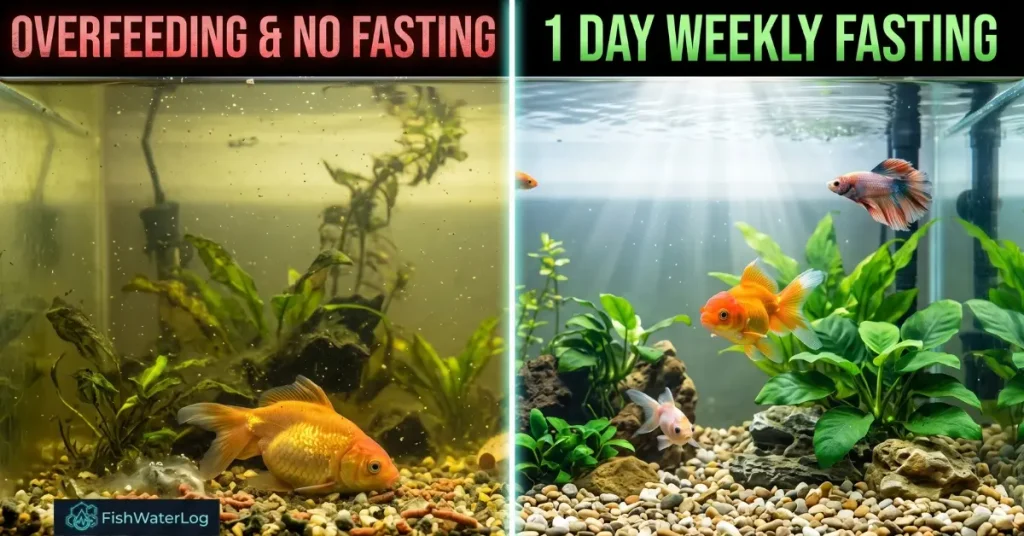
A comparison of cloudy water and fish bloat from chronic overfeeding versus pristine water quality achieved by fasting aquarium fish once a week.Biological filtration depends on autotrophic nitrifying bacteria—predominantly ammonia-oxidizing bacteria (AOB) such as Nitrosomonas and nitrite-oxidizing bacteria (NOB) such as Nitrospira—to convert free ammonia into nitrite, and subsequently into less toxic nitrate.
This chemoautotrophic conversion is intensely aerobic:
- High Oxygen Demand: For every 1.0 mg of total ammonia oxidized by beneficial bacteria, approximately 4.57 mg of dissolved oxygen (DO) is stripped from the water column.
- Hypoxic Compounding: Post-feeding ammonia spikes accelerate bacterial respiration rates, which can rapidly depress dissolved oxygen levels and induce severe respiratory distress in fish.
- Heterotrophic Proliferation: Excess uneaten flakes and dense sinking pellets fuel sudden blooms of heterotrophic bacteria. These opportunistic microbes consume vast quantities of oxygen while mineralizing organics, elevating carbon dioxide levels and increasing the risk of unstable pH crashes.
A weekly fasting day curtails total dissolved organic carbon (DOC) and nitrogenous input, substantially lowering the aquarium’s Biological Oxygen Demand (BOD) and maintaining high dissolved oxygen saturation.
Some hobbyists express concern that skipping meals might starve the beneficial biofilter. However, nitrifying bacteria exhibit remarkable metabolic resilience; strains such as Nitrosomonas europaea can endure extensive periods of substrate deprivation without population die-off. A single non-feeding day simply grants the nitrifying colony a clean operational window to clear residual nitrites, stabilize water chemistry parameters, and prevent heterotrophic biofilm overgrowth across planted leaves and hardscape.
Uneaten food decaying on gravel beds fuels rapid heterotrophic bacterial blooms that deplete dissolved oxygen, which can suddenly destabilize your beneficial biofilter and trigger a catastrophic nitrogen cycle crash.
Advanced Metabolic Insights Omitted by Mainstream Sources
A critical review of mainstream aquatic care guides and hobbyist forums reveals substantial gaps in how fish nutrition and dietary restriction are understood. Mainstream sources frequently recommend withholding food solely as an ad-hoc remedy to “unclog constipation” or “slim down a fat fish”. While partially relevant, this superficial framing ignores the complex physiological and biogeochemical mechanics that make routine fasting essential.
Evaluating the scientific benefits of fasting aquarium fish once a week highlights three major insights consistently overlooked by conventional pet literature:
1. The Ectothermic Fallacy and Metabolic Scaling
Most generalist pet publications mistakenly evaluate fish fasting through a mammalian lens. Because endothermic mammals burn the vast majority of their daily caloric intake simply maintaining constant core body temperature, skipping meals induces acute hunger stress and energy deficits.
Teleost fish, by contrast, are obligate ectotherms; their baseline energetic requirements (Standard Metabolic Rate) represent a small fraction of a mammal’s caloric expenditure. Withholding food for 24 hours does not cause biological distress, physical starvation, or somatic wasting. Instead, it triggers a natural, evolutionarily anticipated catabolic rest phase. Mainstream care sheets routinely overlook that the hepatic tissue (liver)—not merely the lower intestine—is the primary organ revitalized by weekly fasting.
2. Kinetics of Branchial Ammonia Excretion vs. Solid Fecal Waste
Popular aquarium maintenance guides discuss the advantages of fasting almost exclusively in terms of “reducing tank debris” or minimizing visible feces across the substrate. This focus ignores the primary chemical driver of aquatic toxicity.
Because teleosts excrete up to 85% of their total nitrogenous waste directly through their gills as un-ionized ammonia (NH3) and ammonium (NH4+), the most immediate environmental advantage of a fasting day is the abrupt shutoff of branchial ammonia diffusion. Halting post-prandial protein deamination gives biofilters an essential recovery window that mechanical vacuuming of solid waste cannot provide.
3. Chronic Weight-Loss Mismanagement in Captive Teleosts
When hobbyists notice a severely bloated or obese fish, mainstream forums frequently advise prolonged starvation diets spanning a week or more to force rapid weight loss. Veterinary pathology warns that this reactive approach can be counterproductive and dangerous.
Subjecting an already obese, lipemic fish to extended starvation mobilizes peripheral fat reserves too rapidly, flooding and overwhelming an already compromised liver and exacerbating hepatic lipidosis. Fasting yields maximum therapeutic benefit when practiced as a proactive, weekly preventative protocol, rather than an extreme, emergency starvation cure after metabolic organs have sustained damage.
Species-Specific Fasting Strategies and Dietary Nuances
Implementing dietary restriction should never be treated as a rigid, one-size-fits-all practice across all aquarium inhabitants. Different taxa occupy distinct trophic niches in the wild, each possessing unique anatomical adaptations, gastric capacities, and metabolic rates. Understanding the benefits of fasting aquarium fish once a week requires tailoring feeding protocols to the specific dietary physiology of your livestock.
Carnivores and Apex Predators
Piscivorous species and large predatory teleosts—such as Arowanas, Oscars, Peacock Bass (Cichla spp.), and large predatory Catfish—possess muscular, highly distensible stomachs designed for “feast and famine” feeding cycles. In their natural riverine habitats, consuming a large prey item is followed by multiple days of slow digestion and active fasting.
For these large carnivores, daily high-protein feedings are deeply unnatural and serve as a primary trigger for severe hepatic lipidosis. Adult specimens thrive on extended Gastric Evacuation Times (GET) of 48 to 72 hours, benefiting immensely from two to three non-consecutive fasting days per week to fully clear complex lipids and proteins from their digestive tract.
Herbivores, Detritivores, and Continuous Grazers
The widely cited “Two-Minute Feeding Rule” popularized by mainstream aquarium blogs presents a serious biological flaw for benthic and nocturnal livestock. While fast-swimming surface and mid-water schooling fish consume entire rations within two minutes, substrate-dwelling species like Corydoras and Loaches require substantially more time to locate food, leaving them chronically undernourished. Responsible aquarists must evaluate all trophic zones in the aquarium, ensuring dedicated sinking wafers and insect pellets are provided after the photoperiod ends to nourish bottom grazers without over-polluting the water column.
Herbivorous and detritivorous species—including Plecostomus, Otocinclus, Mbuna cichlids from Lake Malawi, and common Goldfish—possess elongated, coiled intestines built for processing low-nutrient, high-fiber matter like microalgae,Aufwuchs, and detritus. These fish are anatomically ill-equipped for rich commercial protein pellets, which frequently cause severe intestinal blockages and bacterial bloat.
In a well-established planted aquarium, instituting a weekly fasting day for constant foragers does not mean zero nutritional intake. Instead, withholding supplemental wafers or pellets encourages them to actively graze on natural biofilm, epiphytic algae, and organic debris on plant leaves and hardscape. This continuous foraging provides essential roughage that keeps their extended intestinal tracts moving without adding excess dissolved nutrients to the water column.
The Betta Fish Feeding Dilemma
The Betta fish (Betta splendens) remains one of the most chronically overfed species in the home aquarium. With a compact stomach roughly the physical size of its eye, a Betta is physiologically incapable of safely digesting excessive quantities of dry commercial food. Because they are strict insectivores, they lack the intestinal enzymes required to break down terrestrial plant starches and grains used as pellet binders.
Consequently, issues like swim bladder disease, abdominal swelling, and obstipation run rampant in captive Bettas. A non-negotiable one-day fast every seven days gives their short digestive tract adequate time to evacuate dry pellets before dangerous impactions develop.
Because captive labyrinth fish are exceptionally prone to metabolic stress and organ swelling, pairing a weekly fast with stable thermal conditions and ideal Betta fish water parameters is vital for long-term health.
Fry and Juvenile Fish: The Critical Exception
The single, non-negotiable exception to any fasting routine applies to fry, fingerlings, and rapidly growing juvenile fish. In these early developmental windows, fish channel nearly 100% of their ingested energy into rapid cell division, skeletal elongation, and internal organ formation.
Because juveniles possess minimal hepatic lipid stores and operate at exceptionally high metabolic rates, withholding food for even 24 hours can induce developmental stunting, spinal deformities, or sudden metabolic collapse. Fry must be fed multiple small, nutrient-dense portions throughout the day until they mature into their species-appropriate adult fasting schedule.
Dismantling Pathological Misconceptions and Dietary Myths
Navigating online aquarium fish care advice often involves sorting through persistent myths and unverified home remedies that directly contradict teleost veterinary science. Misinterpreting the biological rationale behind feeding intervals can actively harm captive livestock. Evaluating the evidence-based benefits of fasting aquarium fish once a week provides the scientific clarity needed to dispel two of the most harmful misconceptions in modern fishkeeping.
The “Boiled Pea” Fallacy for Carnivorous Fish Impaction
One of the most pervasive myths on aquatic forums recommends feeding a blanched, deshelled green pea as a universal cure for constipation and Swim Bladder Disease (SBD) across all species, particularly Bettas.
While the fibrous content of a pea can serve as a mild mechanical laxative in omnivorous or herbivorous fish like Fancy Goldfish, strict carnivores and insectivores lack the specialized digestive enzymes required to process dense terrestrial plant matter. Introducing a complex terrestrial starch into the compromised, impacted digestive tract of a Betta places severe mechanical strain on the intestinal lining, frequently compounding the obstruction rather than clearing it.
The clinically sound veterinary protocol for a bloated carnivorous teleost involves a strict 48-hour fasting window. Once the intestinal lumen has cleared, hobbyists can reintroduce high-moisture, chitin-rich natural prey items—such as live or frozen Daphnia or brine shrimp—which act as a biologically appropriate laxative without burdening the fish with indigestible plant fiber.
Clinical Treatment Protocols: Osmotic Therapy and Safe Rehydration
When addressing severe abdominal bloat, constipation, or Swim Bladder Disease (SBD)—especially in anatomically vulnerable varieties such as Bettas and Fancy Goldfish—aquarists frequently commit a critical therapeutic error: selecting the wrong type of salt.
Aquarium Salt (NaCl) vs. Epsom Salt (MgSO₄): A Critical Distinction
Never administer standard aquarium salt to a bloated fish. Standard aquarium salt is pure sodium chloride (NaCl). In a freshwater teleost suffering from internal organ compression, compromised renal filtration, or early-stage dropsy, sodium chloride increases systemic osmotic water retention. This worsens internal edema, tissue fluid buildup, and abdominal swelling.
In contrast, veterinary protocols mandate the exclusive use of pure Epsom salt (Magnesium Sulfate, MgSO₄):
- Osmotic Muscle Relaxant: Dissociated magnesium ions act on smooth muscle tissue throughout the gastrointestinal tract, alleviating intestinal spasms and easing severe cramping.
- Safe Osmotic Laxative: Sulfate ions create a strong osmotic gradient, drawing trapped fluids out of congested body tissues and directly into the gut lumen to soften and expel stubborn fecal impactions.
Clinical Epsom Salt Bath Protocol
- Prepare a clean, dedicated treatment container using water taken directly from the display aquarium to ensure identical temperature and pH parameters.
- Thoroughly dissolve 1 level tablespoon of pure, unscented Epsom salt per gallon of water before introducing the fish.
- Submerge the bloated specimen for an exact duration of 10 to 15 minutes under continuous observation.
- If the fish shows signs of severe distress, loses equilibrium, or begins to roll, transfer it immediately back to clean tank water. If the fish remains stable, return it to the main aquarium or hospital setup once the 15-minute bath concludes.
Pre-Soaking Dry Commercial Feeds
Therapeutic baths must be paired with preventative feeding adjustments. Commercial extruded pellets and freeze-dried foods are intensely dehydrated and expand rapidly upon moisture contact. When fish ingest these foods dry at the water surface, the particles draw fluids directly from gastric secretions, swelling up to twice their original size within minutes and pressing tightly against the adjacent swim bladder chamber.
Always pre-soak dry pellets and freeze-dried rations in a small cup of aquarium water for 5 to 10 minutes prior to feeding. Allowing food to reach full hydraulic expansion before ingestion eliminates trapped air, prevents dangerous gut impactions, and protects long-term swim bladder function.
Overcoming Anthropomorphic Fear and Perceived Starvation
Novice hobbyists frequently project mammalian dietary needs onto ectothermic aquatic life, operating under the assumption that missing a single daily meal causes biological distress or starvation. In reality, a well-conditioned, healthy adult aquarium fish can comfortably go 7 to 14 days without food with zero adverse health consequences.
This misplaced fear of starvation frequently leads to catastrophic outcomes during holidays or short travel periods. Hobbyists often rely on mechanical automatic feeders or dissolving chalk-based “weekend feeder blocks”. These devices are notorious for malfunctioning, dissolving unpredictably, and releasing massive volumes of concentrated organic waste into the water column. The resulting acute ammonia and nitrite spikes kill livestock far faster than a planned period without food ever could.
Understanding ectothermic energy dynamics makes it clear that adult fish are far safer fasting during short absences than being exposed to the risks of unmonitored feeding devices. Adopting a weekly fasting routine reinforces the reality that periodic feed cessation is an essential pillar of long-term aquatic health, not an act of deprivation.
Common Aquarium Husbandry Feeding Mistakes vs. Scientific Corrections
| Common Husbandry Mistake | Physiological & Environmental Impact | Scientifically Backed Correction |
|---|---|---|
| Strict reliance on the “2-Minute Rule” | Fast surface feeders consume all food in minutes, leaving benthic, nocturnal bottom dwellers (Corydoras, Loaches) systematically starved. | Observe all trophic tank levels. Feed slow-sinking wafers or insect pellets at night specifically for bottom foragers to ensure equitable nutrition. |
| Post-fast overfeeding compensation | Feeding double rations out of guilt distends stomach lining, exhausts resting enzymes, and triggers an acute branchial ammonia spike. | Always resume with strictly measured, conservative baseline portions. Begging behavior is an evolutionary survival reflex, not starvation. |
| Fasting fry and juvenile fish | Juveniles lack hepatic fat stores and have rapid metabolic rates; feed withdrawal causes stalled organogenesis, stunting, or mortality. | Provide uninterrupted, high-frequency micro-feedings (3 to 6 times daily) for juveniles. Restrict weekly fasting strictly to mature adult fish. |
| Using standard aquarium salt for bloat | Sodium chloride (NaCl) lacks laxative properties and worsens systemic fluid retention and internal edema in organ-compromised fish. | Administer pure Epsom salt (MgSO₄) baths (1 tbsp/gal for 10–15 min) to act as an osmotic muscle relaxant and gentle laxative. |
| Feeding dry, unsoaked commercial pellets | Dehydrated feeds absorb stomach fluids and expand up to 2x inside the gut, causing severe impaction and swim bladder compression. | Pre-soak all pellets and freeze-dried items in aquarium water for 5 to 10 minutes prior to feeding so full expansion occurs outside the fish. |
Implementation Guide: Executing a Routine Fasting Protocol
To systematically unlock the physiological benefits of fasting aquarium fish once a week without triggering behavioral stress or social friction in community setups, aquarists must implement a structured, disciplined management framework. Following a consistent protocol ensures that intermittent dietary restriction functions as a proactive wellness habit rather than an unpredictable disruption.
1. Establish a Predictable Weekly Schedule
- Fixed Day Selection: Choose one specific, repeating day each week (such as Sunday) to withhold all supplemental food.
- Habit Formation: Maintaining an invariant feeding calendar prevents accidental feeding by family members and establishes a predictable rhythm for tank maintenance.
- Observation Window: A designated non-feeding day creates an ideal baseline to observe natural foraging behaviors, courtship displays, and baseline swimming dynamics without food distractions.
2. Monitor Clinical Health and Behavioral Indicators
- Activity Evaluation: A healthy fasted fish should remain alert, maintain open fins, and actively explore hardscape surfaces or substrate for microfauna.
- Early Sickness Detection: If a fish remains persistently lethargic, displays clamped fins, or isolates near the substrate during a fast, evaluate the primary symptoms of stress in freshwater fish to rule out underlying environmental issues.
3. Mitigate Conspecific Aggression in Community Setups
- Social Hierarchy Stress: Fasting can temporarily intensify territorial disputes; ensuring your community stocking aligns with established freshwater aquarium fish compatibility rules will prevent food-seeking disputes from turning into harmful fin-nipping.
- Photoperiod Reduction: Dimming aquarium lighting or turning fixtures off a few hours early on fasting days limits visual interaction triggers.
- Metabolic Suppression: Lower light levels encourage a restful nocturnal state, subduing conspecific aggression while preserving the resting metabolic benefits of the fast.
4. Prevent Post-Fast Overfeeding and Ration Compounding
- The “Guilt Feeding” Trap: The most frequent mistake among aquarium keepers is feeling remorseful and offering double rations the day before or immediately after a fast.
- Avoiding Digestive Backlog: Overfeeding post-fast stretches stomach tissues, overwhelms digestive enzymes, and releases a massive spike of post-prandial ammonia into the water column.
- Strict Portion Control: Resume feeding on regular days with strictly measured, single-serving portions that the fish can fully ingest within two minutes.
5. Utilize Body Condition Scoring (BCS)
- Dorsal Visual Inspection: Routinely inspect the physical silhouette of your livestock from an overhead, top-down perspective.
- Ideal Teleost Contour: A well-nourished, healthy fish displays a smooth, streamlined taper originating from the operculum (gill plates) down to the caudal peduncle (tail base).
- Identifying Overfeeding Pathology: Distended abdominal flanks, protruding ventral contours, or scales starting to pinecone are clinical signs of chronic overfeeding and impending organ failure, indicating an urgent need to re-evaluate daily portion sizes.
Conclusion
Empirical findings from teleost physiology, commercial aquaculture models, and veterinary pathology unequivocally support routine, controlled dietary restriction. The multifaceted benefits of fasting aquarium fish once a week serve as a foundational pillar of modern aquatic husbandry, shifting aquarium management away from destructive overfeeding toward evolutionary equilibrium.
Introducing a structured 24-hour feeding break grants the gastrointestinal tract the physiological window needed to complete its Gastric Evacuation Time (GET) cycle. This systematic clearance eliminates chronic food compaction, halts bacterial gas fermentation, and relieves visceral pressure against sensitive organs like the swim bladder. Furthermore, intermittent fasting stimulates endocrine glucagon secretion, mobilizing stubborn hepatic lipid deposits and safeguarding livestock against the silent progression of fatty liver disease.
Beyond the physiological gains experienced by individual fish, a weekly fasting schedule functions as an essential biochemical intervention for closed aquarium ecosystems. Halting post-prandial gill ammonia diffusion for an entire day relieves respiratory strain on nitrifying biofilter colonies, protects dissolved oxygen levels, and prevents severe organic bio-load crashes. Aligning captive feeding routines with the natural metabolic realities of ectothermic fish elevates animal welfare, reinforces natural immune vitality, and sustains crystal-clear water chemistry.
Frequently Asked Questions (FAQs)
Will my aquarium fish starve if I fast them once a week?
No, healthy adult fish will not starve. Because fish are ectothermic organisms that do not expend metabolic energy on thermoregulation, their baseline energy demands are fractional compared to terrestrial pets. Adult teleosts maintain substantial glycogen and lipid reserves in hepatic and muscular tissues, allowing them to fast safely for days or weeks without biological harm. A single day of fasting simulates their natural wild environment and improves systemic health.
Should I implement a weekly fasting day for fry or juvenile fish?
No, fry, fingerlings, and growing juveniles must not be fasted. Young fish direct nearly all their caloric intake toward exponential cellular division, bone growth, and organogenesis. Because they operate at high metabolic rates with negligible fat reserves, withholding food for 24 hours can trigger severe developmental stunting, spinal abnormalities, or fatal metabolic crashes.
Can weekly fasting cure Swim Bladder Disease (SBD)?
Yes, fasting is often an effective primary treatment if the buoyancy disorder is caused by gastrointestinal impaction or stomach distension. When engorged digestive tracts press against the swim bladder’s pneumatic duct, internal gas regulation fails. A 24- to 48-hour fasting window evacuates compacted waste, mechanically decompressing the swim bladder and resolving positive or negative buoyancy issues without pharmaceuticals.
Will fasting cause herbivorous fish to eat live aquarium plants?
In established planted aquariums, common herbivores (such as Otocinclus, Plecostomus, and livebearers) will not destroy healthy foliage during a 24-hour fast. Instead, withholding commercial wafers prompts them to actively graze on nuisance microalgae, epiphytic biofilms, and organic debris coating hardscape and plant leaves. This natural foraging enrichment benefits both fish digestion and planted tank cleanliness.
How do I prevent aggression or fin-nipping on tank fasting days?
In community aquariums housing semi-aggressive or territorial species (such as certain cichlids, tiger barbs, or loaches), temporary hunger can elevate territorial disputes. You can prevent conspecific aggression on fasting days by turning aquarium lights off early or reducing the overall photoperiod. Ambient dimness minimizes visual confrontation triggers, suppresses active metabolic drives, and induces a calm resting state.

2 thoughts on “Fasting Aquarium Fish Once a Week: Stop Bloat & Clear Tank!”