
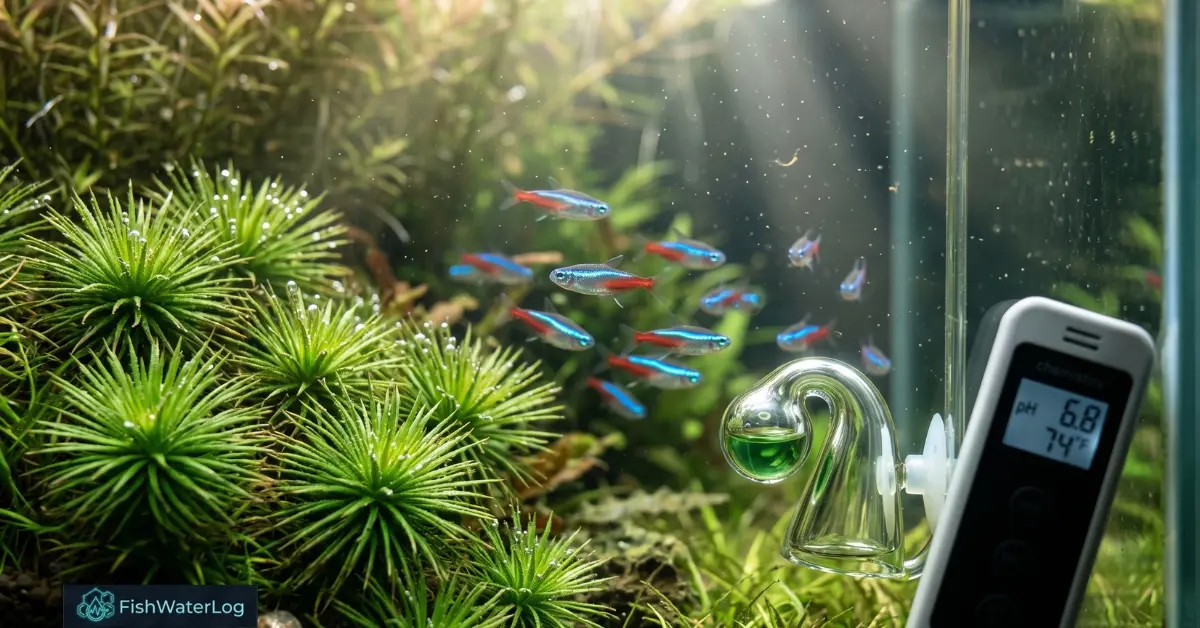
Maintaining long-term biochemical stability in an enclosed aquatic environment requires a working command of inorganic carbon chemistry. Carbonate hardness (KH)—often termed total alkalinity—quantifies the concentration of dissolved carbonate (CO32-) and bicarbonate (HCO3–) anions present in the water column. These anions act as an active chemical buffer, continuously neutralizing endogenous organic acids generated by metabolic waste to prevent sudden, violent swings in hydrogen ion concentration (pH).
In a balanced freshwater ecosystem, the bicarbonate buffering system continuously shifts across a dynamic chemical equilibrium:
CO2 + H2O ⇌ H2CO3 ⇌ H+ + HCO3– ⇌ 2H+ + CO32-
When this buffering capacity is systematically depleted—typically falling below 2 dKH (35.7 ppm as CaCO3)—the ecosystem loses its chemical elasticity and enters a state of acute instability. Without an adequate alkaline reserve, continuous biological acidification will drive the water column toward a catastrophic pH crash, which stalls the nitrifying biofilter, induces branchial distress in teleost fish, and triggers severe osmotic failure in sensitive invertebrates.
Identifying an effective low kh aquarium fix is therefore not merely a cosmetic water parameter adjustment, but an essential life-support intervention. Whether caused by active substrate ion-exchange, autotrophic nitrifying acid production, or biogenic decalcification from demanding plants, discovering how to safely raise low kh in freshwater aquarium systems is what protects livestock from lethal parameter shock while establishing enduring aquatic equilibrium.
Table of Contents
The Baseline: Municipal Source Water Variances
The initial baseline carbonate hardness of any aquatic enclosure is fundamentally determined by its hydrological source. Relying on municipal tap water introduces significant geographical variance, as subterranean aquifers and surface reservoirs impart vastly different mineral profiles into domestic lines.
Hydrological Case Study: Regional Parameter Disparities
A prominent real-world example illustrating these geographic discrepancies is the municipal water network of Islamabad, Pakistan, which relies on a combination of surface dams and deep groundwater tubewells. Environmental analyses across the Simly Dam and Khanpur Dam networks demonstrate distinct baseline parameters that directly influence daily water chemistry management:
| Source Location | Mean pH | Electrical Conductivity | TDS Level | Hardness Profile |
|---|---|---|---|---|
🏞️
Simly Dam (Raw)
Surface Reservoir | 7.75 Slightly alkaline | 259.5 μS/cm Controlled ionic density | 184.8 mg/L Moderate dissolved solids |
✓
Moderate
Stable baseline buffer; minimal remineralization needed. |
🚰
Khanpur Dam Network
Distribution Grid | 7.4 – 8.0 Alkaline range | 265 – 4,020 μS/cm Site dependent swings | 198 – 3,015 mg/L Wide dissolved range |
!
Mod. to Very Hard
High carbonate presence; requires dilution for soft-water setups. |
⛏️
Islamabad Groundwater
Deep Tubewells | 6.5 – 7.5 Sub-neutral to neutral | Highly Variable Aquifer-strata specific | Highly Variable Mineral-rich deposits |
✕
Very Hard
Extremely mineralized; high alkalinity with heavy calcium/magnesium load. |
Tap Water Hardness vs. The Zero-Buffer RO Dilemma
Source water chemistry dictates the risk profile for biological acidification:
- Hard Tap Water Environments: Water drawn from high-conductivity, limestone-rich sectors possesses naturally elevated carbonate hardness (KH), providing a resilient built-in buffer that resists pH crashes without requiring manual supplementation.
- Soft Tap Water Deficits: Municipal supplies originating from soft surface runoff or non-calcareous catchments often enter homes with negligible buffering capacity, necessitating an early low kh aquarium fix to prevent sudden chemical drops.
- The Reverse Osmosis (0 dKH) Baseline: Aquarists utilizing reverse osmosis (RO) systems to filter out heavy metals, nitrates, and municipal sanitizers inadvertently strip away all dissolved carbonates, resulting in a baseline KH of absolute zero (0 dKH).
- Mandatory Remineralization Protocol: Without a calculated remineralization strategy to establish an inorganic carbon reserve, unbuffered RO water remains completely unprotected against biological acids, making it vital to understand how to safely raise low kh in freshwater aquarium systems before stocking delicate aquatic life.
The Biochemical and Thermodynamic Drivers of KH Depletion
A widespread and perilous misconception in aquatic husbandry is that carbonate hardness remains static until altered by a physical water change. In reality, an established aquarium functions as a dynamic, closed biogeochemical reactor where dissolved alkalinity is continuously degraded by biological metabolism. Recognizing what drives this depletion is essential before implementing any long-term low kh aquarium fix.
The Stoichiometry of Autotrophic Nitrification
The single largest consumer of carbonate hardness in a mature ecosystem is the biological filter itself. Autotrophic nitrifying bacteria—primarily ammonia-oxidizing bacteria (AOB) and nitrite-oxidizing bacteria (NOB)—drive the biological conversion of toxic ammonia (NH3) into nitrite (NO2–) and ultimately into nitrate (NO3–). This essential process releases massive quantities of acid into the water column. For a comprehensive understanding of the thermodynamics behind aquatic carbon cycles and alkalinity consumption, researchers often refer to the detailed chemical frameworks provided by the Aquarium Science database. For a comprehensive understanding of the thermodynamics behind aquatic carbon cycles and alkalinity consumption, researchers often refer to the detailed chemical frameworks provided by the Aquarium Science database.
The underlying stoichiometry of autotrophic nitrification follows a strict chemical progression:
NH4+ + 2O2 → NO3– + 2H+ + H2O
For every mole of ammonium processed, two moles of free hydrogen ions (H+) are discharged directly into the water. These liberated protons react instantly with dissolved bicarbonate anions, neutralizing acidity at the direct expense of the tank’s carbonate buffer:
2H+ + 2HCO3– → 2H2O + 2CO2
The Quantitative Toll of Biological Filtration
- The Stoichiometric Ratio: Stoichiometric calculations demonstrate that 7.14 mg of carbonate alkalinity (measured as CaCO3) is irrevocably destroyed for every 1.0 mg of ammonia-nitrogen (NH4-N) oxidized by the biofilter.
- Metabolic Fish Waste Impact: A single gram of standard commercial fish food containing roughly 55% crude protein yields approximately 0.1067 grams of pure ammonia through teleost gill excretion and waste breakdown.
- The Inevitable pH Stall: In densely stocked systems with moderate feeding, biological nitrification silently strips away buffering anions daily. If the aquarist does not routinely replenish this reserve, alkalinity collapses below 1 to 2 dKH, stalling autotrophic bacteria and causing lethal ammonia accumulation.
Maintaining calculated feeding intervals, such as following our protocol on Fasting Aquarium Fish Once a Week, significantly slows alkalinity degradation by minimizing the daily nitrogenous waste load.
Cation Exchange Capacity (CEC) in Active Substrates
Modern high-tech aquascapes frequently deploy active buffering soils manufactured from baked volcanic ash, natural clays, and humic polymers. These specialized substrates feature an exceptionally high Cation Exchange Capacity (CEC), often rated above 250 meq/100g.
- Divalent Cation Adsorption: The negative charge sites within active soil aggressively bind positive divalent cations out of the water column, primarily dissolved calcium (Ca2+) and magnesium (Mg2+).
- Proton Displacement: To maintain electrical neutrality, the substrate matrix releases displaced hydrogen ions (H+) into the surrounding water.
- Active Buffer Stripping: These liberated hydrogen ions systematically neutralize dissolved bicarbonate (HCO3–) ions, artificially depressing KH toward 0 dKH and pulling the baseline pH down into acidic ranges.
- The Buffer War: Aquarists who repeatedly dump soluble alkaline buffers into a tank with fresh active soil trigger a continuous chemical loop: the soil continually strips the added carbonates until its CEC sites are saturated, exhausting the substrate’s active lifespan prematurely.
To safely buffer planted tanks without depleting your substrate’s ion-exchange capacity, learn how to manage and Recharge Old Aquarium Soil before its active life is exhausted.
Biogenic Decalcification by Aquatic Macrophytes
In densely planted aquariums that lack pressurized carbon dioxide (CO2) injection, high-light aquatic plants face rapid carbon starvation during the photoperiod. Under intense photosynthetic demand, specific demanding macrophytes (such as Eriocaulon and Vallisneria species) activate an adaptive survival mechanism known as biogenic decalcification.
- Bicarbonate Splitting: When free dissolved aqueous CO2 is exhausted, these plants actively transport bicarbonate ions (HCO3–) across their foliage, cleaving the inorganic carbon molecule to fuel photosynthesis.
- Hydroxide Precipitation: As a metabolic byproduct, the plant excretes hydroxide ions (OH–) through its leaf surface.
- Insoluble Crust Formation: The secreted hydroxide reacts with ambient calcium ions, precipitating a visible, chalky layer of calcium carbonate (CaCO3) directly on the plant’s leaves.
This botanical carbon extraction strips dissolved carbonate hardness from the water column, further exacerbating buffering deficits. When autotrophic nitrification, active substrate binding, and macrophyte carbon extraction operate simultaneously, knowing how to safely raise low kh in freshwater aquarium tanks becomes critical to avoiding sudden parameter collapse.
For a deeper look at pressurized CO2 balancing to prevent plants from stripping carbonates, read our full breakdown on Biogenic Decalcification in Planted Tanks.
Physiological Pathologies of Depleted Alkalinity
Recognizing the biological symptoms of an exhausted buffer is vital before implementing corrective measures. The physical fallout of a sudden pH drop extends far beyond a numerical shift on a test kit; it triggers severe, cascading cellular failures across aquatic fauna. Without an effective low kh aquarium fix, chronic alkalinity starvation compromises internal organ systems, leading to rapid mortality.
Osmoregulation and Branchial Ionocyte Function
Both teleost fish and freshwater crustaceans rely on specialized, mitochondria-rich epithelial cells in their gills—termed ionocytes or chloride cells—to maintain ionic homeostasis against the dilute osmotic pull of freshwater. These cells consume substantial metabolic energy (ATP) to drive the Na+/K+-ATPase (NKA) pump and the V-type H+-ATPase (VHA), facilitating the active uptake of essential salts.
- Exponential Proton Surge: When water loses its carbonate buffer and acidification takes over, the concentration of ambient hydrogen ions (H+) spikes exponentially.
- Disruption of Acid Excretion: The steep external proton gradient directly opposes the gill’s biochemical mechanism for pumping out endogenous metabolic acids.
- Systemic Acidosis: Inability to clear internal protons traps acids inside the bloodstream, leading to blood acidification (acidosis), branchial swelling, lethargy, loss of physical equilibrium, and acute respiratory distress.
Carbonic Anhydrase and Acid-Base Regulation
The enzyme carbonic anhydrase (CA) is essential across all aquatic taxa, catalyzing the rapid interconversion of carbon dioxide and water into bicarbonate and protons:
CO2 + H2O ⇌ HCO3– + H+
Heavily concentrated in branchial tissues, carbonic anhydrase represents the primary physiological pathway through which aquatic animals expel metabolic CO2 into the surrounding environment.
- Enzymatic Gradient Collapse: In an unbuffered, low-alkalinity environment, the absence of dissolved external proton acceptors stalls the enzymatic concentration gradient.
- Metabolic Exhaustion: Research on aquatic crustaceans (such as Daphnia pulex and dwarf shrimp) reveals that low-alkalinity acid stress triggers an emergency transcriptional upregulation of CA genes. The organism is forced to redirect critical energetic reserves toward maintaining internal hemolymph pH rather than somatic growth, molting, or immune defense.
Oxidative Stress and Cellular Degradation
When carbonate hardness drops below biological thresholds, the autotrophic biofilter ceases functioning, triggering an immediate rebound in toxic, un-ionized ammonia (NH3). This toxic surge provokes systemic oxidative stress within exposed livestock.
- Depletion of Antioxidant Enzymes: To neutralize the destructive onslaught of reactive oxygen species (ROS), organisms must rapidly exhaust endogenous antioxidant defenses, including Superoxide Dismutase (SOD), Catalase (CAT), and Glutathione Peroxidase (GPx).
- Tissue Necrosis: If an aquarist does not understand how to safely raise low kh in freshwater aquarium tanks during an emergency, the animal’s antioxidant reserves drain completely, resulting in lipid peroxidation, branchial necrosis, and organ shutdown.
- Interconnected Diagnostics: For step-by-step telemetry on managing oxidative imbalances throughout biofiltration cycles, consult the Aquarium Nitrogen Cycle Guide: Biofiltration & Fish Tank parameters.
For clinical steps on managing biofiltration kinetics and preventing metabolic shock, explore our comprehensive Aquarium Nitrogen Cycle Guide.
Analyzing the Content Gap: The Fallacy of Sodium Bicarbonate
A rigorous review of high-ranking aquatic literature and hobbyist forums exposes a dangerous informational gap regarding alkalinity supplementation. Mainstream guides routinely suggest kitchen baking soda as the universal, fast-acting solution for depleted alkalinity. However, this advice fails to account for how non-essential ions accumulate in closed freshwater environments over time. Relying on unrefined advice instead of a biochemically sound low kh aquarium fix frequently introduces severe elemental imbalances that compromise both plant health and sensitive livestock.
The Osmotic Toxicity of Sodium Accumulation
Pure sodium bicarbonate (NaHCO3) dissolves instantly in water, releasing bicarbonate anions that promptly neutralize free hydrogen ions and lift carbonate hardness. However, this reaction inherently leaves behind persistent sodium ions (Na+) trapped within the closed ecosystem. In natural soft-water biotopes—such as the Amazon river basin or Southeast Asian blackwater tributaries—ambient sodium concentrations are virtually undetectable.
- Inability to Process Sodium: Freshwater aquatic plants and specialized soft-water teleost species lack physiological mechanisms to excrete or tolerate sustained concentrations of sodium.
- Potassium Nutrient Blocking: High sodium concentrations disrupt cell membrane permeability and competitively block the plant roots’ ability to absorb bioavailable potassium.
- Cellular Tissue Necrosis: Repeatedly dosing baking soda causes persistent osmotic stress that manifests as localized cell death, showing up as blackened, curled, or melting leaf tissue on sensitive aquatic flora.
- Accumulative Chemical Toxin: Because sodium is neither utilized as a macronutrient nor removed via biological filtration, it remains an accumulating hazard that builds up between water changes.
Potassium Bicarbonate as the Superior Alternative
For planted aquaria and delicate community systems, the proven, biologically superior methodology for alkalinity restoration is the calculated use of potassium bicarbonate (KHCO3). Potassium bicarbonate delivers identical acid-neutralizing and pH-stabilizing capabilities as sodium-based powders, but it releases bioavailable potassium ions (K+) upon dissolution.
- Dual-Action Benefit: Potassium functions as a primary, highly mobile plant macronutrient critical for protein synthesis, cellular turgor, enzyme activation, and stomatal opening.
- Elimination of Sodium Toxicity: Replacing baking soda with potassium bicarbonate restores the carbonate buffer while fertilizing the macrophyte biomass, completely bypassing the risks of sodium buildup.
- Targeted Biological Safety: Mastering how to safely raise low kh in freshwater aquarium tanks requires utilizing buffering compounds that actively support aquatic life rather than burdening biological osmoregulation.
Aquarists seeking peer-reviewed community data on the practical dosing rates and botanical impacts of various carbonate salts frequently consult the extensive archives of The Planted Tank Forum. Aquarists seeking peer-reviewed community data on the practical dosing rates and botanical impacts of various carbonate salts frequently consult the extensive archives of The Planted Tank Forum.
Protocols: How to Safely Raise Low KH in Freshwater Aquarium Systems
Implementing a corrective chemical protocol requires absolute precision and restraint. The golden rule when deploying an effective low kh aquarium fix is that water parameters must be adjusted gradually. Aquatic organisms develop cellular adaptations to their ambient environment; sudden shifts in dissolved alkalinity or osmotic pressure can induce lethal osmotic shock. As an established guideline, never raise carbonate hardness by more than 1 dKH (17.86 ppm) per 24-hour period, unless intervening in an acute, catastrophic pH crash.
Rapid Chemical Interventions (Soluble Bicarbonates)
When an aquarium experiences an active pH crash or an unexpected biofilter stall, immediate, soluble buffering agents are necessary to restore buffering capacity before fish suffer irreversible branchial damage.
- Dosing Potassium Bicarbonate (KHCO3): Adding exactly 3.5 grams of high-purity potassium bicarbonate per 100 liters (approximately 26.4 US gallons) of aquarium water increases total carbonate hardness by precisely 1 dKH.
- Safe Dissolution Method: Never add raw, dry crystalline powder directly into the display tank or onto active substrate. Always dissolve the calculated dose thoroughly in a clean container of aquarium water first.
- Dispersal Protocol: Slowly pour the dissolved solution into a high-flow area—ideally near the filter outlet—over several minutes. This technique ensures rapid dilution and prevents localized zones of concentrated high pH from coming into direct contact with fish gills.
If low KH has already caused your beneficial bacteria to stall, follow our emergency protocol to Fix a Nitrogen Cycle Crash alongside your bicarbonate dosing.
Long-Term Mineral Dissolution (Calcareous Aggregates)
For sustainable, maintenance-free stability, passive dissolution of solid calcium carbonate (CaCO3) aggregates offers a dependable and self-regulating approach to water chemistry management.
- Crushed Coral and Aragonite Integration: Place a permeable mesh media bag containing rinsed crushed coral or aragonite gravel directly into the canister filter tray or sump chamber.
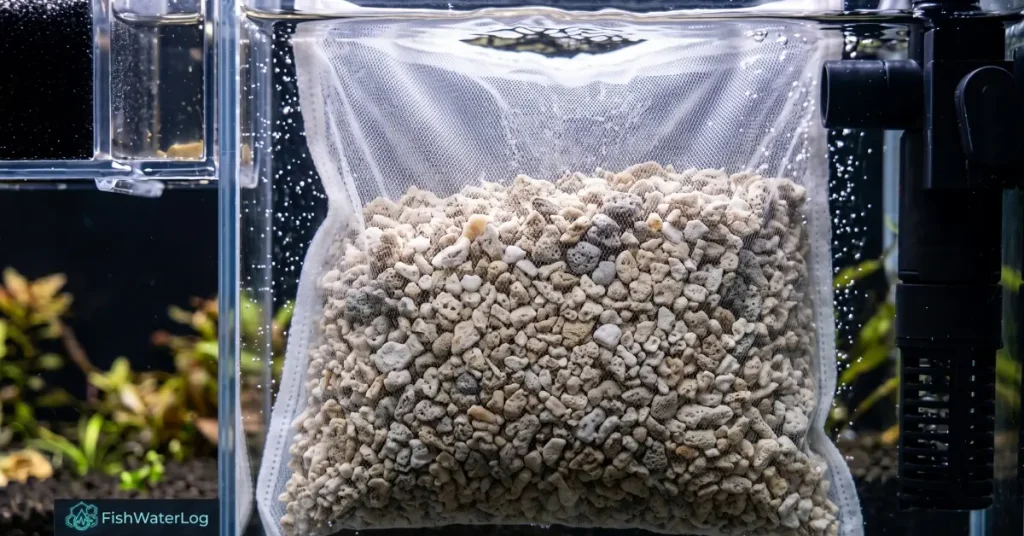
- Thermodynamic Self-Regulation: As nitrifying bacteria process ammonia within the filter media, localized nitric acid lowers the micro-environment’s pH. This acidity dissolves the surrounding calcium carbonate, steadily releasing calcium (GH) and bicarbonate (KH) back into the water column. When the water neutralizes, dissolution slows down automatically.
- Calcareous Hardscape Elements: Incorporating mineral-rich stones such as Seiryu rock or natural limestone gradually elevates carbonate hardness. While effective, this method provides less control than removable filter media bags and may slowly push parameters past the threshold tolerated by soft-water species.
Commercial Alkaline Formulations and RO Remineralization
For advanced hobbyists utilizing reverse osmosis (RO) or deionized (DI) water, relying on unmineralized source water leaves the ecosystem entirely defenseless against acidification. A structured remineralization program is essential to establish baseline stability.
- Proprietary Alkaline Buffers: Commercial buffers contain pharmaceutical-grade blends of bicarbonate and carbonate salts tailored to hold the water column at fixed, stable pH targets (such as 7.0 or 7.5) without unwanted parameter drift.
- Differentiating GH and KH Additives: Remineralizing pure RO water requires a two-part strategy. Standard GH remineralizers provide essential calcium and magnesium sulfates, but zero carbonate hardness. Understanding how to safely raise low kh in freshwater aquarium systems means pairing GH boosters with a dedicated carbonate alkalinity buffer.
| Buffering Agent | Formula | Impact on KH | Impact on GH | Dissolution Speed | Primary Application |
|---|---|---|---|---|---|
🌿
Potassium Bicarbonate
Plant Safe • Pure Buffer |
KHCO3 |
▲
Rapid Increase
Immediate buffering | No Effect 0 dGH change | ⚡ Immediate Dissolves in seconds | Planted tanks & emergency recovery Reverses pH crashes without sodium toxicity. |
⚠️
Sodium Bicarbonate
Standard Baking Soda |
NaHCO3 |
▲
Rapid Increase
Instant alkalinity lift | No Effect 0 dGH change | ⚡ Immediate Dissolves in seconds | Short-term emergency buffer High sodium accumulation risk with long-term use. |
🪨
Crushed Coral
Calcareous Aggregate |
CaCO3 |
~
Slow, Steady
Self-regulating curve | Slow Increase Adds calcium (Ca2+) | ⏳ Passive / Weeks Dissolves as acid forms | Long-term baseline stability Continuous passive buffering inside filter trays. |
🧪
Commercial KH Buffers
Precision Formulations | Proprietary Blends |
✓
Predictable
Calibrated dosage | Variable Depends on formula | ⚡ Immediate Fully water-soluble | RO remineralization & exact pH targets Locks parameters at predetermined pH setpoints. |
Taxonomic Specificity in Alkalinity Tolerances
Water chemistry cannot be managed in a vacuum; it must be calibrated to the evolutionary physiology of your specific livestock. Applying a generic low kh aquarium fix across different aquatic setups without assessing species-level requirements can trigger catastrophic osmotic stress. While certain aquatic inhabitants thrive in mineral-rich, highly buffered conditions, others rely on an acidic, low-carbonate baseline to survive.
Caridina versus Neocaridina Shrimp Requirements
Freshwater dwarf shrimp are exceptionally vulnerable to sudden shifts in alkalinity and total dissolved solids (TDS). When balancing carbonate levels in dwarf shrimp setups, aquarists must distinguish between the two primary genera kept in the hobby:
- Neocaridina Species (Cherry Shrimp, Yellow Neons): These adaptable dwarf shrimp thrive in moderate carbonate hardness, ideally requiring a stable range between 2 dKH and 5 dKH. Adequate dissolved bicarbonate anions support proper chitin synthesis and facilitate seamless ecdysis (the periodic molting of the exoskeleton). A mild, passive crushed coral buffer is often sufficient to maintain this baseline and prevent molting failure.
- Caridina Species (Crystal Red, Taiwan Bee, Blue Bolt): Caridina shrimp originate from pristine, soft-water mountainous streams and demand a strictly soft, acidic habitat with a target KH of 0 dKH to 1 dKH. These sensitive invertebrates rely almost exclusively on the ion-exchange properties of active substrates to sequester carbonates and lock the pH below 6.5.
- The Bicarbonate Danger for Caridina: Attempting to dose bicarbonate powders or add calcareous rocks to a Caridina environment disrupts their internal osmoregulation, leading to failed molts, fatal carapace ruptures, and colony collapse. Knowing how to safely raise low kh in freshwater aquarium tanks requires identifying whether your shrimp stock truly needs buffering or soft-water preservation.
For exact TDS, GH, and carbonate ratios required for safe crustacean molting, consult our Cherry Shrimp Water Parameters Guide.
Gastropod Decalcification and Shell Health
Aquatic mollusks—especially heavy-bodied gastropods like mystery snails, nerites, and trapdoor snails—rely directly on the continuous availability of dissolved calcium and bicarbonate ions to construct, repair, and reinforce their thick protective shells and opercula.
- The Acidic Dissolution Mechanism: In chronically low KH conditions, the lack of an acid-neutralizing buffer causes the water column to strip minerals directly from the organism. Weak acids dissolve the outermost protective protein layer (the periostracum), exposing the underlying calcium matrix to leaching.
- Visual Pathology: Mollusk shell damage begins as fine surface pitting and white fissures, progressing to deep shell erosion, brittle apexes, and eventual internal organ exposure.
- Invertebrate Shell Preservation: To halt and reverse shell degradation, integrate passive calcium carbonate buffers (such as mesh bags of crushed coral or aragonite in the filter) and supply calcium-enriched dietary formulations. For clinical husbandry protocols on invertebrate shell repair and water maintenance, review our dedicated Mystery Snail Care Guide: Shell Health, Diet & Mates.
For in-depth dietary and mineral protocols to repair pitted snail shells, review our complete Mystery Snail Care Guide.
Measurement and Analytical Telemetry
Diagnosing alkalinity depletion and executing an accurate low kh aquarium fix requires precise titration drop testing rather than guesswork. Standard paper test strips degrade quickly when exposed to atmospheric humidity and lack the resolution needed to detect subtle buffering shifts. Liquid titration test kits remain the clinical benchmark for tracking carbonate reserve dynamics in closed freshwater systems.
- The Analytical Titration Process: In a liquid titration drop test, a dedicated indicator dye is added to an exact volume of aquarium water. The titrant reagent is then added drop by drop with gentle agitation until a stark, definitive colorimetric shift occurs—typically transitioning from blue to bright yellow.
- Mathematical Calibration: Each individual drop mathematically corresponds to 1 degree of Carbonate Hardness (dKH). To convert this reading into parts per million (ppm) of dissolved calcium carbonate equivalent for precise dosing calculations, multiply the total drop count by 17.86.
- Systemic Parameter Logging: Because autotrophic nitrification continuously consumes dissolved buffer reserves, regular measurement intervals are essential. Structured data logging protocols can be reviewed in the Aquarium Water Parameters & Telemetry Directory to identify early chemical fluctuations before they trigger biofilter stalls or teleost gill trauma.
To establish safe baseline targets across diverse aquatic species, bookmark the Aquarium Water Parameters Directory for continuous parameter telemetry.
Conclusion
The gradual erosion of carbonate hardness is an unavoidable thermodynamic reality of biological waste conversion, active substrate cation exchange, and ecosystem maturation. The biological law that nitrifying biofilms consume 7.14 mg of protective alkalinity for every 1.0 mg of ammonia-nitrogen oxidized demonstrates why passive neglect leads directly toward catastrophic parameter collapse. Ensuring aquatic stability requires ongoing telemetry and proactive remineralization.
While generic guides frequently recommend kitchen baking soda as a universal cure, advanced aquatic science reveals the persistent osmotic risks of long-term sodium accumulation. Implementing an effective, biologically compatible strategy—such as utilizing pure potassium bicarbonate in planted setups or placing self-regulating crushed coral in filtration trays—allows aquarists to master how to safely raise low kh in freshwater aquarium tanks while permanently eliminating the threat of lethal pH crashes.
Frequently Asked Questions (FAQs)
How to increase KH in freshwater aquarium?
The most reliable method depends on the urgency of the intervention. For an immediate, targeted low kh aquarium fix during parameter drops, dissolve pure potassium bicarbonate powder into tank water and add it to high-flow areas. For long-term, passive maintenance, place a mesh bag of coarse crushed coral or aragonite in your canister filter or sump to release steady, self-regulating carbonate ions over several months.
How do I raise KH without raising GH?
To increase carbonate hardness (KH) without elevating general hardness (GH), utilize soluble bicarbonate salts such as potassium bicarbonate (KHCO3) or sodium bicarbonate (NaHCO3). These compounds supply acid-neutralizing bicarbonate anions (HCO3–) without contributing divalent calcium or magnesium cations, ensuring your GH remains completely unchanged.
How to make KH higher naturally?
To raise KH naturally without manual chemical dosing, incorporate calcareous mineral aggregates into your filtration system or substrate. Materials such as crushed coral, aragonite gravel, limestone rocks, or crushed oyster shells slowly dissolve in the presence of acidic biological byproducts, steadily replenishing the inorganic carbon buffer.
Can baking soda raise the KH level in an aquarium?
Yes, ordinary baking soda (sodium bicarbonate) effectively elevates KH during an acute emergency. However, it should only be used as a short-term intervention. Repeated dosing leads to significant sodium accumulation, which creates osmotic stress, inhibits potassium absorption in plants, and can harm sensitive soft-water fish over time.
