

Dwarf freshwater shrimp, most notably Neocaridina davidi (colloquially recognized as the Cherry Shrimp), represent a massive, highly engaged sub-niche within modern aquariculture. Prized for their prolific breeding capabilities, vibrant phenotypic coloration, and unsurpassed efficacy as detritivores, these invertebrates have fundamentally transformed the freshwater aquarium hobby. However, beneath their apparent adaptability lies a remarkably complex physiological framework that remains acutely sensitive to Neocaridina water chemistry. For invertebrate keepers, the primary cause of sudden colony collapse and mortality is rarely disease, predation, or starvation; rather, it stems directly from osmotic shock and failed ecdysis (the molting process) brought on by an unbalanced aqueous environment.
To cultivate and sustain a thriving breeding colony, one must move beyond the basic parameters of standard fishkeeping and implement strict freshwater shrimp care standards. The foundational pillar of invertebrate health is mastering precise cherry shrimp water parameters. Meeting exact Neocaridina shrimp GH KH requirements regulates the delicate balance between the biological uptake of bioavailable calcium for aquarium shrimp, carbonate hardness buffering, and hypodermal ion transport. Failing to manage these biochemical dynamics—or miscalculating the target TDS for cherry shrimp tank setups—inevitably triggers the fatal “White Ring of Death,” a structural breakdown where the decapod exoskeleton fails to separate properly at the thoracoabdominal joint.
Furthermore, establishing mature biofiltration through comprehensive shrimp tank cycling and biofilm maturation is non-negotiable before stocking. This definitive guide bridges advanced crustacean physiology with practical aquaculture husbandry, delivering actionable protocols on how to prevent cherry shrimp molting issues, stabilize aqueous ion concentrations, and sustain long-term decapod vitality.
Structural Architecture of the Crustacean Cuticle
To fully comprehend why maintaining precise cherry shrimp water parameters is an absolute physiological imperative, one must examine the microscopic architecture and chemical stratification of the decapod exoskeleton. The integument of Neocaridina davidi is not an inert shell, but a biologically active, multi-layered extracellular matrix. This matrix is composed of an outer epicuticle, a structural exocuticle, a dense endocuticle, and an unmineralized membranous layer, all underlain and continuously maintained by the living hypodermis.
The structural integrity of this cuticular matrix depends on satisfying exact Neocaridina shrimp GH KH requirements. Meeting these mineral benchmarks ensures a continuous supply of bioavailable divalent cations, delivering essential calcium for aquarium shrimp directly to the calcifying outer layers.
| Cuticular Layer | Structural Composition | Mineralogical Profile |
|---|---|---|
| Epicuticle | Outermost barrier; thin lipid-protein matrix. | Spherulitic calcite islands; dense, localized mineralization. |
| Exocuticle | Chitin-protein fibers in twisted lamellae (Bouligand structures). | Calcite crystal aggregates with Mg-calcite for structural flex. |
| Endocuticle | Thickest layer; densely packed chitin-protein matrix. | Amorphous calcium carbonate (ACC), ACP, and calcite reservoir. |
| Membranous Layer | Innermost layer directly contacting the hypodermis. | Unmineralized flexible interface for the apolysis phase. |
The mineral phase within these cuticular layers does not consist solely of crystalline calcite; it incorporates specific ratios of amorphous calcium carbonate (ACC) and amorphous calcium phosphate (ACP). In the exocuticle, magnesium ions embed within the crystal lattice (forming Mg-calcite) to prevent structural brittleness. Concurrently, the endocuticle functions as a mineral reservoir where stored ACC and magnesium are partially resorbed during pre-molt stages.
Because decapods must undergo periodic ecdysis to facilitate somatic growth, maintaining a stable TDS for cherry shrimp tank setups is vital. The animal executes an active, bidirectional movement of minerals—principally Ca2+ and Mg2+—driven by Ca-ATPase hypodermal pumps and Sodium-Calcium (Na+/Ca2+) antiporters. Post-ecdysis nucleating sites demand immediate calcification. Mastering how to prevent cherry shrimp molting issues relies entirely on keeping balanced Neocaridina water chemistry, ensuring active ion transport never stalls post-ecdysis.
Endocrine Control of the Molt Cycle (Ecdysis)
Crustaceans exhibit physiological and endocrine paradigms that diverge sharply from vertebrates, using specialized neurohormones, receptors, and enzymes to regulate somatic growth and reproduction. The molting process (ecdysis) is governed by an interlocking neuroendocrine network that synchronizes cuticular shedding with stable cherry shrimp water parameters.
The Hormonal Feedback Architecture
The crustacean molt cycle relies on a precise hormonal feedback loop that monitors environmental readiness and nutritional energy reserves:
- Molt-Inhibiting Hormone (MIH): Continuously secreted by the X-organ/sinus gland complex in the optic peduncles during the inter-molt phase to suppress ecdysteroid synthesis in the Y-organ.
- Crustacean Hyperglycemic Hormone (CHH): Regulates glucose mobilization and metabolic energy allocation during intense pre-molt physiological preparation.
- Methyl Farnesoate (MF): Secreted by the mandibular organ to modulate reproductive maturity, vitellogenesis, and synergistic endocrine signaling.
- Ecdysone & 20-Hydroxyecdysone (20E): Synthesized by the Y-organ once MIH is downregulated, hydroxylating in peripheral tissues into 20E to bind ecdysteroid receptors (EcR) and trigger pre-molt separation.
Hydrostatic Pressure, Ecdysis Mechanics, and Post-Molt Calcification
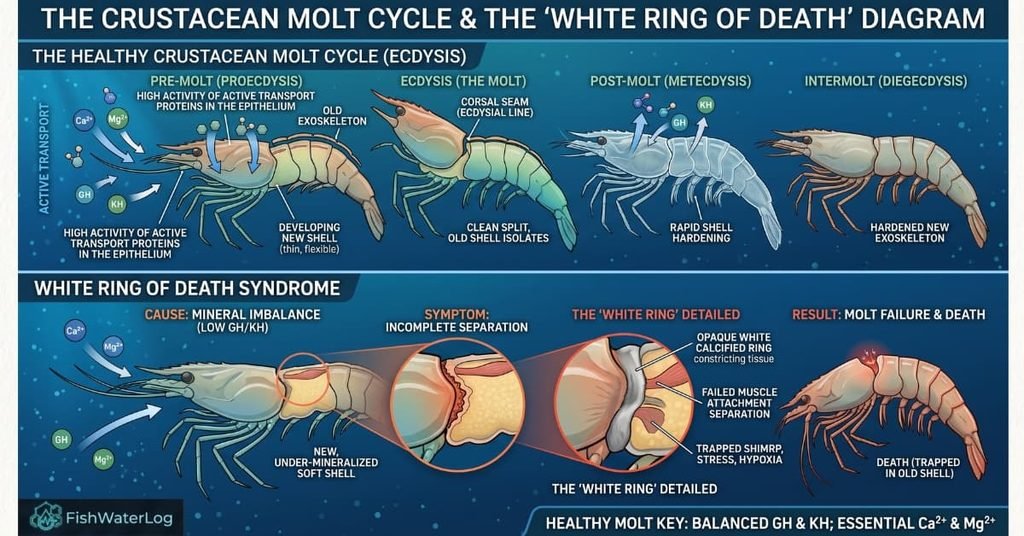
The active shedding phase lasts only minutes, but the physiological mechanics of the molting process and cuticular hardening represent an active, high-peril event:
- Hydrostatic Swelling: The shrimp rapidly absorbs ambient water across the gills to raise internal hydrostatic pressure, splitting the old cuticle along the thoracoabdominal suture line.
- Active Mineral Extraction: Immediately following ecdysis, hypodermal ionocytes absorb bioavailable calcium for aquarium shrimp to initiate cuticular mineralization.
- Environmental Stability: Maintaining stable Neocaridina water chemistry within verified Neocaridina shrimp GH KH requirements prevents osmotic shock during cuticle expansion.
- Osmotic Equilibrium: Controlling the base TDS for cherry shrimp tank setups eliminates physiological strain, acting as the primary protocol on how to prevent cherry shrimp molting issues and avoid the fatal “White Ring of Death”.
The Science of Survival: Invertebrate Osmoregulation and Ion Transport
Dwarf freshwater shrimp have evolved as obligate hyper-osmoregulators. Because they inhabit freshwater ecosystems, their internal hemolymph and intracellular fluids maintain a substantially higher concentration of dissolved salts, proteins, and minerals than the surrounding hypotonic water column. Driven by thermodynamic principles, ambient water continuously diffuses inward via osmosis across the large surface area of the branchial gill epithelia, while vital internal electrolytes (Na+, Cl-, Ca2+, Mg2+) passively leak outward along steep concentration gradients.
To counteract this continuous osmotic dilution and prevent catastrophic cellular lysis, Neocaridina davidi must expend a significant portion of their total metabolic energy budget on active invertebrate osmoregulation.
The Osmoregulatory Energy Budget
To prevent catastrophic cellular lysis and maintain systemic homeostasis, Neocaridina davidi directs a large portion of its total basal metabolic output toward active osmoregulation:
- Antennal Gland Excretion: Excess water diffusing across the branchial membranes is filtered and continuously excreted as dilute urine through specialized paired nephridial organs (antennal glands).
- Branchial Ionocyte Uptake: To counteract passive solute leakage, specialized, mitochondria-rich cells (ionocytes) in the gill filaments actively scavenge and transport bioavailable ions against steep electrochemical gradients.
- Mineral Absorption Pathways: These active transport mechanisms require sufficient ambient cations, delivering bioavailable calcium for aquarium shrimp directly to cuticular target sites.
Osmotic Gradients and Parameter Extremes
This unrelenting physiological demand illustrates why stabilizing cherry shrimp water parameters within strict Neocaridina water chemistry thresholds is critical for colony survival:
- Hypotonic Shock (Pure RO/Distilled Water): Stripping the water column of minerals creates an impossibly steep osmotic gradient. Ionocytes become rapidly exhausted, leading to cellular hyper-hydration, tissue edema, and rapid mortality.
- Hypertonic Dehydration (Excessive TDS): When mineral density exceeds physiological tolerance, water is pulled outward from the hemolymph. Antennal gland filtration ceases, resulting in nitrogenous metabolite accumulation, stunted somatic growth, and reproductive arrest.
- Optimal Osmotic Balance: Maintaining a balanced TDS for cherry shrimp tank setups alongside target Neocaridina shrimp GH KH requirements minimizes cellular stress and forms the foundational strategy on how to prevent cherry shrimp molting issues.
Mastering Cherry Shrimp Water Parameters
To establish a self-sustaining breeding colony and eliminate invertebrate mortality, aquarists must maintain absolute stability across specific biochemical thresholds. Managing cherry shrimp water parameters is not merely a husbandry guideline; it is a physiological necessity directly linked to branchial cellular respiration, cuticular calcification, and neuroendocrine stability.
Maintaining pristine water quality is significantly easier if you utilize the Best Filter Media Guide for Crystal Clear Aquarium Water. Furthermore, for highly precise measurements of your tank’s foundational minerals, refer to our comprehensive Aquarium Water Parameters Directory.
| Biochemical Parameter | Optimal Target Range | Primary Physiological Function & Importance |
|---|---|---|
| GH (General Hardness) | 6 – 8 dGH | Dictates the concentration of bioavailable divalent cations (calcium and magnesium) required for active transport into the post-molt exoskeleton. |
| KH (Carbonate Hardness) | 2 – 5 dKH | Functions as the primary pH buffer, absorbing acidic metabolic waste and providing carbonate ions for the formation of ACC in the cuticle. |
| TDS (Total Dissolved Solids) | 150 – 250 ppm | Represents the aggregate osmotic weight applied against semi-permeable membranes, dictating basal metabolic expenditure. |
| pH Level | 6.5 – 8.0 | Influences the un-ionized ammonia toxicity gradient and modulates branchial ion-exchange pump efficiency. |
| Temperature | 70°F – 78°F (21°C – 25°C) | Establishes the ectothermic metabolic baseline, ecdysone synthesis rate, and temporal molting frequency. |
| Calcium:Magnesium Ratio | ~ 3:1 to 4:1 | Prevents competitive cation inhibition from blocking Ca-ATPase channels during active ion transport. |
Testing Precision Note: Avoid relying on multi-parameter paper test strips, as they degrade quickly in ambient humidity and lack the granular accuracy required to detect subtle GH/KH fluctuations. Always utilize a calibrated digital TDS pen alongside a liquid drop titration kit (such as the API GH & KH Test Kit) to obtain reliable, colorimetric mineral measurements.
Biochemical Stability and Husbandry Guidelines
- Cation Bioavailability: Meeting verified Neocaridina shrimp GH KH requirements ensures adequate bioavailable calcium for aquarium shrimp to fuel hypodermal transport mechanisms.
- Osmotic Equilibrium: Maintaining a stable TDS for cherry shrimp tank conditions prevents osmotic shock and antennal gland fatigue.
- Preventing Ecdysis Failure: Consistent Neocaridina water chemistry is the single most critical factor in how to prevent cherry shrimp molting issues and prevent post-molt mortality.
The Biochemical Synergy: Decoding Neocaridina Shrimp GH KH Requirements
A granular understanding of Neocaridina shrimp GH KH requirements is the hallmark of advanced shrimp keeping. While standard hobbyist guides prescribe baseline numbers, they rarely explain the underlying biochemical synergy governing ion uptake, cuticular calcification, and systemic invertebrate survival.
Divalent Cations: Calcium and Magnesium Kinetics
General Hardness (GH) quantifies the concentration of dissolved divalent metal cations, primarily calcium (Ca2+) and magnesium (Mg2+):
- Calcium serves as the core mineral building block of the exocuticle and endocuticle, precipitating into spherulitic calcite islands and transient amorphous calcium carbonate (ACC) reservoirs.
- Magnesium integrates into the calcite crystal lattice to grant elasticity, while functioning as an indispensable cofactor for hypodermal Ca-ATPase transport pumps. Without sufficient ambient magnesium, active calcium uptake stalls regardless of environmental concentration.
- Maintaining a GH of 6 to 8 dGH provides the precise divalent cation density required to power mineralization immediately following ecdysis.
Carbonate Buffering, Nitrification, and Cuticular Integrity
Providing bioavailable calcium for aquarium shrimp cannot occur in isolation from Carbonate Hardness (KH) and pH stability:
- KH measures carbonate (CO3 2-) and bicarbonate (HCO3-) concentrations, neutralizing hydrogen ions (H+) generated by metabolic waste and autotrophic nitrifying bacteria during the nitrogen cycle.
- In environments lacking KH buffering (pH below 6.0), severe acid stress forces decapods to expend cellular energy maintaining acid-base homeostasis, causing a drop in adenylate energy charge (AEC) and leaching structural minerals directly out of the endocuticle.
- Carbonate ions supplied by adequate KH bind with absorbed cations to form amorphous calcium carbonate in the newly expanding shell.
Balancing this chemical interplay stabilizes Neocaridina water chemistry, optimizes cherry shrimp water parameters, and remains the primary protocol on how to prevent cherry shrimp molting issues. Maintaining these parameters within target TDS for cherry shrimp tank limits eliminates the physiological stress behind incomplete ecdysis.
Substrate Warning (Inert vs. Active Buffering Soil): Unlike soft-water Caridina species, Neocaridina davidi require stable Carbonate Hardness (KH 2–5 dKH). Using active buffering soils (such as ADA Amazonia or Fluval Stratum) actively absorbs carbonates and strips KH down to 0, which destabilizes pH and causes chronic molt failure. Always house Cherry Shrimp on inert substrates like plain aquarium gravel, pool filter sand, or specialized inert shrimp substrates.
Managing TDS for Cherry Shrimp Tank Environments
Total Dissolved Solids (TDS) is an aggregate metric calculating the sum of all mobile charged ions, minerals, salts, and dissolved organic compounds within a given volume of water. While GH and KH measure specific divalent and carbonate species, managing TDS for cherry shrimp tank setups is vital because it establishes the overarching osmotic pressure exerted against the invertebrate’s semi-permeable membranes.
Osmotic Gradients and Physiological Failure Modes
Maintaining strict Neocaridina water chemistry requires avoiding dangerous osmotic extremes that disrupt cellular homeostasis:
- Hypertonic Stress (TDS > 350–400 ppm): Driven by unutilized plant fertilizers, decomposing organics, or chemical additives, excessive solute density draws water out of the shrimp’s hemolymph. To conserve internal fluids, the antennal glands shut down filtration, causing lethal retention of metabolic waste.
- Hypotonic Trauma (TDS < 100 ppm): Un-remineralized pure water creates a steep gradient where water rushes into branchial tissues, risking cellular lysis. The shrimp exhausts glycogen reserves powering its antennal glands to excrete water, stalling somatic growth and reproduction.
- Target Baseline (150–250 ppm): Keeping TDS within 150–250 ppm stabilizes cherry shrimp water parameters, reduces osmoregulatory energy expenditure, and preserves vital metabolic reserves.
Integrating TDS with Mineral Requirements
Stabilizing conductivity must align directly with broader husbandry protocols:
- Meeting Ionic Demands: Regulate total solute concentrations alongside verified Neocaridina shrimp GH KH requirements to ensure adequate calcium for aquarium shrimp.
- Preventing Molt Failures: Osmotic stability is the primary defense in how to prevent cherry shrimp molting issues, eliminating the osmotic shock behind incomplete ecdysis.
The “Osmotic Lag” Theory and Post-Molt Calcification
While general hobbyist guides focus on static water ranges, they routinely overlook the “Osmotic Lag” theory, which explains the biochemical mechanism behind sudden post-molt fatalities. The physiological extraction and incorporation of structural minerals into the newly exposed cuticle is not instantaneous; rather, it follows a delayed kinetic curve spanning the first 48 hours post-ecdysis.
The Cuticular Barrier and Mineralization Kinetics
Immediately following cuticular shedding, the soft decapod exoskeleton initiates rapid biochemical defense mechanisms:
- Lipid-Rich Pore Plugging: Open cuticular pore canals are sealed at early post-ecdysis by a dense lipid filling material, creating an indispensable waterproofing barrier that prevents internal electrolytes from leaking into hypotonic water.
- Delayed Mineral Transport: While this barrier establishes osmotic defense, the active transport of divalent cations (Ca2+ and Mg2+) via hypodermal Ca-ATPase pumps ramps up gradually over a 48-hour recovery window.
- Cation Delivery: Supplying bioavailable calcium for aquarium shrimp within verified Neocaridina shrimp GH KH requirements ensures optimal cation availability as transport channels activate.
The Vulnerability Window and Delayed Mortality
Sudden parameter volatility during this post-molt phase is the hidden driver of unexplained shrimp deaths:
- Osmotic Shock via Water Changes: Performing large, aggressive water changes post-ecdysis creates acute fluctuations in the base TDS for cherry shrimp tank setups, outpacing the recalibration capacity of branchial ionocytes.
- Delayed Post-Molt Collapse: This physiological mismatch causes osmotic shock during the 48-hour lag period, causing shrimp to die 24 to 48 hours after an apparently successful molt.
- Stability Protocol: Maintaining unyielding cherry shrimp water parameters and stable Neocaridina water chemistry represents the ultimate standard for how to prevent cherry shrimp molting issues and secure long-term colony health.
Nutri-Physiological Synergies: Fueling Ecdysis and Embryogenesis
Water chemistry alone cannot sustain a long-term decapod colony; it must be coupled with targeted biochemical nutrition. The synthesis of the complex chitinous exoskeleton, alongside the energy-intensive process of reproduction, requires specialized macromolecules that invertebrates cannot synthesize de novo.
The Critical Role of Dietary Lipids and Sterols
Crustaceans exhibit an inability to synthesize cholesterol internally from basic metabolic precursors:
- Ecdysteroid Hormone Synthesis: Yolk cholesterol stored in the hepatopancreas and dietary sterols serve as the exclusive biological precursors for ecdysone production.
- Preventing Molting Arrest: Depleted dietary cholesterol directly suppresses Y-organ output, stalling the molt cycle and halting embryonic development in berried females.
- Target Lipid Profile: High-quality diets require an optimal lipid concentration of 8% to 12% to facilitate regular ecdysis and vitellogenesis.
| Essential Amino Acid | Optimal Dietary Concentration | Physiological Function |
|---|---|---|
| Arginine | 2.5% – 4.5% | Crucial for cellular signaling, cuticular protein matrix synthesis, and muscle tissue repair. |
| Taurine | 0.6% – 1.0% | Acts as an essential osmoregulatory osmolyte and cellular antioxidant against physiological stress. |
| Threonine | 1.5% – 1.7% | Necessary for the synthesis of protective mucins and structural cuticular proteins. |
Macro-Nutritional Balance and Invertebrate Care
- Structural Protein Demands: Diets require an overall crude protein baseline of 30% to 35% to construct the chitin-protein cuticular matrix and support embryogenesis.
- Fatty Acids and Astaxanthin: Long-chain polyunsaturated fatty acids (LC-PUFAs) and carotenoids enhance shell pigmentation, boost immune response, and maximize juvenile survival.
- Holistic Protocol: Combining nutritional support with balanced cherry shrimp water parameters, verified Neocaridina shrimp GH KH requirements, and bioavailable calcium for aquarium shrimp provides the ultimate framework on how to prevent cherry shrimp molting issues. Keeping a stable TDS for cherry shrimp tank setups ensures these nutrients are directed toward growth rather than osmoregulatory stress.
Environmental Stressors, Thermal Dynamics, and Endocrine Disruption
Even with immaculate water chemistry and optimal nutrition, external environmental stressors can rapidly trigger systemic physiological collapse in invertebrates. A foundational axiom in invertebrate toxicology is that a crab is not a fish. Crustaceans possess specialized metabolic pathways and hormone receptors that make them uniquely vulnerable to thermal shifts and chemical contaminants.
Thermal Stress and Ectothermic Metabolism
Neocaridina davidi are obligate ectotherms whose respiration, enzymatic activity, and digestive rates are dictated entirely by ambient water temperature:
- Glycogen Depletion: Sustained exposure to elevated temperatures (exceeding 30°C / 86°F) triggers an acute exhaustion of muscular glycogen reserves within days.
- Oxidative Degradation: High thermal stress accelerates oxidative cell damage and forces the rapid catabolism of structural proteins and essential free amino acids in muscle tissue.
- Reproductive Arrest: Chronic heat stress induces behavioral distress, severely depresses egg viability, and halts vitellogenesis in breeding females.
- Optimal Range: Maintaining an ectothermic baseline between 70°F and 78°F (21°C – 25°C) stabilizes metabolic expenditure and preserves predictable ecdysteroid synthesis cycles.
Elevated temperatures actively induce widespread oxidative stress, disrupt delicate metabolic balances, and violently accelerate the degradation of structural proteins and free amino acids in the crustacean muscle tissue.
Toxicants and Neuroendocrine Disruption
The evolutionary specialization of the decapod endocrine system means chemical pollutants affect invertebrates through pathways entirely absent in teleost fish:
- Receptor Interference: Compounds considered harmless to fish can act as potent neuroendocrine disruptors in shrimp, directly disrupting methyl farnesoate (MF) signaling or binding aberrantly to ecdysteroid receptors (EcR).
- Insecticide Vulnerability: Agricultural insecticides (such as diacylhydrazines) target arthropod EcRs, triggering lethal premature molting or catastrophic ecdysis failure.
- Heavy Metal Toxicity: Trace concentrations of heavy metals—most notably copper and zinc—inhibit branchial ionocyte transport, destroy gill lamellae, and permanently block the uptake of bioavailable calcium for aquarium shrimp.
High-Tech Planted Tanks and CO2 Swings: Injected pressurized carbon dioxide forms carbonic acid (H2CO3), temporarily depressing ambient pH during the photoperiod. Maintaining a solid baseline of 2–5 dKH prevents rapid pH crashes, while ensuring surface agitation and adequate dissolved oxygen prevent nocturnal hypoxia in grazing shrimp.
Holistic Biosecurity and Colony Protection
Preventing exogenous toxic contamination is essential for long-term invertebrate health:
- Aerosol & Pesticide Defense: Shield the aquarium ecosystem from airborne household sprays, aerosolized cleaners, and commercial flea/tick treatments.
- Water Parameter Stability: Maintaining optimal cherry shrimp water parameters within strict Neocaridina water chemistry ranges buffers the colony against external metabolic strain.
- Ecdysis Preservation: Enforcing verified Neocaridina shrimp GH KH requirements and keeping a stable TDS for cherry shrimp tank setups remains the primary strategy on how to prevent cherry shrimp molting issues.
Shrimp Tank Cycling, Biofilm Dynamics, and the Microbiome
A pristine physicochemical environment is contingent upon deep biological maturity. Executing a rigorous shrimp tank cycling protocol is an absolute, non-negotiable prerequisite before introducing any decapod livestock. Because invertebrates are acutely sensitive to nitrogenous toxins, the aquatic ecosystem requires an established biological filter capable of continuously converting un-ionized ammonia into nitrite, and subsequently into nitrate.
Properly managing your cherry shrimp water parameters is the first step in comprehensive freshwater-shrimp-care. Before adding any livestock, ensure you rigorously execute a How to Cycle Fish Tank With Fish: Complete Biofilter Guide protocol to stabilize your ecosystem.
Nitrification Kinetics and Branchial Integrity
Nitrogenous waste directly impairs invertebrate physiology and cellular respiration:
- Branchial Damage: Free ammonia disrupts electrochemical gradients across gill lamellae, causing branchial irritation and respiratory distress.
- Halting Ion Exchange: Elevated ammonia halts the critical Sodium-Calcium (Na+/Ca2+) antiporters and Ca-ATPase pumps required for post-molt calcification.
- Nitrite Toxicity: Nitrite oxidizes hemocyanin in the hemolymph, drastically inhibiting oxygen transport throughout the decapod body.
Biofilm Colonization and Nutritional Micro-Ecosystems
A newly cycled tank devoid of ammonia remains chemically volatile and largely sterile; Neocaridina davidi require a seasoned system colonized by dense microbial mats:
- Auxiliary Biofiltration: Biofilm represents a complex, living extracellular matrix of autotrophic nitrifying bacteria, microalgae, protozoa, and fungi covering all hardscape, substrate, and glass surfaces.
- Continuous Grazing: This matrix provides an indispensable, 24/7 foraging substrate rich in micro-nutrients, natural carotenoids, and essential polyunsaturated fatty acids.
- Ecdysis Precursors: Microorganisms embedded within the biofilm supply the exact dietary sterols and amino acids necessary to trigger ecdysone synthesis and facilitate smooth cuticular separation.
Stabilizing the Biological Infrastructure
Pairing mature biological filtration with tight chemical management is essential for long-term health:
- Mineral Equilibrium: Regulate biofiltration alongside verified Neocaridina shrimp GH KH requirements to ensure continuous availability of bioavailable calcium for aquarium shrimp.
- Osmotic Balance: Maintain a stable baseline TDS for cherry shrimp tank setups to eliminate osmoregulatory fatigue.
- Preventing Molting Mortality: Establishing a mature microbiome while locking in consistent cherry shrimp water parameters and stable Neocaridina water chemistry represents the ultimate standard for how to prevent cherry shrimp molting issues.
Comprehensive Protocols: How to Prevent Cherry Shrimp Molting Issues
Mastering how to prevent cherry shrimp molting issues directly solves the most critical pain point in decapod husbandry. The pathology of failed ecdysis—manifesting as the fatal “White Ring of Death”—stems from biochemical volatility, osmotic shock, or dietary deficiencies. Enforcing strict protocols eliminates molting fatalities and ensures sustainable colony vitality.
Husbandry Protocols for Ecdysis Protection
- Precision RO Remineralization: Municipal tap water fluctuates heavily and carries toxic chlorine or heavy metals. Reconstituting Reverse Osmosis (RO) or distilled water with dedicated shrimp mineral salts satisfies exact Neocaridina shrimp GH KH requirements (6–8 dGH, 2–5 dKH) with consistent accuracy.
- Slow Drip Water Changes: Aggressive water exchanges trigger premature molting and osmotic trauma. Restrict water changes to 10%–15% weekly and reintroduce new water via a slow siphon to avoid micro-swings in the TDS for cherry shrimp tank setups.
- Extended Drip Acclimation: When introducing new shrimp to a system, utilize airline tubing with a control valve calibrated to 1 to 2 drops per second over a continuous window of 2 to 3 hours. This deliberate rate allows branchial ionocytes ample time to adjust cellular transport mechanisms to new osmotic pressures, eliminating the risk of immediate cellular shock.
- Bioavailable Mineral & Lipid Nutrition: Supply high-grade invertebrate foods enriched with essential sterols, amino acids, and bioavailable calcium for aquarium shrimp. While branchial ionocytes absorb ions from the water, dietary nutrition bolsters hepatopancreatic reserves needed to fuel the energetic demands of cuticular separation.
- Microbial Biofilter Maturation: Complete thorough shrimp tank cycling prior to stocking to ensure continuous oxidation of nitrogenous waste and cultivate rich biofilm for continuous grazing.
Adhering to these protocols stabilizes cherry shrimp water parameters, secures balanced Neocaridina water chemistry, and protects invertebrates through every stage of the molt cycle.
Conclusion: Mastering Cherry Shrimp Water Chemistry for Long-Term Vitality
The successful, long-term cultivation of Neocaridina davidi is an exercise in precise applied biochemistry and dedicated freshwater shrimp care. Decapod crustaceans possess a profoundly complex, highly evolved physiology featuring unique adaptations in osmoregulation, cuticular biomineralization, and endocrine signaling that mandate exceptionally stable environmental conditions. Mastering cherry shrimp water parameters represents the definitive dividing line between a rapidly declining population and a thriving, vibrant breeding colony.
Continuously monitor your water chemistry levels using the Freshwater Aquarium Checklist: Equipment & Testing Audit. If you notice a sudden shift in behavior, verify your levels against our Aquarium Water Maintenance Guide and take immediate steps to avoid a Nitrogen Cycle Crash, which is universally fatal to sensitive invertebrates.
By rigorously adhering to optimal, scientifically validated Neocaridina shrimp GH KH requirements, the aquarist directly supports calcium-ATPase active transport pathways and ensures bioavailable calcium for aquarium shrimp is ready for post-molt calcification. Simultaneously, managing baseline TDS for cherry shrimp tank setups mitigates the inherent dangers of the 48-hour post-molt osmotic lag period, while thorough shrimp tank cycling secures a mature biological filter and biofilm network.
Recognizing this mineral synergy, avoiding rapid shifts in Neocaridina water chemistry, and maintaining stable thermal profiles provides the ultimate, evidence-based strategy on how to prevent cherry shrimp molting issues. Ultimately, a biologically mature ecosystem is the guarantor of robust longevity, successful ecdysis, and prolific reproduction in dwarf freshwater shrimp.
Frequently Asked Questions
What is the best TDS for cherry shrimp tank environments?
A highly stable range of 150–250 ppm is considered the physiological ideal for Neocaridina davidi. This specific TDS range ensures the ambient water is slightly hypotonic to the shrimp’s internal hemolymph, allowing for highly efficient osmoregulation without inducing excessive metabolic strain, dehydration, or fatal osmotic shock.
Why are my shrimp dying immediately before or during the molting process?
Mortality during ecdysis is overwhelmingly caused by improper Neocaridina shrimp GH KH requirements. If the GH is too low, the shrimp cannot source enough ambient calcium and magnesium to harden the new shell, leaving them vulnerable to osmotic trauma. If the GH is excessively high, the shell becomes overly dense and mechanically impossible to shed. Furthermore, rapid fluctuations in water parameters shortly before or after a molt disrupt the delicate endocrine signaling required to complete the process.
Do I need to add calcium for aquarium shrimp directly to the water?
If your municipal source water is excessively soft, or if you are appropriately utilizing RO water, you must use a dedicated shrimp remineralizer to dissolve calcium for aquarium shrimp and magnesium back into the water column. Crustaceans absorb the vast majority of their structural minerals directly from the water via active transport across their gills. Thus, having highly bioavailable dissolved minerals in the water column is non-negotiable for their survival.
How often do Cherry Shrimp molt?
The temporal frequency of the molt cycle is heavily dependent on the shrimp’s developmental age and the ambient water temperature. Juveniles undergoing rapid somatic growth may molt every 7 to 10 days. Mature adults, whose growth has slowed, typically molt every 3 to 4 weeks. Elevated environmental temperatures artificially accelerate the metabolic rate and the synthesis of ecdysteroids, leading to more frequent molting, though this significantly exhausts the animal and reduces the overall lifespan of the shrimp.
Can I use un-cycled tap water for my shrimp tank if I use a dechlorinator?
Absolutely not. Even when dechlorinated, tap water often contains fluctuating TDS levels and trace heavy metals (like copper or zinc) that act as immediate, lethal neuroendocrine disruptors to invertebrates. Furthermore, rigorous shrimp tank cycling must be fully completed to ensure a massive, mature biological filter is in place to instantly neutralize highly toxic ammonia and nitrite, which otherwise destroy the shrimp’s gill tissues.

8 thoughts on “Cherry Shrimp Water Parameters: GH, KH & TDS Tank Care Guide”