
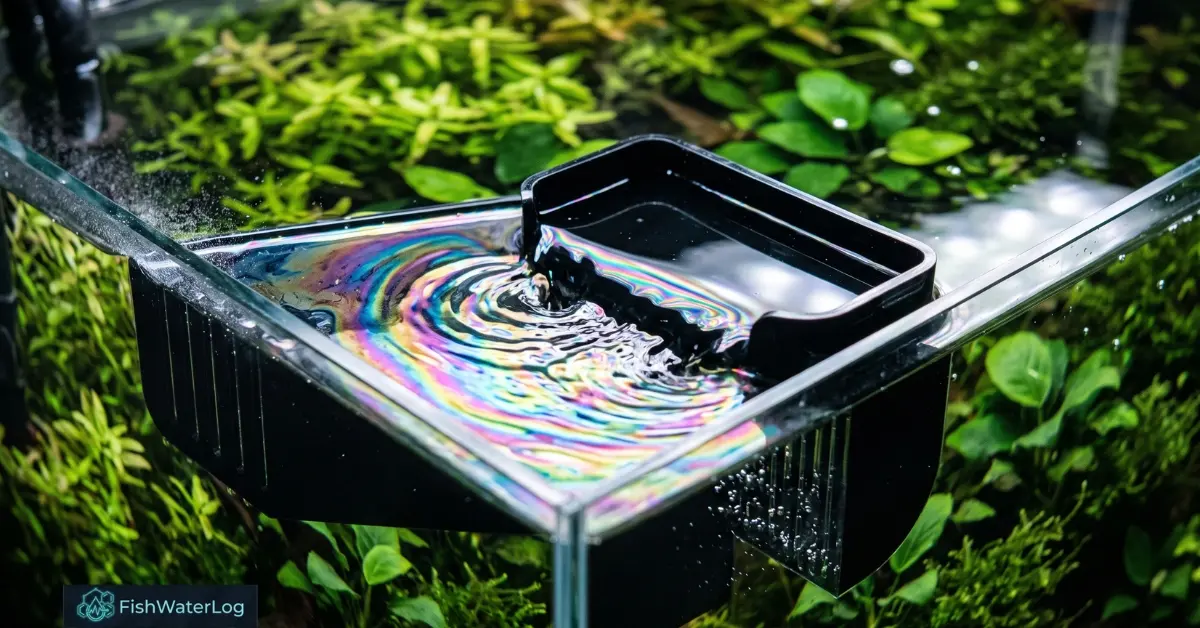
The persistent accumulation of a shimmering, oily layer at the air-water interface is one of the most pervasive challenges encountered in closed aquatic environments. While frequently dismissed as a minor aesthetic issue, this bio-membrane represents a severe physiological barrier that compromises both physical water chemistry and biological stability. Understanding why is there oily film on top of aquarium water requires an interdisciplinary analysis of lipid aggregation, protein denaturation, and heterotrophic bacterial proliferation occurring at the surface boundary.
When unconsumed dietary fats, decaying phytological debris, and ambient airborne hydrocarbons accumulate, amphiphilic surfactants migrate toward the atmosphere. Colonizing aerobic bacteria promptly bind these lipids into an extracellular polymeric substance (EPS) matrix, transforming loose oil slicks into a resilient aquarium surface scum. This viscous barrier directly impedes atmospheric gas exchange, reducing the volumetric mass transfer coefficient ($K_L a$) for oxygen by up to 60% and driving the tank’s Oxidation-Reduction Potential (ORP) toward hypoxic instability.
Permanently resolving this biophysical bottleneck requires more than temporary surface agitation; it necessitates continuous mechanical extraction. Deploying an aquarium biofilm surface skimmer utilizes calibrated hydraulic weir mechanics to fracture the high-tension barrier, systematically drawing surface organics into dense filtration media while restoring oxygen saturation and redox equilibrium. This report details the precise biochemical etiology of surface films and outlines clinical protocols for establishing pristine surface telemetry in freshwater and marine systems.
Table of Contents
The Biochemical Etiology of Surface Scum
Diagnosing the origin of surface contamination is essential before attempting any physical removal or chemical treatment. In any closed aquatic system, dissolved organic compounds (DOCs) continuously accumulate as byproducts of biological turnover. The primary precursors to this contamination are complex lipids, structural proteins, and free fatty acids introduced through feeding, fish excretions, and decomposing plant foliage.
- High-Lipid Feeds and Overfeeding: Processed dry foods, nutrient-dense pellets, and frozen offerings like bloodworms contain significant fat concentrations. When fish are overfed, unconsumed fractions and lipid-rich metabolic waste leach directly into the water column. Unlike simple water-soluble carbohydrates, these non-polar fats do not integrate smoothly into the water column.
- Phytological Decay and Macrophyte Melting: In planted systems, decaying leaves and cryptocoryne melt release intracellular proteins and structural carbohydrates. This massive influx of bioavailable organic carbon acts as an immediate catalyst for surface-dwelling anomalies.
- External Airborne Hydrocarbons: Rimless, open-top aquariums function as electrostatic traps for terrestrial contaminants. Micro-dust, volatile organic compounds (VOCs) from cleaning aerosols, vaporized kitchen oils, and sebum from human hands settle onto the water boundary layer. These compounds integrate into the surface slick, making standard filter agitation largely ineffective.
Lipid Aggregation and the Physics of Surface Tension
The persistent accumulation of an oily film on top of aquarium water is governed by fundamental fluid mechanics and the molecular geometry of organic surfactants. Dissolved proteins and lipids are predominantly amphiphilic molecules, featuring a hydrophilic (water-attracting) polar head and an elongated hydrophobic (water-repelling) hydrocarbon tail.
Because water molecules exhibit strong intermolecular hydrogen bonding, the liquid maintains high cohesive surface tension. This thermodynamic pressure continuously pushes the hydrophobic tails of organic molecules upward, expelling them from the liquid phase toward the atmosphere while keeping their hydrophilic heads anchored beneath the surface. This directional migration causes fats, proteins, and free fatty acids to concentrate into a dense, micro-thin layer at the air-water boundary.
- Suppression of Surface Dynamics: As surfactant concentrations cross a critical threshold, they reduce localized surface tension and prevent subtle ripples from forming.
- Formation of Iridescent Slicks: Lacking turbulent agitation, these floating lipids coalesce into an uninterrupted film that reflects light as a characteristic iridescent, rainbow-colored oil slick.
- Failure of Standard Agitation: Merely directing a powerhead or filter outlet at the surface fails to solve why is there oily film on top of aquarium water. While turbulence may break the film apart temporarily, the persistent amphiphilic molecules quickly resurface once currents subside unless physically extracted with an aquarium biofilm surface skimmer.
Microbial Colonization and the Extracellular Polymeric Substance (EPS) Matrix
Left unchecked, the initial monolayer of lipids and proteins rapidly transforms into a biologically active ecosystem. Heterotrophic bacteria—predominantly aerobic species such as Pseudomonas—migrate to the air-water boundary, drawn by the convergence of abundant atmospheric oxygen and dense organic nutrition.
The rate of bacterial proliferation is closely tied to the aquarium’s Carbon-to-Nitrogen (C:N) ratio. When dissolved organic carbon spikes due to unmineralized detritus or melting plant tissue, heterotrophic bacteria undergo an explosive population bloom directly across the high-tension interface. The rate of bacterial proliferation is closely tied to the aquarium’s Carbon-to-Nitrogen (C:N) ratio. When dissolved organic carbon spikes due to unmineralized detritus or melting plant tissue, heterotrophic bacteria undergo an explosive population bloom directly across the high-tension interface—a process detailed in our guide on freshwater ecosystem C:N ratio dynamics.
- Secretion of the EPS Matrix: As the bacterial colonies proliferate, they secrete extracellular polymeric substances (EPS)—a durable framework composed of complex polysaccharides, structural proteins, and extracellular DNA.
- Structural Cementation: This sticky EPS matrix binds
The Mass Transfer Coefficient (KLa) and Gas Diffusion Kinetics
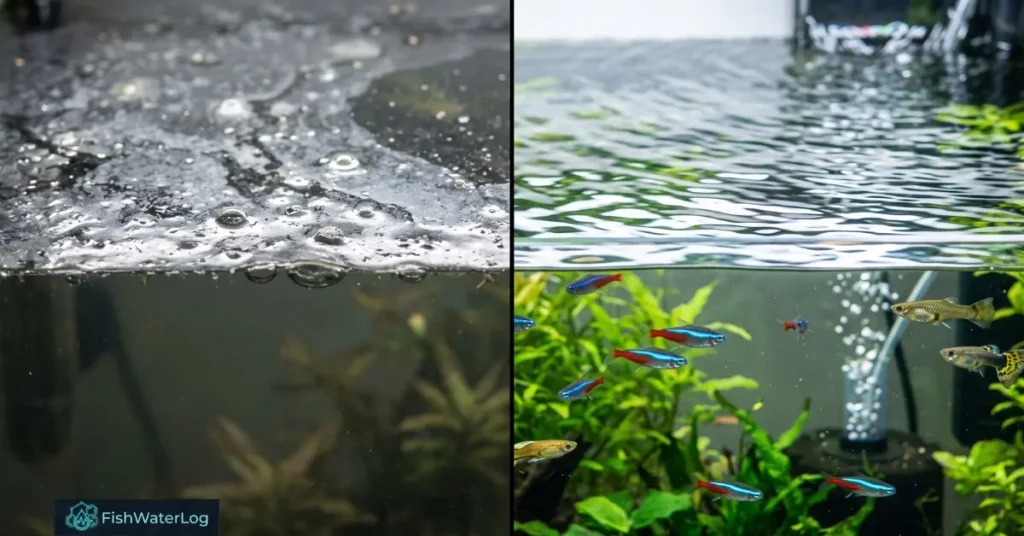
The visible accumulation of aquarium surface scum is far more than an aesthetic defect; it induces a severe biophysical crisis at the air-water interface. In closed aquatic habitats, the exchange of gases—specifically the dissolution of atmospheric oxygen (O2) and the venting of dissolved carbon dioxide (CO2)—is governed by the two-film theory of mass transfer and Fick’s Law of diffusion. The rate of liquid oxygen absorption is dictated by the volumetric mass transfer coefficient, universally designated as KLa.
- Mathematical Parameters of Gas Exchange: In the equation for volumetric gas transfer, KL represents the liquid-phase mass transfer coefficient, while a denotes the specific interfacial surface area available for diffusion. In a well-circulated aquarium without surface barriers, turbulent surface movement minimizes the boundary layer thickness and maximizes a, driving rapid oxygen uptake.
- Suppression of Mass Transfer: The establishment of a lipid-protein matrix and an extracellular polymeric substance (EPS) blanket acts as a persistent diffusion barrier. Industrial fluid dynamics and aquaculture research demonstrate that an unbroken surface film suppresses the oxygen mass transfer coefficient by 40% to 60%.
- Development of Chronic Hypoxia: As the bio-membrane thickens, the collective biological oxygen demand (BOD) of the teleost livestock, biofilter biofilms, and plant roots quickly outstrips the incoming oxygen supply. This leads to sub-clinical chronic hypoxia, impairing cellular respiration across the entire ecosystem. Installing an aquarium biofilm surface skimmer physically fractures this stagnant boundary layer, instantly restoring optimal KLa values and re-establishing unimpeded gas diffusion.
Development of Chronic Hypoxia: As the bio-membrane thickens, the collective biological oxygen demand (BOD) of the teleost livestock, biofilter biofilms, and plant roots quickly outstrips the incoming oxygen supply. Tracking this decline via precision dissolved oxygen telemetry testing confirms sub-clinical chronic hypoxia. Installing an aquarium biofilm surface skimmer physically fractures this stagnant boundary layer, instantly restoring optimal KLa values and re-establishing unimpeded gas diffusion.
The Planted Aquarium Paradox: CO2 Retention Versus Nocturnal Hypoxia
In high-tech planted aquariums utilizing pressurized carbon dioxide injection, an oily film on top of aquarium water introduces a perilous physiological paradox. Because the bio-membrane functions as a bidirectional seal, it blocks atmospheric oxygen from entering while simultaneously preventing dissolved CO2 from outgassing into the ambient air.
While inexperienced aquarists might assume this unintended containment helps conserve injected CO2 during daylight hours, it creates lethal conditions during the nocturnal phase:
- The Dark Cycle Metabolic Shift: During photoperiod illumination, aquatic macrophytes actively drive photosynthesis, absorbing free CO2 and releasing dissolved oxygen. However, the moment aquarium lights turn off, photosynthesis ceases, and plants immediately transition to cellular respiration, consuming dissolved oxygen and exhaling metabolic CO2.
- Accumulation of Carbonic Acid: With livestock, nitrifying bacteria, and macrophyte biomass all respiring simultaneously beneath an unbroken surface scum, large quantities of trapped CO2 hydrolyze into carbonic acid (H2CO3). This triggers an aggressive overnight pH crash.
- Nocturnal Hypoxic Asphyxiation: Because incoming oxygen transfer is restricted by the biofilm, nocturnal oxygen levels crater while carbonic acid peaks. This combination of acidosis and severe hypoxia is a primary catalyst for unexplained early-morning fish losses. Deploying an aquarium biofilm surface skimmer establishes continuous surface turnover, providing controlled gas venting and steady oxygen intake to ensure 24-hour biochemical stability.
Oxidation-Reduction Potential (ORP): The Ultimate Indicator of Water Quality
To accurately evaluate the invisible systemic damage caused by surface protein slicks, aquarists must evaluate parameters beyond basic test kits and track Oxidation-Reduction Potential (ORP). Measured in millivolts (mV), ORP reflects the thermodynamic oxidizing capacity of the water column—specifically its ability to break down organic impurities through electron exchange.
- Baseline Redox Telemetry: A pristine, oxygen-saturated aquatic environment maintains a positive ORP range between +250 mV and +400 mV. Understanding aquarium redox potential and probe calibration reveals that at these elevated positive millivolt thresholds, the ecosystem is aggressively oxidizing, allowing obligate aerobic autotrophs to rapidly convert toxic nitrogenous waste into inert nitrate.
- Redox Degradation Under Surface Films: When a thick bio-membrane restricts atmospheric gas exchange, dissolved oxygen levels plunge. Because oxygen is the primary electron acceptor in aquatic chemistry, its depletion causes the aquarium’s redox value to plummet below +200 mV.
- The Anaerobic Tipping Point: Dropping below +200 mV shifts the environment from an oxidizing state into a reducing state. Under reducing conditions, aerobic nitrification stalls, prompting dangerous ammonia spikes that threaten the fundamental aquarium nitrogen cycle and biofiltration. Concurrently, facultative and obligate anaerobic bacteria proliferate within the substrate and bio-media, producing harmful metabolic byproducts such as toxic hydrogen sulfide (H2S) and volatile organic acids.
- Redox Restoration Via Surface Skimming: Resolving why is there oily film on top of aquarium water through active surface extraction is a critical biological safeguard. An aquarium biofilm surface skimmer strips away the insulating organic blanket, pulling highly oxygenated boundary water into circulation to instantly drive ORP back into positive, oxidizing equilibrium.
Hydrodynamics and Engineering of the Aquarium Biofilm Surface Skimmer
Eliminating stubborn aquarium surface scum requires specialized fluid dynamics rather than simple surface agitation. An aquarium biofilm surface skimmer utilizes a floating intake weir that continuously self-adjusts to the water line using calibrated buoyancy chambers. This mechanism forms a controlled hydraulic drop, creating a localized low-pressure zone at the air-water boundary.
- Density-Driven Separation: Because lipids, denatured proteins, and bacterial sheets possess lower density than water, they concentrate strictly at the surface. The hydraulic drop selectively pulls these buoyant compounds over the weir lip into the filtration chamber.
- Mechanical Extraction vs. Agitation: Unlike spray bars that temporarily disperse lipids into the water column only for them to resurface, a surface skimmer physically captures organic waste within internal media for permanent removal.
9. Foam Fractionation Versus Mechanical Surface Skimming
Understanding why is there oily film on top of aquarium water often leads aquarists to confuse marine protein skimmers with freshwater surface skimmers, despite their fundamentally different operating mechanics.
- Protein Skimmers (Foam Fractionation): These devices inject micro-bubbles into a contact column. In saltwater, high ionic density stabilizes the bubbles, allowing dissolved organic compounds to bind to bubble surfaces and exit as dry foam. In freshwater, low ionic density causes bubbles to burst instantly, rendering foam fractionation ineffective.
- Aquarium Biofilm Surface Skimmers: Operating mechanically without requiring micro-bubble stability, these units use a direct-drive pump to pull the top layer of water through dense filter sponges or fine mesh. This traps coagulated lipids, dust, and extracellular polymeric matrices directly in both freshwater and marine setups.
System Engineering: Calculating Pump Sizing and Flow Rates
Proper pump sizing ensures effective extraction of the oily film on top of aquarium water without generating excessive laminar currents that stress aquatic fauna. Turnover capacity must match total tank volume and bioload:
- Nano Aquariums (<50 Liters): Require micro-skimmers operating between 150 and 300 L/h to clean the surface without overwhelming small fish or invertebrates.
- Standard Aquariums (100–300 Liters): Require standalone units with adjustable flow ratings between 300 and 500 L/h to maintain an active hydraulic drop.
- Large Systems (>400 Liters): Depend on inline skimmers tied to high-output canister intakes rated above 1,200 L/h, or multiple distributed skimming units.
- Operational Head Loss: Installed media sponges, intake guards, and connecting pipework reduce nominal pump output by up to 40% under operating conditions.
Safeguarding Micro-Fauna: Hydrodynamic Entrapment and Mesh Modifications
While deploying an aquarium biofilm surface skimmer provides an unmatched mechanical solution for surface purification, it introduces an operational hazard for nano-fauna. Dwarf shrimp species—notably Neocaridina and Caridina variants—as well as newly hatched fish fry, are vulnerable to intake entrainment. Because freshwater shrimp instinctively graze on lipid-rich matrices and bacterial aggregates, they are naturally attracted to the floating weir crown where organic nutrients continuously pool.
While deploying an aquarium biofilm surface skimmer provides an unmatched mechanical solution for surface purification, it introduces an operational hazard for nano-fauna. Dwarf shrimp species—notably delicate invertebrates maintained under strict cherry shrimp water parameters—as well as newly hatched fish fry, are vulnerable to intake entrainment. Because freshwater shrimp instinctively graze on lipid-rich matrices and bacterial aggregates, they are naturally attracted to the floating weir crown where organic nutrients continuously pool.
Hydrodynamic Entrapment Dynamics
When micro-fauna climb onto the floating weir to feed, the downward intake velocity often exceeds their sustained burst swimming speed. The localized hydraulic drop pulls the organisms through the intake slots and down into the internal filter housing. Although resilient invertebrates can survive within the dark chamber by feeding on captured detritus, they are removed from the display tank and face injury or death if drawn into the spinning impeller.
Advanced Intake Modifications
- 3D-Printed Micro-Mesh Guards: Advanced hobbyists construct custom intake guards using inert PETG or food-safe PLA filaments that fit securely over the intake weir. Specifying a 0.5 mm mesh aperture stops newly hatched shrimplets (1–2 mm in length) from entering while allowing floating oils, amphiphilic lipids, and proteins to pass through unimpeded.
- Internal Coarse Sponge Baffles: For systems without custom printed guards, fitting a coarse, low-PPI (pores per inch) reticulated polyurethane foam cylinder directly beneath the weir creates an effective physical barrier. If livestock slips over the weir crest, it lands safely on the sponge surface above the motorized impeller assembly.
- Automated Duty-Cycle Timers: In heavily stocked shrimp breeding systems, connecting the skimmer to an automated digital timer provides effective protection. Programming the unit to run for 15 minutes every 3 to 4 hours clears surface lipids and restores gas exchange while allowing entrained animals to swim out during idle periods.
The Four-Step Eradication and Remediation Protocol
To eliminate aquarium surface scum and address the underlying drivers of why is there oily film on top of aquarium water, apply a methodical four-stage remediation framework.
Step 1: Diagnostics and Surface Tension Identification
Deactivate all canister filters, circulation pumps, and wavemakers for 5 minutes to let the surface tension settle:
- Lipid-Dominant Slicks: If the film is shimmering, iridescent, and fractures into micro-droplets when disturbed before immediately merging, it is primarily driven by lipids. This indicates excessive dietary fats, overfeeding, or airborne household aerosols.
- Structural Biofilm Matrices: If the film appears matte, dull, greyish-white, and cracks into rigid geometric plates, an active heterotrophic bacterial extracellular polymeric substance (EPS) matrix has developed. This points to elevated dissolved organic carbon, melting aquatic plants, or an overloaded biological filter.
Step 2: Acute Mechanical Mitigation (Capillary Extraction)
If gas exchange is obstructed and dissolved oxygen levels are dropping, quickly clear the surface before modifying hardware:
- Place a dry, additive-free, unbleached paper towel flat across the water surface for 3 seconds.
- Porous capillary action absorbs floating surfactants, free fatty acids, and buoyant bacterial mats.
- Lift the sheet horizontally from all four corners to prevent trapped organics from draining back into the water. Repeat with fresh sheets until the water surface is clear. Note that capillary absorption is a temporary intervention; organic films typically return within 24 to 48 hours unless root biological causes are resolved.
Because water molecules exhibit strong intermolecular hydrogen bonding, the liquid maintains high cohesive surface tension. As detailed in biophysical research on the thermodynamics of aggregated lipids and surface tension, this thermodynamic pressure continuously pushes the hydrophobic tails of organic molecules upward, expelling them from the liquid phase toward the atmosphere while keeping their hydrophilic heads anchored beneath the surface.
Step 3: Installing the Aquarium Biofilm Surface Skimmer
Mount an aquarium biofilm surface skimmer to establish continuous surface clearing:
- Position the device in an area of converging surface currents to maximize debris collection.
- Align the body vertically; tilting causes the floating weir to stick against the intake column, disrupting the hydraulic drop.
- When using an inline glass lily pipe skimmer with a canister filter, adjust the lower flow valve. Balancing flow between the lower intake and the surface weir prevents the crown from bobbing and drawing air into the canister impeller.
Step 4: Managing Biological Inputs
Pair hardware filtration with biological load management to maintain water clarity:
- Feed Adjustment: Reduce high-fat offerings, feeding only what livestock consumes within 60 seconds, and use low-ash, highly digestible aquatic feeds.
- Plant Trimming: Remove decomposing leaves and decaying stems quickly to lower dissolved organic carbon levels.
- Media Maintenance: Rinse the surface skimmer’s internal sponge in dechlorinated aquarium water every 7 to 14 days to remove collected organics permanently from the system.
To prevent chronic organic accumulation and maintain long-term ecosystem balance, integrate surface extraction alongside a structured routine aquarium water maintenance protocol that regulates organic inputs before they manifest as surface tension anomalies.
Comparative Efficacy Analysis of Remediation Techniques
The table below compares standard approaches for clearing oily film on top of aquarium water, outlining their impact on the mass transfer coefficient (KLa) and overall stability.
| Remediation Technique | Primary Mechanism | Impact on Gas Exchange (KLa) | Duration & Sustainability | Micro-Fauna Entrapment Risk |
|---|---|---|---|---|
🧻
Paper Towel Capillary Absorption
Acute Manual Blotting | Capillary draw of floating organic surfactants and lipid layers. | Short Temporary Boost Relief lasts only several hours | ✕ Negligible Re-establishes in 24–48 hours |
✓
Zero Risk
Completely passive |
🌊
Increased Filter Agitation / Spray Bar
Surface Tension Disruption | Mechanical disruption and continuous fracturing of surface boundary layers. | Moderate Increase Active across open ripple zones | ! Moderate Fails against heavy lipid loads |
✓
Zero Risk
Safe outflow current |
🫧
Air Stone / Upwelling Aeration
Pneumatic Column Displacement | Upward water column displacement continually breaking the air-water interface. |
▲
High
Rapidly vents injected CO2 | ⚡ Continuous Causes salt/mineral creep |
✓
Zero Risk
No suction hazards |
🧪
Marine Protein Skimmer (Venturi)
Foam Fractionation | Foam fractionation via hydrophobic micro-bubble adsorption and surface tension lift. |
▲
High
Maintains high DO saturation | ✕ Zero in Freshwater Strictly requires saltwater density | Low Risk Enclosed sump intake |
⚙️
Dedicated Aquarium Biofilm Surface Skimmer
Hydraulic Weir Extraction | Hydraulic weir downdraft with permanent physical sponge and matrix capture. |
✓
Maximum
Restores boundary-layer diffusion | ✓ Permanent Requires periodic sponge rinsing | ⚠️ Elevated Fully mitigated with 0.5 mm guards |
Content Gap Analysis: Synthesizing Missing Literature
A rigorous examination of conventional hobbyist literature and popular aquascaping guides reveals a superficial approach toward surface tension anomalies. Standard community resources routinely identify surface scum merely as a cosmetic flaw caused by high-protein fish foods or poor filtration agitation, universally advising paper towel skimming or the purchase of entry-level surface hardware without addressing the underlying chemical dynamics.
This report bridges these critical scientific gaps by establishing an interdisciplinary framework connecting fluid mechanics, microbial ecology, and closed-system aquaculture chemistry:
- Dissolved Oxygen Telemetry and Redox Thermodynamics: Mainstream guides warn that an unbroken bio-membrane “blocks oxygen,” yet they fail to quantify the chemical cascade. By tracking Oxidation-Reduction Potential (ORP), we demonstrate how the depletion of boundary-layer oxygen suppresses the tank’s redox value below +200 mV, degrading aerobic biological filtration and allowing harmful anaerobic processes to take hold.
- Mathematical Physics of the Diffusion Barrier: Standard blogs fail to explain the physical mechanics of gas transfer at the air-water interface. Applying the two-film theory of mass transfer and calculating the volumetric mass transfer coefficient (KLa) details the physical mechanics by which amphiphilic lipids and EPS matrices reduce oxygen absorption rates by 40% to 60%.
- Hydraulic Engineering of Skimmer Weirs: Popular publications rarely explain how skimming mechanics operate. We synthesize the fluid dynamics of buoyancy chambers, hydraulic drops, and localized low-pressure extraction, explaining why an aquarium biofilm surface skimmer provides permanent removal where standard surface agitation falls short.
Conclusion
The manifestation of an oily film on top of aquarium water is never an isolated aesthetic flaw; it represents a tangible symptom of underlying physiochemical and biological instability. Driven by amphiphilic lipid aggregation, protein denaturation, and heterotrophic bacterial colonization, this bio-membrane fundamentally alters fluid surface tension. By generating a resilient extracellular polymeric substance (EPS) blanket across the surface boundary, this matrix severely restricts the volumetric mass transfer coefficient (KLa), driving gas exchange downward, trapping metabolic carbonic acid overnight, and plunging
Oxidation-Reduction Potential (ORP) toward hypoxic danger thresholds. The rate of bacterial proliferation is closely tied to the aquarium’s Carbon-to-Nitrogen (C:N) ratio. Peer-reviewed research investigating C:N ratio dynamics in biofilm proliferation demonstrates that when dissolved organic carbon spikes due to unmineralized detritus or melting plant tissue, heterotrophic bacteria undergo an explosive population bloom directly across the boundary layer.
While manual blotting techniques provide temporary relief, establishing permanent ecological equilibrium requires the integration of an aquarium biofilm surface skimmer. By utilizing calibrated hydraulic weir mechanics and directed surface intake flow, dedicated surface skimming hardware permanently extracts organic slicks into mechanical filter media, instantly restoring atmospheric gas diffusion and stabilizing system redox values. When outfitted with 0.5 mm mesh guards to safeguard vulnerable dwarf shrimp and nano-fauna, the surface skimmer becomes an essential engineering pillar for closed aquatic life support.
Frequently Asked Questions (FAQs)
Why is there oily film on top of aquarium water even though I perform weekly water changes?
Standard water changes utilize gravel vacs and siphon hoses that draw water from the middle and benthic zones of the water column. Because amphiphilic lipids and bacterial extracellular matrices possess lower specific gravity than water, they cling tenaciously to the air-water interface via high surface tension. As the water drains, the oily surface scum simply rides the water level down and back up when refilled, remaining entirely inside the tank. Without dedicated surface extraction or an aquarium biofilm surface skimmer, routine water changes cannot mechanically capture this floating barrier.
Will an aquarium biofilm surface skimmer deplete the CO2 in my high-tech planted tank?
When properly adjusted, a dedicated surface skimmer will not drain dissolved CO2 to problematic levels. While violent splashing or extreme bubbling drives off gas, an internal skimmer strictly pulls the surface monolayer over a smooth hydraulic weir, removing the physical barrier while preserving laminar bulk water flow. Crucially, clearing the surface allows natural nocturnal gas equilibrium, preventing dangerous overnight carbonic acid buildup and safeguarding livestock against nocturnal hypoxia.
Can I use a marine protein skimmer to remove oily surface scum in a freshwater aquarium?
No, marine protein skimmers relying on foam fractionation are ineffective in freshwater setups. Saltwater possesses high ionic strength and density, which stabilize micro-bubbles and allow amphiphilic organics to bind and lift into an upper collection cup. In freshwater, the lower specific gravity and lack of ionic stability cause micro-bubbles to coalesce and burst immediately, failing to extract floating lipids. Freshwater tanks require a mechanical surface skimmer that physically traps waste inside dense filter sponges.
How often does the sponge inside an electric surface skimmer need to be cleaned?
The pre-filter sponge within an electric surface skimmer should be rinsed in dechlorinated tank water every 7 to 14 days. Because skimmers continuously pull concentrated organic fats, airborne dust, and dense bacterial mats from the surface tension layer, the small internal sponge collects detritus rapidly. Neglecting maintenance allows trapped organic waste to decompose inside the unit, converting captured scum into dissolved nitrates and defeating the purpose of organic removal.
Why does my glass lily pipe surface skimmer constantly bob up and down and suck in air?
Hydrodynamic instability and aggressive weir bobbing occur when the external canister filter’s intake suction exceeds the water inflow entering through the lower slots of the skimmer pipe. The suction drains the skimmer column faster than the hydraulic drop can refill it, causing the floating weir crown to drop below the waterline and draw air into the impeller line. To stabilize the intake, adjust the bottom acrylic bypass rod or flow valve to increase lower water intake, balancing hydrostatic pressure and stabilizing the weir.
