
The biological equilibrium of a freshwater planted aquarium relies on the continuous flux and assimilation of dissolved inorganic carbon. Autotrophic macrophytes depend on carbon dioxide (CO2) and bicarbonate ions (HCO3-) to fuel photosynthesis. However, the molecular diffusion of carbon dioxide in water is nearly ten thousand times slower than in the atmosphere, creating a severe limiting barrier under intense illumination and heavy plant biomass. As submerged plants rapidly strip the water column of free carbon dioxide, the resulting carbonic acid depletion forces the aquatic environment into an increasingly alkaline state.
To avoid photosynthetic arrest during extreme carbon deficits, several fast-growing macrophytes activate specialized carbon-concentrating mechanisms. Rather than remaining starved, these species upregulate enzymes to drive bicarbonate assimilation, directly stripping alternative inorganic carbon from the water. While this metabolic shift preserves plant growth, it initiates biogenic decalcification planted tank degradation. This process systematically extracts alkalinity, causing rapid carbonate hardness (KH) depletion and triggering visible calcium carbonate precipitation across the adaxial epidermis. Left unmonitored, the loss of chemical buffering destabilizes pH stability and leaves the closed ecosystem vulnerable to biological failure.
The consequences of this inorganic carbon scavenging become far more volatile when accelerated by plant allelopathy. By actively secreting secondary biochemical metabolites—such as hydrolyzable tannins and phenolic acids—dominant flora exploit high-pH microzones to suppress the enzyme synthesis and cellular respiration of neighboring competitors. This synergistic chemical interference causes severe interspecific plant competition collapse, leaving sensitive and slow-growing species stunted. Recognizing the physiological markers of biogenic decalcification planted tank KH loss is essential for maintaining aquatic hydrodynamics, preserving biological filtration, and sustaining delicate planted tank ecology.
The Physicochemical Framework of the Calco-Carbonic Equilibrium
Understanding how a closed aquatic habitat destabilizes through biogenic decalcification planted tank mechanics requires analyzing the underlying calco-carbonic equilibrium. Water chemistry in any high-biomass system is governed by a tripartite ionic balance: potential of hydrogen (pH), general hardness (GH), and carbonate hardness (KH).
The Aquatic Carbon Buffer System
- Alkalinity Reservoir: Carbonate hardness measures the aggregate concentration of dissolved carbonate (CO3(2-)) and bicarbonate (HCO3(-)) ions.
- Chemical Acid Sponge: These dissolved carbon species act as a natural buffer, neutralizing free hydrogen ions (H+) produced by biological waste decomposition to prevent catastrophic pH swings.
- Equilibrium Dissociation: Dissolved carbon dioxide reacts with water to form weak carbonic acid (H2CO3), which dynamically dissociates into bicarbonate and carbonate fractions relative to the ambient pH.
- Neutral State Dominance: In typical neutral to slightly acidic planted tank conditions, bioavailable free carbon dioxide and bicarbonate dominate the dissolved inorganic carbon (DIC) profile.
Carbonic Acid Depletion and Equilibrium Shifts
- Photosynthetic Drawdown: During peak photoperiods under intense lighting, submerged macrophytes consume free carbon dioxide significantly faster than passive atmospheric diffusion can replenish it.
- Thermodynamic Shift: This aggressive uptake triggers acute carbonic acid depletion, shifting the chemical equilibrium via Le Chatelier’s principle and forcing the water column into an alkaline state.
- Carbon Speciation Loss: As the pH rises unchecked, the remaining inorganic carbon shifts away from bioavailable free CO2 toward non-diffusible carbonate forms.
- Systemic KH Collapse: Once critical alkaline thresholds are crossed, natural mineral solubility breaks down, precipitating essential buffering ions out of solution and causing severe planted tank KH loss that destabilizes the biofilter microbiome.
Bicarbonate Assimilation KH Depletion Plants and Metabolic Adaptations
When free carbon dioxide is entirely stripped from the water column, submerged aquatic macrophytes face severe carbon starvation. To prevent photosynthetic shutdown, resilient flora initiate bicarbonate assimilation, directly tapping into the aquarium’s chemical alkalinity to drive metabolic synthesis. This specialized physiological adaptation is the primary biological engine driving bicarbonate assimilation KH depletion plants across enclosed freshwater ecosystems.
Beyond external carbon acquisition, active bicarbonate uptake provides vital intracellular protection against photorespiration. The core carboxylating enzyme, Ribulose-1,5-bisphosphate carboxylase/oxygenase (Rubisco), exhibits high oxygenase reactivity under low-carbon regimes, driving substantial energetic and carbon losses. Comparative physiological investigations between the bicarbonate-using Ottelia alismoides and its phylogenetically close, obligate CO2-using relative Blyxa japonica highlight this evolutionary divide. Bicarbonate assimilation allows O. alismoides to suppress photorespiratory carbon waste by approximately 13% under depleted aqueous CO2 conditions, maintaining steady metabolic carbon fixation. Conversely, obligate species like B. japonica experience unmitigated photorespiratory spikes, rapid cellular stunting, and irreversible foliar necrosis when free dissolved gas is exhausted.
Enzymatic Catalysis and Carbon-Concentrating Mechanisms
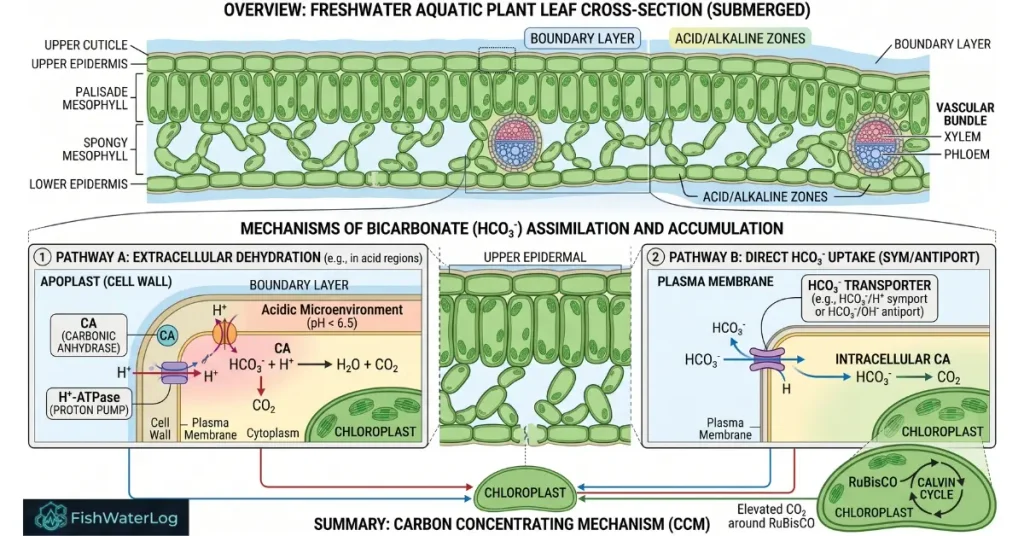
- Carbonic Anhydrase Induction: Flora upregulate both intracellular and extracellular carbonic anhydrase, a specialized zinc metalloenzyme that actively scavenges bicarbonate (HCO3-) ions from the surrounding boundary layer.
- Cellular Conversion Pathway: Extracellular carbonic anhydrase catalytically dehydrates bicarbonate at the cell boundary into bioavailable carbon dioxide (CO2) and a residual hydroxyl ion (OH-).
- RuBisCO Fixation: The newly liberated carbon dioxide rapidly diffuses across the plasmalemma, entering the Calvin cycle to be fixed by Ribulose-1,5-bisphosphate carboxylase/oxygenase (RuBisCO) for carbohydrate production.
- Hydroxyl Efflux: To maintain strict intracellular pH homeostasis and prevent internal alkaline toxicity, the plant actively pumps the excess hydroxyl ions back into the immediate water column.
The obligate biochemical dependency on this catalytic system is conclusively demonstrated in aquatic plant pharmacology. When researchers introduce specific carbonic anhydrase inhibitors—such as acetazolamide (AZA) or ethoxyzolamide—into the water column, the enzymatic dehydration of bicarbonate is completely arrested. Without functional carbonic anhydrase activity, bicarbonate-assimilating flora immediately lose their capacity to exploit the KH buffer and cease calcium carbonate precipitation entirely, definitively proving that decalcification is fundamentally an enzyme-mediated pathway rather than a passive abiotic chemical event.
The Bioenergetic Cost and Plant Vulnerability
- Elevated Energy Demand: Bicarbonate extraction requires significantly higher adenosine triphosphate (ATP) expenditure compared to the passive, effortless diffusion of free dissolved carbon dioxide.
- Specialist Dominance: Highly adaptable, opportunistic species—including Egeria densa, Ceratophyllum demersum, Myriophyllum spicatum, and Vallisneria—excel at rapid enzymatic upregulation.
- Slow-Growing Stunting: Species lacking robust extracellular carbonic anhydrase machinery (such as delicate Cryptocoryne or Anubias varieties) cannot compete for bicarbonate, leading to acute carbon starvation and arrested growth.
- Progressive Buffering Loss: As fast-growing macrophytes systematically consume dissolved bicarbonate molecules, they extract the core components of alkalinity, accelerating localized planted tank KH loss and setting the stage for mineral precipitation.
Inorganic Carbon Uptake Kinetics and Hydrodynamic Mass Transfer
The biological rate of bicarbonate assimilation KH depletion plants exhibit is heavily governed by species-specific enzyme kinetics and the physical fluid dynamics of the water column. Because submerged leaves lack aerial stomata exposed to turbulent atmosphere, they rely entirely on the aqueous transfer of carbon molecules across physical boundary layers.
This inorganic carbon availability is strictly governed by thermodynamic equilibrium, as illustrated along a Bjerrum plot. At an acidic pH below 6.4, free dissolved CO2 and carbonic acid (H2CO3) dominate the inorganic carbon pool. As pH climbs between 6.4 and 10.3, the speciation curve shifts dramatically, leaving bicarbonate (HCO3–) as the overwhelming carbon species. In typical hard-water planted aquariums maintaining a pH above 7.5, free gaseous CO2 is virtually non-existent, leaving macrophytes with no physiological alternative but to mine the bicarbonate buffer to sustain carbon fixation.
Bicarbonate Use Efficiency Across Macrophyte Species
- Species-Specific Plasticity: Submerged flora display stark differences in their Michaelis-Menten affinity constants for dissolved bicarbonate ions.
- Egeria densa Dominance: Under low alkalinity conditions, Egeria densa accelerates its photosynthetic rate by roughly five times compared to high-alkalinity baselines, demonstrating aggressive carbonic anhydrase upregulation.
- Lagarosiphon major Versatility: Lagarosiphon major essentially doubles its baseline carbon fixation rate when dissolved carbon dioxide drops, relying on dual uptake pathways to outcompete neighboring plants.
- Ceratophyllum demersum Resilience: Exhibits a consistent, high-affinity baseline for inorganic carbon, maintaining steady carbon fixation even when free carbonic acid is entirely exhausted.
| Plant Species | Photosynthetic Rate (Low Alkalinity) | Photosynthetic Rate (High Alkalinity) | Phenotypic Adaptation Strategy |
|---|---|---|---|
| Lagarosiphon major | 634 ± 114 µm | 322 ± 119 µm | Dual uptake pathways and extreme metabolic plasticity under carbon limitation |
| Ceratophyllum demersum | 336 ± 95 µm | 120 ± 31 µm | Unaffected baseline efficiency; robust extracellular enzyme regulation |
| Egeria densa | 264 ± 15 µm | 50 ± 27 µm | High phenotypic plasticity; strong carbonic anhydrase upregulation in soft water |
The Diffusive Boundary Layer and Fluid Dynamics
- Microscopic Stagnant Zone: Every submerged macrophyte leaf is surrounded by a stagnant diffusive boundary layer (DBL), an unstirred water film where mass transport relies strictly on slow molecular diffusion.
- Flow Velocity Impact: In stagnant or low-circulation tanks (approaching 0 m/s), the boundary layer thickens significantly, trapping the leaf in a localized carbon vacuum.
- Photosynthetic Enhancement: Increasing circulation velocity to 0.066 m/s physically shears and thins the boundary layer, boosting leaf oxygen flux and photosynthetic rates more than tenfold (from 0.20 ± 0.01 to 2.1 ± 0.07 µmol m⁻²s⁻¹) by improving carbon mass delivery.
- Artificial Decalcification Onset: Aquariums with poor circulation artificially force plants into premature bicarbonate scavenging; free CO2 remains present in the open water but cannot penetrate the stagnant leaf boundary layer, directly triggering biogenic decalcification planted tank KH loss.
To fully grasp the broader ecological implications of aquatic chemical interactions, reviewing foundational research on the biogeochemical carbon cycle provides critical context regarding how inorganic carbon fluxes govern both localized aquariums and global freshwater systems.
Biogenic Decalcification: Mechanisms of Calcium Carbonate Precipitation
The localized efflux of hydroxyl ions (OH-) during aggressive bicarbonate uptake triggers acute chemical transformations at the cellular boundary layer. As submerged flora excrete hydroxyl ions to offset internal alkaline build-up, the potential of hydrogen (pH) within the immediate microzones of the leaf surface surges dramatically, frequently exceeding values between 9.0 and 10.0 under intense illumination and low water movement.
The Precipitation Equilibrium Cascade
- Thermodynamic Mineral Collapse: Within these alkaline microzones, the thermodynamic solubility of dissolved earth minerals breaks down completely.
- Phase Shift: The extreme basicity forces dissolved calcium (Ca2+) and remaining bicarbonate (HCO3-) ions out of solution to form solid calcium carbonate (CaCO3).
- Chemical Metrology: This fundamental phase shift follows the chemical precipitation equilibrium:
Ca2+ + 2HCO3- -> CaCO3↓ + CO2 + H2O
Macroscopic Symptoms and Biological Impact
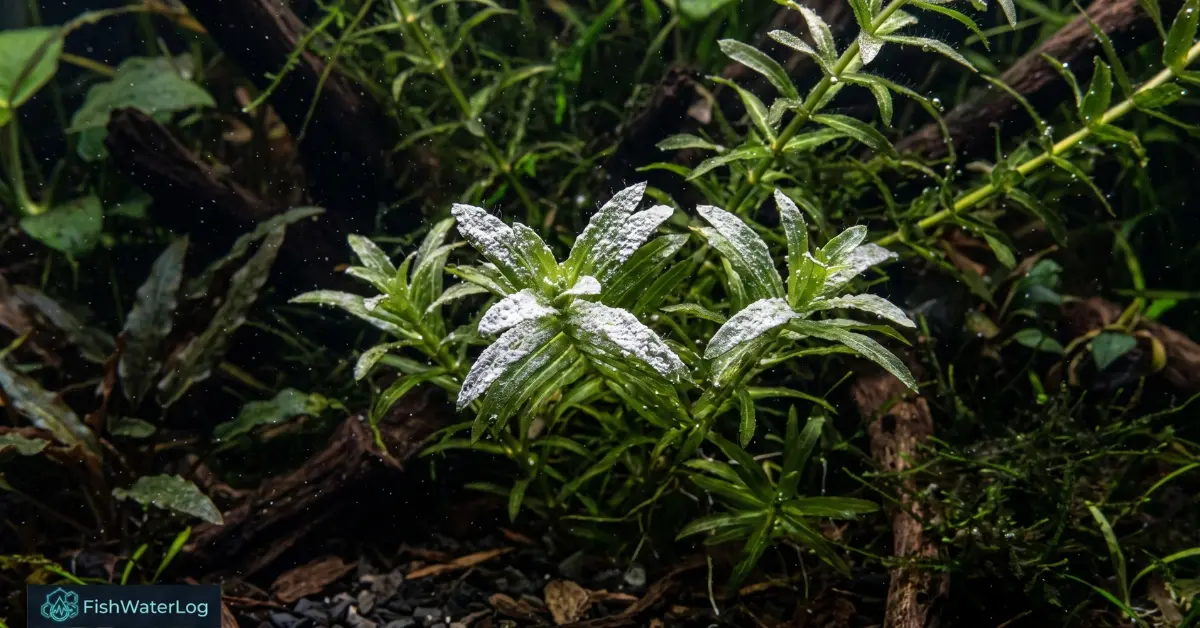
- Adaxial Mineral Crust: The outward manifestation of this reaction is the development of a gritty white crust on aquarium plant leaves. This crystalline deposit forms primarily across the adaxial (upper) leaf surfaces exposed directly to photosynthetically active radiation (PAR).
- Stomatal and Light Blockade: In addition to ruining aquascape aesthetics, the insoluble chalk layer physically obstructs cellular pores and reduces light penetration, creating a secondary barrier to gas exchange and photosynthesis.
- Direct Alkalinity Depletion: Because bicarbonate ions are continuously extracted from the aqueous phase and locked into insoluble calcite matrices, the system undergoes severe carbonate hardness stripping.
- Systemic Ecosystem Risk: This rapid mineral extraction represents the core biochemical engine behind biogenic decalcification planted tank KH loss, degrading total buffering capacity and setting the stage for biofilter instability.
The Ecosystem Threat: Carbonic Acid Depletion and Nitrogen Cycle Disruption
The total volume of buffering minerals in an enclosed aquarium is strictly finite. When biogenic decalcification planted tank mechanics operate unchecked, the persistent extraction of dissolved bicarbonate initiates rapid planted tank KH loss. This chemical degradation extends far beyond leaf aesthetics—it systematically undermines the autotrophic bacterial colonies responsible for the aquarium’s biological filtration.
The Stoichiometric Demands of Nitrification
- Chemoautotrophic Biofiltration: The aquarium nitrogen cycle depends on nitrifying bacteria—primarily Nitrosomonas and Nitrobacter—to oxidize toxic ammonia (NH3) into nitrite (NO2-), and ultimately into benign nitrate (NO3-).
- Acid-Generating Cascade: Ammonia oxidation is inherently acid-producing; for every single milligram of ammonia oxidized, nitrifying bacteria produce hydrogen ions (H+) that consume approximately 7.14 milligrams of carbonate alkalinity (measured as CaCO3 equivalents) to neutralize acidity.
- Buffer Dependency: Carbonate hardness serves as the primary chemical sponge absorbing this continuous acid load, shielding the tank from rapid acidification.
- Breaching the Safety Threshold: When aggressive macrophyte bicarbonate assimilation strips available HCO3-, water alkalinity routinely drops below the critical safety threshold of 3 dKH. Without adequate buffer reserves, daytime carbonic acid depletion followed by nighttime respiratory CO2 release precipitates a catastrophic pH crash.
Systemic Ecosystem Collapse
- Nitrifier Dormancy: When potential of hydrogen falls below 6.0, the enzymatic activity of nitrifying bacteria ceases entirely.
The Lethal Paradox: High pH and Acute Un-Ionized Ammonia (NH3) Toxicity
While aquarists primarily fear the catastrophic pH crash that follows complete buffer exhaustion, active biogenic decalcification triggers a far more rapid, immediate lethal vector during peak daylight hours: photoperiod-induced ammonia deprotonation.
- Alkaline Microzone Influx: As dense macrophyte biomass switches to bicarbonate assimilation, the continuous efflux of hydroxyl ions (OH–) rapidly drives the entire water column’s pH upward, frequently spiking bulk parameters toward 8.5 to 9.5.
- Thermodynamic Speciation Shift: In freshwater, Total Ammonia Nitrogen (TAN) exists in a dynamic equilibrium between non-toxic ionized ammonium (NH4+) and highly toxic un-ionized ammonia (NH3). At acidic or neutral pH levels (below 7.0), virtually all TAN exists as harmless ammonium. However, as the localized hydroxide surge forces pH past 8.5, the chemical equilibrium aggressively deprotonates NH4+ into gaseous, lipophilic NH3.
- Faunal Gill Necrosis and Mortality: Unlike ammonium, un-ionized ammonia readily diffuses across the lipid bilayers of fish and invertebrate gill filaments, disrupting blood-gas exchange, causing acute cellular gill necrosis, and inducing neurotoxic shock. Livestock mortality during biogenic decalcification is rarely a delayed consequence of buffer loss alone; it is predominantly driven by this sudden, photoperiod-coupled surge in free ammonia toxicity.
- Ammonia Accumulation: Arrested biological oxidation breaks the nitrogen cycle, allowing un-ionized ammonia to surge rapidly—a scenario requiring emergency intervention as outlined in our step-by-step protocol on how to fix a nitrogen cycle crash.
- Osmotic Shock: Uncontrolled pH volatility strips the protective mucous barrier from freshwater fish and invertebrates, triggering acute osmoregulatory distress.
- Macrophyte Necrosis: Severe pH crashes cause structural cellular damage across submerged plants, initiating rapid leaf melt and rot that further accelerates organic waste loading.
Plant Allelopathy in Freshwater Aquariums: Evolutionary Chemical Warfare
In dense flora structural elements, competition for photosynthetically active radiation (PAR), benthic substrate space, and limited dissolved inorganic carbon is exceptionally fierce. To secure ecological dominance, numerous aquatic macrophytes have evolved plant allelopathy in freshwater aquariums—the synthesis, accumulation, and active exudation of secondary biochemical metabolites engineered to suppress the growth, metabolic efficiency, and survival of neighboring competitors.
Chemical Profiling of Secondary Metabolites
- Metabolic Investment: Allelochemicals encompass distinct chemical classes—primarily phenolic acids, flavonoids, terpenoids, alkaloids, and hydrolyzable polyphenols. Synthesizing these bioactive compounds consumes roughly ten percent of a macrophyte’s total metabolic energy budget, underscoring their evolutionary necessity.
- Dispersal Vectors: These secondary metabolites enter the water column via active root exudation, foliar leaching, volatilization, and the passive decomposition of senescent plant tissue.
- Enclosed Tank Accumulation: In the closed hydrological volume of an aquarium, poor circulation and high macrophyte biomass lead to rapid allelochemical accumulation, creating chronic chemical stress.
- Algal and Biofilm Suppression: Allelopathic exudates target unicellular phytoplankton and cyanobacteria, preventing the formation of epiphytic periphyton on the host plant’s leaves to protect photosynthetic light capture.
- Benthic Microbiome Manipulation: Allelochemicals alter localized pH and microbial communities within the substrate, cultivating symbiotic bacteria while repelling nutrient competitors.
- Vascular Plant Suppression: Secondary metabolites physically inhibit root elongation, alter cellular membrane permeability, and halt protein biosynthesis in neighboring vascular flora.
The Mechanisms of Tellimagrandin II in Myriophyllum spicatum
- Potent Polyphenolic Weapon: Myriophyllum spicatum (Eurasian watermilfoil) produces substantial quantities of hydrolyzable polyphenols, accounting for up to ten percent of its total dry tissue weight.
- Primary Allelochemical: The primary bioactive agent is beta-1,2,3-tri-O-galloyl-4,6-(S)-hexahydroxydiphenoyl-d-glucose, universally designated as tellimagrandin II.
- Exoenzyme Inactivation: Tellimagrandin II complexes with and deactivates the extracellular enzymes produced by cyanobacteria (such as Microcystis aeruginosa) and competing algae, preventing them from acquiring and metabolizing environmental nutrients.
- Photosystem II Disruption: Lipophilic fractions containing tellimagrandin II penetrate competitor cell membranes and directly arrest photosynthetic oxygen evolution. Electron paramagnetic resonance spectroscopy demonstrates that tellimagrandin II alters the redox midpoint potential of non-heme iron between the primary (QA) and secondary (QB) quinone electron acceptors within Photosystem II.
- Energy Starvation: By physically blocking this photosynthetic electron transport chain, the allelochemical cuts off the synthesis of ATP and NADPH, driving competing autotrophs into severe physiological decline.
| Allelochemical Classification | Primary Source Organism | Mode of Action & Physiological Target | Susceptible Organisms |
|---|---|---|---|
| Hydrolyzable Tannins (e.g., Tellimagrandin II) | Myriophyllum spicatum | Disruption of PSII electron transport chain (QA to QB); complexation of vital exoenzymes | Cyanobacteria (Microcystis), competing vascular macrophytes, filamentous green algae |
| Simple Phenolic Acids (Gallic, Pyrogallic) | Myriophyllum, Ceratophyllum | Interference with root cell membrane permeability; suppression of protein biosynthesis and cellular elongation | Phytoplankton, adjacent vascular plant root networks, diatoms |
| Flavonoids & Terpenoids | Diverse Submerged Macrophytes | Disruption of photophosphorylation; inhibition of mitochondrial respiratory pathways | Planktonic primary producers, epiphytic biofilms |
Limnological evaluations demonstrate that green algae such as Pediastrum duplex show no significant genetic adaptation or resistance when isolated from macrophyte-dominated environments, proving that allelopathic toxicity remains a persistent, non-discriminatory threat in enclosed aquaria. The detailed biochemical mechanisms of photosynthetic enzyme inhibition by secondary metabolites, specifically tellimagrandin II, can be explored through advanced limnological studies on Photosystem II dynamics in aquatic environments, which illustrate exactly how these compounds block electron transport chains.
Interspecific Plant Competition: The Synergy of Decalcification and Allelochemicals (Gap Analysis)
Standard limnological frameworks and conventional aquascaping guides routinely analyze biogenic decalcification and plant allelopathy in freshwater aquariums as entirely isolated biological events. Decalcification is generally viewed as an abiotic chemical fluctuation driven strictly by carbon deficits, while allelopathy is treated as a biotic, biochemical interaction. However, analyzing high-authority ecological data exposes a major gap in modern aquatic literature: the compounding, lethal synergy between these two mechanisms during intense interspecific plant competition.
Amplification of Phenolic Toxicity via High pH Microzones
- Alkaline Boundary Layers: When opportunistic stem plants like Egeria densa and Myriophyllum exhaust dissolved free CO2, their transition to bicarbonate use floods their cellular surfaces with excreted hydroxyl ions (OH-).
- Chemical Speciation Shift: The biological activity, dissociation behavior, and half-life of polyphenolic compounds and hydrolyzable tannins are acutely pH-dependent.
- Ionization and Bioavailability: Extreme alkaline boundary layers generated by decalcifying flora alter the ionization states of co-occurring allelochemical exudates.
- Artificially Enhanced Toxicity: This localized shift significantly elevates the chemical solubility and membrane-binding affinity of secondary metabolites, allowing phenolic acids to penetrate neighboring cellular structures with amplified lethality.
Induced Vulnerability in Carbon-Starved Competitors
- Depleted Energy Budgets: Slow-growing, rigid macrophytes—such as Cryptocoryne, Bucephalandra, and Anubias species—lack rapid-acting extracellular carbonic anhydrase machinery and cannot utilize bicarbonate effectively when free carbon dioxide disappears.
- Impaired Defense Systems: Acute carbon starvation deprives these sensitive species of the photosynthetic energy needed to maintain basic cell repair, antioxidant pathways, and membrane osmoregulation.
- Allelochemical Susceptibility: Severely starved of carbon, these disadvantaged plants lose their physiological defenses, succumbing rapidly even to low baseline concentrations of circulating allelochemicals.
- Weaponized Environmental Niches: Dominant, bicarbonate-assimilating plants effectively weaponize localized planted tank KH loss and carbon starvation. By forcing their competitors into metabolic collapse, their chemical exudates easily trigger leaf chlorosis and root stunting, clearing spatial and benthic niches to secure ecosystem dominance.
The intense pressures of interspecific competition and allelopathic warfare often force slower-growing epiphytes into metabolic dormancy, requiring highly specific placement and anchoring techniques outlined in the Anubias nana care guide to prevent catastrophic rhizome rot.
Diagnosing White Crust on Aquarium Plant Leaves
Accurate biological and chemical diagnosis is essential to prevent systemic ecosystem collapse in high-biomass aquariums. Aquarists frequently misinterpret the symptoms of biogenic decalcification and plant allelopathy, resorting to erroneous interventions like arbitrary macro-fertilization or algaecide dosing that exacerbate chemical instability.
Identifying Calcium Carbonate Precipitation
- Visual Presentation: A rough, chalky, or sandy white crust on aquarium plant leaves forms predominantly across the adaxial (upper) epidermal surfaces directly exposed to intense photosynthetically active radiation (PAR). Unlike organic fungal mats, fluffy mold, or soft bacterial biofilms, this precipitate is rigid, crystalline, and entirely inorganic.
- Tactile Feedback: Leaves encrusted with mineral deposits feel distinctly gritty, brittle, and structurally compromised when handled.
- Chemical Metrology: A precipitous, mathematically unexplained drop in carbonate hardness—such as alkalinity plummeting from 7 dKH to 2 dKH over several days without water dilution—signals active decalcification.
- Diurnal pH Spikes: This drawdown is routinely coupled with extreme late-day alkaline spikes (frequently exceeding 8.0 to 8.5 pH) as autotrophs completely exhaust dissolved free CO2 reserves.
Differentiating from Allelopathic Stunting
- Morphological Arrest: Plant allelopathy presents as metabolic stunting and developmental deformity rather than mineral precipitation. Susceptible plants exhibit severely inhibited root elongation, asymmetric leaf formation, and halted apical meristem growth.
- Localized Necrosis: Exposed competitors frequently develop patchy chlorosis (yellowing) and localized tissue collapse despite saturated water column fertilization.
- Internode Compression: Stems show abnormally shortened internodal spacing and stunted vertical growth, directly caused by allelochemical interference with cellular elongation pathways.
- Metabolic Starvation: When a plant arrests growth despite verified macro- and micronutrient availability, the root cause is biochemical electron transport chain inhibition induced by neighboring allelochemicals, preventing the plant from metabolizing ambient nutrients.
Strategic Interventions for Dense Flora Structural Elements
Mitigating the compounding, synergistic threats of biogenic decalcification and allelochemical accumulation requires an integrated protocol combining inorganic carbon stabilization, hydrodynamic boundary layer shearing, and targeted chemical filtration.
Re-establishing the Carbon Equilibrium
- Pressurized CO2 Supplementation: The primary biological intervention to halt decalcification is maintaining elevated dissolved carbon dioxide levels (optimally 20 to 30 ppm), which should be monitored using a calibrated aquarium CO2 drop checker with standardized 4 dKH solution.
- Enzymatic Downregulation: Saturating the water column with free CO2 eliminates the bioenergetic need for high-cost extracellular carbonic anhydrase synthesis, allowing macrophytes to revert entirely to passive diffusion.
- Precipitation Cessation: Ceasing bicarbonate uptake halts hydroxyl ion (OH-) efflux, collapsing the alkaline microzones along leaf boundaries and immediately stopping calcium carbonate precipitation.
- Autonomous Remineralization: Dissolved CO2 produces weak carbonic acid (H2CO3), which gradually dissolves existing calcium carbonate crusts back into bioavailable calcium (Ca2+) and bicarbonate (HCO3-) ions, replenishing depleted alkalinity over time.
Deconstructing the “Liquid Carbon” Myth
A widespread misconception among hobbyists attempting to halt biogenic decalcification is the reliance on commercial “liquid carbon” additives (such as glutaraldehyde-based formulations) as a direct alternative to pressurized gaseous CO2.
- Biocidal Chemistry vs. Carbon Yield: These commercial solutions are chemically formulated around aqueous glutaraldehyde (or polycycloglutaracetal), a potent five-carbon dialdehyde traditionally manufactured as an industrial biocide and cold sterilant. The perceived vigor observed after dosing stems almost entirely from its aggressive algicidal action—rupturing the cellular membranes of competing epiphytic algae—rather than substantial bioavailable carbon delivery.
- Inadequate Carbon Mass: While aerobic bacterial decomposition slowly breaks down glutaraldehyde through glutaric acid intermediates into trace CO2, the actual yield is infinitesimally small compared to the physical uptake demands of high-light macrophytes. It cannot elevate aqueous dissolved CO2 levels enough to suppress carbonic anhydrase upregulation or prevent active bicarbonate mining.
- Toxicity to Primary Bicarbonate Users: Because glutaraldehyde acts as a non-selective cross-linking fixative, chronic dosing carries acute phytotoxic and ecotoxic risks. Highly adapted bicarbonate users like Vallisneria, Elodea, and delicate liverworts rapidly melt under standard doses due to cellular tissue breakdown, while exposing sensitive aquatic fauna to chemical distress without resolving the underlying KH loss.
Hydrodynamic Flow Modulation
- Boundary Layer Shearing: Fluid velocities exceeding the critical threshold of 0.066 m/s physically compress and shear the stagnant diffusive boundary layer surrounding submerged leaves.
- Accelerated Carbon Transport: Thinning the boundary layer exponentially elevates the Sherwood number, facilitating continuous convective carbon mass transfer and preventing premature bicarbonate scavenging even under fluctuating carbon levels.
- Allelochemical Dilution: High-velocity circulation prevents localized stagnation within dense plant groupings, diluting concentrated exudates like tellimagrandin II and phenolic acids into the broader water column for microbial breakdown or chemical removal.
Chemical Adsorption and Filtration Protocols
- Targeted Adsorption Media: Deploying high-grade acid-washed activated carbon or synthetic macroporous polymeric resins—detailed in our best filter media guide—actively scrubs toxic dissolved organic compounds from the water column.
- Toxin Extraction: These specialized adsorbents scavenge hydrophobic phenolic rings, hydrolyzable tannins, and flavonoids released by competitive macrophytes like Myriophyllum and Ceratophyllum.
- Photosystem Protection: Systematically binding circulating allelochemicals prevents them from reaching inhibitory thresholds, protecting sensitive epiphytes and slow-growing flora from Photosystem II arrest.
Advanced Water Chemistry Management and Substrate Interactions
Securing long-term biological stability requires mastering the complex chemical interactions between active benthic substrates, aqueous buffering agents, and microbial metabolism. When dense vegetation accelerates inorganic carbon uptake, managing water column chemistry becomes the primary defense against systemic collapse.
The Double-Edged Sword of Active Aquasoils
- High Cation Exchange Capacity (CEC): Modern planted tanks frequently utilize active aquasoils manufactured from baked montmorillonite clays and rich humic matter.
- Active Mineral Stripping: These substrates naturally soften water by binding dissolved calcium (Ca2+) and magnesium (Mg2+) ions while continuously leaching humic and fulvic acids.
- Suppressed Baseline Buffering: While this interaction establishes the slightly acidic pH favored by tropical flora, it forces the aquarium to operate at near-zero carbonate hardness.
- Heightened Crash Risk: In aquariums utilizing active substrate, preventing biogenic decalcification planted tank KH loss is critical. Because baseline alkalinity is already depleted by soil cation exchange, any secondary bicarbonate extraction by plants triggers an immediate, unbuffered pH crash.
Precision Remineralization Strategies
- Standardized Water Base: Rather than relying on seasonal, unstable tap water parameters, utilize Reverse Osmosis (RO) or deionized water to establish an exact baseline.
- Targeted General Hardness: Reconstituting purified water with a calibrated mixture of pharmaceutical-grade calcium sulfate (CaSO4) and magnesium sulfate (MgSO4) maintains a stable general hardness (GH) optimal for cellular osmoregulation.
- Sodium-Free KH Restoration: Maintaining a meticulous dosing regime of potassium bicarbonate (KHCO3) replenishes carbonate buffering capacity without introducing excess sodium, which induces osmotic stress and nutrient transport inhibition in delicate aquatic plants.
- Invertebrate Osmotic Safety: Maintaining a meticulously stable KH and GH is not only critical to preventing plant melt and pH crashes, but it is also biologically essential for the survival of aquatic invertebrates, as detailed heavily in our advanced cherry shrimp water parameters guide focusing on molting success.
Precision Dosing Paradigms: Low-Tech vs. High-Tech Systems
Preventing buffer collapse and biogenic decalcification requires distinct quantitative protocols depending on system architecture:
- The Low-Tech Remineralization Standard (Potassium Bicarbonate): In non-CO2 injected aquariums, avoid commercial baking soda (sodium bicarbonate), which accumulates excess sodium ions that disrupt plant osmotic potential. Instead, use pharmaceutical-grade potassium bicarbonate (KHCO3).
Exact Dosing Metric: Adding exactly 3.5 grams of KHCO3 per 100 liters (approx. 26.4 US gallons) raises carbonate hardness by precisely 1 dKH (17.86 ppm as CaCO3 equivalents) while delivering approximately 13.7 mg/L of bioavailable potassium, a critical macronutrient. - The High-Tech Acidic Paradigm (Zero-to-Low KH Management): Modern competitive aquascaping circumvents biogenic decalcification entirely by deliberately operating at 0 to 2 dKH using RO water remineralized solely with general hardness (GH) minerals (CaSO4 and MgSO4). In this low-alkalinity environment, pressurized CO2 injection easily drives a sustained 1.0 to 1.4 point drop in pH (e.g., dropping degassed water from 6.4 pH down to 5.0–5.2 pH during peak photoperiod). This guarantees extreme aqueous saturation of free, diffusive CO2, permanently downregulating carbonic anhydrase and making bicarbonate extraction biologically obsolete.
Metrology and Ecological Thresholds
- Calibrated Titration Metrology: Aquarists must bypass inaccurate paper test strips and employ high-precision liquid titration reagent kits to monitor the core triad: KH, GH, and pH.
- Diurnal pH Tracking: Measuring the diurnal pH swing—the quantitative variance between photoperiod initiation and the peak right before lights turn off—serves as an early diagnostic gauge for carbon consumption.
- Critical Warning Threshold: A diurnal shift exceeding 1.0 pH unit indicates that dissolved free CO2 reserves are completely exhausted early in the photoperiod, serving as an immediate operational warning of impending biogenic decalcification.
Conclusion
Understanding biogenic decalcification planted tank dynamics and freshwater plant allelopathy is essential for preventing catastrophic biological collapse in high-biomass aquascapes. When rapid-growing macrophytes exhaust free carbon dioxide, aggressive bicarbonate assimilation forces solid calcium carbonate precipitation, forming a chalky white crust on aquarium plant leaves while driving rapid carbonate hardness (KH) depletion. This unchecked planted tank KH loss strips the ecosystem of vital chemical buffers, leaving the water column vulnerable to severe pH crashes and nitrifying biofilter dormancy.
When localized alkaline microzones alter the toxicity of secondary allelochemicals like tellimagrandin II, the compounding strain breaks down interspecific plant competition, stunting sensitive slow-growing flora. Halting this downward spiral requires an integrated operational approach: maintaining saturated inorganic carbon levels through pressurized CO2 injection, thinning leaf diffusive boundary layers via hydrodynamic flow, deploying targeted chemical adsorption filtration, and executing precise remineralization. By stabilizing these limnological parameters, aquarists can eliminate biogenic decalcification, preserve delicate flora, and secure enduring microbial equilibrium across the entire ecosystem.
Frequently Asked Questions
What is the underlying cause of the white crust on aquarium plant leaves?
The white, chalky deposit is solid calcium carbonate (CaCO3). It precipitates out of the water column when aquatic macrophytes exhaust dissolved free carbon dioxide (CO2) and switch to metabolizing bicarbonate (HCO3–). To preserve intracellular pH equilibrium during bicarbonate assimilation, plants excrete residual hydroxyl ions (OH–) across the leaf boundary, creating an extreme alkaline microzone (pH 9.0–10.0) that forces dissolved calcium and carbonates into an insoluble mineral crust.
How does biogenic decalcification lead to fatal pH crashes in an aquarium?
By extracting dissolved bicarbonate and converting it into solid calcite, biogenic decalcification strips carbonate hardness (KH) from the water. Carbonate hardness serves as the primary chemical buffer against acidification. When plants drop alkalinity below the critical threshold of 3 dKH, the acid produced by nitrifying biofilter bacteria (7.14 mg of alkalinity consumed per 1 mg of ammonia oxidized), coupled with nocturnal plant respiration, drives the water column into an unbuffered, lethal pH crash.
What exactly is plant allelopathy in a freshwater aquarium?
Plant allelopathy is an evolutionary chemical competition strategy where aquatic flora synthesize and exude secondary biochemical metabolites—such as hydrolyzable tannins (tellimagrandin II), flavonoids, and phenolic acids—into the water column. These bioactive allelochemicals disrupt the Photosystem II electron transport chain, complex vital exoenzymes, and inhibit root cellular elongation in competing vascular macrophytes, microalgae, and cyanobacteria.
How can I effectively stop my planted tank’s KH from dropping so rapidly?
To halt KH depletion, you must eliminate the plant’s metabolic requirement for bicarbonate. Maintain dissolved carbon saturation (20–30 ppm) using pressurized CO2 injection, increase water circulation above 0.066 m/s to shear the stagnant diffusive boundary layer for improved carbon transport, and replenish lost buffering reserves through regular water changes using RO water reconstituted with pure potassium bicarbonate (KHCO3).
Will using activated carbon harm my planted tank or remove necessary fertilizers?
No. Acid-washed, high-grade activated carbon and macroporous polymeric resins target and adsorb high-molecular-weight dissolved organic compounds, specifically binding toxic phenolic rings, flavonoids, and allelochemical tannins that cause interspecific stunting. It removes these bioactive organic toxins without significantly depleting essential inorganic chelated fertilizers or macronutrients.
