

The subject of this comprehensive botanical analysis is Anubias barteri var. nana, an incredibly resilient, slow-growing aquatic perennial belonging to the family Araceae. This taxonomic classification places the species in direct relation to prominent terrestrial and hemiepiphytic aroids frequently cultivated as houseplants, such as Philodendron, Monstera, and Spathiphyllum. Endemic almost exclusively to the wet tropical biomes of West Africa—most notably the dense rainforests, shaded ravines, and riverine ecosystems of Cameroon—this plant has evolved highly specialized physiological adaptations to survive environments characterized by extreme seasonal fluctuations. For exhaustive taxonomic data, global distribution mapping, and verified nomenclature regarding the Araceae family, researchers rely heavily on the precise botanical records maintained by the Kew Royal Botanic Gardens POWO database.
For both beginners and professional aquascapers, mastering aquarium plant care is essential to maintain a stable, closed-loop aquatic ecosystem. While delicate stem plants demand high-intensity lighting and continuous chemical dosing, starting with hardy epiphytes allows you to establish biological balance without complex equipment overhauls.
Establishing an effective Anubias nana care guide begins with understanding its native habitat dynamics. In its natural biome, Anubias nana rarely grows completely submerged on a continuous, year-round basis. Instead, it is classified functionally as a rheophyte—a plant specifically adapted to colonizing fast-flowing water environments. It establishes itself along rocky riverbanks, anchoring securely into the crevices of basalt stones and the submerged root systems of towering riparian trees. During the region’s intense monsoonal rainy seasons, river levels rise dramatically, plunging the terrestrial or emersed colonies into a state of total inundation for extended periods.
To survive the sheer mechanical stress of rushing floodwaters, the species evolved an aggressive, highly tensile adventitious root system capable of gripping porous, inert surfaces rather than penetrating loose, shifting aquatic soils. Furthermore, its leaves feature an exceptionally thick, coriaceous (leathery) waxy cuticle designed to repel detritus, resist hydraulic tearing, and prevent cellular damage from high-velocity water flow. These precise evolutionary mechanisms make it the quintessential low light epiphyte plant for any balanced freshwater aquarium ecosystem.
Whether learning how to attach anubias to driftwood, diagnosing physiological stress for an anubias yellow leaves treatment, or applying an emergency anubias rhizome rot fix, mastering stable anubias water parameters and correct anubias propagation techniques ensures lasting vitality for both novice hobbyists and advanced aquascapers in low-energy botanical setups.
| Parameter | Specification | Quick Practical Rule |
|---|---|---|
| Scientific Name | Anubias barteri var. nana | Rheophytic epiphyte (West Africa) |
| Ideal Temperature | 72°F – 82°F (22°C – 28°C) | Stable tropical range; tolerates down to 54°F |
| pH & Hardness | pH 6.0 – 7.5 (Tolerant to 8.0) | Soft to moderately hard (2–15 dGH) |
| Light & PAR | 15 – 30 µmol/m²/s (PAR) | Low light; prevents Green Spot Algae (GSA) |
| CO2 / Fertilizer | Strictly Optional | Water-column dosing; no root tabs |
| Mounting Rule | Hardscape Only (Wood/Rock) | Never bury rhizome in substrate |
Popular Anubias Nana Cultivars and Morphological Variants
Due to extensive commercial selection and meristematic tissue culture, several specialized cultivars of Anubias barteri var. nana have become staples in modern aquascaping, each sharing the same foundational epiphytic care requirements:
- Anubias nana ‘Petite’: A miniature, highly compact variant characterized by leaves less than half the size of the standard form, making it the premier choice for nano aquariums and intricate driftwood detailing.
- Anubias nana ‘Golden’: A striking chromatic mutation that produces bright chartreuse to lime-green foliage, creating high-contrast focal points against dark hardscape without demanding high-intensity illumination.
- Anubias nana ‘Pinto’ / ‘Snow White’: Highly prized variegated cultivars featuring marbled white and green cellular patterns; because these variants have lower chlorophyll density, they exhibit even slower metabolic rates and require ultra-stable water parameters.
- Anubias nana ‘Pangolino’: Ultra-compact narrow foliage resembling pangolin scales; highly prized in micro-aquascaping.
- Anubias nana ‘Ovalis’: Rounded, broad oval leaves with longer petioles, creating distinct midground leaf textures.
- Anubias barteri var. ‘Coffeefolia’: Heavily ribbed, crinkled leaves resembling coffee foliage with bronze/reddish new shoots.
Morphological Anatomy: The Science of Epiphytic Tissue
A critical failure mode frequently observed in amateur aquatic horticulture stems from a fundamental misunderstanding of epiphytic and rheophytic plant anatomy. Traditional aquatic flora—such as Cryptocoryne or Echinodorus—utilize a root-and-shoot structure biologically programmed for deep substrate penetration to forage for subterranean nutrients in anaerobic zones. In stark contrast, understanding how to attach anubias to driftwood requires recognizing that the primary structural engine of this species is not a subterranean root system, but an exposed, horizontal modified stem known as the rhizome.
The Role of the Rhizome in Low-Energy Botany
The central anatomical axis of any Anubias nana care guide centers on preserving the integrity of this horizontal storage vault. The rhizome coordinates several vital physiological functions:
- Nutrient and Carbohydrate Banking: It serves as the primary reservoir for synthesized starches, stored carbohydrates, and essential moisture, allowing the specimen to survive extended periods of low illumination, nutrient scarcity, or seasonal physical trauma.
- Meristematic Petiole Growth: Upward-facing growth nodes drive the gradual development of robust petioles and leathery leaves.
- Adventitious Root Anchoring: Downward-projecting fibrous roots function primarily as physical anchors rather than heavy subterranean feeding mechanisms.
Why Substrate Burial Triggers Lethal Tissue Suffocation
A prevalent informational gap in standard aquatic plant literature is the exact cellular mechanism that causes sudden plant melting. The rhizome of this low light epiphyte plant requires continuous exposure to oxygen-saturated water to sustain cellular respiration. When an aquarist mistakenly buries the rhizome beneath dense silica sand, compacted gravel, or active aquatic soil, a destructive sequence begins:
- Localized Hypoxia: Compaction prevents dissolved gas exchange, cutting off cellular respiration in the vascular cambium.
- Hydrogen Sulfide (H2S) Exposure: Anaerobic pockets within the substrate rapidly degrade the tissue barrier, making immediate anubias rhizome rot fix surgical interventions necessary.
- Vascular Liquefaction and Leaf Shedding: Without aerobic circulation, cellular necrosis liquefies the core, prompting progressive anubias yellow leaves treatment symptoms or total specimen loss.
Maintaining stable anubias water parameters and strictly keeping the central rhizome elevated above the substrate line ensures reliable long-term growth and seamless execution of vegetative anubias propagation techniques.
Hydrological Biochemistry and Anubias Water Parameters
Designing a dedicated anubias tank requires establishing a stable, consistent biochemical baseline. Although these West African rheophytes are capable of adapting to a wide range of mineral boundaries, sudden water chemistry volatility will compromise their long-term growth dynamics.
Despite its classification as a highly adaptable flora, optimized cellular replication and long-term vitality require adherence to specific biochemical and hydrological baselines. The robust physiological nature of Anubias nana permits it to thrive across diverse water profiles, but sharp biochemical volatility triggers significant physiological stress. Maintaining optimal anubias water parameters is essential for preventing foliar decay and supporting healthy rhizome respiration in any comprehensive Anubias nana care guide.
Target Water Chemistry and Mineral Boundaries
Establishing baseline water chemistry ensures the low light epiphyte plant efficiently absorbs nutrients directly from the water column while maintaining cellular turgor:
- pH Tolerance Spectrum: The species thrives in a slightly acidic to neutral range of 6.0 to 7.5, but its strong biological buffering capacity allows acclimatization to alkaline environments up to 8.0 without acute cellular injury.
- General Hardness (GH) and Carbonate Hardness (KH): It adapts seamlessly to both soft-water biotope setups and mineral-rich hard tap water, making it exceptionally resilient in community aquariums.
- Thermal Dynamics and Metabolic Stasis: Optimal incubation ranges between 72°F and 82°F (22°C to 28°C). During wintering stress, the plant can downregulate metabolic respiration and enter protective stasis down to 54°F (12°C), whereas temperatures exceeding 84°F (29°C) mandate heavy aeration to satisfy elevated biological oxygen demand.
Nitrogen Compound Sensitivity and Cuticle Breakdown
A primary cause of acute failure during initial tank setup is exposing newly acquired specimens to uncycled aquatic environments. The plant exhibits an acute physiological sensitivity to high nitrogenous waste:
- Lethal Ammonia (NH3) and Nitrite (NO2-) Spikes: In maturing tanks, ammonia levels reaching or exceeding 2.0 ppm trigger rapid cellular lysis.
- Chemical Cuticle Melting: Toxic compounds dissolve the thick waxy cuticle, causing leaves to collapse into a translucent, gelatinous mass.
- Pathogen Susceptibility: Tissue damage sustained from nitrogen toxicity frequently necessitates surgical anubias rhizome rot fix measures or corrective anubias yellow leaves treatment.
To maintain long-term stability and ensure successful vegetative anubias propagation techniques, stabilize your biological filtration through proper aquarium nitrogen cycle biofiltration before learning how to attach anubias to driftwood and integrating specimens into your hardscape.
Photosynthetic Dynamics and Lighting Specifications
As an obligate shade-tolerant species originating from the dense canopy floors and shadowed riverbanks of the African rainforest, the photobiology of Anubias nana is calibrated for maximum efficiency under minimal photon exposure. The plant possesses an unusually high density of chloroplasts stacked within its epidermal layers, a specialized adaptation that allows it to capture and process Photosynthetically Active Radiation (PAR) effectively even in profoundly dim conditions.
PAR Metrics and Low-Light Photoperiods
The baseline lighting requirement for this species is universally classified as low to moderate in any practical Anubias nana care guide:
- Technical Light Thresholds: Maintain a low PAR reading between 15 and 30 micromoles per square meter per second (μmol/m²/s) under modern full-spectrum LED systems, or approximately 0.5 Watts per liter (W/L) when using traditional T5 or T8 fluorescent fixtures.
- Photoperiod Duration: Provide a stable photoperiod of 8 to 10 hours daily to sustain steady, low-energy cellular replication without triggering competitive algal outbreaks.
- Canopy Shading Strategies: In brighter setups, position this low light epiphyte plant beneath tall stem plants, under the shadow of large hardscape overhangs, or under floating plants such as Limnobium laevigatum to diffuse light intensity naturally.
The Light Compensation Point (LCP) represents the exact physiological threshold where photosynthetic energy production balances cellular respiration. Below this threshold (<10 μmol/m²/s PAR), the specimen depletes stored carbohydrates and gradually declines:
| Lighting Intensity (PAR) | Physiological Response | Algae Risk & Action |
|---|---|---|
| < 10 μmol/m²/s | Below LCP; growth stalls, slow carbohydrate depletion. | Negligible algae; plant starves long-term. |
| 15 – 30 μmol/m²/s | Optimal metabolic stability and steady cell replication. | Low risk; easily managed by cleanup crews. |
| 30 – 50 μmol/m²/s | Accelerated metabolism; requires strict CO2 and dosing. | High risk; Green Spot Algae (GSA) on older leaves. |
| > 50 μmol/m²/s | Photoinhibition and destructive reactive oxygen species (ROS). | Critical; rapid BBA infestation. Relocate to shade. |
Photoinhibition, Algal Fouling, and Leaf Protection
Exposing shade-adapted foliage to excessive, high-intensity illumination induces photoinhibition, where oversaturated photosynthetic pathways generate damaging reactive oxygen species (ROS). Because individual leaves persist for several years, slow cellular turnover leaves broad surfaces vulnerable to stubborn epiphytes:
- Green Spot Algae (GSA) and Black Beard Algae (BBA): High light fosters dense opportunistic algae that anchor directly into the waxy cuticle, blocking gas exchange and light transmission.
- Foliar Burn and Curling: Light toxicity manifests as bleached, curled foliage requiring corrective anubias yellow leaves treatment and light reduction.
- Preventing Systemic Decay: Excess lighting paired with poor water flow accelerates cellular breakdown, complicating recovery efforts like an anubias rhizome rot fix.
Balancing moderate illumination with stable anubias water parameters prevents stress while you practice how to attach anubias to driftwood or execute vegetative anubias propagation techniques. For hobbyists looking to expand their setup, explore our comprehensive Low Light Aquarium Plants: Top 10 Easy Plants For Beginners guide.
Chemical Eradication: BBA and GSA Spot Treatment Protocols
Because slow-growing Anubias leaves act as permanent anchors for opportunistic Black Beard Algae (BBA) and Green Spot Algae (GSA), stubborn infestations require direct chemical spot-treatment rather than systemic tank overdosing:
- Direct Syringe Spot-Dosing (In-Tank): Turn off all filter circulation for 15 minutes. Using a precision syringe, apply a targeted dose of 3% Hydrogen Peroxide ($H_2O_2$) at a maximum rate of 1 ml per gallon (or standard glutaraldehyde / liquid carbon at recommended dosage) directly onto the algae-fouled leaves. The algae will oxidize, turn pink or white within 48 hours, and die off.
- External Dip Protocol (High Precision): For removable hardscape, submerge the affected leaves into a 1:4 dilution of 3% hydrogen peroxide and aquarium water for 2 to 3 minutes (or a 1:20 bleach-to-water dip for strictly 60 to 90 seconds). Avoid submerging the rhizome and adventitious roots directly. Thoroughly rinse the foliage in dechlorinated water before returning the specimen to the aquarium.
Hardscape Integration: How to Attach Anubias to Driftwood
Anubias barteri var. nana is widely celebrated as one of the most versatile and resilient aquascape plants in the modern freshwater hobby. Because its rheophytic anatomy is structurally built to thrive without substrate burial, aquascapers utilize its gripping root system to style empty hardscape zones dynamically.
Because subterranean planting is biologically contraindicated due to the risk of rhizome suffocation, mastering the mechanical attachment of the plant to inert surfaces is imperative in any foundational Anubias nana care guide. When evaluating how to attach anubias to driftwood, porous rocks, or synthetic structures, three primary methodologies dominate modern aquascaping, each offering distinct biomechanical advantages for this low light epiphyte plant:
1. Chemical Adhesion (Cyanoacrylate Polymerization)
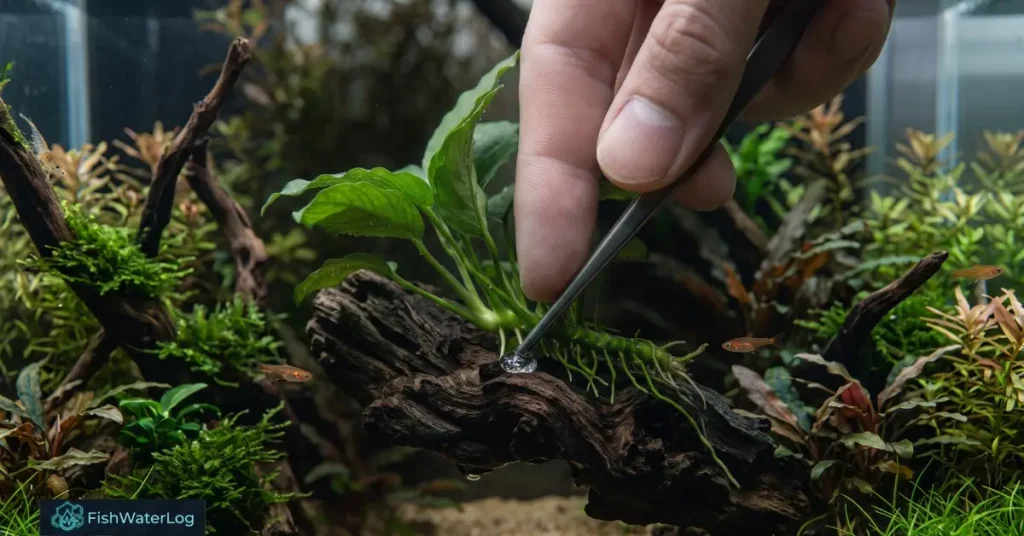
The most efficient, instantaneous method utilizes ethyl cyanoacrylate gel (aquarium-safe super glue). Cyanoacrylate cures and solidifies via an exothermic polymerization reaction triggered by contact with hydroxide ions in water, forming a biologically inert bond within seconds underwater:
- Application Technique: Place a pinpoint micro-droplet of gel directly onto the underside of the adventitious roots or a small contact point on the rhizome, pressing it against the hardscape for 10 seconds.
- Avoiding Tissue Suffocation: Apply sparingly; coating the entire rhizome in glue seals the epidermal layers, blocking gas exchange and causing localized rot that necessitates an anubias rhizome rot fix.
2. Synthetic Monofilament Binding
Using clear, low-visibility fluorocarbon or nylon fishing line provides a durable, inert hold without chemical contact:
- Mechanical Securing: Wrap the line firmly around the hardscape and root zone without crushing vascular tissue.
- Natural Thigmotropism: Over a period of 3 to 4 months, roots utilize thigmotropism (contact-driven directional growth) to permanently grip wood pores or rock crevices, after which the line can be excised with scissors.
3. Biodegradable Ligatures
For densely planted layouts where manual thread removal would disrupt the aquascape, dark cotton sewing thread serves as a self-removing alternative:
- Timed Breakdown: Bacterial decomposition dissolves the cotton thread naturally over several months, aligning perfectly with the adventitious root adhesion timeline.
Hardscape Selection and Foliar Health
Pairing the right hardscape prevents systemic degradation and symptoms requiring anubias yellow leaves treatment:
- Recommended Substrates: Dense hardwoods (Malaysian driftwood, Spider wood, Mopani) and porous stones (Dragon stone, Lava rock) provide optimal grip and stability.
- Materials to Avoid: Steer clear of softwoods that decompose rapidly, shedding the plant and fouling the water column.
Maintaining baseline anubias water parameters during attachment ensures rapid acclimation and facilitates future anubias propagation techniques. For substrate guidance around anchored hardscapes, review our comprehensive Substrate for Planted Tanks: Sand vs Gravel Guide.
Nutrient Acquisition and Foliar Physiology
Contrary to heavy root-feeding aquatic plants that rely on dense root networks buried in nutrient-rich soils, Anubias nana acquires the vast majority of its essential macronutrients and micronutrients directly from the surrounding water column. It achieves this via specialized, highly permeable epidermal cells located across the broad surfaces of its leaves and the exposed segments of its rhizome. Consequently, the deployment of subterranean fertilizer capsules (root tabs) into the gravel or sand beneath the plant is entirely ineffective and constitutes a waste of horticultural resources.
Water Column Dosing and Micronutrient Demands
A reliable fertilization regimen is a core pillar of any practical Anubias nana care guide, ensuring sustained growth and structural integrity without inducing nutrient toxicity:
- Liquid Column Supplementation: Routine micro-dosing of a comprehensive liquid fertilizer delivers bioavailable nutrients directly to the foliage of this low light epiphyte plant.
- Iron and Potassium Bioavailability: Specialized foliar uptake demands consistent levels of chelated iron to drive chlorophyll synthesis and soluble potassium to maintain osmotic balance.
- Deficiency Prevention: Neglecting water column nutrients leads to interveinal chlorosis and pinholes, which require targeted anubias yellow leaves treatment to restore leaf vitality.
Advanced Biostimulant Conditioning: Utilizing diluted botanical extracts derived from the marine macroalgae Ascophyllum nodosum introduces trace natural auxins, cytokinins, and chelated trace minerals. These natural compounds increase foliar chlorophyll ‘a’ and ‘b’ concentrations, effectively lowering the specimen’s Light Compensation Point and boosting photosynthetic efficiency in low-energy environments.
CO2 Requirements and Metabolic Thresholds
Because this species maintains an exceptionally low cellular metabolic rate, supplemental carbon dioxide (CO2) injection remains strictly optional:
- Passive Carbon Utilization: Natural atmospheric dissolution and faunal respiration provide sufficient dissolved carbon to sustain steady growth under low-energy conditions.
- High-Tech Precautions: In pressurized setups, balance lighting and fertilization precisely to avoid severe algae colonization on slow-growing surfaces.
- Vascular Protection: Consistent nutrient levels combined with stable anubias water parameters protect the plant from tissue necrosis, reducing the risk of conditions requiring an emergency anubias rhizome rot fix.
Understanding foliar feeding enables aquarists to master how to attach anubias to driftwood safely and execute vegetative anubias propagation techniques with maximum success. Furthermore, while supplemental carbon dioxide injection is optional, hobbyists running pressurized gas should monitor saturation levels using our Aquarium CO2 Drop Checker Guide.
Pathological Failure Modes: Anubias Rhizome Rot Fix
The most catastrophic biological failure mode documented in the cultivation of this species is systemic rhizome decay. This aggressive condition causes structural tissue collapse, transforming a firm, vibrant green rhizome into a soft, mushy mass that emits a sulfurous odor from anaerobic bacterial proliferation. Understanding how to identify and execute an anubias rhizome rot fix is a critical component of any advanced Anubias nana care guide to rescue declining plants before the entire vascular network is lost.
Etiology and Pathogenic Vectors
While mechanical suffocation from burying the rhizome in substrate is the primary trigger, secondary opportunistic pathogens can rapidly destroy this low light epiphyte plant:
- Soft Rot Pectobacteriaceae (SRP) Infiltration: Highly virulent phytopathogens—predominantly Dickeya dadantii (formerly Erwinia chrysanthemi) and Pectobacterium species—enter through transport abrasions or improper division cuts. These bacteria secrete aggressive extracellular pectolytic enzymes that systematically dismantle cellular pectin walls, causing rapid tissue maceration and vascular liquefaction.
- Environmental Shock: Volatile spikes in nitrogenous waste or sudden shifts away from baseline anubias water parameters compromise cellular walls and accelerate pathogenic decay.
- Substrate Hypoxia: Compacted soils starve tissue of dissolved oxygen, creating anaerobic pockets that rapidly rot vulnerable rhizomes.
Clinical Surgical Intervention Protocol
Because chemical medications and simple water changes cannot reverse localized cellular liquefaction, immediate surgical amputation is mandatory:
- Extraction and Isolation: Carefully remove the infected specimen from the aquarium. Leaving decaying tissue in the system triggers ammonia spikes and allows waterborne pathogens to spread to nearby epiphytic flora.
- Surgical Excision: Using a sterilized scalpel or sharp razor blade, amputate all discolored and mushy segments. Cut at least 1 to 2 centimeters deep into clean, firm green tissue to ensure no microscopic bacterial pockets or fungal hyphae remain in the vascular bundle.
- Sanitization and Reattachment: Rinse the healthy segment in clean, dechlorinated water. Remount the specimen using established protocols on how to attach anubias to driftwood or stone using inert glues, placing it in an area of high dissolved oxygen flow to inhibit anaerobic bacterial growth.
Differentiating Rot from Nutrient Deficiencies
Aquarists must distinguish systemic rot from physiological stress requiring an anubias yellow leaves treatment, where chlorosis is caused by mobile nutrient deficiencies rather than vascular tissue collapse. Once the salvaged cut heals and produces a protective callus, healthy nodes can once again be utilized for vegetative anubias propagation techniques.
Physiological Stressors: Anubias Yellow Leaves Treatment
When the naturally dark, vibrant green foliage of this species exhibits chlorosis, it functions as a visual diagnostic signal of nutritional deficiency or environmental stress. Determining the exact morphological pattern of discoloration is necessary to deploy the correct anubias yellow leaves treatment and protect overall plant health within your Anubias nana care guide.
Diagnostic Profiles and Corrective Protocols
- Interveinal Chlorosis (Iron Deficiency): When leaf tissue between veins turns pale yellow or translucent white while structural veins remain dark green, chlorophyll synthesis is impaired due to a lack of bioavailable iron. Because iron is an immobile nutrient, symptoms manifest primarily on newly formed leaves. Resolution requires supplementing the water column directly with high-grade chelated iron.
- Marginal Necrosis and Pinholes (Potassium Deficiency): Yellowing that starts along outer leaf margins and advances inward—eventually forming small, necrotic brown pinholes—indicates potassium depletion. As a mobile macronutrient, the plant scavenges potassium from older leaves to support apical meristem development. Treat by dosing soluble liquid potassium into the water column.
- Uniform Bleaching and Inward Curling (Light Toxicity): While total foliar yellowing can occasionally stem from extreme nitrogen depletion, it predominantly indicates phototoxicity from excessive lighting. High PAR levels overwhelm photosynthetic pathways, burning chloroplasts. Immediately move this low light epiphyte plant to shaded hardscape micro-habitats or beneath floating plant cover.
- Natural Foliar Senescence: The isolated yellowing and slow decline of an older leaf at the base of the rhizome represents normal cellular turnover. Sever the dying petiole cleanly at the rhizome base using sterile aquascaping scissors to prevent decaying plant matter from elevating ammonia levels.
Maintaining consistent water parameters and regular foliar feeding prevents stress, minimizing systemic vulnerabilities that might otherwise require an emergency anubias rhizome rot fix. Healthy, nutrient-rich specimens adapt smoothly when learning how to attach anubias to driftwood and yield resilient divisions during anubias propagation techniques.
Emersed-to-Submerged Acclimation and Transition Melt
A frequent source of panic for beginner aquarists is sudden foliar melting within the first three weeks of introducing farm-cultivated specimens. Commercial aquatic plant nurseries cultivate Anubias nana emersed (grown above water in high-humidity greenhouses) to accelerate growth and eliminate algae risks:
- Cuticle & Stomatal Reconfiguration: When transitioned to a fully submerged environment, the thick emersed aerial cuticle and stomatal structures must biologically adapt to underwater gas exchange. Older emersed leaves may gradually yellow, soften, and shed.
- Preserving Meristem Integrity: Do not discard the specimen if leaf drop occurs. As long as the central rhizome remains firm, bright green, and fully elevated above the substrate line, the apical meristem will produce fully aquatic, submerged-adapted leaves within several weeks. Simply prune away decaying emersed foliage cleanly at the petiole base.
Anubias Propagation Techniques and Meristematic Cultivation
Because Anubias nana rarely produces viable, fertile seeds while maintained in a fully submerged state—despite frequently producing a striking white spadix inflorescence underwater—multiplying stock relies on vegetative cloning. Mastering vegetative anubias propagation techniques is mechanically straightforward, though it requires patience due to the species’ sluggish metabolic rate.
Rhizome Division: Step-by-Step Hobbyist Protocol
Hobbyist-level propagation centers on the clean mechanical division of a mature, elongated rhizome (typically reaching 10 to 15 cm in length):
When you learn how to trim aquarium plants like Anubias, clean and precise surgical cuts are mandatory to prevent opportunistic tissue rot. Using a chemically sterilized scalpel, sever the horizontal rhizome cleanly, leaving a sufficient quantity of leaves and active anchoring roots on both divisions.
- Tool Sterilization: Chemically sterilize cutting tools (a sharp scalpel, razor, or surgical aquascaping scissors) with isopropyl alcohol to prevent introducing opportunistic pathogens into the open vascular incision.
- Strategic Meristem Division: Make a clean vertical incision across the rhizome. Ensure each newly divided segment retains at least 3 to 4 healthy, mature leaves and a functional cluster of adventitious roots to supply necessary carbohydrate reserves during recovery.
- Reattachment and Callus Formation: Secure the new cuttings using proven methods on how to attach anubias to driftwood or porous rock. Over several weeks, the apical meristem seals the open wound with a protective callus and initiates directional growth.
Commercial In Vitro Tissue Culture
On a commercial scale, modern nurseries propagate this low light epiphyte plant via in vitro meristematic tissue culture. Specimens are cultivated in sterile laboratory environments using nutrient-rich agar gels, leveraging cellular totipotency to produce clones 100% free of nuisance snails, parasitic algae spores, and pesticides. Aquatic horticulturists seeking pristine, lab-cultivated specimens free of pathogens and pests frequently utilize tissue-cultured variants documented extensively in the official Tropica Aquarium Plants commercial catalog.
While tissue-cultured cups guarantee a 100% pest-free and snail-free start, aquarists must meticulously rinse away all nutrient agar gel in lukewarm dechlorinated water prior to planting; residual agar introduces organic loads that trigger severe bacterial blooms. Furthermore, lab-grown tissue culture specimens consist of delicate juvenile foliage that demands a gentle acclimation window, making them temporarily more susceptible to transition melt compared to robust, nursery-potted plants with hardened rhizomes.
Post-Propagation Recovery and Failure Prevention
Maintaining stable anubias water parameters during post-cut recovery minimizes stress and prevents localized cell death. Clean incisions eliminate the risk of bacterial collapse requiring an anubias rhizome rot fix, while balanced liquid micronutrient dosing prevents chlorosis symptoms that would necessitate an anubias yellow leaves treatment. Following these propagation guidelines ensures long-term botanical stability across all planted layouts in your Anubias nana care guide.
Faunal Synergies and Ecosystem Integration
The thick, highly coriaceous cellular structure of Anubias nana leaves renders it highly unpalatable to herbivorous aquatic fauna, making it an essential botanical component in any comprehensive Anubias nana care guide. Species notorious for devastating delicate aquatic vegetation—such as large African Cichlids, Silver Dollars, Buenos Aires Tetras, and Goldfish—are generally incapable of masticating its rigid foliage. This mechanical defense mechanism makes this low light epiphyte plant one of the few viable flora options for tanks housing aggressive, plant-eating fish.
Micro-Habitats and Behavioral Benefits
Beyond herbivore resistance, the physical architecture of the foliage introduces structural complexity to the aquarium ecosystem:
- Territorial Line-of-Sight Breaks: Sturdy stems and broad leaves create sightline barriers that reduce aggression among territorial fish.
- Surface Hammocks for Labyrinth Fish: Positioned near the surface, broad horizontal leaves serve as natural resting hammocks for small cyprinids, fry, and Bettas.
- Spawning Substrate: Multiple egg-scattering fish species preferentially use the durable leaf surface as a secure substrate to lay adhesive eggs.
The rigid foliage offers crucial line-of-sight breaks to diffuse aggression in community setups, as outlined in our Freshwater Aquarium Fish Compatibility Guide.
Invertebrate Symbiosis and Foliar Maintenance
Integrating this epiphyte into invert-heavy setups creates a powerful biological synergy:
- Biofilm Grazing: Dwarf shrimp (Neocaridina and Caridina species) and algivorous snails (Nerite snails and Amano shrimp) continuously graze the microscopic biofilms, epiphytic algae, and organic particulate matter that settle on slow-growing leaves.
- Stomata Cleaning: These detritivores function as an automated maintenance team that keeps the leaf stomata clear without damaging the cuticle, ensuring unimpeded cellular respiration and maximum photosynthetic efficiency.
- System Health: Constant foliar grazing prevents the algal buildup that often triggers nutritional chlorosis or light starvation, eliminating conditions that necessitate an anubias yellow leaves treatment.
Maintaining balanced anubias water parameters supports both fauna and plant tissue. Healthy foliage remains resilient against opportunistic pathogens, eliminating the need for an emergency anubias rhizome rot fix and allowing aquarists to safely master how to attach anubias to driftwood for successful vegetative anubias propagation techniques.
For invertebrate ecosystems, the plant operates highly synergistically with dwarf shrimp; ensure mineral balance is aligned with our Cherry Shrimp Water Parameters Guide.
Quantitative Maintenance Standards
To synthesize the complex environmental parameters required for optimized, long-term botanical cultivation, the following biological and environmental standards should be strictly maintained within your Anubias nana care guide:
Maintaining these quantitative benchmarks stabilizes baseline anubias water parameters and preserves foliar health. Adhering to these specifications prevents cellular stress that causes foliar chlorosis requiring an anubias yellow leaves treatment or hypoxic suffocation requiring an emergency anubias rhizome rot fix. Furthermore, maintaining optimal water conditions ensures that newly secured specimens thrive after you execute protocols on how to attach anubias to driftwood and establish healthy stock for future anubias propagation techniques.
Conclusion
The successful, long-term cultivation of Anubias barteri var. nana represents a masterclass in understanding specialized botanical morphology over standard horticultural assumptions. While this species boasts extreme resilience across diverse tank setups, the core foundation of any practical Anubias nana care guide rests on protecting the delicate anatomy of the exposed rhizome. Treating this species strictly as a rheophytic low light epiphyte plant and mastering how to attach anubias to driftwood or porous stones allows aquarists to permanently eliminate the risk of substrate suffocation. Stabilizing baseline anubias water parameters prevents foliar stress and eliminates nutritional imbalances that trigger an anubias yellow leaves treatment.
Furthermore, maintaining high dissolved oxygen levels, utilizing detritivore cleanup crews to safeguard leaf cuticle pores, and applying an immediate surgical anubias rhizome rot fix at the first sign of soft tissue decay ensures lasting cellular vitality. With patient management and clean meristematic cuts, hobbyists can reliably perform vegetative anubias propagation techniques to multiply healthy stock, allowing this durable perennial to serve as a thriving, verdant centerpiece across both low-energy community aquariums and advanced planted aquascapes.
Can Anubias nana survive if planted in sand or gravel?
Yes, but only under specific conditions. The plant will survive if its adventitious anchoring roots are buried while the thick, horizontal rhizome remains entirely exposed above the substrate layer. If the rhizome itself is buried, the lack of oxygen induces rapid tissue suffocation, anaerobic decay, and inevitable rot.
Why are the leaves on my Anubias melting and turning to mush?
Rapid melting in aquatic plants is typically caused by two primary factors: acute ammonia or nitrite toxicity in a newly established, uncycled aquarium, or advanced rhizome rot caused by bacterial infection resulting from substrate suffocation.
How do I cure the hard, green spots forming on the leaves?
Green Spot Algae (GSA) thrives opportunistically on slow-growing plants exposed to excess light. To cure this, reduce the duration and intensity of the lighting period, physically relocate the plant to a shaded micro-environment beneath larger plants, and introduce grazing invertebrates like Nerite snails or Amano shrimp to consume the biofilm.
Does Anubias nana require CO2 injection to grow?
No. It is an extremely slow-growing, low-energy species that readily absorbs all necessary dissolved carbon naturally generated through surface gas exchange and the respiration of aquatic fauna within the ecosystem.
How long does it take for Anubias nana to attach naturally to a rock?
Depending on water parameters, temperature, and the specific porosity of the hardscape material, adventitious roots generally require 3 to 4 months of uninterrupted growth to securely anchor themselves to stone or wood. During this extended attachment phase, chemical glues or synthetic threads are necessary to hold the plant in place.

1 thought on “Anubias Nana Care Guide: Easy Low-Light Epiphyte (No CO2)”