
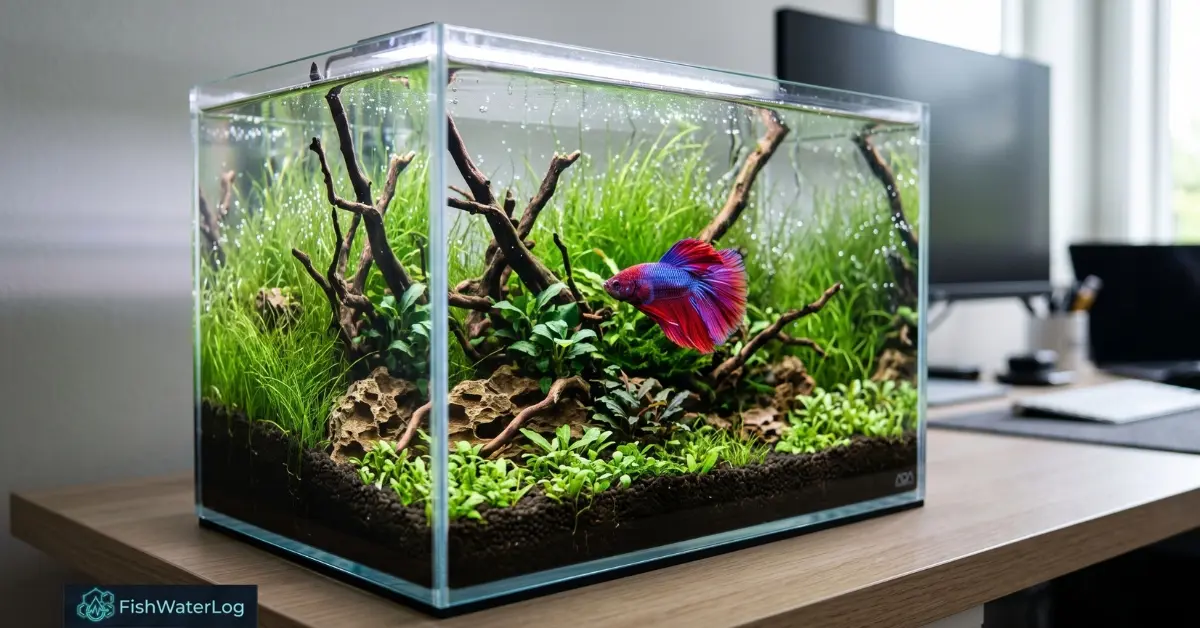
The modern discipline of aquatic biology and home aquaristics has undergone a profound paradigm shift toward micro-environments, commonly referred to as nano aquariums. Defined by their emphasis on small-scale inhabitants housed within drastically reduced spatial footprints, nano aquariums demand absolute precision in biological and chemical management. At the epicenter of this specialized discipline is the pursuit of identifying the best nano fish for 5 galon tank systems, a specific volumetric limitation that presents profound biochemical, hydrodynamic, and ethological challenges for the aquarist.
When evaluating aquatic life for such restricted environments, it is imperative to understand that true nano fish are not merely juvenile iterations of larger teleost species. Rather, they represent a distinct evolutionary pathway characterized by extreme niche specialization. These organisms have adapted over millennia to highly localized, often marginal micro-habitats in the wild, such as the shallow peat swamps of Borneo, the slow-moving forest tributaries of the Amazon, and the stagnant, seasonally ephemeral rice paddies of Southeast Asia. Transitioning these highly adapted species into a captive 5-gallon enclosure requires the meticulous replication of their specific environmental parameters while simultaneously mitigating the severe risks associated with low-volume water stability. The overarching objective is to align the behavioral ecology of the smal fish with the geometric and biological constraints of the vessel.
Hydrodynamics and Spatial Constraints in a 5-Gallon Aquarium
A fundamental axiom of fluid dynamics and aquatic chemistry dictates that small volumes of water are inherently and disproportionately unstable. A standard 5-gallon rectangular aquarium typically possesses a baseline footprint of 45×30 centimeters (18×12 inches). This restricted geometry limits not only physical horizontal swimming space but also the total surface area available for critical atmospheric gas exchange. When setting up the best nano fish for 5 galon tank environments, aquarists must recognize that low water volume provides zero buffer for environmental fluctuation, rapidly amplifying subtle water parameter shifts into lethal physiological stress.
Niche specialization in smal aquarium fish often renders them exceptionally sensitive to the accumulation of dissolved organic compounds (DOCs) and dissolved nitrogenous waste. In a micro-tank setup, the high ratio of glass boundary surface area to open water volume fundamentally alters current mechanics. Power filtration outflow patterns are interrupted by glass perimeters, creating turbulent, chaotic micro-eddies. Because many true nano species originate from sluggish backwaters, slow-moving peat swamps, or seasonal floodplains, persistent high-velocity current quickly leads to systemic physical exhaustion and immune suppression.
Critical Spatial and Hydrodynamic Vectors for Micro-Tanks
Selecting appropriate inhabitants for compact enclosures requires aligning hydrodynamic mechanics with species-specific ethology:
- Horizontal Swimming Corridors: Fast, open-water pelagic cruisers require uninterrupted linear vectors; housing active schooling species in a confined 45 cm footprint forces abrupt stopping and turning, triggering chronic behavioral stress.
- Surface-Area-to-Volume Ratio: Narrow or tall 5-gallon designs compromise the gas-exchange boundary layer, making vertical swimming and surface-grazing micro-fish vulnerable to localized oxygen depletion.
- Laminar vs. Turbulent Flow Dynamics: High-turnover mechanical filters generate localized vortexes; replacing powerheads with gentle air-driven sponge filters protects delicate fins while providing optimal surface tension turnover.
- Vertical Stratification and Territorial Geometry: Confining multiple mid-water micro-predators collapses natural line-of-sight barriers, which makes choosing low-bioload, solitary oddballs or strictly specialized smal fish essential for long-term equilibrium.
Advanced Biofiltration Mechanics and Nitrogen Control
A critical gap in mainstream aquaristics is the pervasive oversimplification of biological filtration. Selecting the ideal livestock is rendered entirely moot if the foundational biological matrix cannot process their metabolic waste. Traditional, non-scientific advice frequently defaults to subjective spatial rules, completely ignoring the biochemical reality of the environment. In contrast, advanced biofiltration relies strictly on quantitative metrics: daily feed input, Volumetric Nitrification Rate (VTR), and the Specific Surface Area (SSA) of the biofilter media utilized to maintain the best nano fish for 5 galon tank systems.
Autotrophic vs. Heterotrophic Nitrification Pathways
Biofiltration within an aquarium operates primarily through the competitive interaction of two distinct microscopic microbial communities: autotrophic and heterotrophic bacteria. Autotrophs consume inorganic compounds; autotrophic nitrifying bacteria oxidize lethal ammonia into nitrite, and subsequently into less toxic nitrate via the classical nitrogen cycle.
Conversely, heterotrophic bacteria rapidly break down complex organic matter derived from uneaten food, fish feces, and decaying botanical tissue, converting them into dissolved organic compounds (DOCs). The critical dynamic in a tightly constrained 5-gallon tank is replication velocity: heterotrophic bacteria reproduce exponentially faster than autotrophs. If a micro-aquarium receives even minor excess feed, heterotrophs proliferate rapidly, outcompeting slower-growing autotrophic nitrifiers for available colonizable surface area and dissolved oxygen. This competitive exclusion triggers biofilter failure, imperiling delicate smal aquarium fish through acute parameter toxicity.
Biological Surface Area and Volumetric Nitrification Rates
The overall efficacy of a nano tank biofilter is governed directly by the Specific Surface Area (SSA) of the media, categorized by pore dimensions: macropores (>75 µm), mesopores (30–75 µm), and micropores (<30 µm). Beneficial nitrifying biofilms do not suspend freely in the water column; they require rigid structural matrices to colonize. Sintered glass and porous ceramic rings provide an exponential increase in functional colonization area compared to smooth plastic bio-balls.
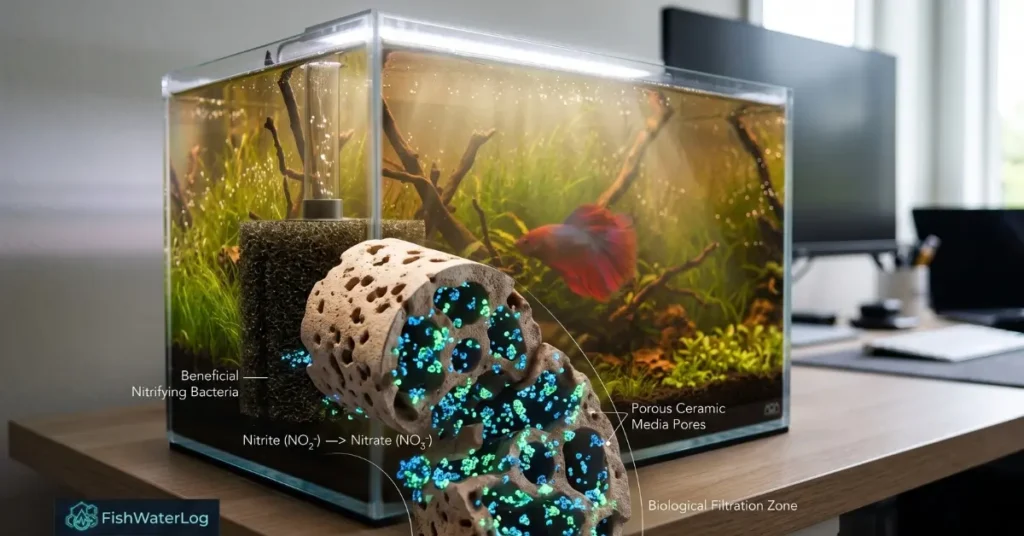
To engineer a biochemically stable 5-gallon tank, the biological capacity must be calculated using principles derived from Recirculating Aquaculture Systems (RAS). The critical determining input is not the total volume of the tank, but rather the daily mass of feed introduced into the system. The required biofilter media volume can be mathematically modeled to ensure adequate nitrification:
Vmedia = TANproduced / VTR
Where TAN produced represents the Total Ammonia Nitrogen generated per day, and VTR is the Volumetric TAN Conversion Rate of the chosen media (for instance, 90 g TAN/m3/day for static submerged media). For a precision nano tank setup, daily TAN production is calculated based on the protein content of the applied feed:
TANproduced = Feed (kg/day) × Protein % × 0.50 (Nitrogen wasted) × 0.16 × 1.2
By ensuring the chosen media provides a Specific Surface Area between 300 to 600 square feet per cubic foot, the aquarist guarantees that bacterial biofilms remain thin, highly oxygenated, and efficient, preventing the deeper layers of the biofilm from undergoing necrosis and subsequently clogging the micropores.
| Filter Media Type | Approximate SSA (sq ft / cu ft) | Porosity Characteristics | Recommended Flow (Tank Turnovers/Hour) |
| Plastic Bio-Balls | 30–50 | Macropores (Non-clogging) | 4–5x |
| Coarse Sponge Foam | 100–150 | Macropores to Mesopores | 2–4x |
| Sintered Glass Rings | 450–600 | Highly interconnected Micropores | 1–3x |
| MarinePure Ceramic | 600 | Open interconnected porosity | 1–2x |
In contrast, advanced biofiltration relies strictly on quantitative metrics: the daily feed input, the volumetric nitrification rate (VTR), and the specific surface area (SSA) of the biofilter media utilized, principles extensively detailed in commercial recirculating aquaculture systems engineering.
Recognizing and Remediating a Nitrogen Cycle Crash
When a 5-gallon ecosystem exceeds its bioload threshold, a rapid and silent collapse of autotrophic bacteria occurs. Fish gasping at the surface is a critical diagnostic indicator of a sudden Nitrogen Cycle crash, and is frequently misdiagnosed as mere environmental oxygen deficiency. When the beneficial nitrifying bacterial colonies collapse, a lethal spike in ammonia occurs almost instantly. In such critical emergencies, standard protocols mandate an immediate 50% water exchange, the dosing of a water conditioner designed to temporarily bind free ammonia, and the addition of non-iodized aquarium salt to protect the delicate gill epithelial tissues from chemical burns. Aquarists routinely rely on comprehensive emergency remediation protocols, such as the fix nitrogen cycle crash methodology, to stabilize the biological bed before total livestock loss occurs.
Water Chemistry, Substrate Dynamics, and Environmental Buffering
Maintaining smal aquarium fish in optimal physiological condition requires that environmental buffering mechanisms be integrated directly into the physical hardscape and substrate layers of the 5-gallon enclosure. In ultra-compact closed aquatic ecosystems, relying solely on water volume for biochemical stability is insufficient; every surface element must contribute to ionic equilibrium.
Active Aqua Soils vs. Inert Substrates
A primary point of failure in meticulously aquascaped 5-gallon planted nano tanks is the erroneous selection of completely inert substrates, such as silica sand or non-porous gravel. Attempting to cultivate heavy root-feeding aquatic flora in plain, compacted sand suffocates the root structures, causing massive hypoxic plant melt. The resulting decayed organic matter overloads heterotrophic bacteria, driving up dissolved oxygen consumption and triggering systemic ammonia spikes.
- Cation Exchange Capacity (CEC): The strategic implementation of high-CEC active aqua soils actively binds and exchanges vital nutrient ions, pulling excess nitrogen out of the water column while keeping plant growth lush and vigorous.
- Substrate Stratification: For advanced methodologies regarding substrate layering and root zone oxygenation, consult our detailed substrate for planted tanks guide to optimize nutrient transport pathways for the best nano fish for 5 galon tank setups.
- Hypoxic Zone Prevention: Porous substrate granules prevent compaction, ensuring micro-currents circulate through the benthic floor and avoiding the formation of toxic anaerobic pockets.
Blackwater Chemistry and Humic Acid Buffering
A significant proportion of premier nano fish candidates originate from Southeast Asian peat swamp ecosystems. These specialized environments are heavily shaded by dense primary forest canopies and are characterized by water rich in dissolved humic substances. As a result, the water exhibits negligible carbonate hardness (KH) and highly acidic pH values, often ranging from 4.0 to 6.0. Attempting to replicate these specific ionic conditions in a 5-gallon tank using pure reverse osmosis (RO) water with zero KH presents a severe risk; without a chemical buffer, the pH can crash suddenly and lethally.
- Botanical Tannin Buffering: Introducing Indian Almond (Catappa) leaves, Alder cones, and Lotus pods releases humic acids that act as a natural buffering system, stabilizing the water chemistry at a safe acidic equilibrium for your smal fish.
- Antimicrobial Epithelial Protection: Dissolved tannins exert mild antifungal and antibacterial properties, bolstering the delicate epidermal slime coats of wild-derived nano fauna.
- Photometric Penetration Management: Penetrating these dark, tannin-stained waters with adequate light for plant photosynthesis requires precise calculations, making aquarium PAR meter mapping rules essential to sustain lower-light, slow-growing epiphytes like Bucephalandra and Cryptocoryne without triggering algae blooms.
Solitary Apex Micro-Predators and Oddball Builds
When evaluating the best nano fish for 5 galon tank environments, prioritizing a “wet pet” architectural build—housing a single, highly interactive specimen—is frequently the most biologically sound and stable decision an aquarist can make. This singular stocking approach completely eliminates inter-species competition, prevents fin-nipping, and halts territorial shoaling stress in spatially restricted water volumes.
Betta splendens (Siamese Fighting Fish)
The Betta fish (Betta splendens) remains the undisputed premier candidate for a solitary 5-gallon micro-enclosure. Belonging to the family Osphronemidae, Bettas are evolutionary labyrinth breathers possessing a suprabranchial organ that allows direct extraction of atmospheric oxygen. This physiological trait evolved in the warm, oxygen-deprived ephemeral floodplains of the Mekong River basin.
- Thermal Requirements: Maintain ambient water temperatures between 26°C and 30°C to support enzymatic digestion and robust immune responses.
- Spatial Utilization: Reaching up to 70 mm (2.8 inches) in standard length, a single adult male fully commands the spatial dimensions of a 5-gallon tank without feeling confined.
- Hydrodynamic Safeguards: Domesticated long-finned varieties suffer severe physical drag; gentle, air-driven sponge filtration is mandatory to prevent chronic exhaustion.
- Boundary Protection: A tightly fitted aquarium lid is non-negotiable, as their natural instincts drive them to leap between fragmented micro-pools.
Dario dario (Scarlet Badis)
For enthusiasts seeking a calculating micro-predator, the Scarlet Badis (Dario dario) from the Brahmaputra River drainage in India provides remarkable behavioral ethology. Reaching an adult size of just 20 mm (0.8 inches), this microprecision hunter stalks copepods and micro-fauna within shaded moss thickets.
- Sexual Dimorphism: Dominant males exhibit brilliant ruby-red and iridescent blue bars, whereas cryptic females remain a subdued, mottled silvery-grey.
- Territorial Micro-Zoning: While minute, males are aggressively territorial toward conspecifics; house them strictly solitary or as a verified bonded pair with dense visual barriers.
- Dietary Specialization: They almost universally reject processed dry flakes and pellets. Long-term survival requires a steady cultivation of live micro-foods such as Daphnia magna, Grindal worms, and freshly hatched Artemia nauplii.
Carinotetraodon travancoricus (Dwarf Pea Puffer)
The Dwarf Pea Puffer (Carinotetraodon travancoricus) is a true freshwater pufferfish endemic to the Western Ghats of India. At a maximum length of 25 mm (1 inch), it packs extraordinary intelligence and predatory drive into a miniature frame, requiring broken sightlines formed by intricate live plant stems.
- Strictly Solitary Footprint: Despite their diminutive stature, Pea Puffers are relentless fin-nippers. A 5-gallon tank possesses the geometry for only one specimen; multi-specimen groups will engage in lethal territorial disputes.
- Dentition Management: Possessing continuously growing beak-like dental plates, their feeding regimen must include hard-shelled pest snails (Bladder or Ramshorn snails) to naturally grind down tooth plates and prevent fatal overgrowth.
- Invertebrate Incompatibility: Due to their obligate predatory nature, never combine them with ornamental Neocaridina shrimp or valued decorative snails, which will be methodically predated.
Micro-Schooling Dynamics in Spatially Constrained Systems
If a solitary apex specimen is not desired, the alternative architectural approach is a carefully curated micro-community consisting of a single schooling nano fish species. The unbreakable biological rule of 5-gallon communities is to select one highly specific shoaling species (in a cohesive group of 6 to 8) paired exclusively with a benthic invertebrate cleanup crew. Attempting to stack multiple mid-water schools in a 5-gallon footprint severely disrupts their horizontal swimming vectors and exponentially increases competitive psychological stress, metabolic waste, and system instability for your smal aquarium fish.
Boraras brigittae (Chili Rasbora)
The Chili Rasbora (Boraras brigittae), endemic to the ancient blackwater peat swamps of southwestern Borneo near the Jelai Bila river basin, is arguably the most visually striking micro-schooling teleost available for nano aquarists. The genus name Boraras is an intentional anagram of Rasbora, referencing the reversed ratio of abdominal and caudal vertebrae uniquely found in this specific genetic clade.
- Miniature Footprint: Reaching a maximum standard length of merely 20 mm (0.8 inches), a tight, cohesive group of 8 to 10 individuals presents an exceptionally low metabolic bioload.
- Blackwater Parameter Demands: Their deep, fiery red physical coloration only manifests fully in soft, highly acidic water (pH 4.0–7.0) rich in dissolved humic substances.
- Lighting and Shelter: Dim lighting achieved through floating plants like Phyllanthus fluitans or Salvinia simulates dense forest canopies, reducing stress and encouraging confident swimming.
- Gentle Hydrodynamics: Originating from sluggish jungle pools, high-velocity currents cause severe physical exhaustion; a mature, air-driven sponge filter is mandatory.
- The genus name Boraras is an intentional anagram of the generic name Rasbora, referencing the reversed ratio of abdominal and caudal vertebrae documented in the FishBase taxonomic database.
Boraras merah (Phoenix Rasbora)
Often found in overlapping sympatric ranges in southern Borneo, the Phoenix Rasbora (Boraras merah) offers a distinctive aesthetic alternative within identical biological parameters. Deriving its name from the Indonesian word for “red”, it displays a broken, spotty lateral blotch compared to the solid stripe of B. brigittae.
- Spatial Footprint: Requires a minimum 45 × 30 cm tank base to support natural micro-territorial spacing between rival males.
- System Maturity Requirement: Neither Boraras species should ever be introduced into a raw, biologically immature setup lacking established biofilms and stable nitrifying pathways.
Hyphessobrycon amandae (Ember Tetra)
Native to the slow tributaries and backwaters of the Araguaia River basin in South America, the Ember Tetra (Hyphessobrycon amandae) brilliantly bridges the gap between fragile micro-fish and standard community tetras.
- Robust Body Geometry: Maxing out at approximately 20 mm (0.8 inches), they display a deeper, slightly more resilient profile than slender cyprinids.
- Zonal Stratification: A dedicated group of 6 to 8 Ember Tetras occupies the mid-to-lower water strata, their translucent amber-orange hue creating intense contrast against green carpet flora.
- Thermal Affinity: Adapts readily to municipal soft tap water and thrives at elevated temperatures of 24°C to 28°C, making them an ideal candidate for warm indoor best nano fish for 5 galon tank environments.
Paracheirodon simulans (Green Neon Tetra)
While standard Neon Tetras (Paracheirodon innesi) demand extensive horizontal swimming corridors, the diminutive Green Neon Tetra (Paracheirodon simulans) serves as a viable micro-alternative.
- Petite Morphology: Growing to a maximum of 25–30 mm (1–1.25 inches), they feature a slender frame and omit the deep red ventral pigmentation of their larger congeners.
- Iridescent Aesthetics: Dominated by a brilliant, neon blue-green lateral stripe that reflects dramatically under dim, tannin-tinted illumination.
- Quarantine Protocol: Because many specimens in the hobby are wild-caught from the Rio Negro basin, thorough quarantine is necessary to prevent introducing pathogens into your fragile nano environment.
Petruichthys sp. ‘rosy’ (Rosy Loach)
For keepers desiring active benthic exploration, the Rosy Loach (Petruichthys sp. ‘rosy’), native to Myanmar and Thailand, delivers dynamic swimming behavior.
- Agile Bottom Dwellers: Reaching 25–30 mm (1–1.25 inches), these miniature loaches dart inquisitively through the bottom and mid-water column without constant pacing.
- Dimorphic Patterning: Males exhibit striking reddish-orange midlines, whereas females display an attractive, mottled tannish-grey camouflage.
- Pygmy Corydoras Alternative: Unlike Corydoras that pace glass walls when restricted horizontally, a small group of 6 Rosy Loaches adapts far better to a 5-gallon footprint.
| Species Name | Common Name | Max Size | Swimming Level | Optimal pH | Minimum Group Size in 5-Gal |
| Boraras brigittae | Chili Rasbora | 20 mm | Mid / Top | 4.0–7.0 | 8–10 |
| Hyphessobrycon amandae | Ember Tetra | 20 mm | Mid / Bottom | 5.5–7.0 | 6–8 |
| Paracheirodon simulans | Green Neon Tetra | 25 mm | Mid-water | 5.0–6.5 | 6 |
| Petruichthys sp. ‘rosy’ | Rosy Loach | 30 mm | Bottom / Mid | 6.5–7.5 | 6 |
Gap Content: Under-Researched Model Organisms for Micro-Tanks
Most mainstream analyses and retail publications routinely recycle the same few conventional species for 5-gallon setups, creating an echo chamber of limited stocking choices. A deeper investigation into scientific literature, developmental biology, and phylogenetic research reveals highly adapted model organisms that are biologically validated for ultra-small water volumes yet remain overlooked in the home aquarium trade. Incorporating these resilient species ensures long-term biochemical equilibrium for aquarists seeking the best nano fish for 5 galon tank systems.
Oryzias latipes (Japanese Medaka)
The Japanese Rice Fish, or Medaka (Oryzias latipes), represents a major gap in modern micro-aquarium guides despite centuries of intensive husbandry across East Asia. Having evolved in isolated agricultural ditches, stagnant rice paddies, and ephemeral flood pools subject to dramatic seasonal fluctuations, their physiological adaptability to confined volumes is practically unmatched.
- Empirically Validated Spatial Density: Extensively utilized as a foundational model organism in developmental biology and toxicology, their spatial crowding thresholds have undergone rigorous peer review. Controlled laboratory behavioral modeling demonstrates that a 5-gallon (19-liter) volume comfortably sustains a small breeding cohort of 5 to 6 individuals (ideally 2 males and 4 females) with zero abnormal behavioral stereotyping or stress-induced immunosuppression.
- Euryhaline and Eurythermal Plasticity: Medaka tolerate a remarkably expansive temperature envelope (surviving near-freezing conditions up to warm summer water), functioning seamlessly in unheated indoor nano setups without thermal shock.
- Low Organic Particulate Output: Unlike conventional livebearers that produce heavy, loose fecal strings, Medaka possess high metabolic conversion efficiency, generating minimal particulate waste that will not overwhelm the delicate nitrifying capacity of smal aquarium fish systems.
Epiplatys annulatus (Clown Killifish)
The Clown Killifish (Epiplatys annulatus), also known as the Rocket Killifish, is an obligate surface-dwelling micro-predator native to the slow coastal streams and freshwater swamps of Guinea, Sierra Leone, and Liberia. Maxing out at approximately 30 mm in total length, they combine exceptional visual aesthetics with specialized vertical spatial partition.
- Specialized Surface Niche: Because they hunt springtails and micro-insects trapped within the air-water meniscus, they inhabit the uppermost millimeters of the water column, entirely avoiding competition with benthic or mid-water fauna.
- Morphology and Sexual Dimorphism: Displaying alternating black and cream vertical bands, mature males develop an ornate, flame-like spade tail marked with intense blue, red, and yellow structural coloration.
- Hydraulic and Physical Restraints: They demand placid, mirror-flat water surfaces beneath dense patches of floating macrophytes (such as Salvinia or Phyllanthus fluitans). A tightly sealed aquarium lid is mandatory, as their primary instinctive response to sudden stimuli is a high-velocity jump.
Invertebrate Alternatives: The Zero-Bioload Approach
If an aquarist desires continuous micro-movement within a 5-gallon footprint without stressing fragile nitrifying bacterial beds, eliminating teleost fish entirely in favor of an invertebrate-exclusive ecosystem represents a biologically elegant alternative. Invertebrates provide continuous substrate agitation and graze biofilms without introducing the heavy organic nitrogen loads associated with standard teleost metabolism, making them an ideal stocking choice alongside or instead of smal fish.
- Neocaridina davidi (Dwarf Cherry Shrimp): Available in diverse line-bred morphs (such as Red Cherry, Blue Dream, and Green Jade), these dwarf shrimp boast a negligible metabolic footprint. A mature 5-gallon planted setup can comfortably support a self-sustaining colony of 15 to 30 individuals, provided they are not co-housed with micro-predators like Dario dario or Pea Puffers.
- Neritina natalensis (Nerite Snail): Operating as specialized biofilm and diatom grazers, a single Nerite snail keeps glass panels and hardscape surfaces clean. Because their larval veliger stages require brackish salinity gradients to develop, they cannot reproduce in freshwater, completely eliminating the risk of sudden population blooms that destabilize water parameters.
- Caridina multidentata (Amano Shrimp): Renowned for their efficiency against filamentous hair algae and organic plant detritus, one or two adult Amano shrimp effectively process stubborn organic matter without outgrowing the physical dimensions of the tank.
| Invertebrate Species | Primary Diet | Bioload Impact | Reproduction in Freshwater |
| Neocaridina davidi (Cherry Shrimp) | Biofilm, Micro-algae, Detritus | Negligible | High (Prolific) |
| Neritina natalensis (Nerite Snail) | Diatoms, Green Spot Algae | Very Low | None (Requires Brackish) |
| Caridina multidentata (Amano Shrimp) | Filamentous Hair Algae, Detritus | Low | None (Requires Brackish) |
Contraindicated Species: Why Common Choices Fail Biologically
A fundamental element of mastering 5-gallon micro-environments is distinguishing biologically viable fauna from commercially marketed species that inevitably fail in reduced spatial geometries. Despite persistent retail claims, several popular freshwater species suffer acute physiological and ethological deterioration when confined to a 5-gallon vessel.
- Corydoras Catfish (Including Pygmy Corydoras): Although Corydoras pygmaeus reaches only 25 mm, they are active schooling fish requiring expansive horizontal foraging space. Confining an obligate group of 6 to a standard 45 × 30 cm footprint induces chronic glass-surfing, stereotypic pacing, and long-term immunosuppression.
- Standard Neon Tetras (Paracheirodon innesi): Unlike their smaller congener Paracheirodon simulans, standard neon tetras are active pelagic cruisers requiring continuous horizontal swimming vectors of at least 60 cm (24 inches) to shoal naturally without hydrodynamic confinement stress.
- Poeciliid Livebearers (Guppies, Mollies, Platies): While male Endler’s livebearers are physically compact, typical livebearers possess exceptionally fast metabolic turnover rates. Introducing mixed sexes guarantees rapid, unchecked population spikes that quickly overwhelm the volumetric nitrification capacity of a 5-gallon biofilter.
- Common Goldfish & Plecostomus: Juvenile specimens are frequently sold to beginners for small bowls or desktop setups. These teleosts produce massive quantities of solid heterotrophic waste, grow far too large, and cause immediate nitrogen cycle collapses.
Conclusion
Curating a 5-gallon nano aquarium is a scientific endeavor that transcends mere aesthetics; it is an exercise in applied aquatic biology, chemical telemetry, and rigorous species-specific spatial matching. The best nano fish for 5 galon tank setups are exclusively those organisms that naturally occupy highly constrained micro-environments in the wild—such as the resilient, labyrinth-breathing Betta splendens, the acid-adapted blackwater Boraras brigittae, or the scientifically validated model organism Oryzias latipes. Success in micro-aquaria is entirely contingent upon heavily mitigating the fragile nitrogen cycle by calculating exact volumetric nitrification rates, utilizing highly porous ceramic bio-media, establishing active aqua soils, and rigorously adhering to a low-bioload, singular-species philosophy. By embracing extreme niche specialization over generic, mismatched community builds, aquarists can successfully transform a restrictive 5-gallon glass vessel into a thriving, biochemically stable, and deeply fascinating slice of nature.
Frequently Asked Questions (FAQs)
What is the single best nano fish for a 5-gallon tank?
The single most stable and biologically appropriate option for a 5-gallon tank is a solitary male Betta fish (Betta splendens). They are specialized labyrinth breathers adapted to small, low-flow, and oxygen-poor environments in the wild, making their natural physiology uniquely suited for this captive volume compared to hyperactive, open-water schooling fish.
Can I put a school of standard Neon Tetras in a 5-gallon tank?
No. Standard Neon Tetras (Paracheirodon innesi) are highly active pelagic swimmers that require extensive horizontal swimming space to thrive; they should be kept in a minimum of a 10 to 20-gallon long tank. However, their smaller, less active cousin, the Green Neon Tetra (Paracheirodon simulans), can be housed in a 5-gallon tank in a tight, carefully managed group of 6.
Are Dwarf Pea Puffers safe to keep with a shrimp colony?
Absolutely not. Dwarf Pea Puffers are highly aggressive, intelligent micro-predators armed with powerful, beak-like jaws. They will actively hunt, kill, and consume dwarf shrimp (such as Cherry Shrimp) and any small snails present in the tank, viewing them strictly as live prey rather than tank mates.
How do I prevent my 5-gallon tank’s water chemistry from crashing?
A 5-gallon tank possesses extreme spatial constraints, meaning ammonia can spike rapidly with any excess bioload. Aquarists prevent crashes by calculating their daily feed input, using highly porous ceramic bio-media to maximize the specific surface area for autotrophic nitrifying bacteria, utilizing active aqua soils to support plant root health, and strictly avoiding overfeeding. Incorporating botanical tannins also provides a critical humic acid buffer to stabilize the pH in soft water setups.
Do I actually need a filter for a 5-gallon tank if I only have one smal fish?
Yes, without exception. Biological filtration is mandatory for any enclosed aquarium to process the nitrogen cycle, converting lethal ammonia into relatively harmless nitrate. For smal fish in a 5-gallon tank, a mature, low-flow sponge filter driven by a small air pump provides the necessary biofiltration surface area without creating an overpowering hydrodynamic current that would exhaust the fish.
