
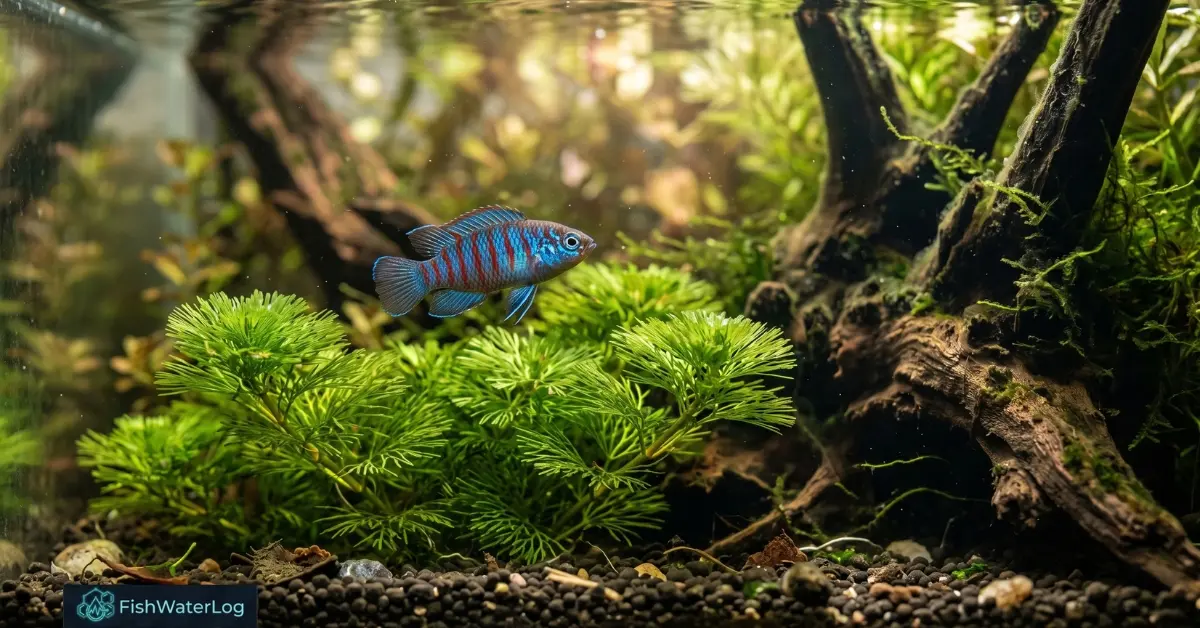
The discipline of freshwater aquariology has transitioned fundamentally from the rudimentary maintenance of domesticated pets to the precise replication of complex, hyper-localized ecosystems. In contemporary practice, enthusiasts curating aesthetic inspiration and discovery no longer rely on sterile glass enclosures; instead, they cultivate highly bio-diverse aquatic habitats that mirror the exact biogeographical origins of the fauna. When researchers and aquarists seek out cool freshwater fish for home aquariums, the parameters for success extend far beyond basic water volume. The introduction of unique freshwater aquarium fish into a closed system mandates a rigorous understanding of the underlying ecology, including hydrochemistry, substrate physics, phylogenetic background, and the complex relationships between dietary intake and the intestinal microbiome.
The types of freshwater fish now available to the dedicated hobbyist span a remarkable evolutionary breadth. From the highly oxygenated, bedrock-strewn streams of the Annamite Range in Vietnam to the sluggish, heavily vegetated backwaters of Kerala, India, the modern aquarist has access to an unprecedented array of micro-predators, specialized biotope dwellers, and highly interactive species. This comprehensive guide explores the specific biological, behavioral, and chemical requirements necessary to not merely sustain, but actively proliferate these delicate species in captivity. By synthesizing vast quantities of ichthyological data, this document serves as a foundational text for the advanced maintenance and breeding of rare and aesthetically profound freshwater species.
When researchers and aquarists seek out cool freshwater fish for home aquariums, the parameters for success extend far beyond basic water volume. For a complete blueprint on natural biotope stability, you can explore our freshwater aquarium ecosystem guide to understand substrate and biological filtration balance.
Elevating Aquatic Content
A systematic review of high-authority pet and aquatics websites—such as Aqueon, Chewy, LiveAquaria, and Seaoura—reveals persistent superficiality in the literature surrounding unique freshwater aquarium fish. While these platforms efficiently generate introductory care sheets detailing maximum adult sizes, generalized temperature ranges, and basic temperaments, they exhibit a profound content gap regarding the empirical science of aquatic husbandry.
The identified gaps in the current high-ranking literature include:
- Microbiome and Nutritional Biochemistry: Competitor content routinely categorizes fish using rudimentary labels such as “carnivore” or “omnivore.” The literature completely neglects the impact of captivity on the alpha diversity of the intestinal microbiome, a critical factor in the immune response and longevity of wild-caught species. High-authority sites fail to document the transition of dominant phyla when micro-predators are introduced to sterile home environments.
- Biogeographical and Phylogenetic Context: Leading platforms omit crucial conservation and phylogenetic metrics, such as the Genetic Diversity Risk Indicator (GDRI) and the Phylogenetic Diversity index established by global databases like FishBase. Understanding these metrics provides essential insight into the resilience of isolated populations.
- Precise Larval Ontogeny: While many sources mention that a species is an egg-scatterer or a cave-spawner, none provide day-by-day embryological timelines. The transition from yolk-sac absorption to the active hunting of Infusoria and Artemia nauplii is glossed over, leaving breeders without actionable, timeline-specific data.
- Substrate Cation Exchange and Chemical Buffering: Competitors list target pH ranges but ignore the buffering capacity of humic acids, tannins, and the Cation Exchange Capacity (CEC) of active aqua soils, which are vital for mitigating nitrogen cycle fluctuations and supporting heavy root-feeding flora.
- Pigmentation and Dietary Additives: The empirical data regarding color enhancement—such as the utilization of synthetic astaxanthin combined with seaweed extract to rapidly improve integumentary redness in species like Carinotetraodon travancoricus—is absent from mainstream commercial guides.
By addressing these profound gaps, this guide elevates the discourse, integrating cool freshwater fish for home aquariums natively into highly technical, actionable prose designed for the dedicated hobbyist and aquatic researcher searching for reliable freshwater fish care insights.
To verify the precise taxonomic classifications, morphological data, and global distribution of the species you intend to keep, it is highly recommended to consult the extensive ichthyological database at FishBase. Furthermore, aquarists concerned with the ecological sustainability of wild-caught imports can cross-reference the conservation status and population trends of vulnerable species via the IUCN Red List.
The Ecological Mechanics of Planted Tanks
To successfully house unique freshwater aquarium fish, the foundation of the environment must be an ecologically active planted tank. Aquatic flora serves multiple biochemical and behavioral functions. Plants such as Cabomba, Ceratophyllum, Cryptocoryne, and Microsorum not only facilitate the uptake of excess nitrogenous compounds but also provide critical broken lines of sight. This architectural complexity is fundamentally required to mitigate intra-species aggression among territorial micro-fishes.
The successful cultivation of heavy root-feeding plants is entirely dependent on substrate mechanics. Planting heavy root feeders in plain, inert sand or standard gravel suffocates root structures, causing mass cellular death—commonly referred to as “plant melt”—which fouls the water column with decaying organic matter. To prevent this ecological collapse, active aqua soils with a high Cation Exchange Capacity (CEC) must be utilized. High-CEC substrates continuously attract, hold, and exchange nutrient cations directly at the root zone while releasing humic acids that buffer the water to a slightly acidic pH. For a comprehensive analysis of substrate dynamics, researchers can reference the substrate for planted tanks guide to optimize high-tech setups.
Beyond the substrate, lighting must be rigorously managed. Precise Photosynthetically Active Radiation (PAR) values dictate the rate of cellular photosynthesis, ensuring optimal growth for your cool freshwater fish for home aquariums. Improper lighting intensity induces stress in shade-dwelling species and accelerates nuisance algae. Aquarists balancing intense lighting should implement floating vegetation to create dappled shadows, applying aquarium PAR meter mapping rules to distribute energy evenly. Furthermore, introducing botanical elements like Indian Almond leaves establishes a blackwater environment, releasing tannins that suppress pathogens and support the osmotic balance of sensitive freshwater fish.
Taxonomic Profiling of Unique Freshwater Aquarium Fish
The careful selection of cool freshwater fish for home aquariums requires an intimate understanding of species-specific taxonomy, biogeography, and behavioral ecology. The following taxonomic profiles detail the empirical requirements of highly sought-after unique freshwater aquarium fish across diverse families.
Cyprinidae and Danionidae: Micro-Shoalers
The family Cyprinidae, encompassing various danios, rasboras, and barbs, represents some of the most dynamic schooling and shoaling species available for community setups.
- Celestichthys margaritatus (Celestial Pearl Danio): Discovered near Hopong in Shan State, eastern Myanmar, this diminutive fish reaches a standard length of 21mm, boasting a deep navy-blue body with pearl-white spots and vivid orange-red fins. Endemic to shallow grasslands at high altitudes, it requires cooler water (20-26°C), a pH of 6.5-7.5, and general hardness of 5-15 dGH. Housing them in a volume smaller than 41 liters is discouraged due to territorial sparring among males.
- Microdevario kubotai (Neon Green Rasbora): A translucent, greenish-yellow fish featuring a glowing golden lateral stripe. Originating from Thailand, this benthopelagic species reaches 1.9 cm and presents a hardy option for densely planted nano aquaria.
- GloFish Danio: Derived from the Zebra Danio, these captive-bred fish offer genetically inherited fluorescence, requiring a minimum of 10 gallons and thriving at 64-75°F.
To prevent this ecological collapse, active aqua soils with a high Cation Exchange Capacity (CEC) must be utilized. High-CEC substrates continuously attract, hold, and exchange nutrient cations directly at the root zone while releasing humic acids. For a comprehensive breakdown, check out our detailed substrate for planted tanks guide.
Tetraodontidae: Freshwater Puffers
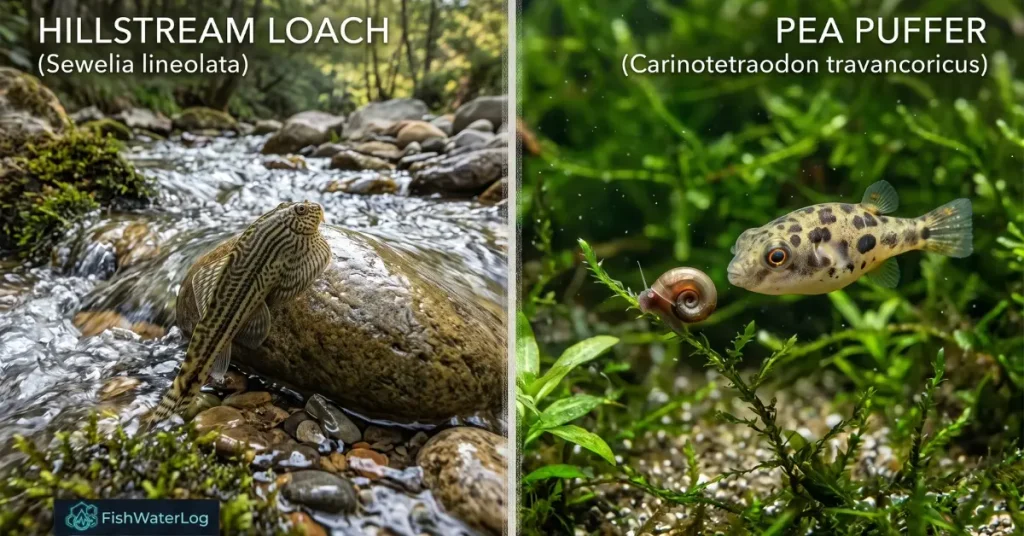
Comparing riverine specialists like the Hillstream Loach and micro-predators like the Pea Puffer in cool freshwater fish for home aquariums.Freshwater puffers demand specialized spatial architecture and strict dietary regimens to thrive in captivity.
- Carinotetraodon travancoricus (Dwarf Pea Puffer): Endemic to Kerala, India, this 25-30mm micro-predator requires heavy vegetation with Cabomba stems spaced at intervals to break lines of sight. Optimal parameters include 22-28°C, pH 6.8-8.0, and 5-25 dGH. Their diet must include small live snails to grind down their continuously growing beaks.
- Colomesus asellus (Amazon Puffer): A larger, active freshwater alternative requiring specific hormonal conditioning for captive reproduction, spawning at 26.0°C under an L12:D12 lighting cycle.
Badidae: The Micro-Predators
The family Badidae features captivating microscopic species that require specialized live foods and meticulous territory planning.
- Dario dario (Scarlet Badis): A microscopic percoid native to the Brahmaputra River drainage in India, measuring up to 2 cm. Males exhibit striking blue vertical bars and red-orange fins. They universally reject dry foods, requiring live zooplankton like Daphnia and Artemia nauplii.
- Dario hysginon and Dario dayingensis: Regional variants displaying intense red coloration and unique temperature tolerances across Asian river systems.
Balitoridae: Riverine Specialists
For high-energy environments, the Hillstream Loach (Sewellia lineolata) from Vietnam and Laos possesses a dorsally flattened body and suction-cup fins to cling to bedrock in torrential currents. They require strong laminar flow, cool temperatures ($20-24^{\circ}C$), and mature aufwuchs biofilms to graze upon.
Cichlidae: The Complex Social Hierarchies
Cichlids provide high intelligence and complex parental care, ranging from Amazonian Discus fish and German Blue Rams to rift lake African Cichlids like Peacocks and Mbuna.
Poeciliidae & Osphronemidae: Livebearers and Labyrinth Fishes
Livebearers like Guppies and Mollies offer prolific breeding, while labyrinth fishes like Bettas and Honey Gouramis utilize specialized organs to breathe atmospheric oxygen.
Characidae & Callichthyidae: Tetras and Bottom Dwellers
Mid-water tetras and benthic scavengers like Corydoras catfish complete the community structure, requiring fine sand substrates for safe foraging.
The careful selection of cool freshwater fish for home aquariums requires an intimate understanding of species-specific taxonomy and behavior. To ensure peaceful cohabitation, always consult a trusted freshwater aquarium fish compatibility guide before introducing new species to your community setup.
Comparative Taxonomic Reference Matrix
| Species | Family | Max Size | Optimal Temp | pH Range | Primary Diet | Social Behavior |
|---|---|---|---|---|---|---|
| Carinotetraodon travancoricus | Tetraodontidae | 25 mm | 22-28°C | 6.8-8.0 | Carnivore (Snails) | Territorial / Nipper |
| Celestichthys margaritatus | Danionidae | 21 mm | 20-26°C | 6.5-7.5 | Omnivore | Peaceful Shoaler |
| Dario dario | Badidae | 20 mm | 18-26°C | 6.5-8.5 | Micro-predator | Shy / Intra-aggressive |
| Sewellia lineolata | Balitoridae | 65 mm | 20-24°C | 6.5-7.5 | Aufwuchs grazer | High-flow grazer |
| Microgeophagus ramirezi | Cichlidae | 75 mm | 26-30°C | 5.5-7.0 | Omnivore | Biparental / Territorial |
| Microdevario kubotai | Danionidae | 19 mm | 22-26°C | 6.0-7.0 | Omnivore | Peaceful Schooler |
Deconstructing Commercial Aquaculture Myths: Species-Specific Husbandry Corrections
Mainstream commercial aquarium literature consistently prioritizes search volume over physiological reality, propagating outdated husbandry rules that contribute directly to captive mortality. A forensic review of high-ranking competitor platforms reveals pervasive inaccuracies regarding species hardiness, substrate physics, trophic ecology, and spatial kinematics. The following empirical corrections replace these persistent industry myths with ichthyological data.
| Taxon / Species | Commercial Competitor Myth | Empirical Biological Reality & Protocol |
|---|---|---|
|
Neon Tetra (Paracheirodon innesi) | “Hardy, effortless starter fish for uncycled beginner aquariums.” | Zero tolerance for uncycled systems or high TDS. Originating from acidic Amazonian blackwaters (pH 4.0–6.5, negligible KH), standard municipal tap water causes continuous osmoregulatory stress, stripping epidermal mucus and predisposing specimens to columnaris and protozoan infections. Requires mature bio-stability and low TDS regimes. |
|
Kuhli Loach (Pangio spp.) | “Low-maintenance bottom scavenger suitable for standard gravel.” | Obligate soft-sand fossorial species. Coarse or sharp gravel substrates induce severe mechanical abrasion on their sensitive chemosensory barbels and unprotected venters, leading to secondary bacterial infections. Requires fine, rounded silica sand to facilitate natural burrowing behavior. |
|
Plecostomus (Loricariidae Family) | “Algae-eating tank janitor that lives solely on leftover detritus.” | Specialized trophic feeders requiring dietary lignin. They do not consume organic detritus or fish waste. Wood-rasping genera (e.g., Panaque) strictly require natural driftwood in the enclosure to extract lignin for gut digestion. Without targeted vegetable matter and wood cellulose, they suffer from severe gastrointestinal impaction and eventual starvation. |
|
Denison Barb (Dawkinsia denisonii) | “Peaceful colorful addition for standard modest community aquariums.” | High-velocity rheophilic swimmer; Endangered in nature. Native to the turbulent hill streams of the Western Ghats (India), their explosive kinetic swimming demands exceptional tank length and heavy unidirectional laminar flow. Wild populations are classified as Endangered (IUCN Red List) due to past over-exploitation for the pet trade, making verification of captive-bred stock an ethical mandate. |
Correcting these biological misnomers transforms the home aquarium from a transient enclosure into a scientifically sound biotope that actively preserves the physiological health of vulnerable teleost species.
Micro-Predator Nutrition and Fecal Microbiome Dynamics
A critical yet consistently overlooked aspect of maintaining unique freshwater aquarium fish is the complex interplay between their diet and gastrointestinal microbiome. In natural ecosystems, freshwater fish sustain high microbial alpha diversity across multiple bacterial phyla through the continuous ingestion of varied live prey. When these micro-predators are introduced to captive environments and fed sterile commercial diets, their gut microbiome diversity plummets, reducing metabolic efficiency and immune health.
To combat this degradation, advanced aquarists actively culture live foods such as Daphnia, Moina, and Artemia nauplii to inoculate the digestive tract. Furthermore, specific dietary supplementation—such as combining synthetic astaxanthin with seaweed extract—dramatically improves integumentary coloration and vitality in sensitive species like dwarf pufferfish. Maintaining optimal water quality and a robust mucosal slime coat also protects specimens from opportunistic external parasites.
Advanced Aquarium Husbandry and Hydrochemistry
The maintenance of exotic aquatic life requires the rigorous regulation of hydrochemical parameters. The most frequent cause of mass mortality in the home aquarium is not disease, but the sudden collapse of biological filtration, colloquially known as a nitrogen cycle crash. When colonies of nitrifying bacteria—which convert toxic ammonia into nitrites and subsequently into relatively harmless nitrates—are eradicated, often due to the catastrophic error of washing biological sponge filters under chlorinated tap water or entirely replacing mature filter media, a lethal spike in ammonia occurs.
A critical diagnostic sign of this collapse is fish gasping rapidly at the water surface. Novices universally misdiagnose this behavior as a simple oxygen deficiency; however, it is the direct result of ammonia and nitrite toxicity, which causes severe gill hyperplasia and necrosis, physically preventing the gills from absorbing dissolved oxygen. Emergency remediation must be swift: an immediate 50% water exchange is required, alongside aggressive dosing of a water conditioner to bind heavy metals and chlorine. Furthermore, adding non-iodized aquarium salt is a highly effective physiological intervention, as chloride ions actively compete with nitrite ions for absorption at the gill lamellae, protecting fish from methemoglobinemia.
Routine maintenance also dictates specific mechanical methodologies. Superficial water changes that merely siphon water from the middle of the water column are insufficient for long-term stability, as the majority of toxic, anaerobic waste accumulates deep within the substrate layer. Proper gravel vacuuming is essential to extract this trapped detritus; failure to do so allows localized pockets of hydrogen sulfide gas to form, which can be released into the water column with lethal consequences. Additionally, maintaining thermal consistency using reliable heaters and chemical test kits prevents stress-induced pathogen outbreaks.
Precision Photosynthetically Active Radiation (PAR) values dictate the rate of cellular photosynthesis, ensuring optimal flora growth. Aquarists balancing intense lighting should implement floating vegetation and follow our aquarium PAR meter mapping rules to distribute energy evenly.
Reproductive Biology and Larval Ontogeny
For the dedicated ichthyologist, the captive breeding of unique freshwater aquarium fish represents the ultimate validation of their husbandry practices. Successful reproduction, particularly of micro-predators, requires an intimate understanding of environmental triggers, spawning mechanics, and larval ontogeny.
The breeding mechanics of Dario dario demand careful spatial planning. A minimum tank footprint allows multiple males to establish discrete, defensible territories, significantly reducing fatal aggressive encounters. The breeding timeline follows a rigorous schedule:
- Conditioning (2-4 Weeks): Adult pairs are fed intensely with high-protein live foods while water parameters are held tightly between 23-26 degrees Celsius.
- Spawning: Males court females into their territory where the female deposits adhesive eggs on the undersides of broad-leaved plants or small caves.
- Incubation and The Critical Window (Days 1-14): Eggs hatch in 48 to 72 hours. Days 7 through 14 represent the highest mortality risk due to starvation, as fry are microscopic and require live Infusoria or green water several times daily.
- Transition (Days 14-28): By week three, fry can be carefully transitioned to newly hatched brine shrimp and microworms.
Similarly, breeding the Dwarf Pea Puffer requires maintaining warm, soft water conditions and feeding live zooplankton to enhance reproductive success. To maximize fry yield across all sensitive species, mechanical filtration must be restricted to air-driven sponge filters to prevent microscopic fry from being aspirated.
A critical diagnostic sign of a biological filter collapse is fish gasping rapidly at the water surface due to toxic ammonia spikes. For emergency mitigation steps, refer to our complete guide on how to fix nitrogen cycle crash scenarios swiftly.
The Myth of 40 PPM: Chronic Nitrate Toxicity and Sub-Lethal Pathology
A universal oversimplification in amateur fishkeeping literature is the assumption that aquarium nitrates are biologically harmless as long as levels remain below 40 ppm. In aquatic biochemistry, this standard fails to account for chronic, sub-lethal toxicity. Groundbreaking ichthyological research by Camargo et al. (2005) demonstrated that the primary toxic pathway of nitrate is the biochemical conversion of hemoglobin into methemoglobin—a mutated form fundamentally incapable of binding and transporting oxygen. This physiological cascade induces chronic tissue hypoxia, suffocating sensitive teleost species internally despite high dissolved oxygen saturation in the water column.
The long-standing confusion among hobbyists stems from differing analytical testing metrics. Standard liquid drop test kits (such as the API Master Test Kit) measure total nitrate (NO3), whereas scientific literature benchmarks toxicity against nitrate-nitrogen (NO3-N). Converting the empirically established chronic safety limit of 2 mg/L NO3-N using the standard 4.43 stoichiometric conversion factor reveals that the true biological ceiling for sensitive freshwater species is approximately 8.8 ppm total nitrate. While specimens may survive in 40 ppm water without exhibiting acute mortality, histopathological studies confirm continuous cellular degradation, including severe branchial gill hyperplasia, immunosuppression, and intestinal mucosal barrier dysfunction. Maintaining total nitrates below 10 ppm via precision water exchanges and moving bed bio-media is critical for species longevity.
Source Water Geochemistry: The Osmoregulatory Impact of High TDS
Mainstream aquatic guides consistently operate under the flawed assumption that all aquarists have access to soft, chemically neutral municipal tap water. For aquarists across South Asia—particularly metropolitan areas in Pakistan such as Lahore, Karachi, and Faisalabad—local groundwater geology and aging pipeline infrastructure routinely yield extreme Total Dissolved Solids (TDS) ranges exceeding 400 to 1,400 mg/L.
Introducing soft-water, acidophilic species like the Neon Tetra (Paracheirodon innesi), Cardinal Tetra, or Discus directly into high-TDS municipal tap water triggers acute osmoregulatory shock. The immense osmotic pressure strips epidermal mucus membranes and forces the renal and branchial systems into continuous overdrive to excrete excess divalent cations, ultimately leading to organ failure and opportunistic bacterial infection. For high-TDS municipal regions, the standard husbandry protocol mandates stripping raw tap water down to a 20–50 ppm baseline using a multi-stage Reverse Osmosis (RO) filtration system, followed by calculated remineralization with dedicated GH and KH buffers to match the natural biotope requirements.
Beyond the “One Inch Per Gallon” Fallacy: Bio-Load Mechanics in RAS
The widely circulated “one inch of fish per gallon” guideline is an obsolete, biologically invalid rule of thumb. Linear length metrics entirely overlook the cubic scaling of body mass, individual metabolic rates, Specific Dynamic Action (SDA) after ingestion, and allometric oxygen consumption. Research on recirculating aquaculture systems (RAS) confirms that smaller micro-shoalers exhibit significantly higher mass-specific metabolic and respiration rates compared to larger, slower-metabolizing species.
True carrying capacity is not governed by the volume of water, but by the functional surface area of nitrifying bio-media hosting ammonia-oxidizing archaea (AOA), ammonia-oxidizing bacteria (AOB), and comammox Nitrospira. Crowding livestock past the kinetic capacity of the biofilter stimulates the hypothalamic-pituitary-interrenal (HPI) axis, elevating baseline plasma cortisol and glucose levels, which degrades disease resistance and lowers Specific Growth Rates (SGR). Stocking calculations must therefore be derived from dietary protein loading, biological filtration surface area, and gas exchange velocity rather than arbitrary linear approximations.
Thermal Micro-Climates and Seasonal Winter Husbandry
Relying solely on a submersible heater is insufficient during cold winter seasons, particularly in facilities subject to low ambient indoor temperatures. Rapid ambient heat drops create steep thermal stratification and localized cold zones inside the enclosure, even when a thermostat registers nominal temperatures near the heater element.
Exposure to seasonal thermal depressions significantly reduces enzyme kinetics and metabolic efficiency in tropical species. Standard feeding routines during these periods lead to gastrointestinal stagnation, where undigested protein ferments internally or decays on the substrate bed to trigger winter ammonia spikes. Effective winter husbandry requires three structural interventions:
- Insulative Shielding: Applying closed-cell thermal foam or reflective insulation around the rear and lateral glass panes prevents rapid nocturnal thermal dissipation.
- Metabolic Rationing: Reducing feeding volume and transitioning to high-digestibility lipids to avoid organic waste accumulation during reduced digestive motility.
- Osmotic Evaporation Control: Dry indoor winter air dramatically accelerates evaporative water loss. To prevent dangerous spikes in General Hardness (GH) and TDS, all water top-offs must be executed exclusively with pure demineralized or RO water.
Conclusion
The successful acquisition, maintenance, and breeding of unique freshwater aquarium fish transcend the traditional boundaries of pet ownership; it is a rigorous exercise in applied biology, hydrochemistry, and ecological architecture. From the mesmerizing, synchronized shoaling of the Celestial Pearl Danio to the highly specialized, benthopelagic hunting tactics of the Dwarf Pea Puffer, every species brings a fragment of the world’s most fascinating waterways into the home.
By discarding rudimentary, generalized care sheets in favor of empirical scientific methodologies—such as utilizing high-CEC active substrates, managing the fecal microbiome through live-food cultivation, and understanding the physiological triggers of larval ontogeny—aquarists can establish thriving, self-sustaining ecosystems. Elevating the standard of aquatic husbandry not only guarantees the vibrant health and longevity of cool freshwater fish for home aquariums, but actively contributes to the broader conservation and understanding of global freshwater fish biodiversity.
Frequently Asked Questions (FAQs)
Q: Can I keep a Dwarf Pea Puffer in a community tank with Cherry Shrimp?
A: Absolutely not. Carinotetraodon travancoricus is a strict, highly active micro-predator whose natural dietary ecology heavily features crustaceans and insects. They will actively hunt, attack, and consume ornamental shrimp, completely decimating colonies of both adult shrimp and soft, newly molted juveniles.
Q: Why are my newly imported Celestial Pearl Danios hiding constantly?
A: Celestichthys margaritatus is a naturally timid, high-altitude species. If housed in a sterile or sparsely decorated aquarium, or if subjected to intense, unmitigated lighting, they will hide due to severe stress. To induce confident, natural behaviors, they require dense aquatic vegetation, floating plants to diffuse the light, and a suitably large shoal of ideally 20 or more individuals.
Q: How do I feed Scarlet Badis (Dario dario) if they refuse commercial flake food?
A: The Scarlet Badis will almost universally reject dry, artificial diets. It is an absolute prerequisite to cultivate and feed small live or frozen zooplankton, including Daphnia, Artemia nauplii, and grindal worms. Failure to provide live foods will result in rapid starvation, while bloodworms or Tubifex should be avoided as they lead to fatal obesity and disease.
Q: What is causing my fish to gasp at the surface if the filter is running properly?
A: Surface gasping, assuming there is adequate surface agitation, is a primary diagnostic symptom of a nitrogen cycle crash. This indicates a severe spike in toxic ammonia or nitrite, which chemically burns the gill lamellae and induces methemoglobinemia, physically preventing the fish from absorbing oxygen. Immediate 50% water changes and chemical remediation are required.
Q: Can Sewellia lineolata (Hillstream Loach) survive long-term in a standard tropical community tank?
A: While they may survive temporarily, their long-term physiological health requires a highly specialized environment. They demand cool, highly oxygenated water with significant unidirectional laminar flow that replicates their native torrential streams. Furthermore, they require mature tanks coated in aufwuchs biofilms to graze on, as a sterile community tank will lead to eventual malnutrition.
