
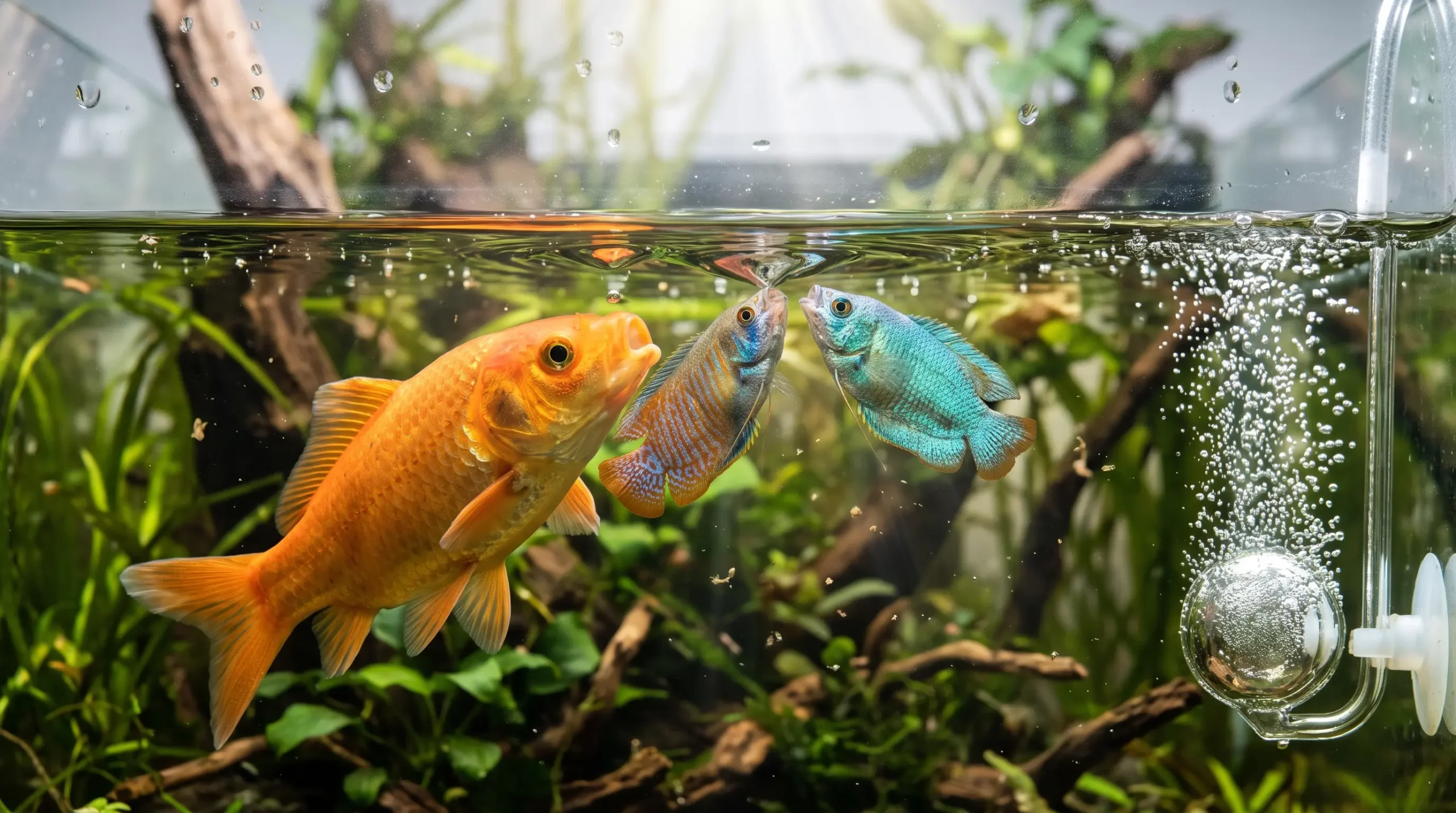
Observing fish gasping at water surface is an acute respiratory emergency signaling critical dissolved oxygen depletion or an underlying physiological failure in branchial gas exchange. While casual aquarium hobbyists often wonder why freshwater fish swim near top gasping for air, surface piping (clinically termed aquatic surface respiration) is rarely just a temporary behavioral quirk. Teleosts instinctively gather at the immediate surface meniscus because atmospheric diffusion creates a thin, oxygen-saturated boundary layer along the water’s upper boundary.
Diagnosing the root cause requires evaluating multiple environmental and chemical triggers simultaneously. Severe aquarium hypoxia frequently stems from warm water thermodynamic degassing, dense lipid surface biofilms, or elevated nitrogenous toxins like free ammonia and nitrite that induce cellular gill damage. Left unaddressed, systemic oxygen starvation accelerates respiratory distress, triggers secondary biofilter failure, and leads to rapid livestock loss. Executing immediate hydrodynamic aeration alongside targeted water testing is essential to restore dissolved oxygen and stabilize distressed fish before irreversible branchial injury occurs.
Table of Contents
Competitor Landscape and Scientific Content Gap Analysis
An evaluation of high-authority veterinary manuals, university aquaculture extension publications, and commercial hobbyist portals—including the Merck Veterinary Manual, UF/IFAS Extension, Petco, HydroHabitats, Bassleer, and Monster Aquarium—reveals a pronounced divide between superficial symptom checklists and rigorous aquatic pathophysiology. While general aquarium platforms correctly note that fish gasping at water surface (clinically designated as piping or Aquatic Surface Respiration, ASR) requires immediate surface agitation and parameter testing, prevailing online guides overlook four interconnected biochemical and physiological mechanisms that govern teleost survival during a respiratory crisis.
1. Thermodynamic Solubility and Metabolic Double Jeopardy
Hobbyist blogs frequently state that warm water holds less oxygen, but fail to synthesize the direct thermodynamic and biological consequences:
- Gas Solubility Thresholds: Freshwater at 45°F (7.2°C) holds 11.9 mg/L of dissolved oxygen (DO) at saturation, whereas at 90°F (32.2°C) it holds only 7.4 mg/L.
- Ectothermic Metabolic Acceleration: As temperature climbs, basal cellular oxygen demand in fish sharply increases at the exact time aqueous oxygen reserves are lowest.
- Bacterial Competition and Biofilter Collapse: Elevated temperatures accelerate heterotrophic bacterial Biological Oxygen Demand (BOD) while starving obligate aerobic nitrifiers that require DO > 2.0 mg/L to prevent a secondary biofilter crash.
2. Branchial Ionocyte Transport Kinetics and Nitrite Toxicosis
General sources warn that nitrite suffocates fish, but ignore cellular ion kinetics and standard testing limitations:
- Competitive Ion Hijacking: Nitrite ions (NO2–) competitively hijack branchial chloride (Cl–) uptake channels across gill ionocytes to enter the bloodstream.
- Brown Blood Disease (Methemoglobinemia): Nitrite oxidizes functional ferrous hemoglobin (Fe2+) into ferric methemoglobin (Fe3+), neutralizing oxygen transport capacity.
- Stoichiometric Test Conversion: Standard colorimetric test kits measuring nitrite-nitrogen (NO2-N) must be multiplied by 3.3 to determine actual ionic nitrite (NO2–) exposure.
- Prolonged Lamellar Pathology: Severe nitrite exposure induces histological gill damage—specifically epithelial lifting and secondary lamellar fusion—prolonging hypoxia even after water parameters return to baseline.
3. The Ammonia-pH Rebound Trap in Emergency Interventions
When hobbyists investigate why freshwater fish swim near top gasping for air, routine checklists urge immediate large water changes and heavy aeration, triggering an unintended chemical trap:
- Ammonium Sequestration: In “old tank syndrome” (carbonate hardness near 0 mg/L, pH < 6.0) or sealed shipping bags rich in CO2, Total Ammonia Nitrogen (TAN) remains locked as non-toxic ammonium (NH4+).
- Rapid Carbonic Acid Off-Gassing: Heavy surface turbulence or dumping in alkaline tap water off-gasses dissolved CO2 and drives pH upward within minutes.
- Caustic Free Ammonia Burn: The rapid pH shift drives chemical equilibrium toward un-ionized ammonia (NH3), inflicting catastrophic chemical burns and acute branchial necrosis on already compromised gills.
4. Interfacial Barriers and Nocturnal Botanical Hypoxia
Commercial care guides frequently promote live vegetation for aeration without accounting for surface diffusion dynamics:
- Lipid-Protein Biofilm Obstruction: Hydrophobic surface scum creates a tight physical viscoelastic barrier that blocks atmospheric diffusion while trapping dissolved CO2.
- Upper-Stomatal Oxygen Loss: Dense floating mats of duckweed (Lemna spp.) vent photosynthetic oxygen directly into room air through top-facing stomata while physically sealing the water-air interface.
- Pre-Dawn Respiration Depletion: Nighttime mitochondrial respiration by plants, fish, and biofilter microbes consumes residual dissolved oxygen, triggering lethal hypoxic crashes right before lights turn on.
Pathophysiology of Aquatic Surface Respiration (Piping)
Observing fish gasping at water surface represents an acute clinical emergency indicating either severe environmental oxygen depletion in the water column or an internal physiological inability to extract and transport dissolved oxygen across the branchial apparatus. Prolonged oxygen deprivation activates the hypothalamic-pituitary-interrenal (HPI) cascade, making surface piping one of the most urgent symptoms of stress in freshwater fish that demands immediate environmental intervention before irreversible cellular exhaustion occurs.
Unlike terrestrial vertebrates that inhale atmospheric air, teleost fish rely on countercurrent gas exchange across delicate secondary gill lamellae to absorb molecular oxygen (O2) dissolved within the aqueous phase. Because the microscopic boundary layer directly contacting the atmosphere maintains the highest partial pressure of diffused oxygen through continuous interfacial exchange, distressed specimens instinctively migrate upward to skim this oxygen-rich microlayer. Determining why freshwater fish swim near top gasping for air requires isolating whether the limiting mechanism is thermodynamic degassing, interfacial blockage, chemical gill destruction, or hematological toxicosis.
Thermodynamic Dissolved Oxygen Depletion and Metabolic Double Jeopardy
Dissolved oxygen availability in closed aquatic ecosystems is governed by Henry’s Law, wherein gas solubility in a liquid medium decreases inversely as thermal energy rises. As aquarium water warms—whether driven by summer ambient heatwaves, malfunctioning submersible heaters, or internal pump friction—kinetic molecular motion forces dissolved O2 out of solution into the atmosphere.
Empirical aquaculture measurements demonstrate that freshwater saturation drops from 11.9 mg/L at 45°F (7.2°C) to 7.4 mg/L at 90°F (32.2°C). According to empirical UF/IFAS Extension dissolved oxygen guidelines for fish production, warmwater freshwater systems require a minimum dissolved oxygen baseline of 5.0 mg/L for optimal teleost health and demand immediate emergency aeration whenever concentrations drop below 4.0 mg/L.
This physical degassing places ectothermic fish in physiological double jeopardy. As ambient water temperature climbs, the metabolic rate of the fish accelerates, driving a sharp increase in cellular oxygen demand at the exact moment the water column holds the lowest concentration of dissolved gas. Large-bodied, high-demand species—such as arowana, peacock bass, large cichlids, plecos, koi, and coldwater goldfish housed in warm indoor setups—exhaust available oxygen reserves first and exhibit surface piping significantly earlier than smaller tankmates. Furthermore, because chemolithoautotrophic bacteria and Comammox Nitrospira require dissolved oxygen concentrations above 2.0 mg/L to sustain aerobic oxidation, severe hypoxia rapidly halts aquarium nitrogen cycle biofiltration and triggers a secondary spike in toxic nitrogenous waste.
Hydrodynamic Barriers: Lipid Biofilms, Floating Canopies, and Nocturnal Hypercapnia
Even when a filtration pump operates continuously, fish gasping at water surface frequently manifests when interfacial gas exchange across the water meniscus is obstructed. In enclosed aquariums, dissolved organic carbon, uneaten lipid-rich feeds, and cellular detritus pool at the top to form a hydrophobic protein-lipid scum known as a surface biofilm. This viscoelastic membrane creates a physical diffusion barrier across the air-water interface, trapping metabolic CO2 inside the water column while blocking atmospheric oxygen dissolution. Filling an aquarium too close to the upper rim similarly dampens surface ripple turbulence from filter outlets, reducing the effective gas-exchange surface area.
Botanical dynamics further intensify nocturnal oxygen depletion through the 24-hour diurnal oxygen cycle. During daylight hours, submerged vascular plants and phytoplankton photosynthesize, absorbing CO2 and liberating O2. Once aquarium lighting extinguishes, photosynthesis ceases instantly while mitochondrial respiration by fish, invertebrates, submerged flora, and heterotrophic bacteria continues uninterrupted. In densely planted setups—or systems running continuous pressurized CO2 injection overnight—dissolved oxygen plummets to lethal troughs prior to dawn while dissolved CO2 surges, inducing acute hypercapnia alongside hypoxia.
Invasive floating plants such as duckweed (Lemna spp.) compound this deficit because their respiratory stomata sit on the upper leaf surface, venting photosynthetic oxygen directly into ambient room air while forming a physical mat that seals the water surface. Replacing suffocating duckweed mats with manageable botanical alternatives from the best floating plants for aquarium aeration guide preserves an unobstructed air-water interface for nocturnal atmospheric diffusion while stripping excess nitrates to lower biological oxygen demand.
Nitrogenous Toxicosis: Branchial Hyperplasia and Nitrite Methemoglobinemia
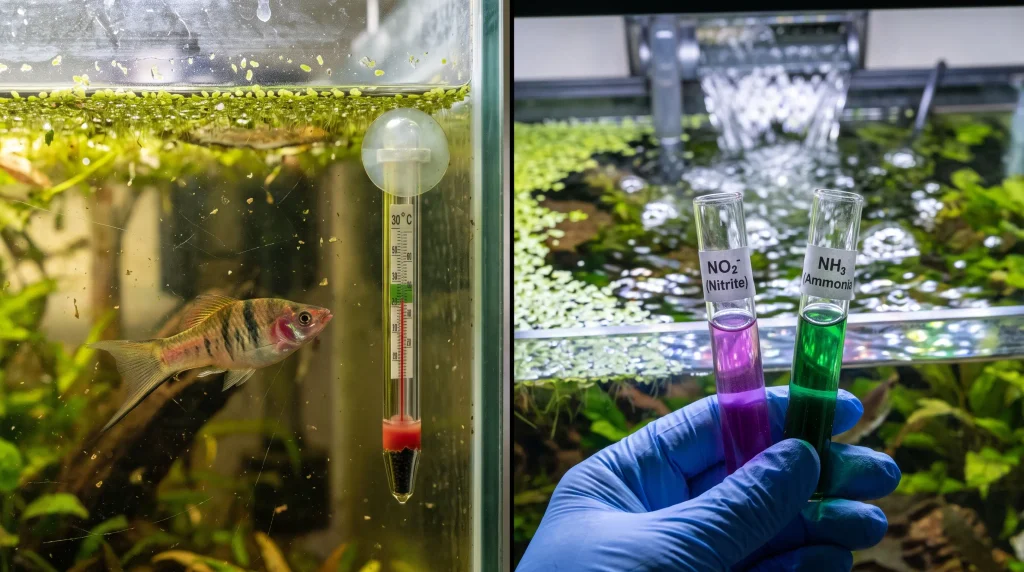
A frequent diagnostic failure occurs when keepers assume that why freshwater fish swim near top gasping for air is exclusively attributable to low dissolved oxygen in the water column. Teleosts routinely exhibit frantic surface piping in fully oxygenated water with vigorous airstone agitation because nitrogenous waste toxins have either destroyed their branchial gas-exchange epithelium or neutralized their blood’s oxygen-carrying capacity.
Total Ammonia Nitrogen (TAN) exists in reversible chemical equilibrium between ionized ammonium (NH4+) and un-ionized free ammonia (NH3). Un-ionized NH3 is a neutral, lipid-soluble gas that diffuses freely across branchial membranes, inflicting caustic chemical burns on delicate gill tissues. Exposure to free NH3 concentrations above 0.05 mg/L triggers profound histological pathology: lifting of the respiratory epithelium, goblet cell mucus hypersecretion, proliferation of interlamellar cells (gill hyperplasia), and incomplete or complete fusion of secondary gill lamellae.
As adjacent lamellae fuse into a solid cellular mass, functional respiratory surface area collapses, causing the fish to suffocate despite high ambient dissolved oxygen. Aquarists can calculate the exact un-ionized free ammonia (NH3) mole fraction across shifting temperature and pH gradients by inputting daily test values into the aquarium calculator parametric log before executing corrective dilution changes.
Nitrite (NO2–) toxicosis operates through an entirely distinct hematological pathway. Freshwater teleosts exist in a state of continuous hyperosmotic stress relative to their environment and actively pump chloride ions (Cl–) from the water into their bloodstream via specialized branchial ionocytes. Because the nitrite ion (NO2–) shares a comparable ionic radius and charge with chloride, branchial chloride transporters mistakenly pump NO2– directly into the circulatory system whenever biofilter oxidation stalls. Inside the vasculature, nitrite oxidizes the ferrous iron atom (Fe2+) within hemoglobin into the ferric state (Fe3+), forming methemoglobin. Methemoglobin cannot bind or release oxygen molecules to peripheral tissues, imparting a diagnostic chocolate-brown coloration to the blood and gill filaments.
When methemoglobinemia exceeds 50%, fish display severe tachypnea, cyanotic brown mucous membranes, and relentless surface piping; levels reaching 80% precipitate terminal anoxic seizures and death. As documented in veterinary reference standards, nitrite concentrations exceeding 0.1 mg/L in low-chloride freshwater systems induce acute surface piping and dark-brown methemoglobinemia, while standard nitrite-nitrogen (NO2-N) test readings must be multiplied by 3.3 to determine true ionic nitrite exposure.
As documented in the Merck Veterinary Manual clinical table of environmental hazards for fish, nitrite concentrations exceeding 0.1 mg/L in low-chloride freshwater systems induce acute surface piping and dark-brown methemoglobinemia, while standard nitrite-nitrogen (NO2-N) test readings must be multiplied by 3.3 to determine true ionic nitrite exposure.
The Ammonia-pH Rebound Trap During Emergency Intervention
A secondary iatrogenic mortality crisis frequently unfolds when aquarists react to fish gasping at water surface by executing massive tap-water changes or blasting neglected tanks with air diffusers without first measuring pH and TAN. In heavily stocked aquariums where routine maintenance has lapsed (“old tank syndrome”), continuous nitrification and organic acid mineralization erode carbonate hardness (KH) to near 0 mg/L, causing system pH to slide below 6.0. Similarly, inside sealed polyethylene transport bags, metabolic CO2 accumulates to form carbonic acid, depressing water pH below 6.5.
At pH 6.0 to 6.5, virtually all accumulated nitrogenous waste remains sequestered in the non-toxic ionized ammonium (NH4+) state. However, the toxic un-ionized NH3 share increases roughly tenfold for every 1.0 unit rise in pH. At 25°C, the toxic NH3 fraction escalates rapidly as pH shifts upward:
- pH 7.5 (Caution): 1.77% un-ionized NH3
- pH 8.0 (Danger): 5.38% un-ionized NH3
- pH 8.5 (Critical): 15.30% un-ionized NH3
- pH 9.0 (Lethal): 36.30% un-ionized NH3
Performing a sudden 50% to 80% water change using alkaline municipal tap water—or aggressively aerating a low-KH system without dosing an ammonia-binding conditioner—drives rapid CO2 off-gassing and spikes system pH upward within minutes. This carbonic acid degassing mechanism mirrors the chemical shift analyzed in the drip acclimation vs plop and drop fish guide, where aerating acidic high-TAN water without an ammonia binder drives a rapid upward pH rebound and acute branchial burning.
Rapid Clinical Triage: 60-Second Differential Diagnostic Matrix
Before administering emergency chemical treatments or executing abrupt water parameter adjustments, aquarists must cross-reference physical behaviors, population distributions, and branchial color changes to pinpoint the exact physiological etiology. Investigating why freshwater fish swim near top gasping for air requires distinguishing simple surface hypoxia from branchial necrosis or blood toxicosis. For example, when fish gasping at water surface coincides with milky water turbidity, active heterotrophic blooms are consuming aqueous oxygen reserves, requiring swift adherence to the protocol to fix aquarium water cloudy white bacterial blooms through forced surface agitation and organic detritus extraction.
| Clinical Observation & Tank Pattern | Gill & Mucous Membrane Appearance | Primary Pathophysiological Mechanism | Critical Water Parameter Anomaly | Immediate Corrective Action Protocol |
|---|---|---|---|---|
| Multiple fish gasping at surface Especially large specimens; distress spikes sharply at dawn or during summer ambient heatwaves. | Pale to darkened gills; flared opercula; rapid opercular beat frequency (tachypnea). |
🫧
Environmental Hypoxia
Oxygen Starvation
Thermal gas stripping, nocturnal plant respiration, or filter flow stall. |
DO < 4.0 mg/L
Water Temp > 28°C NH3 = 0 | NO2– = 0 | Elevate filter outflow above waterline to induce splashing; deploy air stones immediately; cool water gradually via surface fans or floating sealed ice packs. |
| Fish piping despite strong aeration Profound lethargy; coincides with recent filter cleaning, uncycled media, or heavy bioload stocking. | Brown Blood Disease: Chocolate-brown or tan gills; dark muddy blood coloration inside branchial vessels. |
🩸
Nitrite Toxicosis
Methemoglobinemia
NO2– oxidizes hemoglobin (Fe2+ → Fe3+), halting vascular O2 transport. |
NO2– > 0.1 mg/L
(Baseline: 0 mg/L) Low ambient chloride (Cl–) | Perform 30%–50% dechlorinated water change; dose therapeutic non-iodized sodium chloride (Cl– competitively blocks branchial NO2– uptake). |
| Erratic panic darting & gasping Clamped fins, cutaneous erythema, hyperexcitability, and heavy epidermal mucus shedding. | Caustic Chemical Burns: Bright red, inflamed, or purple/lilac gills; stringy mucus trailing from opercular margins. |
🧪
Acute Ammonia Poisoning
Lamellar Hyperplasia
Un-ionized NH3 corrodes lamellae, causing cellular proliferation and fusion. |
Free NH3 > 0.05 mg/L
Elevated pH (> 7.8) Elevated TAN levels | Halt feeding completely; dose liquid ammonia detoxifier; execute temperature-matched partial water changes (10%–25% gentle increments if low-pH unbuffered water). |
| Sudden gasping in milky-white water Opaque water column turbidity developing abruptly following heavy feeding or carbon overdosing. | Pale gills; normal mucosal symmetry without external parasitic encystments or bleeding. |
🧫
Heterotrophic Bacterial Bloom
Severe BOD Surge
Explosive bacterial proliferation aggressively consumes water-column dissolved O2. |
DO < 3.0 mg/L
Rapid DO drawdown Nascent TAN accumulation | Maximize mechanical surface agitation and airstone flow; gravel-vacuum decaying organic detritus; enforce a strict 48-hour feeding pause. |
| Only 1 or 2 isolated fish gasping Stationed near outflow; flashing, scraping, or rubbing opercula against hardscape; other stock normal. | Swollen, pale, or mottled gills; localized mucus patches; gold-dust or velvety epidermal sheen. |
🔬
Branchial Parasitosis
Epithelial Destruction
Gill flukes (Dactylogyrus), Piscinoodinium, or Flavobacterium gill disease. |
DO > 5.0 mg/L
NH3 = 0 mg/L NO2– = 0 mg/L | Isolate affected specimen in a dedicated hospital tank; perform gill scraping wet-mount microscopy; administer praziquantel or target antiprotozoal therapeutics. |
| Single fish with mouth locked agape Suspended at surface; physically unable to close oral jaws or swallow; refusing all feeds. | Normal bright red gill coloration; physical obstruction lodged and visible inside the buccal cavity. |
⚠️
Mechanical Obstruction
Pharyngeal Impaction
Substrate gravel pebble or oversized feed pellet mechanically jammed in pharynx. |
Optimal Baselines
All water parameters within normal limits | Dim lighting; avoid stressful net chasing; utilize blunt microsurgical forceps under gentle aquatic sedation for careful manual extraction. |
| Periodic upward trips to gulp air Followed immediately by calm foraging and active swimming across mid-water and substrate zones. | Healthy bright red gill filaments; intact fins; active foraging and normal social interaction. |
🌿
Facultative Air-Breathing
Physiological Norm
Labyrinth organ respiration (Anabantoidei) or intestinal gas exchange (Corydoras). |
DO > 5.0 mg/L
NH3 = 0 mg/L NO2– = 0 mg/L | No clinical intervention required for Bettas, Gouramis, or Corydoras unless accompanied by lethargy, clamped fins, or rapid opercular flaring. |
Immediate Emergency Action Protocol for Hypoxic Aquariums
When confronted with fish gasping at water surface, livestock survival depends on executing a disciplined, sequential stabilization protocol. Dosing random antiparasitic medications, algicides, or chemical pH adjusters prior to restoring gas exchange and measuring baseline chemistry is counterproductive; many aquatic pharmaceuticals chemically deplete dissolved oxygen and severely irritate compromised branchial tissues. Investigating why freshwater fish swim near top gasping for air requires resolving acute physical suffocation first, followed by methodical chemical detoxification across three chronological phases:
Phase 1: Immediate Hydrodynamic Stabilization (Minutes 0 to 5)
- Maximize Interfacial Surface Agitation Immediately: Disrupt the upper air-water boundary layer by elevating canister spray bars or hang-on-back (HOB) filter returns slightly above the waterline to create vigorous splashing, angling submersible wavemakers upward, and deploying auxiliary air stones powered by a high-output diaphragm pump.
- Skim Surface Biofilms and Thin Floating Canopies: Physically break up the oily protein-lipid scum obstructing atmospheric diffusion using clean paper towels or a surface skimmer, and manually remove overgrown duckweed or salvinia until 30% to 50% of the water surface is completely clear.
- Terminate Pressurized CO2 and Liquid Carbon Dosing: Immediately unplug CO2 solenoid regulators and halt all glutaraldehyde-based liquid carbon additions, which exert an intense biochemical oxygen demand (BOD) during organic oxidation.
- Inspect Filter Impellers and Inflow Intakes: Check mechanical sponges and intake strainers for clogging. If a canister filter has remained unpowered for several hours, rinse the biomedia in removed tank water before restarting to avoid flushing toxic anaerobic hydrogen sulfide (H2S) and raw nitrite into the display aquarium.
- Keep Distressed Fish Submerged at All Times: Never lift a gasping fish out of the tank into open room air; delicate secondary gill lamellae collapse immediately under gravity outside of water, causing fatal respiratory arrest and mucosal stripping.
Phase 2: Chemical Toxicology Testing and Thermal Moderation (Minutes 5 to 20)
- Execute a Full Liquid-Reagent Water Test Panel: Measure and record Total Ammonia Nitrogen (TAN), Nitrite (NO2–), Nitrate (NO3–), pH, Carbonate Hardness (KH), and Dissolved Oxygen (DO) before pouring replacement water into the tank.
- Cross-Check Independent Digital Thermometers: Verify thermal levels using a calibrated glass or digital probe rather than relying on heater dial markers, as stuck bimetallic thermostats frequently overheat tanks overnight.
- Lower Elevated Water Temperatures Gradually: If water temperature exceeds safe species thresholds, unplug the submersible heater, remove solid glass canopies, direct a cooling fan across the surface for evaporative cooling, or float sealed bags of cool water. Never dump loose ice cubes or ice-cold tap water directly into the aquarium, as dropping temperatures from 85°F down to the low 70s°F triggers lethal thermal shock.
- Enforce a Strict 48-Hour Fasting Period: Cease feeding immediately. Digestion substantially spikes post-prandial metabolic oxygen consumption in teleosts, while uneaten feed pellets decay rapidly, fueling heterotrophic bacterial blooms and secondary ammonia spikes.
Phase 3: Targeted Remediation and Biofilter Preservation (Minutes 20 to 60)
- Execute Temperature-Matched, Conditioned Partial Water Changes: If ammonia or nitrite is detectable, perform a 25% to 50% water change using fresh water treated with an advanced dechlorinator that binds both chlorine and chloramines.
- Guard Against the Old-Tank pH Rebound Trap: If testing reveals severe acidification (pH < 6.2) alongside high ammonia (“old tank syndrome”), limit water changes to small daily increments of 10% to 25%. A sudden surge of alkaline municipal tap water drives off carbonic acid and spikes system pH, rapidly converting non-toxic ammonium (NH4+) into lethal un-ionized ammonia (NH3).
- Apply Competitive Chloride Blockade for Nitrite Poisoning: If nitrite exceeds 0.1 mg/L and fish exhibit chocolate-brown gills, add pure non-iodized sodium chloride (NaCl) tailored to species tolerance; dissolved chloride ions (Cl–) competitively block nitrite uptake across gill ionocyte transporters, halting methemoglobin formation.
- Deploy Fresh Activated Carbon for Chemical Contamination: If respiratory piping began shortly after adding medications, algicides, or exposure to household aerosol sprays, perform an immediate partial water change and pack fresh granular activated carbon into the filter chamber to adsorb dissolved chemical toxins.
- Preserve Beneficial Biofilter Colonies: Never rinse biological filter media under chlorinated tap water or replace mature filter pads during a respiratory crisis. If dissolved oxygen levels remain above 5.0 mg/L, ammonia and nitrite measure 0 mg/L, yet isolated fish continue piping and flashing against substrate, consult targeted clinical protocols for freshwater fish diseases to eradicate branchial parasites such as Dactylogyrus gill flukes or velvet.
Conclusion and Preventative Telemetry Synthesis
Resolving an acute episode of fish gasping at water surface requires treating the behavior not merely as an isolated ailment, but as an urgent physiological alarm signaling system failure across the physical air-water boundary, the nitrifying biofilter, or teleost vascular oxygen transport. When evaluating why freshwater fish swim near top gasping for air, providing immediate surface agitation via elevated filter returns or air stones stabilizes distressed livestock within minutes.
However, long-term survival depends on empirical chemical testing to differentiate simple thermal hypoxia from caustic un-ionized ammonia burns and nitrite-induced methemoglobinemia. Maintaining continuous surface rippling, keeping battery-backed aeration ready for electrical outages, preserving carbonate hardness (KH > 4 dKH) against nocturnal pH crashes, and maintaining weekly water testing logs will protect closed aquarium systems from recurring hypoxic crises.
Frequently Asked Questions (FAQs)
Why do freshwater fish swim near top gasping for air even when an air stone is running?
When keepers wonder why freshwater fish swim near top gasping for air despite active air stones and visible aeration bubbles, the root issue is usually chemical gill destruction or vascular poisoning rather than ambient oxygen depletion. High levels of un-ionized ammonia (NH3) chemically corrode and fuse delicate secondary gill lamellae, while elevated nitrite (NO2–) oxidizes functional hemoglobin into ferric methemoglobin (“brown blood disease”), making red blood cells physically incapable of carrying oxygen to vital organs.
Why are fish gasping at the water surface only in the early morning?
Early-morning surface piping is the direct clinical signature of a nocturnal dissolved oxygen crash governed by the 24-hour diurnal oxygen cycle. While live aquarium plants release dissolved oxygen through photosynthesis during the lighted day, they consume oxygen and vent carbon dioxide (CO2) after dark. In heavily planted setups, tanks blanketed by thick floating duckweed mats, or systems with unswitched nighttime CO2 injection, dissolved oxygen can plunge below critical thresholds right before dawn. Setting an auxiliary air stone on a nocturnal timer prevents early-morning suffocation.
Should medications or salt be added immediately when fish gasp at the surface?
Dosing broad-spectrum medications or algicides before verifying core water parameters is hazardous. Many liquid antiparasitic and antibacterial agents deplete dissolved oxygen, inhibit aerobic nitrifying colonies, and further aggravate inflamed branchial tissues. Non-iodized sodium chloride (NaCl) should only be dosed once liquid test kits verify elevated nitrite (NO2–) or microscopic skin scrapings identify branchial parasites, tailored strictly to the salinity tolerance of resident aquatic plants and scaleless fish.
Why do large fish gasp and die before small fish during an oxygen drop?
Large-bodied fish possess a much higher absolute metabolic oxygen demand alongside a lower branchial surface-area-to-body-mass ratio compared to nano species or juvenile fry. When water temperatures spike, biofilters stall, or mechanical circulation fails, large specimens exhaust their cellular oxygen reserves first, exhibiting pronounced aquatic surface respiration long before smaller tankmates show distress.
Is it normal for Betta fish, Gouramis, and Corydoras catfish to gulp air at the surface?
Brief and intermittent trips to the water surface are entirely normal for facultative air-breathing fish. Labyrinth fish (Anabantoidei) like Bettas and Gouramis possess a specialized vascular labyrinth organ to utilize atmospheric air, while Corydoras catfish periodically dart upward to swallow air bubbles for intestinal respiration. However, if these species remain suspended continuously at the water meniscus, clamp their fins, exhibit rapid opercular pumping, or refuse food, they are experiencing acute hypoxic stress or water-quality toxicity requiring immediate testing.

1 thought on “Fish Gasping at Water Surface: Top Causes & Fast Action Fix”