
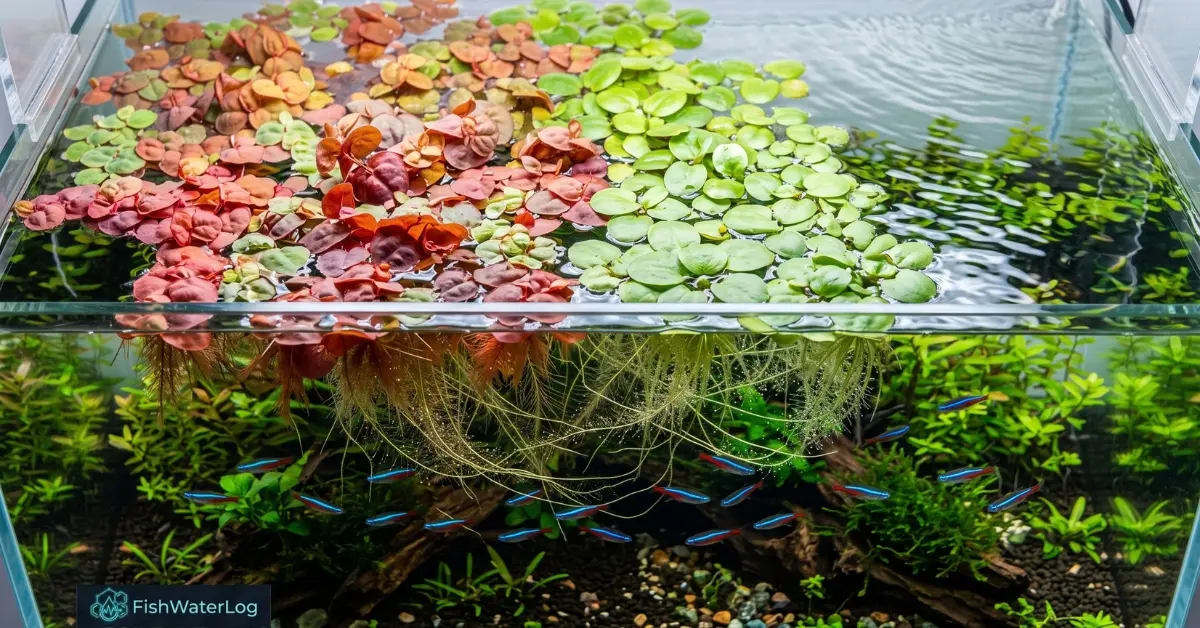
Freshwater aquatic ecosystems operate within an exceptionally delicate biological balance. While hobbyists routinely prioritize high-end canister filtration, specialized LED spectrums, and premium nutrition, the most fundamental biochemical metric—dissolved oxygen (DO)—is frequently overlooked until acute distress occurs. When closed habitats experience environmental hypoxia, teleost fishes instinctively migrate toward the air-water interface to perform aquatic surface respiration, displaying classic symptoms of stress in freshwater fish before critical cellular breakdown occurs.
For the vast majority of tropical freshwater species, verifying that water maintains a stable 6 to 8 mg/L (ppm) threshold using an aquarium dissolved oxygen meter is essential to prevent chronic metabolic failure. When concentrations drop below 5 mg/L, chronic metabolic stress takes hold, and dropping further into the 3 to 4 mg/L range induces critical respiratory collapse and rapid mortality.
This physiological hazard escalates drastically during seasonal temperature spikes. Fundamental gas solubility physics dictates that thermal energy reduces water’s capacity to hold atmospheric gases. While pure water at 20°C can sustain 9.1 mg/L of dissolved oxygen at full saturation, increasing the temperature to 36°C collapses this capacity down to 6.7 mg/L. In a fully stocked community aquarium—where biological respiration from fish, nitrifying autotrophs, and heterotrophic microbes continuously consumes available gases—actual ambient DO metrics sink significantly lower.
While mechanical air stones and flow wavemakers offer brute-force agitation, utilizing the best floating plants for aquarium aeration introduces an integrated biological solution. Surface-dwelling macrophytes establish a dynamic bridge between atmospheric gas reserves, root-zone biological micro-zones, and rapid nitrogen export. Strategically managing surface cover prevents organic protein biofilm buildup, optimizes natural gas exchange in aquariums, and provides robust surface oxygenation. By exploring superior, manageable duckweed alternatives, this guide details how deliberate botanical selection transforms high-stress, hypoxic setups into self-sustaining, naturally oxygenated aquatic biotopes.
Why Trust This Guide: As a fisheries researcher working with aquatic physiological stress, I evaluated these macrophytes across both nano setups and high-flow community tanks. Observations over extended photoperiods confirmed that species like Phyllanthus fluitans require targeted iron dosing and subdued surface agitation, while root hyper-accumulators directly reduce systemic Biological Oxygen Demand (BOD).
Table of Contents
The Physics of Gas Exchange and Surface Oxygenation in Aquariums
The mechanism of gas exchange in an aquarium is governed by fundamental principles of physics. Many hobbyists operate under the misconception that bubbles rising from an air stone inject oxygen directly into the water column; however, physical reality differs significantly. The primary biological function of rising bubbles is driving upward water circulation and creating surface turbulence. As the water surface ripples, the functional surface area between ambient air and water expands exponentially, facilitating passive atmospheric oxygen diffusion while allowing accumulated carbon dioxide to off-gas. Consequently, effective gas exchange in aquariums depends strictly on the total surface area of the air-water interface and its dynamic disturbance.
Incorporating robust floating species during the initial stages of a new fish tank setup dramatically accelerates the nitrogen cycle, ensuring that your aquarium fish tank achieves biological and chemical stability far faster than a sterile environment.
Biofilm and the Surface Boundary Layer: The Silent Oxygen Blockers
Within an enclosed aquatic ecosystem, dissolved organic compounds, decaying plant particulates, and lipids naturally migrate to the water-air interface, forming an oily organic film known as a surface biofilm. This boundary layer serves as an impermeable barrier that critically impedes passive gas transfer:
- Boundary Layer Resistance: This hydrophobic protein film prevents atmospheric oxygen from making direct molecular contact with the water surface, suppressing overall oxidation-reduction potential (ORP).
- Trapped Carbon Dioxide: Biological respiration byproducts (CO2) cannot readily escape into the ambient air, driving down pH levels and compounding the severity of nocturnal hypoxia.
- Light Deflection and Refraction: The viscous film scatters incoming photon energy, reducing photosynthetic efficiency in submerged vegetation and lowering autotrophic oxygen production.
During daylight hours, floating plants drive active photosynthesis following the classical biochemical pathway:
6CO2 + 12H2O + Light Energy → C6H12O6 + 6H2O + 6O2↑
While this process elevates dissolved oxygen levels, excessive daylight production can push the water column into hyper-saturation (>115%), which poses a severe risk of Gas Bubble Disease in delicate fish. More critically, the Diurnal Oxygen Cycle reverses nocturnal dynamics: once the photoperiod ends and artificial lights shut off, photosynthesis ceases entirely while cellular respiration continues unabated. Over dense, unmanaged plant canopies, macrophytes shift from net oxygen producers to aggressive oxygen consumers, which can trigger pre-dawn hypoxic crashes unless supplementary aeration is provided.
Furthermore, an understanding of foliar stomata mechanics reveals a common misconception: because floating macrophytes keep their upper leaf surfaces exposed to open air, their functional stomata draw carbon dioxide directly from the atmosphere and vent the vast majority of photosynthesized oxygen directly back into the ambient air, rather than the water column. The true aeration benefit of floating plants comes indirectly through rapid Biological Oxygen Demand (BOD) reduction and micro-turbulence generated by root architecture under mild currents.
How the Best Floating Plants for Aquarium Aeration Transform the Water Surface
Strategically deployed, the best floating plants for aquarium aeration dismantle this surface boundary layer through biological and physical interactions. As floating macrophytes propagate across the water column, their petioles, leaves, and lateral runners disrupt the cohesive surface tension, preventing lipid films from consolidating into an unbroken, suffocating sheet. Simultaneously, extensive trailing root networks generate hydrodynamic drag against filter currents, establishing continuous micro-turbulence that enhances dissolved gas circulation.
However, physiological equilibrium requires precision management. Allowing an unmanaged botanical canopy to cover 100% of the water-air interface seals the boundary layer, halting natural atmospheric diffusion entirely. Maintaining a controlled surface cover of roughly 50% to 60% preserves sufficient open surface area for sustained gas transfer while maximizing root-driven nitrogen export. By choosing superior, non-invasive duckweed alternatives, aquarists can safeguard continuous surface oxygenation and secure stable, optimal dissolved oxygen parameters for their livestock.
The “Surface Cover Paradox”: A Major Content Gap
Mainstream aquarium literature routinely makes the sweeping claim that adding plants directly elevates aquarium oxygen levels. While this statement applies to submerged aquatic flora actively photosynthesizing under the water column, floating macrophytes operate under an entirely different biological mechanism. This divergence creates what experienced aquarists call the “Surface Cover Paradox”—a critical physiological distinction that frequently misleads hobbyists into suffocating their tanks.
Unlike fully aquatic or terrestrial vegetation, common floating plants—such as duckweed, Salvinia, and Amazon Frogbit—develop stomata exclusively on the upper epidermis of their leaves. Because these respiratory pores face the open air rather than the water column, the oxygen synthesized during daytime photosynthesis is discharged directly into the ambient room air instead of dissolving into the aquarium water.
How Surface Blockade Induces Hypoxia
When unmanaged floating vegetation blankets the entire water surface, it forms an impermeable organic barrier that seals the air-water interface. This structural blockade creates severe ecological hazards:
- Boundary Layer Sealing: A dense mat physically prevents atmospheric oxygen from dissolving across the surface film.
- Carbon Dioxide Entrapment: Respiratory CO2 generated by fish and heterotrophic bacteria cannot off-gas, causing carbonic acid accumulation and pH instability.
- Photosynthetic Suppression: Dense surface mats block downwelling light, arresting oxygen production in submerged plants and forcing them into net oxygen consumers.
- Lethal Oxygen Depletion: Thick carpets—such as a 1.5 cm mat of Lemna minuta—can strip the water column of dissolved oxygen and light, triggering acute mass mortality.
Thick vegetative carpets can strip the water column of dissolved oxygen and light, as demonstrated in peer-reviewed research on Lemna canopy dynamics, triggering acute hypoxic stress and mortality in aquatic life.
The Controlled 50% to 70% Surface Rule
The solution is not avoiding floating vegetation, but strictly regulating its spatial density. Restricting vegetative growth to 50% to 70% total surface cover provides distinct biological advantages:
- Preserved Atmospheric Diffusion: Leaving 30% to 50% of the surface open maintains uninterrupted gas transfer across the rippling boundary layer.
- Hydrodynamic Deflection: Submerged roots deflect filter discharge, breaking stagnant surface zones and driving micro-turbulence downward.
- Algae Suppression: Moderate surface shading filters excess light spectrums, checking opportunistic microalgae without starving livestock of oxygen.
Because dense surface cover filters intense lighting, pairing floating rosettes with hardy low-light aquarium plants for beginners prevents submerged vegetation from decaying under reduced PAR.
Nitrogen Export: How Decreasing BOD Conserves Dissolved Oxygen
Fish are not the primary oxygen sink in an established aquarium. Aerobic nitrifying autotrophs in the biofilter and substrate consume extensive amounts of dissolved oxygen to oxidize toxic ammonia into nitrite, and subsequently into nitrate—a biological burden quantified as Biological Oxygen Demand (BOD). As decaying uneaten feed, fish waste, and plant detritus decompose, bacterial BOD surges, depleting oxygen reserves required for fish respiration.
This dynamic reveals the true aeration power of the best floating plants for aquarium aeration:
- Unchecked Aerial Growth: Access to unrestricted atmospheric CO2 and overhead lighting allows floating macrophytes to grow exponentially faster than submerged species.
- Direct Ammonium Assimilation: High-efficiency duckweed alternatives like Amazon Frogbit (Limnobium laevigatum) rapidly assimilate Total Ammonia Nitrogen (TAN) directly through their root mass.
- Plummeting System BOD: By preemptively absorbing ammonium before bacterial breakdown occurs, floating roots starve the biofilter’s oxidative chain, driving down microbial BOD.
- Indirect Oxygen Abundance: Sparing the biofilter from oxidative load preserves ambient dissolved oxygen, keeping water column DO metrics stable and high.
If livestock exhibit sudden surface gasping accompanied by erratic swimming, do not assume simple hypoxia. Rapid chemical accumulation often points to systemic biofilter failure; immediately consult our clinical guide to fix nitrogen cycle crash events to halt irreversible gill toxicity.
Top Duckweed Alternatives: The Best Floating Plants for Aquarium Aeration
When optimizing surface oxygenation and systemic nitrogen export, not all floating macrophytes perform equally. Common duckweed (Lemna minor) exhibits an invasive growth dynamic that can blanket the entire air-water interface virtually overnight, physically arresting vital gas exchange in aquariums. Managing duckweed in closed systems is notoriously labor-intensive. Consequently, experienced aquascapers rely on superior duckweed alternatives that produce larger fronds, can be culled manually with ease, and feature specialized root structures that enhance biological aeration and microbial colonization.
The comparative matrix below highlights the biological characteristics and gas exchange efficiency of the best floating plants for aquarium aeration:
| Plant Species | Scientific Name | Growth Rate | Nitrogen Uptake | Root Morphology | Ideal Agitation | Impact on Gas Exchange |
|---|---|---|---|---|---|---|
| Amazon Frogbit | Limnobium laevigatum | Fast | Excellent | Long, dense, branching (10–20 cm) | Low to Moderate | Excellent if trimmed |
| Red Root Floater | Phyllanthus fluitans | Moderate | Good | Moderate, red-tinted | Very Low (hates splashing) | Good |
| Water Spangles | Salvinia minima | Very Fast | High | Short, non-invasive | Moderate (water-repellent) | Very Good |
| Dwarf Water Lettuce | Pistia stratiotes | Fast | Very High | Extremely long and dense | Low (sensitive to rot) | Excellent for large tanks |
When establishing a biologically balanced aquatic ecosystem, introducing live aquarium plants—specifically floating varieties—is one of the most effective, immediate methods for achieving rapid nutrient export and natural oxygenation. For novices seeking fail-proof biological filtration, species such as Salvinia minima and common Duckweed rank among the absolute best low-maintenance floating aquarium plants, requiring virtually no added CO2 or specialized commercial substrates to thrive.
Amazon Frogbit (Limnobium laevigatum)
Amazon Frogbit represents arguably the most versatile floating species for freshwater setups, recognized by its circular, bright green leaves resembling miniature water lilies:
- Aeration Mechanism: Its primary advantage lies in an extensive trailing root architecture reaching 10 to 20 cm into the water column. These roots redirect lateral filter flow downward, eliminating stagnant dead spots while cultivating a rich nitrifying biofilm across their expansive surface area.
- Nitrogen Export: Classified as an efficient hyper-accumulator, Limnobium laevigatum accelerates its vegetative propagation during nitrate surges, relieving oxidative strain on the biofilter and preserving critical dissolved oxygen. Its physical size ensures that manual harvesting remains quick and effortless.
Red Root Floater (Phyllanthus fluitans)
For systems where aesthetic appeal is as vital as biological aeration, the South American Red Root Floater offers striking crimson and bronze coloration under intense illumination:
- Care Constraints: This species is intolerant of severe surface turbulence and constant water agitation. Direct discharge from filter return lines causes crown submersion, quickly leading to leaf rot.
- Aeration Benefit: Because its proliferation rate is more moderate than duckweed or Salvinia, it rarely forms a solid, suffocating mat across the water-air interface. This creates natural, open breathing spaces that allow continuous atmospheric diffusion to proceed uninterrupted.
Water Spangles (Salvinia minima)
Salvinia minima is a compact, rapidly multiplying floating fern that functions as an exceptional nutrient sponge:
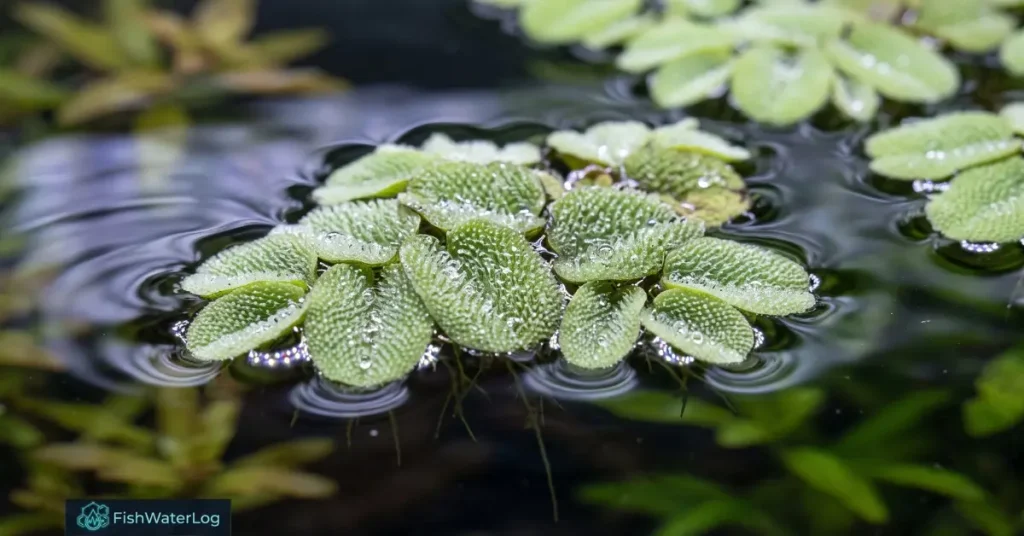
Close-up macro of Salvinia minima (Water Spangles), highlighting water-repellent leaf trichomes that maintain buoyancy during surface water movement.- Unique Hydrophobic Biology: The upper epidermis of each leaf is covered in microscopic, branched trichomes (fuzzy hairs) that repel water drops. This hydrophobic adaptation ensures the fronds remain buoyant even during moderate water movement and light splashing.
- Nitrogen Control: Highly favored in dwarf shrimp colonies and breeding setups, it diffuses overhead glare, suppressing opportunistic cyanobacteria while absorbing excess ionic waste. Its shallow root system makes it particularly suited for nano aquariums where longer roots might foul the substrate.
Dwarf Water Lettuce (Pistia stratiotes)
Characterized by rosettes of velvety, ribbed, pale green leaves resembling small heads of cabbage, Dwarf Water Lettuce provides robust ecological filtration:
- Heavy-Duty Biological Demands: This species develops an exceptionally dense, feather-like root mass. In heavily stocked tanks containing messy eaters like cichlids or goldfish, it aggressively extracts dissolved phosphorus and Total Ammonia Nitrogen, lowering biological oxygen demand (BOD) across the ecosystem.
- Ventilation Vulnerability: In enclosed aquarium hoods, high humidity and trapped condensation cause the delicate rosettes to melt rapidly. It requires open-top tanks with steady ambient air circulation to thrive.
Proper atmospheric ventilation remains a non-negotiable prerequisite for both plant health and effective gas exchange. When configuring balanced habitats, review our comprehensive substrate for planted tanks guide to ensure that root-feeding plants receive sufficient nutrition without being starved by surface-dwelling competitors.
A Critical Salinity Distinction: It is crucial to note that species like Amazon Frogbit, Salvinia, and Water Lettuce have evolved strictly for freshwater habitats. Enthusiasts searching for saltwater aquarium plants must look toward specialized marine macroalgae (such as Chaetomorpha), as standard floating freshwater species will rapidly dehydrate and perish if exposed to marine salinity levels.
Biofilm Management and Root Microhabitats
Floating macrophytes regulate water quality far beyond bulk oxygen and nitrogen cycling; they actively structure the micro-habitat of the aquatic environment. In enclosed systems, organic detritus and lipids pool at the surface to create an oily protein scum known as a biofilm. This barrier disrupts the air-water boundary, severely impeding gas exchange in aquariums and causing dissolved oxygen metrics to decline.
The best floating plants for aquarium aeration counter this buildup through biological and physical mediation:
- Allelopathic Allelochemical Exudates: Submerged roots release bioactive phenolic compounds that suppress unchecked bacterial blooms and nuisance cyanobacteria.
- Particulate Filtration: Dense root mats of species such as Limnobium laevigatum and Salvinia minima intercept suspended particulates, clarifying the water column.
- Beneficial Microhabitats: Root systems become colonized by beneficial autotrophic nitrifiers, providing vital grazing surfaces and protective cover for dwarf freshwater shrimp and popular algae eater fish.
- Oxygen Conservation: Augmenting biological processing within the water column reduces organic accumulation in mechanical filters, stabilizing total system oxygen demand.
Submerged roots release bioactive phenolic compounds that suppress unchecked bacterial blooms and nuisance cyanobacteria, a mechanism documented in clinical studies on floating macrophyte dynamics.
The Diurnal Cycle: Day vs. Night Oxygen Swings
A critical biochemical dynamic in planted biotopes is the daily oxygen fluctuation known as the Diurnal Cycle. During the active photoperiod, all photosynthetic biomass—including floating plants, submerged species, and benthic microalgae—assimilates dissolved CO2 while discharging high levels of oxygen. Under intense illumination, dissolved oxygen can reach super-saturation levels (surpassing 100% saturation), manifesting as visible oxygen pearling across plant leaves.
The physiological vulnerability arises once lights turn off. Photosynthesis stops completely, whereas biological cellular respiration continues uninterrupted. Throughout the dark phase, every living inhabitant—including fish, biological filter colonies, and the plants themselves—switches to consuming dissolved oxygen while exhaling carbon dioxide. If an unmanaged floating carpet blankets the surface, atmospheric diffusion halts, causing oxygen levels to plummet to their lowest levels right before dawn and inducing acute surface gasping in fish.
Mitigating Nighttime Hypoxia
- Strict Surface Management: Always maintain 30% to 50% of the surface area completely unobstructed to sustain open atmospheric gas exchange.
- Timed Nocturnal Aeration: In densely planted setups or during summer heatwaves, run one of the proven quiet aquarium air pumps on an overnight timer to drive off-gassing of trapped CO2 without disturbing room acoustics.
Care Guide: Managing Flow and Surface Agitation
Successfully maintaining robust duckweed alternatives while preserving peak biological aeration requires three practical husbandry protocols:
- Adequate Illumination: Positioned directly below overhead lights, floating species require balanced exposure; consult our aquarium lighting photoperiod guide to optimize daily run-times between 6 and 8 hours without triggering nuisance algae blooms.
- Flow Baffling and Plant Rings: Vigorous surface churning from hang-on-back (HOB) filters or powerheads submerges delicate leaves, causing systemic rot. Construct floating corrals from standard airline tubing to isolate plants from direct turbulence while keeping dedicated zones open for gas exchange.
- Routine Biomass Culling: The core benefit of floating vegetation is nitrogen export. Leaving dead or overgrown leaves to decompose inside the tank returns trapped nitrogen back into the water, spiking biological oxygen demand (BOD). Manually scoop out excess plant growth during weekly maintenance to permanently remove accumulated nitrates.
Conclusion
Relying exclusively on noisy mechanical equipment for aquarium aeration overlooks a highly effective biological alternative. The best floating plants for aquarium aeration—such as Limnobium laevigatum, Salvinia minima, and Phyllanthus fluitans—provide continuous biochemical stabilization. By drawing carbon dioxide directly from the atmosphere, these vigorous duckweed alternatives export large quantities of ammonia and nitrates from the water column. This reduction in organic waste lowers the oxygen consumed by biofilter autotrophs, leaving high concentrations of dissolved oxygen available for your livestock.
Success depends on avoiding the pitfalls of the Surface Cover Paradox. Maintain roughly 50% surface coverage with floating species to drive biological purification, leaving the remaining 50% clear to allow unhindered atmospheric gas exchange in aquariums. This balanced approach establishes a self-sustaining, crystal-clear, and oxygen-rich environment where freshwater fish thrive without stress.
Frequently Asked Questions (FAQs)
Can floating plants reduce oxygen levels in an aquarium?
Yes. If floating vegetation is permitted to cover 100% of the surface area, it physically seals the boundary layer, cutting off atmospheric gas exchange. Furthermore, because their stomata are located on the upper surface of the leaves, photosynthetic oxygen escapes directly into ambient room air rather than into the water. Always leave 30% to 50% of the water surface unobstructed.
Why is Duckweed considered suboptimal for biological aeration?
Duckweed (Lemna minor) reproduces aggressively, rapidly forming a thick, light-blocking mat that suffocates the surface layer and impedes gas transfer. In addition, its diminutive roots provide minimal biological surface area for nitrifying colonies. Slower-growing, larger species like Amazon Frogbit or Salvinia are far easier to manage and cull.
How do floating plants help prevent fish from gasping at the surface?
Surface gasping is commonly triggered by severe hypoxia or ammonia toxicity. Floating plants are hyper-accumulators that rapidly strip ammonia and nitrates from the water. Lowering this organic waste significantly decreases bacterial Biological Oxygen Demand (BOD), preserving high dissolved oxygen levels for fish respiration.
Why do dissolved oxygen concentrations fall overnight?
During the day, photosynthetic plants release abundant oxygen. Once lights turn off, photosynthesis ceases, but cellular respiration continues across all livestock, bacteria, and plant life. Without supplemental surface circulation, this collective nocturnal oxygen consumption can drive water into acute hypoxia by early morning.
Why are my floating plants rotting near the filter outlet?
Species such as Phyllanthus fluitans and Pistia stratiotes are adapted to keeping their upper leaf crowns dry. Constant agitation or splashing from filter returns waterlogs the leaves, initiating decay. Installing spray bars to diffuse flow or setting up floating barriers keeps plants isolated from heavy turbulence.

1 thought on “4 Best Floating Plants for Aquarium Aeration: 2026 Guide”