
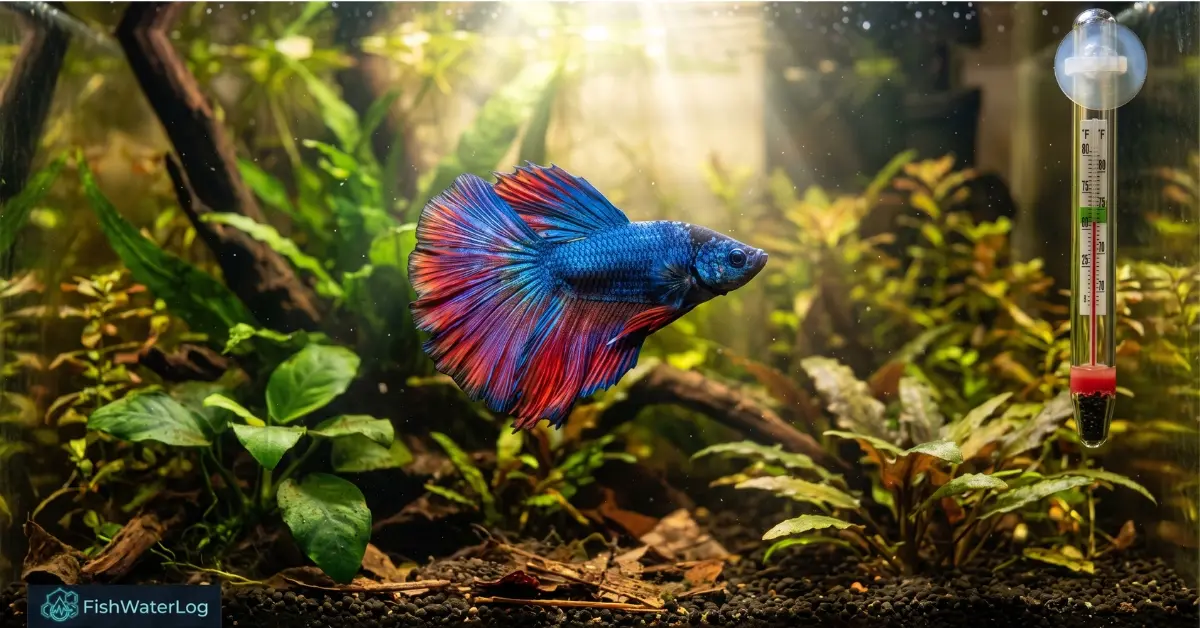
The global ornamental fish trade has long perpetuated a widespread biological fallacy: the assertion that Betta splendens—commonly known as the Siamese fighting fish—can thrive in unheated, unfiltered novelty bowls. This pervasive industry misinformation fundamentally misunderstands the evolutionary history, genetic adaptations, and precise physiological requirements of the species. To establish the ideal betta fish water parameters for home tanks, the aquatic habitat must be viewed through a rigorous scientific lens rather than the aesthetic framing of retail pet husbandry. To fully grasp the intricate physiological requirements of these animals, one must review the natural habitat distribution and environmental tolerances recorded on the FishBase ichthyological registry.
Native to the Mekong basin of Southeast Asia—specifically the expansive floodplains, rice paddies, and slow-moving drainage canals of Thailand and Cambodia—Betta splendens inhabits ecosystems characterized by high water temperatures, complex organic chemistry, and dense vegetation. While these environments may occasionally contract into smaller pools during dry seasons, they are continuously refreshed by massive volume shifts, natural rainfall, living vegetation, and subterranean substrate beds that instantly process nitrogenous waste. Consequently, mastering baseline betta fish water parameters requires replicating these natural biochemical and hydrodynamic buffers.
A 1-gallon glass bowl or novelty vase lacks the physical water mass required to dilute metabolic waste, sustain thermal stability, or provide adequate surface area for gas exchange. Achieving a biologically sound betta tank setup demands the precise management of thermal regulation, efficient biofiltration, and stabilizing the chemical buffer and pH for betta health to prevent acute toxicological shock and chronic immunosuppression. Dismantling the myth of the unfiltered bowl is essential: the species’ remarkable evolutionary hardiness was never an evolutionary blueprint for environmental neglect.
Thermal Regulation and the Thermodynamics of Poikilothermic Metabolism
As tropical, poikilothermic organisms, the internal body temperature of Betta splendens is entirely dependent on ambient environmental thermodynamics. Unlike endothermic mammals, teleost fish cannot generate internal metabolic heat. Consequently, their basal metabolic rate, enzymatic kinetics, gastrointestinal motility, and systemic immunological functions are strictly governed by surrounding water temperatures.
Metabolic Depression and Enzymatic Starvation
The baseline physiological mandate for Betta splendens requires a stable water temperature between 76°F and 82°F. Standard room temperatures, which routinely fluctuate between 68°F and 72°F, represent a chronic hazard zone for tropical teleosts. When subjected to unheated water below 72°F, a Betta enters a state of systemic metabolic depression.
At the molecular level, lower kinetic energy decreases the activation rate of digestive enzymes. Gastrointestinal secretions stall, leaving ingested proteins and lipids unhydrolyzed within the intestinal lumen. This static organic mass becomes a primary substrate for opportunistic bacterial colonization, culminating in severe constipation, swim bladder compression, and secondary septicemia. Concurrently, cold exposure inhibits leukocyte proliferation and antibody synthesis. A Betta maintained in sub-optimal thermal conditions exhibits chronic lethargy, melanophore contraction (loss of vibrant coloration), and heightened vulnerability to pathogens like Flavobacterium columnare and Aeromonas hydrophila.
The Optimal Physiological Sweet Spot
To support continuous cellular repair and optimal bioenergetics, research identifies 78°F to 80°F as the precise metabolic sweet spot for Betta splendens.
- Heater Integration: Maintaining this thermal plateau requires an adjustable, thermostatically controlled submersible heater sized at roughly 5 watts per gallon.
- Nocturnal Buffer: Automated thermal regulation eliminates dangerous nocturnal temperature drops that trigger endocrine stress and immunosuppression.
- Verification: Calibrate the heater using an independent digital or glass alcohol thermometer positioned at the opposite end of the aquarium to confirm uniform heat distribution.
Molecular Pathogenesis of Nitrogenous Waste Toxicity
To prevent acute toxicological shock, mastering the core principles of the nitrogen cycle biofiltration is mandatory for maintaining zero-ppm ammonia and nitrite levels in your aquarium. The core of managing biological betta fish water parameters centers on the strict control of the aquatic nitrogen cycle. Total ammonia (NH3/NH4+) and nitrite (NO2–) must be maintained at absolute zero (0 ppm), while nitrate (NO3–) should remain below 20 ppm through scheduled volumetric water changes.
Chemoautotrophic Nitrifiers: Nitrosomonas vs. Nitrobacter pH Dynamics
Biological filtration relies on specialized chemoautotrophic bacteria with distinct physiological tolerances. Nitrosomonas oxidizes total ammonia into toxic nitrite (NO2–), functioning optimally at a pH of 7.8 to 8.0. Subsequently, Nitrobacter converts nitrite into relatively benign nitrate (NO3–), preferring a pH between 7.3 and 7.5. When aquarium pH plummets below 6.5—often driven by organic acid accumulation and exhausted carbonate buffers—the enzymatic kinetics of both bacterial strains stall drastically. This microbial shutdown freezes the biofiltration process, triggering abrupt ammonia and nitrite spikes even in established systems.
The Thermodynamic Equilibrium of Ammonia
In aquatic ecosystems, ammonia exists in a pH-dependent and temperature-dependent thermodynamic equilibrium between toxic un-ionized ammonia (NH3) and relatively benign ionized ammonium (NH4+):
NH3 + H2O ⇌ NH4+ + OH–
As the water’s pH rises into alkaline territory and temperatures sit within the Betta’s ideal 78°F to 80°F range, this chemical equilibrium shifts toward lethal, un-ionized NH3.
Total Ammonia Nitrogen (TAN) Speciation and the Alkalinity Trap
Standard liquid reagent kits measure Total Ammonia Nitrogen (TAN), the sum of un-ionized free ammonia (NH3) and ionized ammonium (NH4+). The toxic fraction is governed strictly by ambient pH and water temperature. In acidic conditions (pH < 6.5), the equilibrium holds nearly all TAN in the benign NH4+ state. However, as pH climbs above 7.0 at 28°C (82.4°F), the concentration of lethal free ammonia rises exponentially, reaching approximately 13% of total TAN at pH 8.0.
Critical Clinical Warning: Never attempt to rapidly elevate pH using sodium bicarbonate or alkaline chemical buffers during an active ammonia spike. Artificially raising the pH instantaneously converts harmless ammonium ions into toxic, un-ionized ammonia gas, causing acute gill cauterization and rapid respiratory death.
Rhesus (Rh) Glycoproteins and Trans-Epithelial Diffusion
Un-ionized ammonia carries no electrical charge and possesses high lipid solubility, enabling it to cross the phospholipid bilayers of the gill lamellae with minimal resistance. This trans-epithelial transport is actively facilitated by specialized transport channels known as Rhesus (Rh) glycoproteins. When ambient NH3 levels in the aquarium surpass internal blood concentrations, the gradient reverses, pushing ammonia directly into systemic vascular circulation.
Neurological Collapse: The Glutamine Synthetase Pathway
Once circulating ammonia breaches the blood-brain barrier, it disrupts critical central nervous system operations. Because the hydrated ionic radius of ammonium (NH4+) mirrors that of potassium (K+), excess ammonia displaces potassium ions, depolarizing neuronal membranes and destabilizing synaptic signaling.
To counter free ammonia accumulation, the fish’s brain utilizes the enzyme glutamine synthetase to catalyze the conversion of glutamate into glutamine. However, excessive intracellular glutamine functions as a potent osmolyte within astrocytes, pulling water across cellular membranes and driving acute astrocyte swelling and cerebral edema. The unnatural intracellular accumulation of glutamine within astrocytes acts as a powerful osmolyte that triggers brain edema, a neurotoxic mechanism widely detailed in teleost studies available via the PubMed Central database. This swelling triggers NMDA receptor activation, causing an uncontrolled influx of calcium (Ca2+) that drives mitochondrial collapse, ATP exhaustion, and rapid neuronal necrosis.
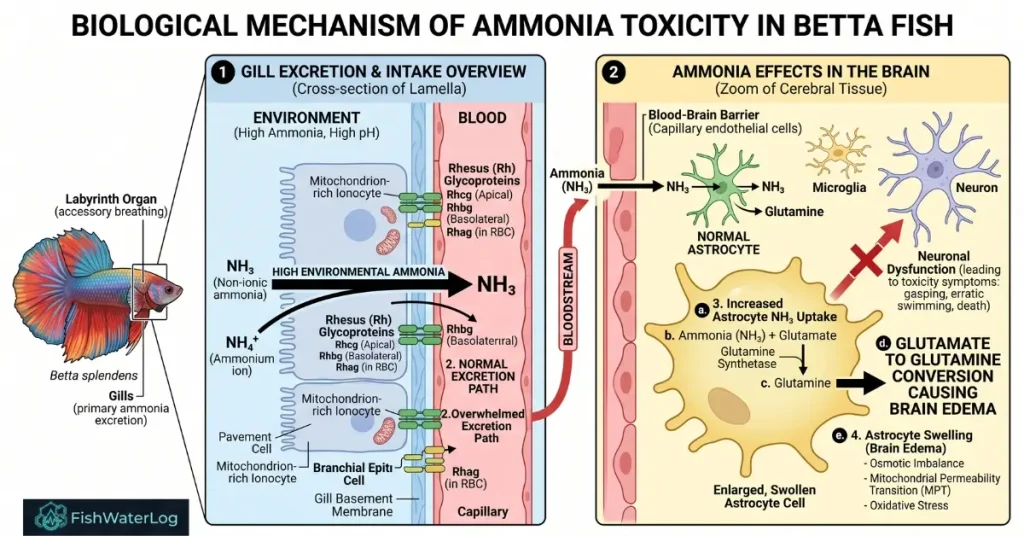
Cellular pathway of ammonia toxicity in Betta splendens: trans-epithelial diffusion via Rh glycoproteins leading to glutamine-induced astrocyte edema.Nitrite Toxicity, Methemoglobinemia, and Buoyancy Failure
When nitrifying Nitrosomonas bacteria oxidize ammonia, they generate nitrite (NO2–), which enters the bloodstream via competitive uptake at branchial chloride cells. Inside erythrocytes, nitrite oxidizes functional ferrous iron (Fe2+) within hemoglobin into ferric iron (Fe3+), generating methemoglobin:
- Cellular Hypoxia: Methemoglobin cannot bind dissolved oxygen, turning the blood brown and causing systemic asphyxiation even in well-aerated water.
- Buoyancy Complications: Hypoxia impairs blood flow to the rete mirabile—the capillary network regulating gas secretion into the swim bladder. Erratic oxygen secretion leads to swim bladder hyper-inflation, causing fish to float helplessly at the water’s surface.
To keep nitrates safely below 20 ppm and replenish vital minerals, consistent aquarium water maintenance and weekly partial water changes must be strictly enforced.
The Labyrinth Organ: Atmospheric Respiration and Evolutionary Resilience
When analyzing the ideal betta fish water parameters for home tanks, one must thoroughly address the unique anatomical adaptation that defines the suborder Anabantoidei: the labyrinth organ.
Suprabranchial Anatomy and Gas Exchange
The labyrinth organ is a specialized, highly vascularized suprabranchial respiratory structure situated directly dorsocranial to the primary gill arches. Anatomically, it consists of extensively folded, rosette-like bony plates derived from the first epibranchial bone, all covered by a richly vascularized respiratory epithelium. This evolutionary adaptation enables Betta splendens to gulp atmospheric air directly at the water’s surface, extracting oxygen even when dissolved oxygen levels in stagnant, warm temporal pools approach zero.
Because Bettas function as obligate surface air-breathers, blocking access to atmospheric air will lead to suffocation, regardless of how thoroughly oxygenated the surrounding water column may be.
Acute Tolerance Thresholds vs. Chronic Sub-Lethal Tissue Necrosis
This secondary respiratory mechanism provides Betta splendens with substantial short-term survival capabilities during severe chemical water degradation compared to purely branchial teleosts. Toxicological bioassays establish that the 96-hour LC50 (lethal concentration causing 50% mortality) for adult Bettas exposed to total ammonia-N reaches an elevated threshold of 123.4 mM (approximately 1.7 g/L). By relying on atmospheric air, Bettas can temporarily reduce branchial ventilation rates, curbing the passive influx of ammonia across their fragile gill lamellae.
However, this survival adaptation is routinely misinterpreted by commercial retailers to defend housing Bettas in stagnant, unfiltered glass bowls. The labyrinth organ evolved strictly as a short-term survival strategy for ephemeral dry-season puddles, not as an optimal state of long-term health. Chronic exposure to sub-lethal ammonia or nitrite concentrations causes:
- Severe Chemical Burning: Microscopic epithelial damage occurs on both the primary gill arches and delicate labyrinth rosettes.
- Branchial Lamellar Fusion: Gill tissues thicken and fuse together, permanently reducing baseline respiratory surface area.
- Systemic Tissue Degradation: Suppressed cellular immunity accelerates chronic fin necrosis (fin rot) and secondary bacterial septicemia.
Survival under hypoxic or toxic conditions does not equate to biological thriving; maintaining undetectable ammonia and nitrite levels (0 ppm) remains an absolute requirement for stable health.
Chemical Buffering, Osmoregulation, and Ion Gradients
While biological filtration neutralizes acute nitrogenous waste toxicity, long-term physiological stability in an aquarium relies heavily on ionic balance and water chemistry buffers. The baseline pH for betta health, combined with General Hardness (GH) and Carbonate Hardness (KH), directly dictates the osmoregulatory workload placed on the teleost renal system.
Defining the Optimal pH Gradient
Betta splendens naturally inhabits slow-moving environments filled with decomposing botanical matter, establishing slightly acidic to neutral conditions. The optimal pH gradient must be maintained between 6.5 and 7.5, with 7.0 serving as a stable physiological midpoint.
When water parameters drift outside this range—especially in alkaline tap water above 8.0 or acidic environments below 6.0—the fish’s protective epidermal mucus layer (glycoprotein slime coat) breaks down. This loss exposes delicate epithelial surfaces directly to opportunistic pathogens, parasites, and systemic infections. When managing the acid-base balance of the aquarium, it is vital to consult resources on the ideal pH for betta to prevent catastrophic crashes that strip the fish’s protective slime coat. Chemical stability is far more critical than targeting a rigid numeric figure; rapid pH swings induce severe osmotic shock and cellular stress.
Active buffering soils and specialized aquarium substrate for planted tanks naturally lower pH into the acidic range while stabilizing cation exchange capacity.
Stop Losing Fish to Unknown Illnesses
Diagnose aquatic pathogens in under 60 seconds. A 2-page clinical triage flowchart and precision dosing matrix designed to treat symptoms safely without crashing your biofilter.
📥 Get Clinical Diagnostic Guide
General Hardness (GH) and Cellular Membrane Stability
General Hardness measures the aggregate concentration of divalent alkaline earth cations in the water, principally calcium (Ca2+) and magnesium (Mg2+). Bettas thrive within a soft to moderately hard range of 3 to 12 dGH (approximately 50 to 200 ppm). These dissolved minerals are essential for teleost osmoregulation, muscular contraction, and skeletal maintenance:
- Hyperosmotic Dynamics: Freshwater teleosts possess internal electrolyte concentrations higher than surrounding aquarium water, causing constant passive water influx across gill membranes.
- The Pure RO/DI Pitfall: Keeping Bettas in pure distilled or un-remineralized Reverse Osmosis (0 dGH) water creates a severely hypotonic environment. Water floods cellular structures while vital blood electrolytes leach outward, culminating in renal failure and acute osmotic shock.
Unlike the precise mineral tolerances required when maintaining the ideal water parameters for cherry shrimp during molting, adult Bettas tolerate a broader GH range.
Trans-Epithelial Potential and the Bubble Nest Degradation Mechanism
Divalent cations (Ca2+ and Mg2+) modulate trans-epithelial electrical potential across the gill lamellae, dictating baseline osmoregulatory energy demands. While certain teleosts thrive in mineral-dense water, elevated General Hardness exerts severe species-specific reproductive consequences on Betta splendens.
An empirical evaluation by Krishnakumar et al. (2020) demonstrated that while species such as guppies flourish at elevated hardness thresholds (900 ppm CaCO3), male Bettas suffer profound reproductive failure. Hyper-mineralized water destabilizes the surface tension and lipid-protein structural matrix of male bubble nests, causing the foam to rapidly blast and disintegrate. This structural collapse drives larval hatchability down to roughly 25%, establishing 3 to 12 dGH (50–200 ppm) as an absolute physiological ceiling for breeding stability.
Carbonate Hardness (KH) and Acid-Neutralizing Capacity
Carbonate Hardness (KH) measures bicarbonate (HCO3–) and carbonate (CO32-) ion concentrations, providing the fundamental acid-neutralizing capacity (alkalinity buffering) of the aquarium system. A baseline level of 3 to 8 dKH is recommended to guarantee chemical stability.
During biological filtration, autotrophic nitrifying bacteria continuously consume alkalinity, generating nitric acid as a metabolic byproduct. If KH falls below 2 dKH, the water column loses its chemical buffer completely. This results in an immediate pH crash—dropping from 7.0 down to sub-5.5 levels within hours—stalling nitrifying bacteria and inflicting severe chemical burns across the fish’s branchial filaments.
If alkalinity is depleted and pH plummets, the sudden stall in bacterial activity can lead to a dangerous nitrogen cycle crash, causing rapid spikes in toxic ammonia.
Botanical Therapeutics and Flavonoid Pharmacology
To optimize betta fish water parameters and authentically mirror the complex biochemical architecture of wild Southeast Asian habitats, modern aquatic husbandry leverages botanical conditioning—predominantly through the integration of Indian almond leaves (Terminalia catappa).
Replicating Southeast Asian Blackwater Ecosystems
In natural waterways, Betta splendens inhabits shallow, slow-moving blackwaters shaded by dense forest canopies. The water column is deeply stained with humic substances derived from submerged, decaying leaf litter. Integrating live foliage is crucial for nitrate uptake; mastering how to attach Anubias to driftwood prevents buried rhizome rot from spiking ammonia. Introducing dried Terminalia catappa leaves into an aquarium naturally reproduces this aquatic biome:
- Natural Tannin Extraction: As foliage breaks down, it releases humic acids, fulvic acids, and concentrated tannins that gently acidify water chemistry without causing abrupt osmotic changes.
- Chelation of Heavy Metals: Humic compounds function as biological chelators, binding free divalent metal ions and neutralizing potential municipal water contaminants.
- Stress Alleviation: The resulting amber tint filters harsh artificial lighting, lowering environmental stressors and promoting natural territorial and bubble-nesting behaviors. To prevent high-light induced stress and algal explosions in shallow tanks, follow standardized aquarium PAR meter mapping rules for balanced photon delivery.
Flavonoid Mechanisms: Quercetin and Kaempferol
Beyond gentle pH reduction, the clinical benefit of Indian almond leaves stems from their distinct pharmacological profile. The tissue contains potent secondary metabolites, most notably the bioflavonoids quercetin and kaempferol, alongside diverse hydrolyzable ellagitannins. These specialized botanical compounds provide direct prophylactic, anti-inflammatory, and antimicrobial defenses within the aquatic environment.
Bacterial Cell Wall Disruption and Tissue Regeneration
Aquatic microbiology confirms that quercetin exerts targeted bactericidal effects by interacting directly with pathogenic cellular envelopes:
- Membrane Intercalation: Quercetin molecules insert into the outer phospholipid bilayers of bacterial cells, destabilizing structural integrity and increasing membrane electrical conductivity.
- Intracellular Lysis: Compromised membrane permeability allows vital proteins, nucleotides, and intracellular potassium ions to leak out, rapidly terminating bacterial viability.
- Pathogen Suppression: Concurrently, kaempferol inhibits bacterial DNA gyrase and suppresses virulence factors, actively mitigating the colonization of notorious aquatic pathogens such as Flavobacterium columnare (Columnaris) and Aeromonas hydrophila.
Through botanical flavonoid conditioning, aquarists can naturally treat minor epidermal abrasions, arrest early-stage fin rot, and stimulate epithelial regeneration without resorting to synthetic antibacterial pharmaceuticals that destroy biological biofiltration beds.
Optimal Water Parameter Specifications Data
To maintain biologically stable betta fish water parameters, monitor the following thresholds using calibrated liquid reagent test kits rather than inaccurate paper test strips:
| Parameter | Ideal Range | Danger Threshold | Biological Significance |
|---|---|---|---|
| Temperature | 78°F – 80°F (25.5°C – 26.7°C) | < 72°F or > 82°F | Controls basal enzymatic rates, gut motility, and immune function. |
| pH | 6.5 – 7.5 (Optimal: 7.0) | < 6.0 or > 8.0 | Preserves epidermal slime coat integrity and sets the un-ionized NH3 ratio. |
| Total Ammonia (NH3 / NH4+) | 0.0 ppm | ≥ 0.25 ppm | Diffuses via Rh glycoproteins; triggers cerebral edema and gill necrosis. |
| Nitrite (NO2–) | 0.0 ppm | ≥ 0.25 ppm | Causes methemoglobinemia, branchial asphyxiation, and swim bladder failure. |
| Nitrate (NO3–) | < 20 ppm | > 40 ppm | Chronic biological stressor; managed via regular volumetric water dilution. |
| General Hardness (GH) | 3 – 12 dGH (50 – 200 ppm) | 0 dGH or > 15 dGH | Provides vital Ca2+ and Mg2+ cations for stable teleost osmoregulation. |
| Carbonate Hardness (KH) | 3 – 8 dKH (50 – 140 ppm) | < 2 dKH | Supplies total alkalinity buffering to prevent abrupt, catastrophic pH crashes. |
Actionable Setup Protocol for Home Aquariums
Executing a biologically sound betta tank setup requires systematic equipment integration and cycle establishment before introducing livestock:
- Volumetric Standardization: Utilize an aquarium with a minimum water volume of 5 to 10 gallons. This physical volume dilutes metabolic excretion and stabilizes thermodynamics against ambient room air swings.
- Low-Velocity Hydrodynamic Filtration: Install an air-driven sponge filter. Sponge filtration provides extensive surface area for nitrifying biofilm colonization while eliminating turbulent water currents that exhaust long-finned male Bettas.
- Thermostatic Heating Architecture: Integrate an adjustable 25W to 50W submersible heater paired with an independent secondary thermometer. Calibrate the unit to hold continuous water temperatures within 78°F to 80°F.
- Biological Fishless Cycling: Dose pure liquid ammonium chloride to reach 2.0 ppm in the unpopulated aquarium. Monitor the biological conversion of NH3 to NO2– and subsequently to NO3–. The system is biologically mature only when a 2.0 ppm ammonia dose is completely metabolized to nitrate within 24 hours.
Osmotic vs. Thermal Shock: The 90-Minute Veterinary Drip Protocol
Standard retail advice advocating floating plastic bags for 15 minutes only equalizes temperature; it provides zero protection against osmotic and pH shock. Moving a Betta between divergent General Hardness and pH gradients causes violent shifts in branchial trans-epithelial potential, damaging cellular integrity.
- Vessel Transfer: Place the newly acquired Betta and transport water into a clean, dedicated 1-gallon acclimation container.
- Siphon Setup: Connect standard airline tubing from the main display tank fitted with a plastic control valve.
- Flow Rate Calibration: Adjust the flow to a steady drip rate of 2 to 4 drops per second.
- Equilibration Window: Continue the siphon over 60 to 90 minutes until the container volume has tripled, gently equalizing pH, GH, and KH before transferring the fish.
Elevating Industry Standards
A critical review of high-authority commercial pet publications reveals persistent pedagogical shortcomings regarding aquarium water chemistry. Generic resources routinely advise vague targets like “clean water” and “room temperature” while omitting the precise physiological mechanisms responsible for sudden fish mortality.
- The Rh Glycoprotein Omission: Mainstream guides rarely address branchial molecular dynamics. Clarifying that ammonia actively enters the bloodstream via Rhesus (Rh) glycoproteins demonstrates why even minute traces (0.25 ppm) trigger systemic distress and why water changes must remain proactive rather than reactive.
- The Neurological Pathogenesis Gap: Commercial care sheets warn of external “ammonia burns” on gill tissues but ignore internal neurotoxicity. The biochemical cascade wherein glutamine synthetase activity leads to excessive astrocyte swelling and lethal cerebral edema provides the precise physiological explanation behind rapid mortality in uncycled systems.
- The Labyrinth Organ Fallacy: While hobbyist literature highlights aerial respiration, it frequently decouples acute toxicological tolerance (96-hour LC50 of 1.7 g/L) from chronic sub-lethal tissue necrosis. Emphasizing that surviving toxic water is an ephemeral evolutionary adaptation—not a justification for permanent housing in unfiltered bowls—establishes a necessary scientific distinction.
For a broader scientific overview of acceptable chemical thresholds across diverse aquatic species, consult our comprehensive aquarium water parameters directory.
Conclusion
The persistence of the unfiltered novelty bowl represents a profound disconnect between retail convenience and teleost physiology. When viewed through the lens of evolutionary biology, Betta splendens clearly requires an enclosure grounded in rigorous biochemical, thermal, and osmotic discipline.
Mastering the ideal betta fish water parameters for home tanks is not an optional pursuit, but a baseline husbandry mandate. By holding thermal parameters steady within the 78°F to 80°F metabolic sweet spot, eliminating toxic ammonia and nitrite to safeguard neural and branchial tissues, and utilizing botanical flavonoids to simulate Southeast Asian blackwater environments, aquarists transition their care routines from bare survival to sustained biological thriving. The labyrinth organ stands as an evolutionary marvel of resilience, but it must never serve as a pretext for substandard aquatic care.
Frequently Asked Questions (FAQs)
What is the best pH for betta fish?
The recommended range spans 6.5 to 7.5, with 7.0 representing a balanced physiological target. Maintaining stable parameters is far more critical than pursuing a rigid number, as sudden chemical fluctuations strip the protective glycoprotein slime coat and induce severe osmotic stress.
Can Bettas survive in unheated water at room temperature?
No. Ambient room temperatures (68°F to 72°F) induce chronic metabolic depression in tropical poikilotherms. This drop impairs digestive enzyme function, halts leukocyte synthesis, and leaves the fish vulnerable to secondary opportunistic infections. A reliable submersible heater set to 78°F–80°F is mandatory.
Why is my Betta floating sideways or struggling to swim downward?
Erratic buoyancy often stems from acute water toxicity rather than simple dietary constipation. Nitrite exposure induces methemoglobinemia, reducing oxygen delivery to the rete mirabile and causing erratic swim bladder gas regulation. Branchial irritation from ammonia spikes similarly disrupts internal gas equilibrium.
What level of ammonia is considered safe for a Betta tank?
Zero parts per million (0.0 ppm). Although Bettas possess a high acute tolerance threshold due to auxiliary labyrinth respiration, chronic exposure above 0 ppm causes irreversible gill lamellar fusion, astrocyte swelling, and necrotic fin degradation.
What do Indian Almond Leaves actually do for aquarium water?
Decomposing Terminalia catappa foliage releases humic acids that gently stabilize pH, alongside bioflavonoids such as quercetin and kaempferol. These compounds disrupt bacterial cell wall integrity, suppress pathogen colonization like Flavobacterium columnare, and encourage rapid tissue regeneration.
Should I use distilled or pure RO water for a Betta aquarium?
Never use un-remineralized pure Reverse Osmosis (RO) or distilled water. Water devoid of general hardness creates an extreme hypotonic gradient that leaches vital electrolytes from the fish’s bloodstream, culminating in renal failure. Tap water conditioned with a quality dechlorinator or properly remineralized RO water is essential.
How often should water changes be performed in a cycled 5-to-10-gallon tank?
Perform a scheduled 20% to 30% water change weekly using temperature-matched, dechlorinated water. This routine physically dilutes accumulated nitrate below 20 ppm and replenishes vital mineral buffers depleted by autotrophic nitrifying bacteria.
