
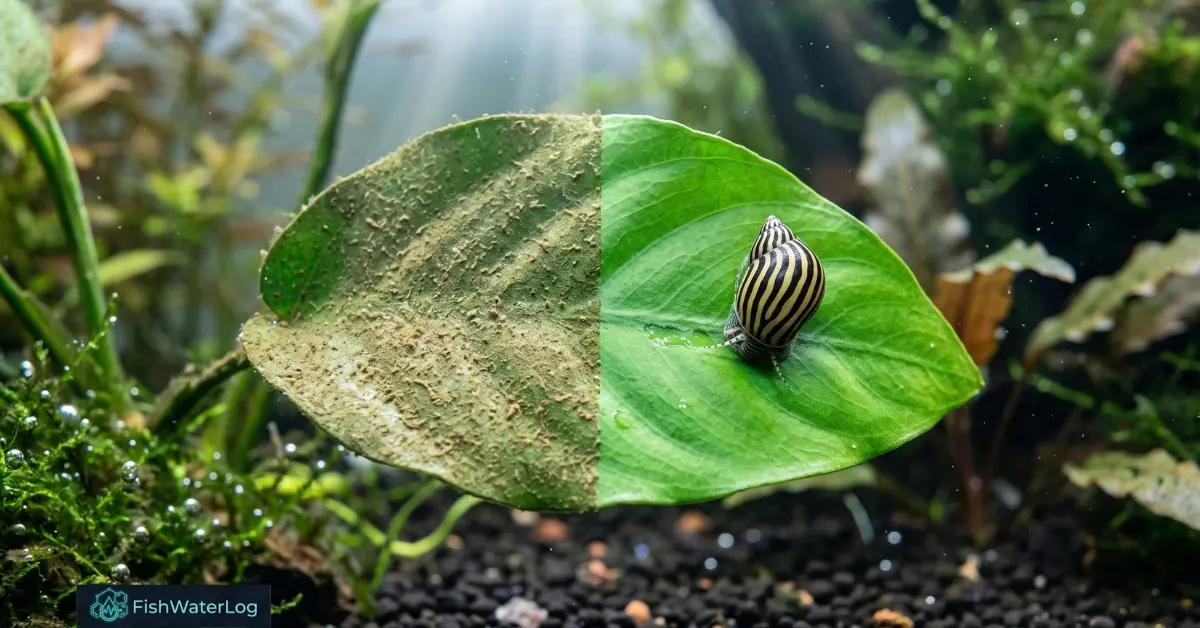
Finding a dusty, brownish-yellow coating covering your aquarium glass, hardscape, and plant leaves is one of the most common frustrations for both beginner and experienced hobbyists. If you are searching for how to get rid of brown algae in tank setups, understanding the underlying aquatic microbiology is the first step toward long-term eradication. While aquarists casually label this unsightly residue as “brown algae,”
it is not a true macroscopic plant or filamentous algae. Instead, this rusty film consists of specialized, single-celled photosynthetic eukaryotic microalgae known as diatoms (class Bacillariophyceae). Unlike the coarse, bristly tufts of Black Beard Algae (BBA) or the thick, peeling sheets of Cyanobacteria, diatoms feel soft, powdery, and slightly slimy to the touch, wiping off smooth glass surfaces effortlessly with a single finger swipe.
The core physiological reason diatoms proliferate so aggressively lies in their unique cell wall architecture, scientifically classified as a frustule. Unlike green algae species that build outer walls using organic cellulose, diatoms construct their rigid, glassy brown algae frustules from biogenic opaline silica—essentially hydrated silicon dioxide. Engineered like a microscopic Petri dish with two overlapping halves (the epitheca and hypotheca), these cells require continuous access to bioavailable silicon to divide. When an aquarium contains elevated dissolved silicates, these micro-organisms reproduce rapidly via binary fission, covering gravel, ornaments, and glass in slippery brown sheets within mere days.
This explosive growth is the quintessential hallmark of new tank syndrome. In newly established aquariums, immature biofiltration and incomplete bacterial colonization leave abundant free nutrients and unbuffered surfaces vulnerable to colonization. By addressing the primary triggers—ranging from municipal tap water silicates and substrate leaching to spectral lighting deficits—you can starve these microalgae at the cellular level. Implementing targeted mechanical removal alongside dedicated silicate removal protocols provides a direct, scientifically proven framework to eliminate diatom blooms permanently and restore crystalline water clarity. For a detailed scientific taxonomy of opaline silica cell walls and microalgal biology, explore the educational database at Diatoms of North America.
Table of Contents
What is New Tank Syndrome and Silica Leaching?
A sudden, aggressive diatom bloom is the hallmark symptom of new tank syndrome. When setting up a fresh biotope, the nitrifying autotrophic bacteria and competitive microbial biofilms required for stability have not yet colonized the gravel bed and filter media. In this biologically vacant environment, opportunistic microalgae face zero competition for ecological real estate. Diatoms capitalize on this opening by harvesting abundant dissolved silica to construct their glassy cell walls, triggering rapid, exponential blooms across newly submerged surfaces. To stabilize your aquatic biofilter and prevent recurring parameter crashes, consult our Aquarium Nitrogen Cycle Biofiltration Guide to ensure beneficial bacteria establish properly.
This biological surge is sustained by steady silicate leaching from two primary physical vectors:
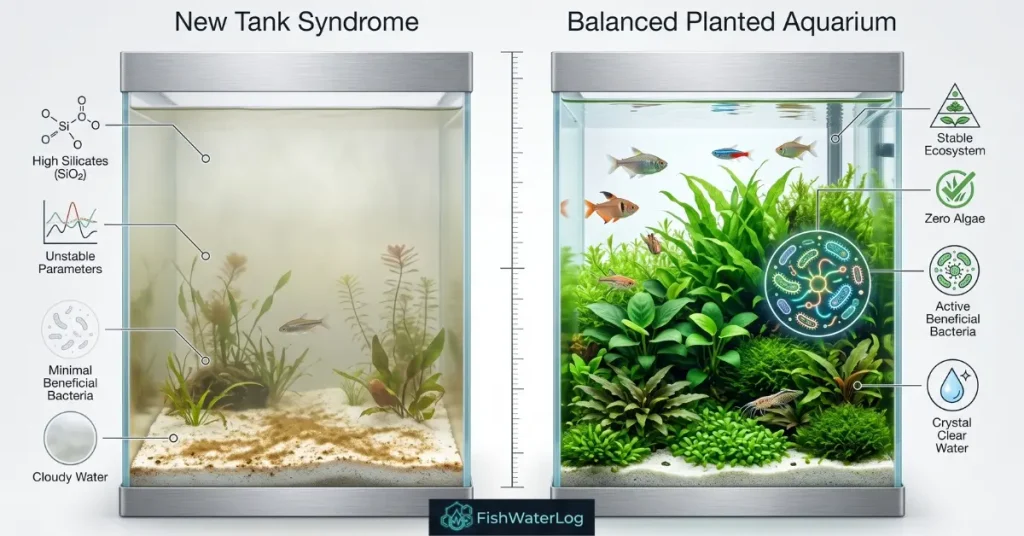
Comparison infographic illustrating new tank syndrome with elevated silicates and brown diatom blooms versus a mature, biologically balanced planted aquarium.- Unwashed Substrates and Silica Sands: Commercial play sand, blasting sand, and unwashed decorative gravels frequently contain soluble silicate dust and fine clay impurities. These minerals dissolve directly into the water column, elevating dissolved silicate levels well above optimal baseline thresholds.
- New Glass and Silicone Adhesives: Brand-new aquarium builds continually leach trace compounds, unpolymerized silicates, and residual sealants from uncured structural seams during their first four to six weeks of submersion. Coupled with tap water rich in municipal silicates, this creates an ideal chemical environment for diatoms to dominate.
Peer-reviewed biophysical studies on how diatom frustule nano-chambers alter molecular diffusion gradients can be reviewed through the National Center for Biotechnology Information.
Core Causes of Brown Algae Proliferation
While bioavailable silicates provide the architectural raw materials for brown algae frustules, secondary environmental stressors compound the problem and accelerate their growth rate:
- Sub-Optimal Lighting Spectrums: Diatoms utilize fucoxanthin—a specialized golden-brown carotenoid pigment that excels at capturing low-intensity and narrow-spectrum blue light. Low-output stock lights, decaying fluorescent tubes with degrading Kelvin ratings, or insufficient photoperiods give diatoms an edge over higher aquatic plants that demand balanced, full-spectrum PAR.
- Organic Loading and Free Nitrates: In immature setups, delayed biofiltration allows organic waste, unoxidized ammonia, and nitrates to accumulate. These dissolved organics act as continuous fuel, expanding diatom colonies into dense, greasy sheets.
- Stagnant Flow and Inadequate Circulation: Hydraulic dead spots prevent filtration systems from capturing free-floating microscopic cells. Stagnant water enables suspended diatoms to anchor onto vulnerable plant leaves, decor, and glass panes unchecked.
Step-by-Step Guide: How to Get Rid of Brown Algae in Tank in 5 Proven Steps
Successfully discovering how to get rid of brown algae in tank setups requires a systematic protocol that pairs immediate manual eradication with long-term chemical starvation and biological competition. Follow these five steps to systematically clear diatoms from your system:
- Execute Precision Mechanical Scraping and Substrate Siphoning: Because diatom biofilms detach easily under minimal friction, wipe the glass panes and consult our comprehensive clean aquarium gravel guide to vacuum detached frustules directly out of the substrate before they settle.
- Install Dedicated Silicate Removal Media: Mechanical export must be coupled with chemical starvation; integrate high-capacity silicate-adsorbing resins alongside the best filter media for crystal clear water inside your canister filter to maintain dissolved silicates strictly below 0.5 mg/L, depriving multiplying diatoms of essential cellular building blocks.
- Transition to Remineralized Reverse Osmosis (RO/DI) Water: If local tap water tests positive for high silica content (often exceeding 5 to 10 mg/L in municipal supplies), standard water changes will inadvertently replenish the bloom. Shift your water change schedule to reverse osmosis deionized water remineralized with aquarium-grade GH/KH buffers, while preventing TDS creep in aquarium RO/DI systems to permanently cut off the primary source of incoming silicates during weekly water changes.
- Calibrate and Stabilize the Photoperiod: Place your aquarium light fixtures on a reliable 6- to 8-hour daily schedule using a digital timer. Avoid weak, diffuse ambient room light or direct window exposure, both of which favor shade-adapted diatoms over vascular plants. Upgrading to a modern full-spectrum LED ensures that true plants receive the Photosynthetically Active Radiation (PAR) necessary to outcompete microalgal films. Controlling daily light exposure is critical to preventing opportunistic microalgae, so review our Aquarium Lighting Photoperiod Guide to set up a balanced timer schedule.
- Establish Heavy Fast-Growing Stem Plant Biomass: Introduce fast-growing aquatic macrophytes—such as Hygrophila difformis, Elodea, Ceratophyllum demersum, or Rotala rotundifolia—across at least 50% to 70% of the substrate footprint. Fast-multiplying stem plants aggressively uptake dissolved nitrates and phosphates from the water column, locking up vital macronutrients and depriving diatoms of secondary metabolic fuel.
Advanced Prevention: The Dark Start Method
For modern aquascapes utilizing nutrient-dense active soils, the most dependable biological strategy to bypass diatom blooms entirely is the Dark Start Method. Rather than immediately installing high-output lights and delicate live plants, the aquarium hardscape and substrate are assembled, filled with conditioned water, and run in absolute darkness for 4 to 6 weeks.
Operating the filter completely unlit during initial setup achieves two essential biochemical milestones: it completes the nitrifying colonization of the biofilter without cultivating photosynthesizing microalgae, and it allows the acute spike of dissolved silicates leaching from fresh glass silicone and active substrates to bind and precipitate. Following a 90% water change at the conclusion of the dark phase, live plants can be safely introduced into an established biological matrix, virtually eliminating the initial brown algae colonization phase.
Diatoms (Brown Algae) vs. Green Algae
Diagnosing microalgal outbreaks correctly is crucial when determining how to get rid of brown algae in tank environments. True green algae belong to plant-like chlorophytes that feed primarily on excess light and free nitrates, whereas diatoms are eukaryotic single-celled organisms that rely almost entirely on dissolved silica and municipal silicates. Understanding these biochemical and structural distinctions ensures you do not waste time applying treatments designed for green hair algae to a harmless diatom bloom.
| Diagnostic Parameter | Diatoms (Brown Algae) | Green Algae (True Chlorophyta) |
|---|---|---|
| Biological Classification | Unicellular microalgae (Bacillariophyceae) | True botanical plant relatives (Chlorophyta) |
| Cell Wall Composition | Biogenic opaline silica frustule | Organic cellulose and pectin matrix |
| Primary Nutrient Driver | Dissolved silicates (SiO₃²⁻) and organic waste | Excess phosphates, nitrates, and direct light |
| Lighting Preference | Thrives in dim, low, or narrow blue light spectrums | Requires moderate to intense PAR photoperiods |
| Physical Texture & Removal | Silky, powdery film; wipes away effortlessly | Firm, fibrous, slimy, or hair-like filaments |
| Natural Cleanup Crew | Nerite snails, Otocinclus, Amano shrimp | Siamese Algae Eaters, Florida Flagfish, Mollies |
| Progression Pattern | Transient; recedes naturally as the tank matures | Persistent; demands permanent macronutrient control |
Biological Clean-Up Crew: Enlisting Natural Grazers
While mechanical maintenance and targeted silicate removal address environmental causes, recruiting biological grazers provides safe, round-the-clock defense. Because diatoms possess fragile structural boundaries compared to fibrous filamentous algae, several freshwater invertebrates and fish consume them voraciously:
- Nerite Snails (Neritina sp.): Unquestionably the most efficient diatom grazers in freshwater aquaria. Nerites systematically scour brown films from glass, porous rocks, and driftwood without biting into or damaging delicate plant tissue. Furthermore, their inability to reproduce in purely freshwater setups prevents sudden snail overpopulation.
- Otocinclus Catfish (Otocinclus vestitus): These diminutive, peaceful dwarf suckermouth catfish continuously browse surfaces. A small school of three to six Otos will gently browse surfaces and scour brown algae frustules from broad leaves following standard Anubias Nana care protocols without damaging delicate leaf tissue.
- Amano Shrimp (Caridina multidentata): While famous for grazing on hair algae, Amano shrimp continuously pick through substrate grains, porous lava rock, and plant crevices, processing dead organic matter and breaking up stubborn biofilm patches before they harden.
- Husbandry Caution & Starvation Risks: While Otocinclus catfish (Otocinclus vestitus) are exceptional diatom grazers, they should never be introduced into an aquarium that has been running for less than 3 to 6 months. As obligate wild-caught micro-grazers, they rarely recognize standard dry flakes or sinking pellets as nutrition. Once a small troop eradicates the initial brown diatom bloom, they face rapid starvation, visually evident by a concave, sunken belly. To sustain them long-term, supplemental grazing must be established by rubber-banding blanched zucchini, unsalted canned green beans, or applying specialized aufwuchs gel diets (such as Repashy Soilent Green) directly onto cured driftwood.
Long-Term Ecological Stabilization
Experiencing a heavy diatom outbreak during new tank syndrome can be visually alarming, but it represents a natural ecological stage in your aquarium’s biological succession. Reaching for harsh chemical algaecides or copper-based treatments is a critical mistake: these chemical additives destroy delicate nitrifying bacteria colonies, stall biological maturation, and release bound silicates back into the water column upon cell lysis.
True eradication relies on disciplined environmental consistency. Maintain regular 25% to 30% weekly water changes using remineralized RO water, vacuum out organic detritus, cut off incoming silica reserves, and allow the autotrophic biofilter to establish robust dominance. Within two to four weeks, the diatom population will completely crash from resource exhaustion, leaving behind a balanced, biologically stable, and crystal-clear aquatic ecosystem.
Brown Algae Myths Busted: Silica, Lighting, and Substrates
A persistent misconception across beginner forums suggests that fine quartz sand substrates actively cause brown algae by dissolving silicates into the water column. Understanding the chemical stability of aquarium substrates eliminates unnecessary media spending:
| Common Aquarium Myth | Empirical Scientific Fact | Practical Actionable Rule |
|---|---|---|
|
Myth 1 “Quartz aquarium sand leaches silicates and causes brown algae.” | Pure crystalline quartz silica (SiO2) is chemically inert and virtually insoluble at standard aquarium temperatures and neutral pH ranges. It does not release orthosilicic acid into the water column. | High-grade commercial aquarium silica sands are chemically stable and completely safe. Do not replace or discard inert quartz sand substrates. |
|
Myth 2 “Cheap hardware play sand or blasting grit is safe straight from the bag.” | Unwashed industrial sands frequently contain weathered feldspar, unbound colloidal silica dust, and clay impurities that rapidly dissolve, leaching bioavailable silicates directly into the water column. | Rinse non-aquarium specialty sands thoroughly through fine sieves or buckets until the discharge water is 100% free of cloudiness and colloidal dust before installation. |
|
Myth 3 “Keeping tank lights off permanently will kill all brown algae.” | While blackouts suppress green algae, diatoms thrive in low-light environments due to specialized fucoxanthin pigments requiring minimal photosynthetic radiation. | Maintain a stable 6 to 8-hour photoperiod on an automated digital timer. Avoid prolonged blackouts, which weaken higher live aquatic plants and worsen nutrient imbalances. |
|
Myth 4 “Municipal tap water is completely silica-free.” | Municipal water treatment plants frequently inject soluble sodium silicates into public water grids as anti-corrosive agents to coat distribution piping and prevent lead contamination. | If diatom blooms persist in established setups, deploy targeted silicate-binding chemical media (e.g., Seachem PhosGuard or synthetic iron oxide resins) within direct filter flow. |
Conclusion
Mastering how to get rid of brown algae in tank setups is a test of biological patience and chemistry control, not chemical warfare. Brown diatoms thrive exclusively because bioavailable silicates, uncolonized surfaces, and immature biofiltration provide them an open evolutionary window. By combining immediate physical siphoning, active silicate removal resins, a stable photoperiod, and natural cleaners like Nerite snails, you starve these microalgae of their silica building blocks. As your aquarium matures past early new tank syndrome, your plants will outcompete opportunistic microalgae, securing lasting clarity and vibrant livestock health.
Frequently Asked Questions (FAQs)
Is brown algae harmful or toxic to aquarium fish?
No, diatoms are non-toxic, completely harmless to fish, and even serve as a nutritious natural food source for many freshwater grazers. However, if thick blankets of brown diatoms are allowed to coat live aquatic plants for extended periods, they can physically block light penetration and smother leaves, inhibiting photosynthesis and causing plant tissue decay.
Will a complete 3-day blackout eliminate brown diatoms permanently?
A blackout will temporarily weaken diatoms because they depend on light for photosynthesis. However, it will not cure the problem permanently. If elevated concentrations of dissolved silicates remain in the substrate or source water, dormant diatoms will rapidly reconstitute their glass frustules and bloom again as soon as your aquarium lights turn back on.
How long does brown algae typically last in a newly set up aquarium?
In a freshly cycled aquarium experiencing new tank syndrome, brown diatoms typically emerge between weeks two and four. As available silica reserves are depleted and competitive nitrifying bacteria colonize surfaces, the bloom clears naturally within two to six weeks with routine water maintenance.
