

Learning how to clean aquarium gravel correctly is essential for maintaining the biological equilibrium, water clarity, and long-term health of an enclosed aquatic environment. In closed systems, the sustained stability of the habitat depends fundamentally on the meticulous management of the benthic zone—the lowest substrate level where waste accumulates. Historically, early aquatic husbandry treated the tank as a sterile enclosure requiring aggressive sanitation. Modern limnology and aquatic science have shifted this paradigm, recognizing the aquarium as a complex micro-ecosystem sustained by delicate bacterial symbiosis.
Within this closed habitat, standard water changes are primarily effective at diluting dissolved organic compounds (DOCs) and nitrogenous byproducts, such as nitrate (NO3-). However, routine water changes alone cannot extract particulate organic carbon (POC) and trapped detritus. Uneaten food, decaying plant cellulose, and fish waste continuously settle downward, lodging deep within substrate interstitial spaces. This decaying organic layer—commonly known as mulm—acts as a persistent point source for ammonia (NH3) as heterotrophic bacteria break down proteins.
To properly maintain the benthic bed, an aquarist must master the physical extraction of this mulm without stripping the nitrifying biofilm or collapsing beneficial bacterial colonies. The industry standard method for benthic sanitation is fish tank vacuuming, a technique that leverages fluid dynamics and differential particle density to evacuate lightweight waste while retaining dense substrate media. Unfortunately, simplified advice frequently leads beginners into severe procedural mistakes—most dangerously, catching and removing resident fish prior to maintenance.
This comprehensive gravel siphon guide delivers the exact mechanical, biological, and physical protocols required to execute deep substrate sanitation safely. By applying precise flow modulation and rotational vacuuming techniques, you will learn how to clean aquarium gravel without removing fish, safeguarding your biological filter while eliminating physiological stress for your livestock.
The Biological Imperative: The Endocrinology of Fish Stress and Relocation
A pervasive, highly detrimental practice within amateur aquariology is the assumption that the primary enclosure must be evacuated to facilitate deep substrate hygiene. On the contrary, catching and removing fish from their established environment initiates severe physiological trauma that frequently results in acute immunosuppression, pathogenic susceptibility, or immediate mortality. Scientific consensus unequivocally dictates that to safely clean aquarium gravel, the livestock must remain inside the tank throughout the entire maintenance process.
Veterinary Husbandry Directive: Never Relocate Resident Fish
Netting and catching fish during maintenance triggers an acute surge in the Hypothalamic-Pituitary-Interrenal (HPI) axis, elevating serum cortisol and suppressing immune response. In addition, physical net abrasion strips the epithelial glycoprotein mucus coat, directly inviting Saprolegnia and Ichthyophthirius infections while triggering catastrophic osmotic shock across gill lamellae. Modern gravel vacuuming is engineered to be performed entirely around resident fish inside the display tank.
The HPI Axis and Cortisol Production
When a fish is pursued with a net, the animal perceives a lethal predatory threat rather than a routine tank cleaning. This intense visual and mechanical stimulation immediately activates the Hypothalamic-Pituitary-Interrenal (HPI) axis, the primary neuroendocrine pathway responsible for the teleost stress response. The hypothalamus secretes corticotropin-releasing factor (CRF), prompting the pituitary gland to release adrenocorticotropic hormone (ACTH), which stimulates interrenal tissue to dump massive concentrations of cortisol and catecholamines directly into the bloodstream.
Elevated serum cortisol triggers rapid hepatic glycogenolysis, flooding the bloodstream with glucose for a survival fight-or-flight response. While adaptive in short bursts, acute cortisol spikes severely suppress the innate and adaptive immune systems. Leukocyte production plummets, leaving fish vulnerable to opportunistic pathogens like Aeromonas hydrophila, requiring aquarists to enforce strict clinical fish disease treatment protocols following an unnecessary relocation. Learning how to clean aquarium gravel without removing fish completely eliminates this severe endocrine disruption.
Osmoregulation Failure and Gill Permeability
The surge in catecholamines accelerates heart rate while dramatically increasing the functional surface area and permeability of the gill lamellae to maximize oxygen uptake. However, this heightened permeability creates a severe osmoregulatory crisis.
Freshwater teleosts are hyperosmotic to their surroundings; their internal fluids contain a significantly higher ion concentration than ambient water. Under resting conditions, water constantly diffuses into the body through the gills, which the fish expends metabolic energy to excrete via dilute urine while active chloride cells retain essential electrolytes. When a fish is panicked by netting, water floods into the circulatory system at an unmanageable rate while sodium and chloride passively leak out. This osmotic shock can trigger acute cellular lysis and neurological collapse. By implementing careful fish tank vacuuming around resident livestock, this osmotic crisis is entirely bypassed.
Epidermal Mucus Coat Compromise
The physical act of capturing fish also causes direct mechanical trauma. Teleost fish are enveloped in a protective glycoprotein slime coat that acts as the primary barrier against parasites, bacteria, and fungal spores while housing critical immunoglobulins and lysozymes.
The friction of nylon mesh nets combined with thrashing shears this delicate mucus layer away, creating direct entry vectors for Ichthyophthirius multifiliis (Ich) and Saprolegnia water molds. Furthermore, transferring fish to temporary holding buckets creates hyper-concentrated environments where excreted stress-ammonia builds to toxic levels within minutes.
Following an established gravel siphon guide allows maintenance to proceed safely within the main tank. Fish quickly habituate to the slow, predictable movement of a siphon tube and naturally swim to undisturbed zones of the tank without triggering an alarm response.
Benthic Biogeochemistry and Microbial Ecology
When reviewing standard aquarium literature, a significant analytical gap becomes apparent: mainstream guides prioritize the aesthetic removal of debris and basic nitrate reduction, but critically neglect the underlying microbial ecology of the benthic zone. An aquarium substrate is not biologically inert; it is a stratified, highly active bioreactor. To avoid triggering severe physiological stress in livestock, professional husbandry protocols establish that aquarists should follow established standards on how to properly clean your fish tank without unnecessary relocation.
Biofilm Disruption Thresholds and Extracellular Polymeric Substances
Every individual grain of aquarium gravel provides vital surface area for autotrophic, chemolithotrophic nitrifiers, primarily Nitrosomonas, Nitrobacter, and Nitrospira species. These bacteria oxidize toxic ammonia into nitrite, and subsequently into relatively benign nitrate.
These microorganisms do not drift as free-floating planktonic cells; they anchor to the gravel by secreting an Extracellular Polymeric Substance (EPS) matrix made of polysaccharides, structural proteins, and extracellular DNA. When executing a gravel siphon guide to clean aquarium gravel, the tumbling motion inside the vacuum cylinder creates localized physical shear stress. While this is necessary to separate detritus, vacuuming 100% of the substrate bed in a single session strips a catastrophic percentage of this protective EPS layer.
Decimating the biofilm collapses biological filtration capacity, triggering acute ammonia spikes that often force hobbyists into emergency nitrogen cycle crash protocols. To safeguard nitrifying colonies, advanced protocols dictate deep-vacuuming a maximum of 25% to 33% of the total substrate area per maintenance session, preserving overall biofilter stability.
Biomechanical Shear Stress and EPS Resilience
A frequent misconception among hobbyists is that the mechanical turbulence inside a siphon tube strips away beneficial nitrifying colonies. Chemolithotrophic bacteria do not float freely; they anchor into micro-crevices on gravel surfaces via a self-secreted Extracellular Polymeric Substance (EPS) matrix—a robust scaffold of structural glycoproteins, extracellular DNA, and insoluble polysaccharides.
Under fluid dynamics modeling, the upward hydraulic lift inside the siphon cylinder creates localized fluid shear stress (τ). Research demonstrates that attached nitrifying biofilms are viscoelastic: under moderate shear stress, the EPS matrix compresses, becoming denser and mechanically tougher rather than sloughing off. The upward hydrodynamic flow easily strips loose, flocculent particulate detritus and unadhered heterotrophs, while leaving the deep, firmly anchored nitrifying bio-architecture adhered to the silica grains intact.
Microbial Population Dynamics: Managing the Carbon-to-Nitrogen (C:N) Ratio
Substrate siphoning is fundamentally a biochemical intervention rather than cosmetic housekeeping. The aquarium biofilter relies on autotrophic, chemolithotrophic nitrifiers (Nitrosomonas and Nitrospira) to oxidize ammonia into nitrite and nitrate. However, these slow-growing autotrophs share benthic surface area with rapid-growing heterotrophic bacteria responsible for decomposing organic solids (fish feces, uneaten feed, plant cellulose).
Heterotrophs exhibit a metabolic yield vastly superior to autotrophs, converting approximately 10 grams of organic carbon per gram of bacterial biomass generated. When accumulated detritus drives a high Carbon-to-Nitrogen (C:N) ratio within the interstitial substrate voids, heterotrophic colonies reproduce exponentially. They physically overgrow the biological matrix, starving Nitrosomonas and Nitrospira of dissolved oxygen and surface attachment space. This shift induces “sick tank syndrome,” manifesting as chronic heterotrophic bacterial blooms (turbid, dull water) and sudden ammonia spikes. Routine gravel vacuuming physically exports particulate organic carbon (POC), keeping the local C:N ratio low and ensuring chemolithotrophic nitrifiers maintain biological dominance.
Anaerobic Zones, Sulfate Reduction, and Hydrogen Sulfide Toxicity
Over time, fine particulate organic matter settles into the deepest benthic layers. When gravel beds exceed two inches in depth or use mixed-grade grains, particulates seal the interstitial void spaces, halting oxygenated water permeation.
As interstitial dissolved oxygen plummets, the environment becomes anoxic, shifting microbial populations to anaerobic heterotrophs. In the absence of oxygen, sulfate-reducing bacteria (SRB) such as Desulfovibrio utilize sulfate (SO4 2-), producing toxic hydrogen sulfide gas (H2S) as a metabolic byproduct. At a cellular level, H2S binds to the iron center of cytochrome c oxidase in fish mitochondria, halting the electron transport chain and inducing cellular asphyxiation.
Anaerobic pockets are visually identified by darkened substrate patches and a characteristic rotten egg odor. Plunging a siphon into a mature anoxic pocket can release concentrated gas into the water column. Routine, rotational fish tank vacuuming mechanically aerates the gravel bed, maintaining interstitial flow and preventing these lethal zones from forming.
Anoxic Kinetics: Coarse Gravel vs. Deep Sand Beds
While anaerobic sulfate reduction by Desulfovibrio produces lethal hydrogen sulfide gas ($H_2S$), the risk profile varies dramatically across substrate typologies:
- Shallow Gravel Beds (1–2 inches, 2–5 mm grain size): Gravel exhibits high hydraulic conductivity and expansive interstitial void spaces. Even when lightly covered in mulm, natural convection currents and passive aqueous diffusion continuously deliver dissolved oxygen into lower layers, maintaining an elevated redox potential that prevents extensive obligate anaerobic colonization.
- Fine Sand & Deep Substrates (>3–4 inches): Fine particulate packing seals off interstitial channels, creating steep dissolved oxygen gradients that terminate in true anoxic zones. Plunging a siphon into a neglected deep bed can rupture gas pockets, releasing free H2S (which binds mitochondrial cytochrome c oxidase and halts cellular respiration in fish).
Operational Rule: Never plunge a siphon into an old, undisturbed deep substrate bed. For shallow gravel, gentle rotational vacuuming prevents initial particle compaction and eliminates the risk of anoxic pocket formation.
Detritus Accumulation and the Redfield Ratio
Mulm accumulation also alters the nutrient stoichiometry of the water column, modeled via the Redfield Ratio (approximately 106 Carbon : 16 Nitrogen : 1 Phosphorus).
Trapped fish food (rich in phosphorus) and metabolic waste (rich in nitrogen) continuously mineralize, discharging dissolved reactive phosphorus (DRP) and nitrates. This skews the balanced ratio and fuels nuisance outbreaks of cyanobacteria or filamentous algae. Using proper vacuuming techniques to extract solid waste before complete mineralization removes the primary chemical driver of algae blooms, keeping the display biologically balanced.
Applied Physics: The Fluid Dynamics of Substrate Maintenance
Executing flawless substrate maintenance requires an understanding of the physical forces at play within the cleaning apparatus. The standard aquarium vacuum is not a mechanical pump; it is a passive hydraulic instrument that relies entirely on atmospheric pressure, gravity, and fluid dynamics to clean aquarium gravel without disrupting the underlying nitrogen cycle biofiltration kinetics of the benthic environment.
Bernoulli’s Principle in Closed-System Siphoning
The apparatus consists of a wide-diameter rigid cylinder (the lift tube) connected directly to a narrow-diameter flexible discharge hose. This passive hydraulic operation is governed by Bernoulli’s principle and the equation of continuity for incompressible fluids: A1 * V1 = A2 * V2, where A represents the cross-sectional area and V represents fluid velocity.
To initiate the flow, the cylinder and hose must be primed to eliminate air pockets. When the discharge end of the hose rests below the aquarium water surface, gravity pulls the fluid column downward into the collection bucket. This descending fluid creates a low-pressure zone inside the submerged rigid tube. Standard atmospheric pressure (approximately 14.7 psi) acting on the water surface forces fluid upward into the cylinder to equalize the pressure differential.
Because the rigid cylinder has a wide cross-sectional area (A1), the upward velocity of the water (V1) remains relatively slow and controlled. Once water enters the narrow hose (A2), its velocity (V2) accelerates significantly to sustain a constant volumetric flow rate. This basic mechanical principle serves as the operational foundation for any reliable gravel siphon guide.
Bernoulli’s Energy Conservation in Siphoning:
P₁ + ½ρv₁² + ρgh₁ = P₂ + ½ρv₂² + ρgh₂
The net velocity of extraction is governed by the gravitational head differential (h₁ – h₂)—the height between the tank water surface and the discharge point. In standard narrow hoses, water velocity accelerates rapidly according to the continuity equation ($A_1V_1 = A_2V_2$). To prevent premature water depletion before the gravel bed is clean, execute dynamic flow restriction: manually kinking or pinching the discharge hose restricts effective cross-sectional area, artificially dampening fluid velocity inside the cylinder to let tumbled gravel settle downward while low-density detritus exits the column.
Stokes’ Law and the Terminal Velocity of Detritus vs. Gravel
The practical success of fish tank vacuuming relies on Stokes’ Law and the distinct terminal settling velocities of solid materials inside the tank. When the rigid cylinder penetrates the substrate bed, the upward velocity of the water (V1) exerts hydraulic drag on settled particles.
Fish excrement, decayed plant fragments, and loose organic mulm have minimal density and low specific gravity. Their terminal settling velocity is easily overcome by the upward drag force within the wide cylinder, causing light debris to rise smoothly into the narrow discharge hose and exit the system.
Conversely, natural silica or quartz gravel has a much higher specific gravity and substantial mass. The upward water velocity inside the wide cylinder lifts and tumbles the gravel in the lower third of the tube without pulling it up into the main hose. The tumbling friction strips adhering detritus from the stone surfaces. Once stripped clean, the heavier gravel reaches its maximum suspension height, stalls, and falls safely back to the bottom. This hydrodynamic balance demonstrates how to clean aquarium gravel without removing fish, safely separating waste while keeping livestock undisturbed in the upper water column.
Cleaning Equipment Analysis and Material Science
Selecting the exact apparatus is highly dependent on the system’s total volume, the specific gravity of the substrate, and the spatial constraints of the aquascape.
Equipment Comparison Table
| Equipment Type | Hydraulic Mechanism | Primary Materials | Optimal Application | Key Advantages | Inherent Disadvantages |
|---|---|---|---|---|---|
| Standard Manual Siphon | Gravity-fed pressure differential | Polycarbonate cylinder, flexible PVC / Silicone hose | Small to medium setups (5–40 gallons) | Cost-effective; allows precise flow modulation via hose pinching | Requires manual bucket transport; localized spill risk |
| Venturi Water Changer (e.g., Python) | Venturi vacuum via direct municipal faucet attachment | HDPE body, reinforced vinyl tubing | Large volume systems (50–300+ gallons) | Eliminates buckets entirely; continuous suction and direct refilling | Wastes municipal tap water to generate suction; long hose management |
| Electric Impeller Vacuum | Battery or corded rotary motorized impeller | ABS plastic housing, fine mesh filter media | Spot-cleaning between standard water change intervals | Extracts solid detritus while returning filtered water to preserve volume | Impellers jam easily on gravel; does not dilute dissolved nitrates |
| Micro-Pneumatic Extractors (Airline / Baster) | Capillary action / manual bulb displacement | Polyurethane airline tubing, natural rubber bulb | Nano tanks (<5 gallons), breeding shrimp setups, tight hardscape | Pinpoint spot extraction without draining total water volume | Very slow; unsuited for broad substrate bed maintenance |
Pre-Cleaning Protocols and Safety Checklist
Executing fish tank vacuuming safely requires rigorous preparatory protocols before touching the substrate. Inattention to pre-maintenance safety frequently leads to equipment burnout or severe physiological shock to aquatic livestock. Knowing how to clean aquarium gravel without removing fish starts with preparing the environment so resident fauna remain calm and safe.
Thermal and Mechanical Equipment Deactivation
The non-negotiable first step prior to extracting water is cutting electrical power to all submerged, water-dependent equipment. Submersible aquarium heaters are engineered to operate strictly while fully submerged. Ambient water functions as an infinite heat sink, rapidly dissipating thermal energy produced by the internal heating elements. If the water level drops below the minimum operating line during siphoning, the borosilicate glass casing will overheat rapidly. When cold replacement water splashes against the superheated tube during refill, rapid thermal contraction will shatter the casing, discharging glass shards, heavy metals, and lethal electrical current into the water column.
ELECTRICAL HAZARD PROTOCOL: Unplug Submersible Heaters
Severing electrical power to all submerged equipment is mandatory before extracting water. As siphoning lowers the water level, exposed glass heater casings rapidly lose thermal dissipation and superheat in ambient air. Introducing cooler refill water causes violent thermal shock, shattering the borosilicate tube and discharging live electrical current and toxic heavy metals into the tank. Always pull plugs at the outlet prior to inserting the vacuum.
Similarly, Hang-On-Back (HOB) filters, canister filtration units, and circulation powerheads depend on surrounding water to cool and lubricate magnetic impellers. Running these impellers dry while water levels drop causes immediate friction damage, warping shafts and permanently seizing motor assemblies.
Glass, Hardscape, and Algae Management
Because gravity pulls suspended particulates downward, deploying your gravel siphon guide to clean the substrate bed should always be the final mechanical step in the cleaning sequence.
- Viewing Panes: Use a magnetic algae scraper or melamine pad to shear autotrophic films (such as diatoms and green spot algae) from interior glass surfaces. Exercise extreme caution near the substrate interface; catching a single quartz gravel grain under the scraper pad will create deep, permanent scratches across the glass panel.
- Hardscape Elements: Gently brush rocks and driftwood with a dedicated, untreated bristle brush to dislodge accumulated bio-sludge. As detritus breaks loose, it temporarily floats in the water column before settling over the gravel bed, where it can be systematically evacuated.
Pre-Maintenance Safety Inspection Checklist
- Calculate and prepare the required volume of conditioned, temperature-matched replacement water.
- Sever electrical power to all submersible heaters, power filters, wavemakers, and UV clarifiers.
- Scrape all interior glass panes, staying cautious around the lower substrate line.
- Brush built-up organic films and loose mulm from hardscapes and artificial decor.
- Prune dead or decaying plant leaves to stop localized organic decomposition.
- Wait 5 to 10 minutes for suspended water column particulates to fully settle onto the gravel bed.
- Prime the siphon tube completely to clear all trapped air pockets from the discharge line.
Slide a temporary coarse foam or fine mesh pre-filter sleeve over filter intake strainers prior to plunging; this intercepts any liberated, floating detritus clouds from entering and clogging internal filter impellers once equipment is re-energized.
Stop Losing Fish to Unknown Illnesses
Diagnose aquatic pathogens in under 60 seconds. A 2-page clinical triage flowchart and precision dosing matrix designed to treat symptoms safely without crashing your biofilter.
📥 Get Clinical Diagnostic Guide
Substrate Typology and Specialized Cleaning Protocols
The physical characteristics of your substrate dictate the specific fluid dynamics required during maintenance. Attempting a uniform cleaning technique across different materials will result in either poor detritus extraction or the complete disruption of your aquascape.
Epoxy-Coated and Natural Silica Gravel
It is critical to distinguish between brand-new substrate and mature gravel: virgin, uncycled gravel from the store must be rinsed thoroughly under running tap water in a bucket to strip manufacturing dust before placement, whereas established aquarium gravel must only be vacuumed in-tank to fiercely preserve its colonized nitrifying biofilter.
CRITICAL BIOFILTER WARNING: Never Rinse Established Gravel in Tap Water
Exposing colonized substrate to untreated municipal water exposes the delicate nitrobiome to chlorine and chloramines, which rapidly destroy autotrophic nitrifiers (Nitrosomonas and Nitrospira). While new, inert gravel must be rinsed under the sink to flush packaging dust, established gravel must only ever be cleaned via in-tank vacuuming or rinsed in extracted aquarium water. Always condition incoming tap water with chemical neutralizers like sodium hydroxymethanesulfonate.
Traditional inert gravel (typically 3mm to 8mm in diameter) possesses a high specific gravity and strong resistance to physical abrasion. This makes it the ideal candidate for the deep Plunge and Lift method. The dense grains tumble vigorously inside the vacuum tube, breaking apart trapped mulm while falling safely back to the benthic floor.
Advanced Benthic Maintenance: Unconventional Techniques
1. The Closed-Loop Recirculation Method (Zero Water Loss)
For large display systems, heavily stocked cichlid aquariums, or deep-cleaning neglected substrates where thorough siphoning would exhaust tank water volume prematurely, deploy a closed-loop mechanical extraction circuit:
- Fasten the siphon discharge hose directly to a 100-to-200 micron mechanical filter sock suspended inside the filtration sump or clamped securely over the tank rim.
- Alternatively, connect a compact in-line submersible pump to drive extraction through a reusable canister cartridge.
- Result: Turbid mulm, loose silts, and heterotrophic bacterial mats are mechanically stripped by the micron fabric, while chemically balanced, temperature-matched water drains continuously back into the tank—allowing unlimited cleaning duration without draining the water column.
2. The Root Tab Safety Protocol (Planted Scapes)
Plunging gravel vacuum cylinders into planted zones unearths buried macro/micronutrient root tabs (capsules loaded with chelated iron, nitrates, and potassium). Rupturing these pockets leaches concentrated nutrients into the water column, sparking massive green water blooms and inducing copper/iron toxicity in sensitive freshwater shrimp (Neocaridina).
- Maintain a strict surface vortex hover: position the vacuum cylinder 5–10 mm above the substrate surface without plunging.
- Swirl the rim gently in a circular trajectory to generate a localized hydraulic vortex that draws up decaying foliar waste and surface mulm while leaving subterranean fertilizer intact.
3. Targeted Hydrogen Peroxide (H2O2) Spot Treatment for Benthic Algae
When Cyanobacteria (blue-green algae mats) or Black Beard Algae (BBA, Audouinella) anchor directly into gravel grains, general siphoning fails to dislodge the holdfasts. Never dose indiscriminate broad-spectrum antibiotics (such as erythromycin), which wipe out autotrophic nitrifiers and collapse the nitrogen cycle.
- Turn off all circulation pumps, canister filters, and aerators to achieve completely stagnant water.
- Using a calibrated dosing syringe, deliver 3% Hydrogen Peroxide (H2O2) at 1.5–2.0 ml per gallon directly onto the affected gravel patches.
- Allow 15–20 minutes of static contact time. The localized oxidative stress lyses algal cell walls and lipid membranes. H2O2 rapidly decays into non-toxic water and dissolved oxygen (2H2O2 → 2H2O + O2) within 24 hours under aquarium lighting.
- Reactivate filters and gently hover-siphon the dying, oxidatively bleached algal biomass 24 to 48 hours later.
Aragonite and Crushed Coral in High-pH Systems
Used primarily in African Cichlid setups and marine systems, aragonite and crushed coral naturally dissolve to buffer water hardness and maintain elevated pH levels. Because crushed coral is angular and highly porous, organic waste clings stubbornly to its surface. While it can be plunged, excessive tumbling inside the siphon tube can accelerate mechanical breakdown, creating a milky calcium residue. Benthic maintenance here should be deliberate and gentle, relying on controlled suction rather than aggressive agitation.
Fine Silica Sand and the Hover Technique
Sand substrates require a fundamentally different physical approach. Because individual sand grains possess minimal mass, their terminal settling velocity is exceptionally low. Plunging a standard wide-mouth vacuum cylinder deep into fine sand will quickly overcome the gravitational pull on the grains, pulling the substrate straight up the hose and stripping the benthic bed bare.
To effectively clean sand without siphoning it out, execute the Hover Technique:
- Position the rigid cylinder approximately 0.5 to 1 inch above the substrate surface.
- Move the siphon across the bed in a slow, sweeping zigzag motion to lift light surface mulm into the fluid stream.
- If sand grains begin rising toward the discharge hose, immediately elevate the cylinder aperture to reduce hydraulic drag.
Deep plunging in mature marine sand beds is strongly contraindicated, as mechanical disruption destroys delicate meiofauna and collapses stratified anaerobic denitrifying bacteria essential to natural filtration. Following a methodical gravel siphon guide ensures you safely clean aquarium gravel without disturbing sensitive benthic layers or stressing resident fish.
The Step-by-Step Fish Tank Vacuuming Methodology
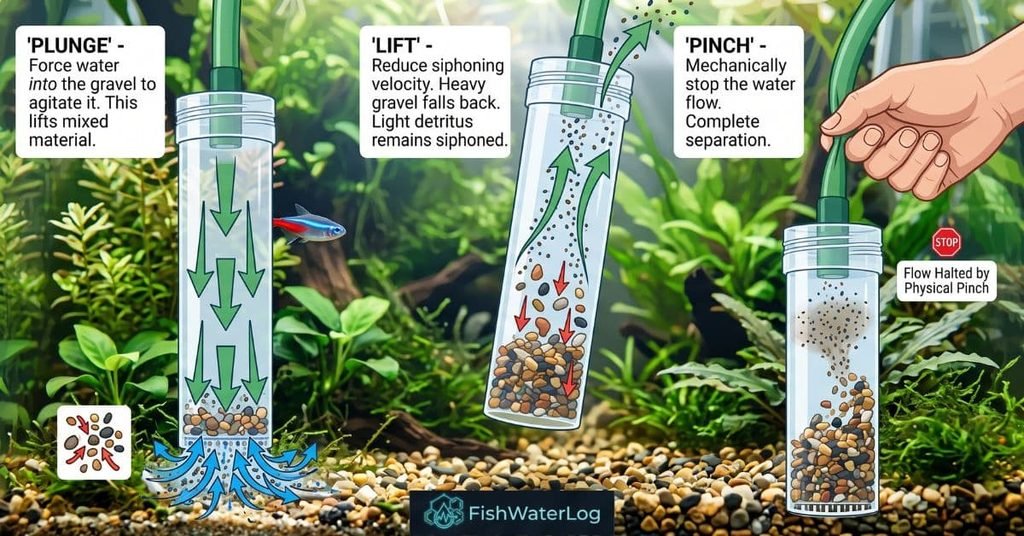
Executing efficient benthic extraction requires strict adherence to biomechanical techniques to maximize waste removal while controlling total water loss. Applying these core steps ensures you can clean aquarium gravel thoroughly while maintaining complete biological equilibrium.
The Plunge and Lift Technique
For traditional gravel substrates, position the rigid cylinder vertically over the target section once the siphon is primed and flowing.
- Drive the cylinder firmly into the gravel bed until the rim reaches the bottom glass panel to access deep, mineralized detritus.
- Allow the gravel to churn in the lower third of the cylinder as turbid waste separates and shoots into the discharge hose.
- For areas coated in stubborn benthic algae or sheet-like cyanobacteria mats, use the circular rim of the rigid cylinder to gently scrape and shear the biofilm into small clumps before plunging, allowing the sudden hydraulic updraft to evacuate the sheets cleanly without letting them disperse into the water column.
- Once water inside the cylinder clarifies, lift the tube vertically to let the clean gravel settle back in place before moving to the adjacent area across your designated 25% cleaning zone.
The Pinch Method for Precision Flow Control
Standard siphons can drain a small aquarium within 60 to 90 seconds, leaving sections uncleaned. Advanced flow modulation solves this volume depletion:
- Hold the flexible discharge hose with your non-dominant hand while guiding the rigid cylinder with your dominant hand.
- When gravel rises too high inside the tube, crimp the flexible hose firmly between your thumb and index finger to halt water velocity, letting heavy gravel drop instantly while light detritus remains suspended.
- Relax the pinch slightly to create a low-velocity draw that carries away suspended waste while conserving water volume.
- Crimp the hose shut when repositioning between substrate patches to avoid draining clean water.
Following this structured gravel siphon guide demonstrates how to clean aquarium gravel without removing fish, giving you complete flow control while keeping resident tank inhabitants calm and undisturbed.
The Rhizosphere: Navigating Live Aquatic Flora and Complex Aquascapes
The inclusion of live aquatic flora permanently alters the physical and biological approach to substrate care. Heavily planted aquariums operate on a distinct biological paradigm where substrate detritus, typically viewed as hazardous waste in unplanted tanks, acts as a vital slow-release organic fertilizer.
Heavy root-feeding species—such as Cryptocoryne, Echinodorus (Amazon Swords), and Vallisneria—develop expansive root networks known as the rhizosphere. These plants rely on the steady mineralization of fish waste within the substrate bed to absorb essential macronutrients (nitrogen, phosphorus, potassium) and micronutrients (iron, manganese).
Aggressively plunging a siphon tube directly into root zones strips away these bioavailable nutrients, causing foliar chlorosis and tissue necrosis. Furthermore, deep physical penetration tears microscopic lateral root hairs responsible for cation-exchange nutrient uptake, stunting plant development.
When executing fish tank vacuuming in planted displays, observe a strict 2-inch (5 cm) exclusion perimeter around plant crowns and stem insertions. Direct your vacuuming exclusively to unplanted foreground sections, cosmetic sand paths, and open feeding zones where excess organic matter accumulates without benefiting plant roots.
For tight margins within complex hardscape layouts (such as stacked dragon stone or tangled driftwood), wide-diameter tubes are impractical:
- Micro-Siphoning: Fasten a segment of rigid airline tubing to a wooden guide dowel to construct a precision micro-siphon that pulls detritus from narrow crevices without destabilizing hardscape structures or startling resting fish.
- Targeted Basting: Use a standard bulb baster to direct gentle water bursts into deep crevices, suspending trapped mulm into the water column so it can be drawn into the mechanical filter or captured by your siphon tube.
Applying these delicate aquascaping techniques ensures you can safely clean aquarium gravel around live plants, following a practical gravel siphon guide that shows how to clean aquarium gravel without removing fish while preserving root health.
Chemical Remediation: Dechlorination and Parameter Matching
The mechanical extraction of waste via siphoning intrinsically involves the physical removal of system water. A standard, highly efficient maintenance session utilizing the pinch method will extract approximately 20% to 25% of the total aquarium volume. The chemical protocols governing the replacement of this water are just as critical to the survival of the ecosystem as the physical cleaning process itself. Introducing chemically unbalanced, toxic, or thermally disparate water into the system will induce severe physiological shock, completely negating the health benefits of the maintenance procedure.
The Chemistry of Chloramine Neutralization
Municipal water treatment facilities universally utilize chemical disinfectants to eradicate human pathogens and guarantee the potability of tap water. Historically, chlorine gas (Cl2) was the primary disinfectant agent. Because chlorine is highly volatile, early aquatic advice suggested that leaving buckets of tap water exposed to the atmosphere for 24 hours would allow the chlorine to naturally off-gas and dissipate.
However, modern municipal infrastructure has largely transitioned to using chloramine (NH2Cl)—a stable chemical compound synthesized by bonding chlorine with ammonia. Chloramine is heavily stabilized, non-volatile, and will not evaporate from standing water, regardless of the duration of atmospheric exposure or heavy aeration. Introducing untreated chloramine directly into an aquarium is universally fatal; it causes acute gill necrosis in teleosts and rapidly lyses the nitrifying biofilm present in biological filters and substrate, destroying the nitrogen cycle.
Therefore, incoming replacement water must be treated instantaneously with a dedicated chemical dechlorinator (water conditioner) prior to entering the system. These water conditioners primarily utilize sodium thiosulfate (Na2S2O3). When introduced, sodium thiosulfate acts as a reducing agent, rapidly breaking the chlorine-ammonia bond. It reduces the highly reactive chlorine into harmless chloride ions (Cl-) and simultaneously binds the liberated ammonia into a non-toxic ammonium complex (NH4+) that can be safely consumed by surviving nitrifying bacteria in the filter. This reaction renders the water immediately safe for aquatic life with zero requisite waiting period.
Thermal Shock and Thermodynamic Matching
Furthermore, the thermodynamic properties of the replacement water must strictly align with the established parameters of the aquarium. Tropical fish possess narrow thermal tolerances. A rapid temperature drop of even 3 to 4 degrees Fahrenheit (approx. 2 degrees Celsius) causes immediate constriction of peripheral blood vessels, severely suppressing the immune system and frequently triggering widespread outbreaks of Ichthyophthirius multifiliis (white spot disease / Ich).
Aquarists must utilize calibrated digital thermometry to ensure replacement water precisely matches the ambient temperature of the aquarium before introduction. Additionally, general hardness, pH, and carbonate hardness (KH) should be monitored. Refilling should be conducted slowly and gently to prevent the physical displacement of the newly cleaned substrate and to allow the fish time to adjust smoothly to the influx of fresh, oxygenated water. Mastering these water preparation steps is a cornerstone of this gravel siphon guide, ensuring you safely clean aquarium gravel without compromising water chemistry or livestock welfare.
Synergistic Maintenance: Balancing Substrate and Biological Filtration
The overarching philosophy of advanced aquarium care is the continuous preservation of biological equilibrium. The substrate bed and the filter do not operate independently; they work synergistically to process the total organic load of your closed system.
The Risk of Simultaneous Deep Cleaning
Conducting a deep gravel vacuuming session concurrently with a comprehensive filter cleaning is a critical maintenance error.
- Nitrifying Bacteria Distribution: Beneficial autotrophic bacteria populate both the benthic substrate and the porous biomedia inside the filter housing.
- Biofilter Collapse: Disrupting or stripping both colonization sites at the same time drastically cuts the tank’s capacity to oxidize ammonia.
- Nitrogen Spikes: This dual disruption triggers post-maintenance ammonia and nitrite spikes, putting fish at severe risk.
Temporal Staggering Strategy
To prevent biological filter crashes, separate substrate vacuuming and filter servicing into different maintenance intervals:
- Substrate Week: When deep-vacuuming 25% to 33% of the gravel bed, leave the filter media completely undisturbed.
- Filter Week: When restricted flow or sludge buildup requires filter maintenance, leave the substrate bed untouched.
Safe Filter Media Handling Protocols
When filter media requires servicing, handling it correctly protects your nitrifying biofilm:
- Use Siphoned Tank Water: Rinse media exclusively in the extracted aquarium water collected in your maintenance bucket.
- Avoid Tap Water: Pressurized tap water exposes beneficial bacteria to toxic chloramine and osmotic shock, causing immediate cellular death.
- Preserve the Biofilm: Gently squeeze coarse mechanical sponges to remove heavy detritus, but fiercely preserve the slick, light-brown biological film coating high-surface-area biological filter media like ceramic nodes and sintered glass rings.
To ensure the biological filter remains stable after deep substrate disruption, aquarists must routinely monitor parameters as outlined in the Comprehensive Aquarium Water Maintenance Guide.
Conclusion
Mastering how to clean aquarium gravel safely is an indispensable, foundational skill for any dedicated aquatic husbandry practitioner. The historical misconception that livestock must be netted during routine maintenance is not only scientifically inaccurate but biologically hazardous, inducing massive endocrine stress responses, osmotic shock, and acute pathogenic vulnerabilities.
By analyzing and implementing fluid dynamics through the proper utilization of a gravel siphon guide, aquarists can isolate and extract toxic organic mulm without disrupting the delicate microbiological architecture of the benthic zone. Adhering to scientifically backed protocols regarding biofilm preservation, rotational 25% cleaning schedules, flow modulation techniques like the pinch method, and chemical dechlorination ensures the long-term biological stability of the enclosed ecosystem.
When executed with a proper understanding of fluid physics and microbial ecology, routine fish tank vacuuming ceases to be a chaotic chore and becomes a refined, targeted operation. Ultimately, learning how to clean aquarium gravel without removing fish provides the safest, most effective way to eliminate decaying waste while sustaining peak water quality and livestock vitality.
Frequently Asked Questions (FAQs)
How frequently should a deep gravel vacuuming session be conducted?
Routine vacuuming frequency is highly dependent on the system’s specific bioload (the volume of fish and metabolic waste output) and feeding schedule. For a standard, moderately stocked community aquarium, systematically vacuuming 25% to 30% of the substrate every one to two weeks, synchronized with a partial water change, is optimal for maintaining low dissolved nitrate levels and preventing dense detritus compaction.
Will operating a wide-mouth siphon pull up young fry or small invertebrates?
Yes. The suction velocity (V1) of a standard wide-mouth cylinder is often strong enough to inadvertently capture small neocaridina shrimp, newly hatched fry, or weak nano fish. To mitigate this risk, operators must maintain vigilance, utilize the pinch method for immediate flow termination if an animal approaches the intake, and carefully inspect the waste bucket with a flashlight prior to water disposal to rescue accidental captures.
Is it strictly necessary to vacuum the substrate hidden completely under large, heavy rocks and driftwood?
While detritus continually accumulates in dead-flow zones beneath heavy hardscape elements, completely dismantling the tank architecture to clean beneath them is unnecessary and disruptive to territorial fish. Specialized micro-tools, such as rigid airline tubing or standard turkey basters, can be used to gently flush out accumulated waste from these tight margins, suspending it into the water column without shifting the structural integrity of the aquascape.
Why does the aquarium emit a strong sulfur or rotten egg odor when the gravel is deeply disturbed?
This specific odor is the definitive indicator of hydrogen sulfide (H2S) gas, an acutely toxic byproduct produced by anaerobic sulfate-reducing bacteria in deeply compacted, oxygen-starved substrate layers. If detected, cease all deep vacuuming immediately, increase water surface agitation to maximize atmospheric oxygenation, and slowly address benthic compaction over multiple, cautious, localized maintenance sessions to prevent a lethal gas release.
Can a standard, gravity-fed gravel vacuum be used on fine sand or specialized baked clay aquasoils?
A traditional deep “Plunge and Lift” method will rapidly crush the structure of baked clay aquasoil granules and completely extract lightweight fine sand directly into the waste bucket. For these materials, strictly utilize the “Hover Technique,” keeping the vacuum aperture approximately an inch above the substrate to pull only lighter organic waste into the fluid stream while leaving heavier particles undisturbed.

4 thoughts on “How to Clean Aquarium Gravel Without Removing Fish: Guide”