
The modern freshwater planted aquarium operates as a highly sophisticated, closed biogeochemical ecosystem reliant on the perpetual exchange of energy, dissolved gases, and bioavailable macronutrients. At the foundation of this aquatic environment lies the substrate bed. Unlike terrestrial agriculture, where soils are tilled, aerated, and amended with organic matter, an aquatic substrate functions under continuous submersion, sustained hydrostatic pressure, and pronounced vertical oxygen stratification.
For years, conventional aquascaping wisdom maintained that once active aquasoil depleted its nutrient reserves, the only remedy was an exhausting, full aquarium teardown. This destructive reset incurs substantial financial expense while simultaneously wiping out mature microbial networks, autotrophic nitrifying colonies, and delicate rhizosphere root associations that take months or years to stabilize.
Advances in aquatic soil chemistry and rhizosphere biology demonstrate that a depleted substrate is rarely biologically inert. Instead, it functions as an uncharged nutrient reservoir whose structural framework and electrochemical binding sites remain fully viable. Learning how to recharge old aquarium soil allows dedicated aquascapers to restore depleted cation exchange capacity (CEC), balance substrate redox potential, and rejuvenate heavy root-feeding plants. By utilizing deep-placed aquarium root tabs, targeted macronutrient replenishment, and fresh soil capping techniques, hobbyists can successfully revitalize exhausted planted tank substrate, prevent foliar chlorosis, and sustain vigorous aquatic plant growth without tearing down a mature aquascape. Proper substrate care is a vital part of long-term aquarium water maintenance to prevent sudden algae blooms and tank crashes.
Table of Contents
The Physicochemical Mechanics of Substrate Exhaustion
To formulate a scientifically sound strategy to recharge old aquarium soil, an aquascaper must first examine the chemical and structural pathways that govern substrate depletion. Commercial active aquarium substrates—commonly termed aquasoils—are manufactured by baking natural volcanic ash, montmorillonite clays, and nutrient-dense humic matter into uniform, porous granules. These active soils serve a dual function in planted tank layouts: they release bioavailable organic nitrogen and actively bind carbonate hardness (KH) to buffer water within an optimal, slightly acidic pH range for delicate tropical aquatic plants and freshwater shrimp.
However, an active planted tank substrate is governed by finite physicochemical limits. Substrate exhaustion does not happen overnight; it represents a progressive degradation defined by the steady depletion of macro- and micronutrients, the electrochemical saturation of exchange sites, and the physical breakdown of the baked clay granules into fine silt. Identifying these breakdown patterns is crucial before deciding how to restore depleted soil fertility.
The Chronological Phases of Active Aquasoil
Throughout its functional lifespan in a planted aquarium, commercial active aquasoil transitions through three distinct biogeochemical stages:
- The Volatile Mineralization Phase (Weeks 1 to 6): Freshly submerged aquasoil undergoes aggressive organic mineralization. Heterotrophic bacteria decompose unbonded organic fractions within the clay matrix, releasing a rapid surge of ammoniacal nitrogen (NH4+) into the water column. While this initial ammonium spike jumpstarts the tank’s biological nitrogen cycle, the dense humic acids simultaneously strip carbonates from the water column, establishing a low carbonate hardness (KH) baseline and stabilizing acidic pH values.
- The Stable Equilibrium Phase (Months 2 to 18): The substrate operates at maximum agricultural efficiency. Initial ammonium spikes subside as the microbial flora matures, and the soil’s cation exchange capacity (CEC) functions as a dynamic nutrient sink. The clay lattice actively trades hydrogen ions for incoming water-column cations, providing a steady supply of potassium, chelated iron, and trace minerals directly to the rhizosphere of heavy root feeders like Cryptocorynes and Amazon Swords.
- The Depletion and Exhaustion Phase (Months 18 to 36+): Over extended run-time, internal reserves of organic nitrogen, bioavailable phosphorus, and chelated trace elements become fully exhausted by vegetative uptake and interstitial porewater diffusion. Simultaneously, the physical clay granules soften, breaking down into compacted mud or anaerobic silt. Interstitial water circulation stalls, foliar chlorosis sets in, and the substrate loses its chemical buffering capacity. This critical threshold signals that you must actively recharge old aquarium soil using targeted root tabs or an active soil cap to restore fertility and avert widespread plant melt.
The Science of Soil & Plant Nutrition in Closed Ecosystems
Achieving sustained aquatic plant vitality requires understanding nutrient bioavailability within the benthic root zone. Heavy root-feeding aquatic macrophytes—such as Cryptocoryne species, Amazon Swords (Echinodorus), and Vallisneria—rely primarily on an electrochemical exchange across their root hairs rather than absorbing minerals through their leaves. While stem plants can extract dissolved ions from the water column, rooted rosette species depend heavily on the mineral concentration of the substrate porewater.
When an active substrate exhausts its pre-loaded nutrient stores, the soil bed turns chemically inert. In this depleted state, deeply rooted plants suffer from nutrient starvation even if liquid fertilizers are dosed heavily into the water column above. Liquid dosing cannot substitute for concentrated root-zone nutrition because foliar absorption pathways in rosette plants are physiologically limited. To maintain robust plant growth and prevent foliar necrosis, aquascapers must systematically recharge old aquarium soil by targeting the substrate’s subterranean electrochemical exchange sites with concentrated macronutrients and chelated trace minerals.
Deciphering Cation Exchange Capacity (CEC)
At the center of substrate longevity and nutrient retention is Cation Exchange Capacity (CEC). In aquatic soil science, CEC measures the electrochemical capacity of a substrate to attract, adsorb, and hold positively charged nutrient ions (cations) from the surrounding interstitial water column.
Natural clays, volcanic soils, and decomposing humic matter feature a molecular lattice dominated by net negative electrical charges. Because opposite charges attract, these microscopic sites function like ionic magnets, binding essential positively charged plant nutrients:
- Potassium (K+)
- Calcium (Ca2+)
- Magnesium (Mg2+)
- Ammonium (NH4+)
- Ferrous Iron (Fe2+)
These bound nutrients are chemically classified as “exchangeable cations.” Rather than being locked permanently, they remain held by electrostatic bonds until an active plant root releases a hydrogen ion (H+) into the porewater to dislodge and absorb the specific nutrient ion. Technical analyses of active substrates and CEC dynamics demonstrate how negative charge sites on baked clay securely store cations until roots actively displace them.
Substrate CEC is quantified in milliequivalents per 100 grams of dry soil (meq/100g). Inert substrates such as pure silica sand and quartz aquarium gravel possess a CEC near zero (<1 meq/100g), offering no biochemical capacity to store nutrients; unabsorbed liquid fertilizers simply wash away or fuel opportunistic algae blooms. In contrast, montmorillonite clay substrates exceed 30 meq/100g, while mature organic humic soils reach up to 250 meq/100g.
A common misconception among planted tank hobbyists is confusing high CEC with actual nutrient availability. CEC represents the total storage volume of the reservoir, not the amount of nutrients stored inside it. When active aquasoil reaches the exhaustion phase, its factory-loaded nutrients are depleted, but its negative clay binding sites remain intact. The soil behaves like a dry sponge. By learning how to recharge old aquarium soil using targeted aquarium root tabs, aquarists repopulate these empty exchange sites with bioavailable nutrients, revitalizing the substrate without resetting the entire aquarium. Understanding the fundamental differences in cation exchange capacity is essential when choosing the right substrate for planted tanks, as inert sand beds lack chemical nutrient storage.
The Impact of Hard Water on CEC Saturation
The operational longevity of a planted substrate’s cation exchange capacity (CEC) is fundamentally governed by the mineral profile of your source water. Active aquarium substrates are engineered to be paired with Reverse Osmosis (RO) water that is precisely remineralized to target parameters. This is not merely an aesthetic choice to mimic soft-water Amazonian biotopes, but a critical electrochemical defense mechanism designed to prevent premature substrate lock.
In municipal regions supplied with hard tap water, the water column carries excessive concentrations of dissolved Calcium (Ca2+) and Magnesium (Mg2+). Because these divalent cations carry a strong +2 charge, they possess a far higher binding affinity for the negatively charged sites on the clay lattice than essential monovalent cations like Potassium (K+) or Ammonium (NH4+). Over time, continuous water changes with unconditioned hard water flood the substrate bed, displacing potassium and micronutrients until the exchange sites are completely saturated with calcium and magnesium. Once these sites are locked, the substrate loses its ability to store plant-available fertilizers. Understanding this dynamic is crucial when planning to recharge old aquarium soil, as using soft, remineralized RO water prevents rapid site saturation and ensures newly introduced substrate nutrients remain fully bioavailable to aquatic plant roots.
Advanced Biogeochemical Dynamics in the Rhizosphere
Standard aquascaping guides often treat substrate exhaustion superficially, recommending casual liquid fertilizer dosing or placing a random tablet beneath a fading plant. In reality, the benthic substrate of a planted aquarium functions as an active subterranean biogeochemical reactor. Aquatic macrophytes actively manipulate their microenvironment through root exudation, navigate steep vertical redox gradients, and interact with endogenous organic compounds to extract essential nutrients.
When you take steps to recharge old aquarium soil, you are restoring the biological and chemical equilibrium of the rhizosphere. A clear grasp of the interplay between low-molecular-weight organic acids, interstitial porewater redox states, and fulvic chelation makes it possible to revitalize exhausted substrate with scientific precision, fostering robust root development and resolving persistent planted tank nutrient deficiencies.
Root Exudates and LMWOA Driven Nutrient Mining
Aquatic macrophytes are dynamic ecosystem engineers rather than passive straws absorbing ambient porewater minerals. Through an energy-intensive physiological process known as root exudation, plants secrete a specialized cocktail of low-molecular-weight organic acids (LMWOAs), sugars, amino acids, and phenolics directly into the rhizosphere.
When aquatic plants sense localized micronutrient depletion or bound phosphorus in an aging substrate, their root tips open specific anion efflux channels to release carboxylates—principally citric, malic, tartaric, and oxalic acids. These exudates drive three essential biological processes:
- Rhizosphere Acidification for Phosphorus Solubilization: Exuding hydrogen protons (H+) alongside organic acid anions sharply lowers the micro-pH immediately surrounding the root hairs. This localized acidity dissolves insoluble calcium-phosphate complexes, freeing trapped phosphorus for immediate cellular uptake.
- Natural Metal Chelation: Citric, oxalic, and tartaric acids act as natural chelators, forming stable ring complexes with multivalent cations. This mechanism solubilizes oxidized ferric iron (Fe3+) and bound trace elements, preventing precipitation into insoluble rust and ensuring steady iron bioavailability.
- Beneficial Microbial Recruitment: Secreted malate and sugars serve as chemical beacons that recruit plant-growth-promoting rhizobacteria (such as Bacillus and Pseudomonas species). These microbes form symbiotic biofilms along root surfaces, synthesizing phosphatase enzymes that convert complex organic detritus into inorganic orthophosphate.
Consequently, when you recharge old aquarium soil using targeted root tabs, the root systems do not wait passively for mineral dissolution. They aggressively secrete carboxylates to break down tab binders, channeling concentrated nutrients directly into vascular tissue. Published research on root carboxylate exudates confirms that plants actively mobilize insoluble minerals by secreting organic acids into the surrounding rhizosphere.
Redox Potential (Eh) and Interstitial Porewater Stratification
The bioavailability of substrate nutrients in closed aquatic systems is fundamentally governed by reduction-oxidation potential, measured in millivolts as Eh. While the upper, circulating water column remains highly oxygenated with a positive aerobic potential ranging from +300 mV to +400 mV, physical substrate depth and microbial respiration rapidly consume interstitial oxygen. At a depth of just 1 to 2 inches, porewater transitions into hypoxic and fully anoxic conditions, where the measured redox potential frequently drops between 0 mV and -150 mV.
This steep vertical redox gradient is vital for iron metabolism. In the oxygen-rich water column, iron oxidizes into the ferric state (Fe3+), precipitating as insoluble oxides and phosphates that plants cannot readily absorb, which often triggers foliar chlorosis. Conversely, within deep, low-redox substrate zones where Eh falls below +100 mV, specialized anaerobic bacteria use ferric iron as a terminal electron acceptor, converting it into the highly bioavailable, soluble ferrous form (Fe2+).
Placing slow-release nutrient tabs deep into exhausted soil positions iron and phosphorus squarely within this reduced, low-redox zone. Here, iron remains in its soluble ferrous state (Fe2+) for direct root absorption, isolated from the high-oxygen water column where it would otherwise precipitate or fuel nuisance benthic algae outbreaks. Nutrient solubility and iron bioavailability are governed by measuring aquarium redox potential, where anaerobic substrate zones facilitate reduced ferrous iron uptake.
Humic and Fulvic Acids as Endogenous Chelators
As a planted aquarium matures, organic matter—including shedding root sheaths, decomposed plant tissue, and bacterial biofilms—accumulates within the substrate pore matrix to form mulm. While excessive surface mulm can restrict water exchange, fully decomposed organic material significantly improves substrate chemistry by introducing stable humic and fulvic acids.
Humic acids are stable, high-molecular-weight polymers that possess high Cation Exchange Capacities, often exceeding 450 meq/100g, which easily surpasses the original baseline CEC of baked manufacturing clay. Simultaneously, fulvic acids act as mobile, endogenous chelators within the porewater, binding heavy metals to keep them soluble and non-toxic. Thus, an aging substrate matrix actually increases its theoretical nutrient holding capacity over time.
When you choose to recharge old aquarium soil with concentrated root tabs, you pair targeted mineral supplementation with the expansive humic storage network of the seasoned soil bed, creating a highly fertile, buffered root environment that prevents nutrient leaching. Much like introducing natural botanical tannins in freshwater aquarium setups, mature substrate mulm continuously releases fulvic fractions that naturally chelate heavy trace metals.
Diagnostic Signs Your Aquarium Soil Needs Recharging
Recognizing the shift from a stable substrate to active nutrient depletion requires regular observation of plant morphology and substrate structure:
- Stunted Growth in Heavy Root Feeders: Established rosette species—such as Cryptocoryne, Echinodorus (Amazon Swords), and Lotus—suddenly stop producing new foliage despite high PAR lighting and steady CO2 saturation.
- Interveinal Chlorosis on Emerging Leaves: New leaves develop pale yellow or translucent tissue while the primary veins remain dark green, pointing to localized iron, magnesium, or nitrogen deficiencies in the root zone.
- Basal Foliar Necrosis and Melting: Older, lower leaves develop pinholes, turn dark brown, and decay rapidly as the plant scavenges mobile macronutrients (nitrogen, phosphorus, and potassium) to sustain the crown.
- Substrate Compaction and Anoxic Gas Accumulation: Granular aquasoil degrades into dense silt or mud, trapping toxic anaerobic gases like hydrogen sulfide that release foul odors when probed with aquascaping pinsettes.
- Persistent Benthic Algae Outbreaks: Stalled macrophyte metabolism diminishes allelopathic defenses, allowing Black Beard Algae (BBA), Cyanobacteria, or Green Spot Algae to aggressively carpet lower stems and the substrate surface.
Trapped gas pockets must be vented with care; similar biological dynamics occur in freshwater deep sand bed denitrification systems where anoxic zones break down nitrogenous compounds.
Strategic Remediation: Recharging Methodologies
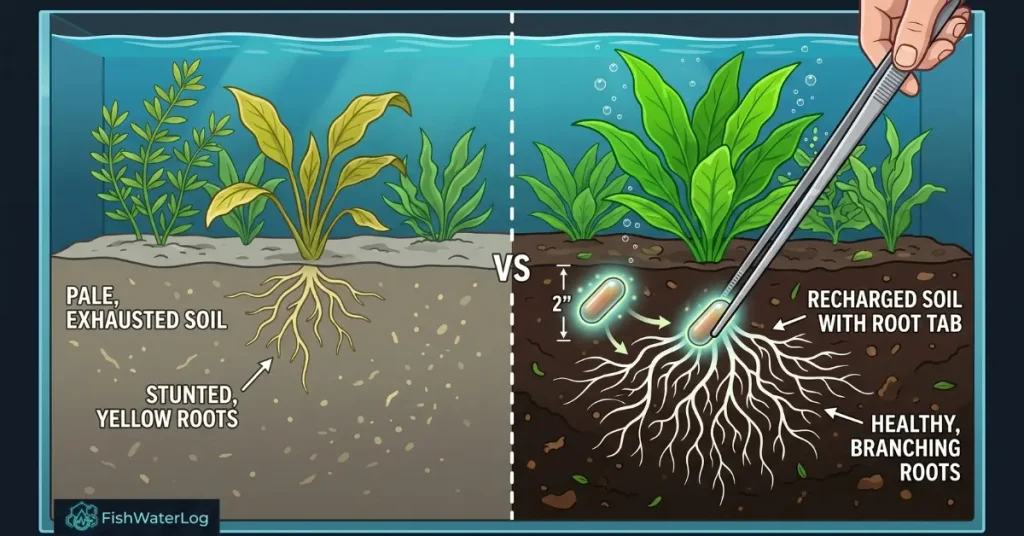
Cross-section comparison: Depleted substrate results in stunted roots and chlorosis (left), while inserting root tabs 2 inches deep safely recharges old aquarium soil to fuel dense root networks (right).Once you confirm that your planted tank substrate is depleted, choosing the right intervention strategy is essential to restore plant vitality without triggering algae blooms or destabilizing water chemistry. There is no single universal approach; the optimal remediation method depends on plant density, rooting depth, livestock sensitivity, and the degree of physical granule breakdown.
Rather than tearing down a mature ecosystem, aquascapers can deploy targeted methods to recharge old aquarium soil. The three primary techniques include deep-insertion root tabs, controlled terrestrial slow-release capsules, and surface aquasoil capping.
The Root Tab Delivery System
Aquarium root tabs represent the most precise and ecologically safe method to recharge old aquarium soil. These solid fertilizer capsules or compressed pellets are engineered specifically for subterranean delivery, releasing concentrated macronutrients (NPK) and chelated micronutrients directly into the depleted root zone.
Unlike water-column liquid fertilizers, high-quality root tabs utilize semi-permeable coatings or slow-dissolving clay binders. Once placed beneath the substrate, interstitial porewater slowly hydrates the core, allowing dissolved mineral ions to diffuse into the surrounding clay lattice. Because aged aquasoil retains negative binding sites and accumulated humic acids, it captures these cations and holds them securely until plant roots extract them via organic acid exudates.
This localized delivery creates concentrated fertility zones beneath heavy root-feeding plants like Amazon Swords and Cryptocorynes without enriching the water column, preventing opportunistic algae outbreaks.
Terrestrial Fertilizers (Osmocote) in Aquatic Environments
A popular, budget-conscious method used to restore depleted substrate fertility is repurposing terrestrial controlled-release fertilizers, particularly Osmocote Plus, packed into gelatin capsules. While effective for driving robust vegetative growth, this DIY approach requires strict adherence to aquatic safety protocols.
The primary concern with terrestrial formulas submerged in an aquarium is their nitrogen composition. Over 50% of the total nitrogen in Osmocote is formulated as ammoniacal nitrogen (NH4+). If a capsule is planted too shallowly or dislodged by bottom-dwelling fish such as Corydoras or Loaches, it can rupture and discharge concentrated ammonia plumes directly into the water column. This sudden influx can overwhelm biological filtration, endanger sensitive livestock, and ignite severe green water or filament algae blooms.
To safely utilize Osmocote capsules when you recharge old aquarium soil, insert them at a minimum depth of 2 to 3 inches, and restrict their use to dense carpeted zones or heavy root clusters where mechanical disturbance is minimized. Shallow or uprooted terrestrial capsules risk dumping concentrated ammoniacal nitrogen into the water column, potentially triggering an acute nitrogen cycle crash that endangers sensitive fish.
The Fresh Aquasoil Capping Strategy
While targeted root tabs excel at feeding discrete rosette specimens, managing extensive, intricate carpets—such as Micranthemum tweediei (‘Monte Carlo’) or Dwarf Hairgrass—often demands a broader approach. Inserting individual tabs throughout a dense carpet can tear delicate runners and disrupt the aquascape.
The aquasoil capping technique revitalizes the entire substrate bed uniformly. By layering 0.5 to 1 inch of fresh, active granular aquasoil over the aged base, you provide an immediate influx of organic nitrogen, humic compounds, and unoccupied cation exchange sites without uprooting existing flora. Over time, porewater circulation and vegetative root expansion draw these newly introduced minerals into the deeper, depleted substrate strata.
Additionally, the dense physical structure of fresh clay granules rebuilds eroded slopes, covers degraded mud or silt, and offers a stable anchoring layer for creeping stolons and carpet runners.
Deconstructing the Copper Toxicity Myth in Substrate Fertilization
Whenever planted tank enthusiasts discuss how to recharge old aquarium soil using nutrient-dense substrate fertilizers, a persistent fear emerges regarding copper toxicity—particularly among keepers of delicate freshwater dwarf shrimp like Caridina cantonensis (Crystal Red Shrimp) and Neocaridina davidi. A widespread hobby myth claims that inserting commercial root tabs or adding micro-fertilizers will immediately wipe out sensitive shrimp colonies due to the trace copper listed on product labels.
This apprehension stems from misunderstanding crustacean biochemistry alongside commercial fertilizer formulation. Copper is not solely a toxic contaminant; it is an essential biological micronutrient required for invertebrate survival. While vertebrates rely on iron-based hemoglobin to bind and transport oxygen through the bloodstream, crustaceans depend on a copper-based metalloprotein called hemocyanin. Without trace bioavailable copper, shrimp cannot synthesize hemocyanin, resulting in cellular hypoxia.
Toxicity is determined by absolute concentration and chemical speciation. Antiparasitic medications designed to eradicate velvet or ich utilize free, unchelated copper ions (copper sulfate) maintained at elevated therapeutic levels (typically 150 to 200 µg/L), which severely damages crustacean gill filaments. In contrast, premium aquarium root tabs deliver minute, sub-trace quantities of copper (often contributing less than 0.5 µg/L to the water column) that are heavily chelated with synthetic agents like EDTA or DTPA. This molecular chelation forms a large, chemically stable ring complex that prevents the metal from binding to crustacean gills while allowing low-molecular-weight organic acids secreted by plant roots to access the nutrient.
Furthermore, seasoned aquatic soil naturally contains high concentrations of humic and fulvic acids that act as powerful endogenous chelators, rapidly neutralizing any free heavy-metal ions present in the interstitial porewater. Consequently, using subterranean fertilizer tabs to recharge old aquarium soil poses virtually no risk of copper poisoning to ornamental shrimp, provided the tabs remain buried deep in the substrate bed. When post-fertilization shrimp mortalities occur, the true cause is almost never trace metal toxicity, but rather an acute ammonia spike or oxygen crash caused by carelessly stirring up deep, anaerobic pockets during placement. When maintaining sensitive invertebrates within stable Cherry shrimp water parameters, aquarists often worry that root tabs containing trace copper will harm their colony.
Comparative Analysis of Substrate Remediation Strategies
To help you choose the best remediation method before you recharge old aquarium soil, the reference table below outlines the primary mechanisms, expected longevity, and ideal application scenarios for each substrate fertilization technique:
| Remediation Strategy | Delivery Mechanism | Expected Longevity | Biogeochemical Mechanism | Ideal Application |
|---|---|---|---|---|
1
Commercial Root Tabs
Targeted Root Zone | Deep substrate insertion into root zone (1.5 – 2 inches depth) | 2 to 4 Months | Recharges localized cation exchange sites within the low-redox zone; minimal water column leaching risk. | Heavy root feeders (Amazon Swords, Cryptocoryne, Lotus) in depleted active soil beds. |
2
DIY Osmocote Gel Capsules
Deep Burial Only | Extra-deep substrate burial (≥ 2.5 inches depth) | 4 to 6 Months | Delivers slow-release ammoniacal nitrogen; requires deep burial to prevent acute water column ammonia spikes. | Cost-effective rejuvenation in deep substrate beds undisturbed by digging benthic fish. |
3
Fresh Aquasoil Capping
Surface Layering | Surface layering (0.5 to 1 inch depth) | 6 to 12+ Months | Restores water-buffering capacity (KH/pH depression), provides fresh CEC binding sites, and stabilizes compacted mud. | Sprawling foreground carpets (Monte Carlo, Hairgrass), eroding slopes, and systemic soil resets. |
4
Water Column Liquid Dosing
Foliar Delivery | Direct water column addition (Daily / Weekly dosing) | Transitory (Hours to Days) | Provides instant foliar absorption; completely bypasses the substrate matrix without replenishing depleted benthic CEC. | Epiphytic layouts (Anubias, Bucephalandra, Java Fern) and fast-growing stem plants. |
Step-by-Step Guide: How to Recharge Old Aquarium Soil Safely
Executing a substrate rejuvenation protocol requires deliberate mechanical precision to avoid triggering dangerous water-column ammonia spikes or destructive algae blooms. Tearing down a planted tank disrupts its biological maturity, whereas targeted remediation reloads depleted cation exchange sites while preserving your beneficial microbiome. Follow these structured steps to safely recharge old aquarium soil and revive plant growth:
- Assess Substrate Depth and Compaction: Before inserting fertilizers, gently probe the soil bed using a thin wooden skewer or aquascaping pinsettes. If the substrate is tightly packed and releases foul-smelling gas pockets (indicating toxic hydrogen sulfide), gently pierce the soil vertically in multiple locations across several days. This vents trapped anaerobic gases safely prior to adding fresh nutrients.
- Determine Strategic Placement and Spacing: Identify heavy root feeders (such as Echinodorus, Cryptocoryne, and Lotus). Root tabs release nutrients in a localized spherical radius. Position one tab every 3 to 5 inches in a grid pattern directly around dense root clusters. Avoid placing tabs in bare, unplanted substrate areas where unabsorbed minerals might leach upward and fuel benthic algae.
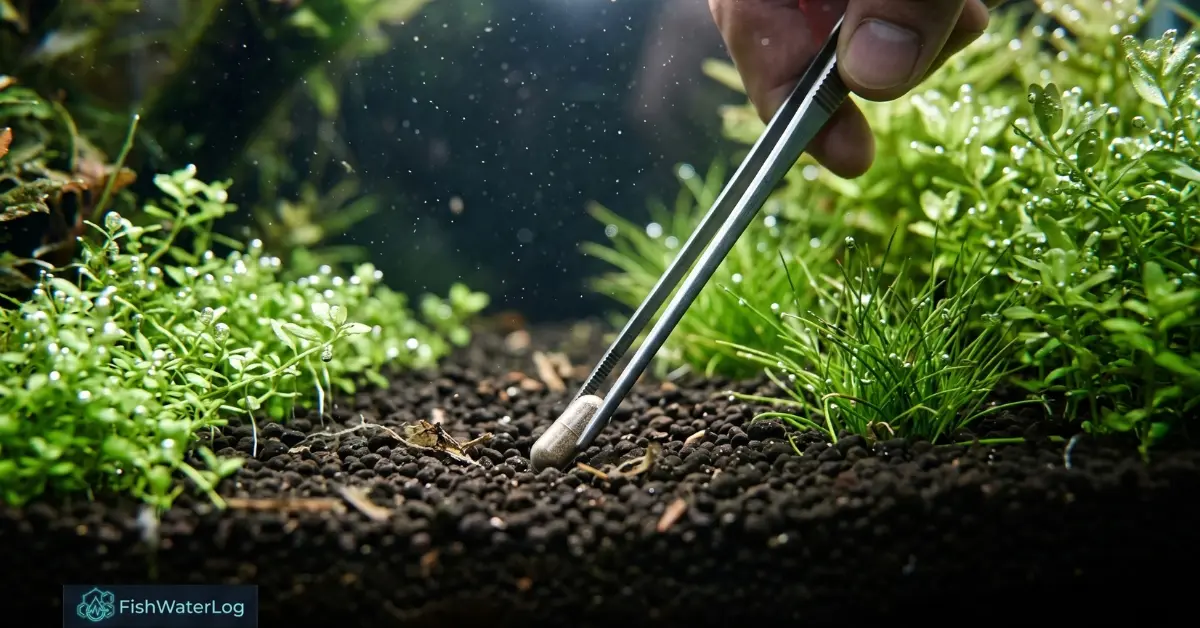
- Execute Deep Insertion: Grip the fertilizer tablet firmly with long, angled stainless steel tweezers. Plunge the tool vertically into the substrate matrix, targeting a depth of at least 1.5 to 2 inches to ensure placement within the low-redox anoxic zone. Release the tab and withdraw the tweezers at a slight angle; this allows surrounding granules to cave in immediately, sealing the entry canal to prevent water-column leaching.
- Apply a Fresh Aquasoil Cap (Optional): If the upper layer has deteriorated into fine silt or mud, gently siphon away the loose top layer during a maintenance session. Pour a 0.5-inch to 1-inch layer of fresh, active granular aquasoil over the surface to rebuild slope contours, anchor foreground runners, and restore pH-buffering capacity.
- Perform Post-Recharge Water Maintenance: Substrate manipulation inevitably releases trapped detritus and dissolved organic compounds (DOCs) into the water column. Immediately execute a 30% to 50% water change following insertion. Maintain active filtration and monitor water parameters over the next 48 to 72 hours to ensure livestock health and stable water clarity.
Conclusion
The realization that substrate exhaustion is a thoroughly reversible chemical condition represents a massive paradigm shift in long-term aquarium maintenance and aquascaping philosophy. You do not need to replace your substrate, incur massive costs, or endure the chaotic, biological instability of tearing down a mature ecosystem. By fundamentally understanding the complex science of Cation Exchange Capacity (CEC), the biogeochemical impact of LMWOA root exudates, the massive chelating power of humic acids, and the delicate electrochemical balance of redox potentials within the soil matrix, you can manipulate the environment to work for you.
Utilizing highly targeted root tabs or aggressive fresh soil caps effectively recharges the “empty sponge” of old aquarium soil, converting an inert, aging bed of clay back into a powerhouse of nutrient delivery. Consistent monitoring, avoidance of physical substrate disturbance, and strategic, localized fertilization will ensure that your planted aquarium remains a lush, thriving landscape for years to come. Maintaining a healthy substrate is the foundation of a stable freshwater aquarium ecosystem guide.
Frequently Asked Questions
Can I recharge my aquarium soil without removing my fish and shrimp?
Yes. Inserting root tabs deep into the substrate using aquascaping tweezers is safe for sensitive livestock, provided you place the tablets deep within the benthic zone (1.5 to 2 inches) and avoid excessively stirring up anaerobic detritus pockets that could cause an ammonia spike.
How often should I recharge old aquarium soil with root tabs?
For high-tech planted aquariums with dense vegetation, commercial aquarium root tabs typically need replenishment every 2 to 4 months. Slower-growing low-tech setups or systems utilizing slow-release DIY terrestrial capsules (like Osmocote) can sustain plant growth for 4 to 6 months between applications.
Will adding root tabs to old soil cause an algae bloom?
When buried properly in the low-redox substrate zone, root tabs present minimal algae risk because the nutrients remain electrostatically bound to clay particles and humic matter. Algae outbreaks only occur if capsules are inserted too shallowly or dislodged by bottom-dwelling fish, allowing dissolved nutrients to escape directly into the open water column.
Do root tabs restore the buffering capacity (KH and pH) of old aquasoil?
No. Root tabs solely restore the mineral nutrient load (the exchangeable cations on the CEC lattice). They do not supply the humic acid fractions needed to absorb carbonates and actively depress carbonate hardness (KH) or water pH. To restore active pH buffering, you must apply a fresh aquasoil surface cap.

2 thoughts on “How to Recharge Old Aquarium Soil: Boost Plant Growth Fast!”