
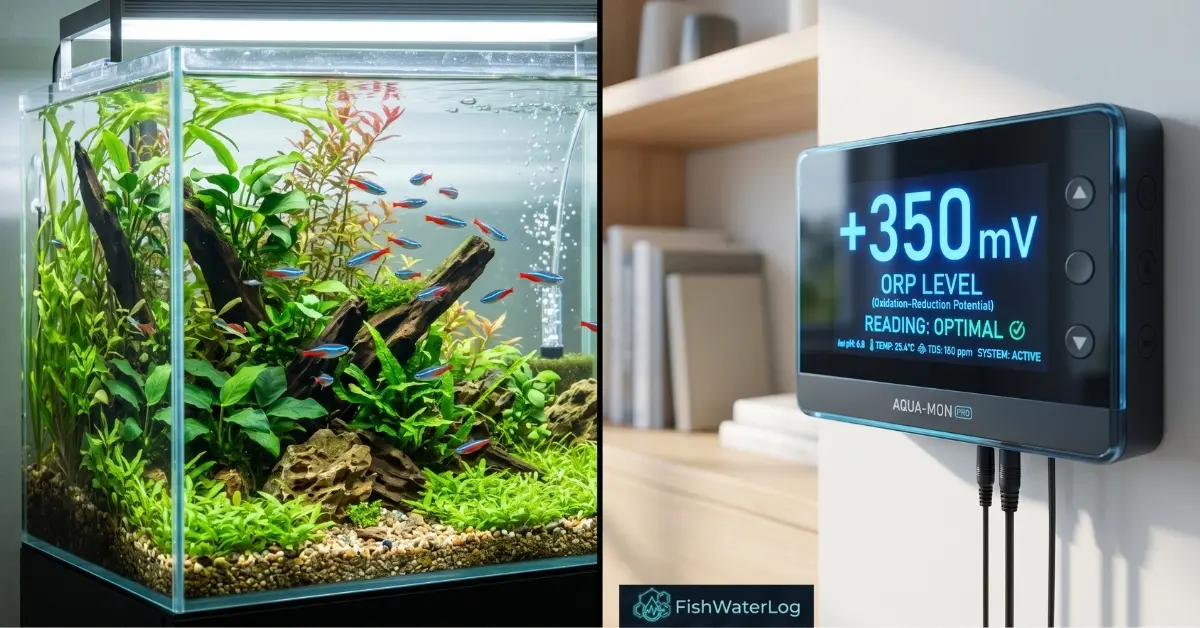
The analysis of aquatic environments has evolved significantly from sporadic chemical reagent testing to continuous, high-resolution electrochemical monitoring. Central to this technological paradigm shift is the aquarium redox potential, a fundamental metric that quantifies the thermodynamic tendency of a water column to either acquire or donate electrons. Measured in millivolts (mV), the oxidation reduction potential (ORP) provides a macroscopic, systemic overview of competing biochemical processes within a closed ecosystem. Understanding this electrochemical baseline is essential for limnologists and advanced aquarists seeking to diagnose microbial stability, biological oxygen demand, and chemical equilibrium.
In aqueous solutions, chemical species interact through paired electron transfers where reducing agents donate electrons and oxidizing agents accept them. Mastering the technical discipline of measuring redox pair potential in freshwater aquarium systems reveals whether an environment is oxidative or reductive. A strongly positive reading indicates an oxidizing environment driven by dissolved oxygen or controlled potassium permanganate redox reactions, whereas negative readings denote hypoxia, heavy detrital buildup, and toxic compounds like hydrogen sulfide.
Maintaining precision requires strict freshwater aquarium orp probe calibration to eliminate sensor drift, reference junction fouling, and temperature interference. Integrating real-time water clarity telemetry transforms ORP monitoring into a predictive organic load sensing system, mapping diurnal metabolic fluctuations across the benthos. Correctly interpreting orp values in planted tank layouts enables hobbyists to track daytime photosynthetic saturation against nocturnal respiration drops, providing continuous environmental surveillance that prevents biological filter collapse and safeguards livestock health.
The Thermodynamics of Oxidation Reduction Potential in Freshwater Aquariums
To comprehend the significance of the aquarium redox potential, one must examine the thermodynamic principles governing aquatic chemistry. Every chemical reaction in a freshwater system involves the transfer of energy. Organisms harvest this energy by transferring electrons from organic substrates (which possess a high free energy state) to terminal electron acceptors (which possess a lower free energy state). The difference in the electrical potential between the donor and the acceptor dictates the amount of metabolic energy available to the organism.
Thermodynamic Drivers and Oxygen Availability
Dissolved oxygen is the most thermodynamically favorable terminal electron acceptor available in aquatic environments due to its high electronegativity. When oxygen is abundant, aerobic respiration proceeds efficiently, breaking down complex organic molecules into simple, benign byproducts such as carbon dioxide and water.
- The abundance of oxygen and its readiness to accept electrons create a strong “pull” on the electrochemical environment.
- This electrochemical pull is measured by a platinum ORP sensor as a high positive millivolt value.
- For instance, raising the dissolved oxygen concentration from a hypoxic 2 mg/L to a saturated 8 mg/L can elevate a system’s aquarium ORP level from approximately +300 mV to +500 mV.
Biological Oxygen Demand and System Decline
However, closed aquatic systems are subjected to constant organic loading. Fish respiration, decaying botanical matter, and the degradation of uneaten high-protein foods exert a continuous Biological Oxygen Demand (BOD) on the water column.
As heterotrophic bacteria metabolize this organic waste, they consume dissolved oxygen at a rapid rate. If the rate of oxygen consumption exceeds the rate of oxygen diffusion through surface agitation or plant photosynthesis, the oxidation reduction potential begins to decline. This decline is not merely a numerical artifact; it represents a fundamental shift in the thermodynamic availability of energy within the ecosystem, triggering a predictable sequence of microbial ecological succession.
Key Takeaways for Advanced Aquarists
- Energy Transfer: Metabolic energy is dictated by the electrical potential difference between electron donors and terminal acceptors.
- Oxidation States: High positive millivolt values reflect optimal aerobic conditions driven by abundant dissolved oxygen.
- Ecosystem Stability: Continuous organic loading and high BOD can overwhelm a system, pulling down the freshwater ORP and risking overall stability.
Microbial Ecological Succession and ORP Thresholds
The aquarium redox potential acts as a master variable dictating the proliferation of specific phylogenetic groups of bacteria. Different microorganisms possess specialized metabolic pathways and enzymatic structures optimized for specific ORP ranges. By monitoring these ranges, one can infer exactly which biochemical processes are dominating the system.
Aerobic Bacterial Zones and High ORP Ranges
Aerobic autotrophic and heterotrophic bacteria thrive in highly oxidative states. The nitrifying bacteria responsible for biological filtration, particularly species within the Nitrosomonas and Nitrobacter genera, are obligate aerobes. They facilitate the sequential oxidation of highly toxic ammonia (NH3) into nitrites (NO2-) and subsequently into relatively benign nitrates (NO3-). This crucial nitrification process operates optimally at an elevated ORP range between +300 mV and +500 mV. In such conditions, electron flow moves efficiently toward oxygen, ensuring rapid waste processing and maintaining exceptional water quality.
This crucial nitrification process operates optimally at an elevated ORP range between +300 mV and +500 mV. In such conditions, electron flow moves efficiently toward oxygen, ensuring rapid waste processing and maintaining exceptional water quality supported by active aquarium nitrogen cycle and biofiltration kinetics.
Facultative Anaerobes and Moderate Reduction States
When the biological oxygen demand outstrips the oxygenating capacity of the system, the ORP falls, forcing the ecosystem into a moderately reducing state. Facultative anaerobes begin to dominate. Denitrifying bacteria, such as species in the Pseudomonas and Bacillus genera, are highly active in low-oxygen environments characterized by an ORP between +50 mV and +250 mV. Instead of oxygen, these bacteria utilize nitrate as their terminal electron acceptor, reducing it to nitrogen gas (N2), which then off-gasses from the system. While denitrification is beneficial for nitrate export, the depressed ORP required for this process indicates an environment where aerobic nitrification is severely compromised.
Strictly Anaerobic Conditions and Toxic Byproducts
If the oxidation reduction potential continues to plummet into negative territory (below 0 mV), the environment becomes strictly anaerobic. Under these highly reducing conditions, sulfate-reducing bacteria (e.g., Desulfovibrio) and methanogenic archaea (e.g., Methanosarcina) begin to proliferate. Operating optimally between -100 mV and -200 mV, these microorganisms utilize sulfates and carbon dioxide as terminal electron acceptors. The metabolic byproducts of these pathways are highly toxic hydrogen sulfide (H2S) and methane (CH4), both of which are lethal to complex aquatic life even in trace concentrations.
If the substrate becomes too deep and lacks interstitial circulation, the ORP can drop into the methanogenic or sulfate-reducing ranges, generating toxic hydrogen sulfide gas. Establishing proper grain sizing and depth as detailed in our freshwater aquarium ecosystem guide prevents deep compaction and severe anaerobic fouling.
| Microbial Metabolic Pathway | Example Genera | Optimal Redox Potential (mV) | Oxygen State | Terminal Electron Acceptor |
|---|---|---|---|---|
| Aerobic Nitrification | Nitrosomonas, Nitrobacter | +300 to +500 mV | Aerobic (Oxidizing) | Oxygen (O2) |
| Denitrification | Pseudomonas, Paracoccus | +50 to +250 mV | Hypoxic (Mildly Reducing) | Nitrate (NO3–) |
| Iron Reduction | Geobacter, Shewanella | -50 to +100 mV | Anaerobic (Reducing) | Ferric Iron (Fe3+) |
| Sulfate Reduction | Desulfovibrio, Desulfotomaculum | -100 to -200 mV | Anaerobic (Highly Reducing) | Sulfate (SO42-) |
| Methanogenesis | Methanosarcina, Methanococcus | < -200 mV | Anaerobic (Strictly Reducing) | Carbon Dioxide (CO2) |
Water Clarity Telemetry and Automated Aquarium Ecosystem Surveillance
The historical approach to monitoring freshwater aquariums relied heavily on episodic chemical testing, which provided only a static snapshot of water chemistry. Modern aquatic husbandry leverages continuous, sensor-based analytics to track real-time changes in the aquatic environment. Water clarity telemetry represents the forefront of this automated ecosystem surveillance, utilizing submerged sensors to transmit continuous data regarding the oxidative state, particulate density, and overall biological load of the water column.
How Aquarium Redox Potential Governs Water Clarity
In freshwater setups, optical water clarity is directly linked to the aquarium redox potential and the system’s baseline oxidation reduction potential (ORP). When the oxidative capacity of the water drops, organic pollutants quickly build up and disrupt ecosystem stability.
- Accumulation of Organics: In systems with low ORP, dissolved organic compounds (DOC) and particulate organic carbon (POC) fail to oxidize into simpler, colorless molecules.
- Gelbstoff Formation: This organic buildup produces “gelbstoff” (yellow water), where humic and fulvic acids increase turbidity and tint the water column.
- Light Attenuation: Elevated turbidity significantly impedes light penetration through the water.
- Photosynthetic Disruption: Reduced light limits the photosynthetic efficiency of benthic aquatic plants, creating a negative feedback loop that further depresses dissolved oxygen levels and drops the overall ORP.
Multiplexed Sensor Arrays and Automated Telemetry
Advanced water telemetry architectures deploy multi-probe arrays to track oxidative health alongside optical clarity parameters without reagent interference.
- Nephelometric Turbidity Sensors: Measure the scattering of light caused by suspended particulates in real time.
- UV-254 Absorbance Probes: Quantify ultraviolet light absorption at the 254 nm wavelength to deliver an immediate, reagent-free measurement of dissolved organic material.
- Integrated ORP Telemetry: Continuous monitoring allows aquarists to cross-reference UV-254 absorbance data with millivolt fluctuations to track the inverse relationship between organic loading and oxidative capacity.
Maintaining a stable, elevated freshwater ORP reading—achieved through aggressive mechanical aeration, efficient biological filtration, or controlled ozone injection—ensures the continuous breakdown of complex waste molecules, resulting in optically pristine, biologically stable water.
Organic Load Sensing and Biological Oxygen Demand in Freshwater Systems
Beyond optical clarity, continuous aquarium ORP monitoring functions as a highly sensitive organic load sensing mechanism. Organic load sensing operates on the electrochemical principle that any sudden introduction of complex organic molecules instantly depresses the oxidation reduction potential of the aqueous medium.
Electrochemical Response to High Biological Load
When a substantial biological load—such as a heavy feeding of protein-dense aquaculture feed—enters a closed system, it triggers immediate biochemical changes:
- Heterotrophic Bloom: The rapid dissolution of amino acids, lipids, and carbohydrates accelerates heterotrophic bacterial replication.
- Oxygen Depletion: Increased microbial respiration leads to an immediate drop in dissolved oxygen, creating a quantifiable downward spike in freshwater ORP telemetry data.
- Assimilation Capacity Assessment: By evaluating the depth of the millivolt drop and the time required to return to baseline, aquarists can directly quantify the biological resilience of the ecosystem.
Tracking System Resilience and Biological Oxygen Demand (BOD)
Analyzing millivolt recovery curves provides critical real-time insight into the system’s bio-filtration capacity and waste-processing limits.
- Rapid ORP Recovery: Systems with robust biological filtration and strong aeration recover quickly, confirming that the organic waste was efficiently oxidized.
- Prolonged Depressed ORP: If readings remain low, it serves as an early indicator that the Biological Oxygen Demand (BOD) has overwhelmed the biofilter’s oxidative capacity.
- Predictive Early Warning: A persistent downward ORP trend alerts aquarists to deteriorating water quality days before standard test kits detect ammonia or nitrite accumulation, enabling proactive interventions like water changes and increased surface agitation.
Measuring Redox Pair Potential in Freshwater Aquarium Environments
While a bulk ORP measurement provides an overarching view of a system’s oxidative health, it possesses inherent analytical limitations. A standard platinum or gold ORP electrode measures a “mixed potential”—an aggregate electrical voltage resulting from the simultaneous interaction of all active redox reactions occurring across the sensor’s surface. As a result, measuring redox pair potential in freshwater aquarium environments remains a complex challenge for limnologists, as bulk measurements cannot isolate or identify the specific chemical species driving the electrical potential.
Electrochemical Foundations: The Nernst Equation
The thermodynamic foundation for calculating individual redox pair potentials in freshwater aquarium systems is described by the Nernst equation:
E = E0 – (RT / nF) * ln([Red] / [Ox])
- E represents the measured half-cell reduction potential.
- E0 is the standard reduction potential of the specific chemical species.
- R is the universal gas constant (8.314 J/(mol*K)).
- T is the absolute temperature in Kelvin.
- n represents the number of moles of electrons transferred during the reaction.
- F is the Faraday constant (96,485 C/mol).
- The ratio of [Red] to [Ox] represents the reaction quotient between the reduced and oxidized chemical species.
In a theoretical, perfectly equilibrated thermodynamic system, all individual redox pairs—such as the iron pair (Fe3+/Fe2+), the nitrogen pair (NO3-/NH4+), and the oxygen pair (O2/H2O)—would reach parity, reflecting the exact same electrical potential.
Biological Disequilibrium and Micro-Environment Dynamics
Freshwater aquariums are open, dynamic biological systems that operate far from chemical equilibrium. Biological enzymes act as catalysts, selectively accelerating specific biochemical pathways much faster than abiotic kinetic rates allow. Consequently, relying solely on a bulk aquarium ORP level to diagnose specific chemical anomalies is scientifically limited.
- Water Column vs. Substrate Disconnect: A water column may exhibit a high bulk ORP of +350 mV due to intense mechanical aeration, indicating an aerobic state.
- Localized Reducing Zones: Simultaneously, the inner core of porous filter media or deep substrate layers can maintain highly reducing conditions where denitrification occurs despite the elevated bulk potential.
- Multiparameter Diagnostic Protocols: Advanced water quality analysis requires cross-referencing bulk ORP data with stoichiometric assays—including chemical oxygen demand (COD), dissolved oxygen profiles, and targeted ion testing—to determine which redox couples dominate the system.
Interpreting Aquarium Redox Potential in Planted Tank Ecosystems
Integrating dense aquatic flora introduces dynamic variations into the biogeochemistry and electrochemical balance of a freshwater system. Accurately interpreting ORP values in planted tank setups requires evaluating diurnal metabolic rhythms, spatial stratification within the substrate, and microbiological activity across the rhizosphere.
Photosynthetic Super-Saturation and Diurnal Redox Fluctuations
Submerged aquatic plants consume dissolved carbon dioxide ($CO_2$) and produce high concentrations of dissolved oxygen through active photosynthesis during the photoperiod. This biological oxygenation routinely elevates dissolved oxygen past 100% atmospheric saturation.
- Daytime Peak: Because dissolved oxygen acts as a potent oxidizer, continuous freshwater ORP telemetry tracks a steady climb in millivolts throughout the photoperiod, reaching maximum levels just before the lights turn off.
- Nocturnal Trough: During the dark cycle, photosynthesis halts while plant and animal cellular respiration consumes dissolved oxygen, releasing carbon dioxide into the water column.
- Diurnal Wave Cycle: This overnight oxygen demand causes the aquarium redox potential to plunge, bottoming out in the early morning hours immediately preceding the next light cycle.
Optimal Planted Aquarium ORP Ranges and Diagnostic Thresholds
While marine reef setups typically aim for higher values, the ideal orp for freshwater aquarium biomes—particularly balanced, high-energy planted tanks characterized by vigorous plant growth, pristine water clarity, and zero nuisance algae—typically sits between a diurnal baseline of +280 mV and +450 mV.
- Biological Overload Warning: When telemetry logs show that the daily peak consistently fails to hit +280 mV, the cumulative biological oxygen demand (BOD) from detritus, fish waste, and heterotrophic bacteria has outpaced photosynthetic oxygen production.
- Cyanobacteria & Algae Risks: Depressed redox readings lingering between +100 mV and +200 mV correlate directly with cyanobacteria (blue-green slime algae) outbreaks, declining fish vitality, and nuisance snail blooms.
- Corrective Aeration Protocols: Prolonged sub-280 mV readings confirm an organic accumulation event, requiring prompt mechanical aeration, filter maintenance, and targeted water flow adjustments to restore electrochemical equilibrium.
The Biogeochemistry of the Benthic Zone in Planted Aquariums
While water column measurements provide data on bulk oxygenation, limnologists and aquatic botanists emphasize that the aquarium redox potential is most practically utilized to gauge the condition of organic sediments and wetland soils. Rather than functioning as a uniform layer, the substrate in a planted tank operates as a highly stratified biogeochemical reactor.
Substrate Redox Stratification and Anaerobic Risks
Aquatic soils, sands, and clay substrates naturally partition into three distinct vertical zones governed by oxygen diffusion and chemical gradients:
- Superficial Aerobic Layer: The topmost substrate interface maintains high oxygen penetration and a positive ORP value.
- Intermediate Anoxic Layer: Moderate depth reduces oxygen availability, yielding a mildly negative redox reading.
- Deep Anaerobic Base: Deep, compacted substrates experience zero oxygen exchange, driving millivolt levels into highly reducing, negative territory.
When substrate depth is excessive and water circulation is restricted, the benthic oxidation reduction potential plunges into methanogenic and sulfate-reducing ranges. This deep anaerobic shift triggers the formation of lethal hydrogen sulfide ($H_2S$) gas, which poses a severe toxicity risk to aquatic life.
Radial Oxygen Loss (ROL) and Nutrient Bioavailability
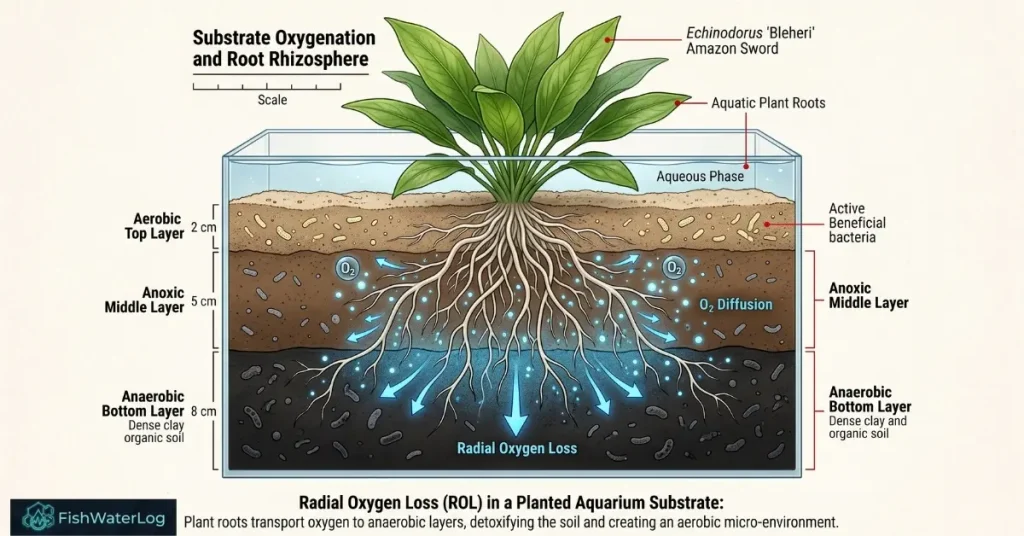
Radial Oxygen Loss (ROL) in a planted aquarium substrate: Plant roots diffuse oxygen into deeper layers, creating an aerobic micro-rhizosphere within reduced sediment.Aquatic plants have evolved specialized anatomical structures—termed aerenchyma tissue—that transport atmospheric oxygen from the foliage down into the root network.
- Micro-Rhizosphere Oxygenation: Through Radial Oxygen Loss (ROL), plant roots release minute quantities of oxygen directly into the surrounding anaerobic sediment, creating an oxidized micro-zone of positive ORP around the root hairs.
- Trace Mineral Solubility: In fully oxidized environments, iron precipitates as insoluble ferric iron (Fe3+) and becomes biologically unavailable. In contrast, reduced benthic layers keep iron in its soluble ferrous form (Fe2+).
- Regulated Nutrient Uptake: By establishing an oxidized micro-zone inside a reduced macro-environment, plant roots assimilate soluble Fe2+ before it oxidizes, while simultaneously neutralizing toxic hydrogen sulfide.
Accurately evaluating freshwater aquarium ORP across the benthic zone requires accounting for this extreme spatial heterogeneity between the bulk sediment and the micro-rhizosphere.
The Biogeochemistry of the Benthic Zone in Planted Aquariums
While water column measurements provide data on bulk oxygenation, limnologists and aquatic botanists emphasize that the aquarium redox potential is most practically utilized to gauge the condition of organic sediments and wetland soils. Rather than functioning as a uniform layer, the substrate in a planted tank operates as a highly stratified biogeochemical reactor.
Substrate Redox Stratification and Anaerobic Risks
Aquatic soils, sands, and clay substrates naturally partition into three distinct vertical zones governed by oxygen diffusion and chemical gradients:
- Superficial Aerobic Layer: The topmost substrate interface maintains high oxygen penetration and a positive ORP value.
- Intermediate Anoxic Layer: Moderate depth reduces oxygen availability, yielding a mildly negative redox reading.
- Deep Anaerobic Base: Deep, compacted substrates experience zero oxygen exchange, driving millivolt levels into highly reducing, negative territory.
When substrate depth is excessive and water circulation is restricted, the benthic oxidation reduction potential plunges into methanogenic and sulfate-reducing ranges. This deep anaerobic shift triggers the formation of lethal hydrogen sulfide (H2S) gas, which poses a severe toxicity risk to aquatic life.
Radial Oxygen Loss (ROL) and Nutrient Bioavailability
Aquatic plants have evolved specialized anatomical structures—termed aerenchyma tissue—that transport atmospheric oxygen from the foliage down into the root network.
- Micro-Rhizosphere Oxygenation: Through Radial Oxygen Loss (ROL), plant roots release minute quantities of oxygen directly into the surrounding anaerobic sediment, creating an oxidized micro-zone of positive ORP around the root hairs.
- Trace Mineral Solubility: In fully oxidized environments, iron precipitates as insoluble ferric iron (Fe3+) and becomes biologically unavailable. In contrast, reduced benthic layers keep iron in its soluble ferrous form (Fe2+).
- Regulated Nutrient Uptake: By establishing an oxidized micro-zone inside a reduced macro-environment, plant roots assimilate soluble Fe2+ before it oxidizes, while simultaneously neutralizing toxic hydrogen sulfide.
Accurately evaluating freshwater aquarium ORP across the benthic zone requires accounting for this extreme spatial heterogeneity between the bulk sediment and the micro-rhizosphere.
Master Your Tank Parameters & Prevent Spikes
Download our scientifically formulated 2-page water chemistry matrix, emergency deviation protocols, and biosecurity checklist.
📥 Download Free Printable PDF
Chemical Interventions: Potassium Permanganate Redox
Understanding the redox kinetics of this chemical reaction is crucial during active potassium permanganate dosing aquarium treatment cycles. Dosing KMnO4 acts as an incredibly aggressive, non-selective oxidizer to eradicate external fish parasites, but its progress must be monitored electrochemically using your ORP telemetry node to prevent pushing the water column past safe physiological boundaries.
In instances where preventative maintenance fails and an aquarium suffers a severe pathogen outbreak or an overwhelming accumulation of dissolved organics, aquarists and aquaculture professionals sometimes deploy powerful chemical oxidizers to artificially manipulate the aquarium redox potential. Evaluating the potassium permanganate redox reaction provides vital insight into how chemical interventions induce extreme oxidative states in freshwater systems.
Mechanisms of Extreme Oxidation
Potassium permanganate (KMnO4) is a caustic, inorganic oxidizing agent that aggressively accepts electrons.
- When introduced into a freshwater aquarium, it rapidly oxidizes dissolved organic carbon, bacterial cellular membranes, and the protective cuticles of external parasites.
- Dosing KMnO4 triggers a massive, immediate spike in the freshwater oxidation reduction potential, often driving the system well beyond +550 mV.
- While this extreme oxidative state is highly effective at eradicating pathogens, it is entirely non-selective.
Biological Risks and Oxidative Stress
- The same elevated ORP that destroys pathogen membranes simultaneously induces severe oxidative stress upon the sensitive gill tissues and mucosal slime coats of resident fish and invertebrates.
- Consequently, many species of freshwater snails, dwarf shrimp, and sensitive primitive plants suffer high mortality rates when exposed to these artificially inflated ORP levels.
Quantifying Chemical Oxygen Demand (COD)
The highly predictable nature of the potassium permanganate redox reaction is leveraged in analytical settings to quantify organic pollution via Chemical Oxygen Demand (COD) testing.
- In potentiometric titration, a water sample is progressively dosed with a known concentration of KMnO4.
- As organic substances in the water are oxidized, the permanganate is reduced.
- The exact titration endpoint is detected by a rapid, vertical shift in the ORP telemetry reading, precisely indicating the moment when all organic matter has been fully oxidized.
- This diagnostic shift demonstrates the direct electrochemical correlation between total organic waste volume and a system’s overall reductive capacity.
Managing Reductants, UV Sterilization, and Oxidative Stress in Freshwater Aquariums
The interplay between oxidants, chemical reducing agents, and physical water treatment equipment adds crucial complexity to managing the aquarium redox potential. Understanding how these components influence electrochemical readings is essential for preventing oxidative stress in fish and ensuring reliable water telemetry interpretation.
Ozone Automation, Hysteresis Deadbands, and Controller Failsafes: When ORP probes are integrated into automated oxidizer management—such as dosing ozone (O3) into a protein skimmer reaction column—programming a precise 10 to 15 mV hysteresis (deadband) into the controller logic is mandatory. Without a deadband window, minor millivolt flutter causes the controller’s electronic relays to rapidly cycle on and off, resulting in premature hardware burnout and erratic dosing spikes.
Lethal Risks of Biofilm-Induced Telemetry Drift: A passivated or fouled ORP probe presents an acute life-safety risk in automated systems. When a thick organic biofilm coats the platinum sensor, the probe exhibits severe downward drift, registering an artificially depressed reading (such as 250 mV when the true water column potential exceeds 380 mV). Deceived by this false telemetry, the automated controller commands continuous, unchecked ozone injection. This severe overdosing rapidly destroys nitrifying biofilm, strips gill lamellae epithelium in fish, causes acute respiratory suffocation, and induces catastrophic livestock mortality. Regular probe validation, high-ORP cutoff interlocks (hard-capping dosing at +400 mV), and scheduled mechanical cleanings are vital safety measures for automated redox management.
UV Sterilization Dynamics and ORP Modification
Ultraviolet (UV) clarification is widely utilized in closed aquatic systems, but its impact on the oxidation reduction potential (ORP) differs fundamentally from gaseous or liquid oxidizers.
- DNA Inactivation vs. Bulk Oxidation: UV-C radiation destroys the cellular DNA of waterborne pathogens and floating algae spores, but it does not directly elevate bulk millivolt levels like ozone gas or chemical oxidizers.
- Degradation of Active Oxidizers: UV radiation functions by severing complex molecular bonds and breaking down organic chelators. For example, if residual potassium permanganate is present in the water, UV-C exposure rapidly degrades the permanganate ion, neutralizing the reaction and causing a measurable decline in the aquarium ORP reading.
- Mitigating Oxidative Stress: Passing water through a properly sized UV sterilizer can support fish health by neutralizing aggressive free oxidizers in the water column that might otherwise induce chronic physiological stress.
Chemical Dechlorinators, Sodium Thiosulfate, and Artificial ORP Drops
Water preparation introduces another critical variable to freshwater aquarium ORP telemetry. Municipal tap water contains strong chemical disinfectants—such as chlorine and chloramines—that must be neutralized prior to use.
- Targeted Reduction Mechanism: Standard aquarium tap water conditioners rely on sodium thiosulfate, a potent chemical reducing agent that rapidly donates electrons to break toxic halogen bonds.
- Transient Millivolt Depression: Introducing sodium thiosulfate triggers an immediate, sharp drop in the measured freshwater ORP, frequently pulling the reading below +300 mV.
- Contextual Data Interpretation: While a sub-300 mV value in an unmedicated aquarium often signals excessive organic loading or impending oxygen depletion, a dechlorinator-induced drop is purely a benign chemical artifact.
- Telemetry Recovery: Sodium thiosulfate additions do not strip dissolved oxygen from the water column or disrupt beneficial nitrifying bacteria. As mechanical aeration and natural biofiltration oxidize the excess reducing agent over several hours, the redox potential naturally returns to its baseline.
The excess reductant will eventually be oxidized by the system’s natural aeration, and the ORP will return to its baseline, reinforcing the principle that telemetry data must always be interpreted contextually alongside a structured protocol for aquarium water maintenance and parameter testing.
Freshwater Aquarium ORP Probe Calibration Protocols
To guarantee the fidelity of continuous telemetry data, rigorous and meticulous maintenance of electrochemical sensors is mandatory. An ORP probe that is fouled, degraded, or out of calibration will transmit wildly inaccurate data, potentially prompting dangerous miscalculations in ecosystem management. Freshwater aquarium ORP probe calibration diverges structurally from standard pH calibration protocols.
Industrial Standards and Reagent Safety Protocols: When executing single-point verifications or chemical cleaning, strict adherence to standardized analytical methodologies—specifically the ASTM D1498 standard test method for electrometric measurement of ORP in water and the USGS National Field Manual (NFM Chapter 6.5)—guarantees scientifically defensible telemetry data. Because calibration fluids and cleaning reagents involve caustic substances (1M hydrochloric acid), respiratory irritants (quinhydrone powder), and toxic metal-cyanide complexes (ZoBell’s potassium ferrocyanide/ferricyanide), practitioners must wear nitrile gloves and splash-resistant eye protection. Always prepare solutions in well-ventilated areas, avoid direct inhalation of dry reagents, and neutralize or dispose of spent calibration fluids in compliance with hazardous chemical safety guidelines.
Anatomy of an Aquarium ORP Sensor
The structural design of a combination ORP electrode incorporates two primary components housed within a single glass or epoxy body:
- Noble Metal Sensing Half-Cell: Features an inert noble metal—almost exclusively a polished platinum band or button (though gold is occasionally used)—that detects the transfer of electrons without participating chemically in the reaction itself.
- Stable Reference Electrode: Paired with the sensing electrode, it provides a constant baseline voltage against which the electron transfer can be measured.
- Reference Electrolyte and Junction: The vast majority of modern environmental ORP probes utilize a Silver/Silver Chloride (Ag/AgCl) reference wire suspended in a concentrated potassium chloride (KCl) electrolyte solution (typically 3M or 4M KCl), interfacing with the bulk water via a porous ceramic or Teflon junction.
Probe Conditioning and Break-in Polarization: Newly unboxed electrodes or sensors removed from long-term dry storage cannot deliver stable, reliable telemetry immediately. The bare platinum sensing tip requires a mandatory 24 to 48-hour pre-measurement conditioning period submerged in active aquarium water or certified standard solution. This break-in window allows the metallic sensing surface to hydrate fully, establish a stable interfacial gel layer, and reach true thermodynamic polarization and redox equilibrium before calibration offsets are calculated.
Single-Point Calibration vs. Multi-Point pH Protocols
Unlike pH probes, which require a multi-point calibration to establish a slope across a wide logarithmic range, ORP probes measure a direct linear millivolt potential:
- Linear Millivolt Measurement: They generally require only a single-point calibration rather than multi-point slope adjustments.
- Calculating the Millivolt Offset: The objective of this procedure is to calculate the offset—the mathematical difference between the theoretical millivolt value of a known chemical standard and the raw, actual millivolt reading generated by the aging sensor.
- Analytical Standards Reference: When sourcing laboratory-grade calibration fluids, referencing standard guidelines provided by specialized analytical instrumentation organizations ensures the highest degree of electrochemical sensor accuracy.
Reference Electrolyte Depletion and Probe Storage Guidelines: Proper long-term maintenance of the reference half-cell is critical to prevent premature telemetry failure. Never store an ORP probe in reverse osmosis (RO/DI) water or distilled water; the extreme osmotic pressure differential will rapidly leach the concentrated 3M or 4M KCl electrolyte out through the porous reference junction, rendering the sensor permanently uncalibrated. Always store the probe wet in dedicated electrode storage solution (4M KCl or pH 4.0 buffer saturated with KCl), and never allow the glass reference bulb or ceramic junction to dry out.
Controller-Specific Calibration Protocols: Offset Verification vs. Two-Point Slope Derivation
Aquarium telemetry systems interpret millivolt potential using two distinct mathematical frameworks depending on the hardware platform. Handheld field pens and baseline transmitters rely on single-point offset shifting, whereas advanced aquarium management platforms (such as Neptune Systems Apex and GHL ProfiLux) utilize two-point slope derivations to calibrate the analog-to-digital (A/D) converter.
1. Single-Point Offset Verification (Handheld Meters & Benchtop Transmitters)
- Thermal Stabilization: Equilibrate fresh ZoBell’s solution to ambient room temperature and record the solution temperature to determine the exact millivolt target (e.g., +228 mV at 25°C).
- Electrode Preparation: Rinse the platinum electrode tip with deionized water. Never rub the sensing tip with dry cloth or paper towels, as friction induces electrostatic charges that skew millivolt readings.
- Immersion & Micro-bubble Removal: Submerge the probe tip into ZoBell’s solution and gently swirl for 10 seconds to dislodge trapped air bubbles from the porous ceramic junction.
- Equilibration Window: Following USGS field protocols, allow the probe to rest undisturbed until the mV reading stabilizes within ±5 mV over a sustained 5-minute interval.
- Offset Lock: Access the controller or meter configuration interface, select manual offset calibration, and input the temperature-adjusted target mV value to shift the baseline intercept.
2. Two-Point Slope Calibration (Neptune Apex & GHL ProfiLux Architecture)
- Fresh Solution Synthesis: Dissolve 0.5 g to 1.0 g of high-purity quinhydrone powder into 50–100 mL of standard pH 7.0 buffer, and repeat in a separate container of standard pH 4.0 buffer. Agitate until undissolved green crystals remain visible at the bottom, verifying true saturation.
- Step 1 Baseline (pH 7.0 + Quinhydrone): To execute a precision quinhydrone orp calibration on advanced controller architectures, navigate to the controller’s ORP probe calibration module. Submerge the DI-rinsed probe into the pH 7.0 quinhydrone mixture. Monitor the raw analog-to-digital (A/D) telemetry; wait until the value completely stabilizes (typically yielding ~+86 mV to +92 mV vs. Ag/AgCl) before confirming the primary baseline.
- Intermediate Rinse: Remove the probe and thoroughly flush the glass body and ceramic junction with deionized water to eliminate chemical carryover.
- Step 2 High-Point Slope (pH 4.0 + Quinhydrone): Submerge the probe into the pH 4.0 quinhydrone mixture. Wait until the raw telemetry ceases all drift (yielding ~+264 mV to +270 mV vs. Ag/AgCl) before locking the secondary baseline.
- Mathematical Slope Derivation: The controller’s processor automatically derives the precise linear mV/pH slope and baseline offset. Discard spent quinhydrone solutions immediately, as atmospheric oxidation renders them invalid within hours.
Calibration Standards: ZoBell’s, Light’s, and Quinhydrone
Three primary chemical standards are universally employed for freshwater aquarium ORP probe calibration, each offering specific oxidative potentials tailored for precise calibration ranges:
- ZoBell’s Solution: Formulated with a stoichiometric ratio of potassium ferrocyanide and potassium ferricyanide, ZoBell’s is the preeminent industry standard for environmental water monitoring. At 25°C, an Ag/AgCl reference electrode filled with 4M KCl yields a theoretical ORP of +228 mV, shifting to +221 mV with a 3M KCl electrolyte.
- Light’s Solution: Composed of ferrous and ferric ammonium sulfate dissolved in dilute sulfuric acid, Light’s solution provides a higher calibration baseline (+475 mV at 25°C with a 4M KCl Ag/AgCl reference), making it ideal for systems utilizing ozone injection.
- Quinhydrone Buffer Solutions: Quinhydrone is a 1:1 molecular complex of hydroquinone and benzoquinone whose redox potential depends strictly on pH. Saturated quinhydrone yields approximately +89 mV in a pH 7.0 buffer and +264 mV to +266 mV in a pH 4.0 buffer at 25°C.
Calibration Solution Stability and Shelf-Life Degradation: ORP calibration standards utilize sensitive thermodynamic redox couples that degrade rapidly upon atmospheric exposure. Once hydrated with deionized water, ZoBell’s solution maintains chemical stability for a maximum shelf life of six months, provided it is stored in an airtight, opaque container below 40°C away from direct light. Conversely, quinhydrone buffer solutions (mixed into pH 4.0 and pH 7.0 standards) are exceptionally unstable; atmospheric oxygen aggressively oxidizes the hydroquinone complex within hours. Mixed quinhydrone standards possess a strict functional lifespan of only 1 to 8 hours and must be mixed fresh for each calibration session. Reusing stored quinhydrone mixtures severely distorts the mathematical slope calculation and compromises all downstream telemetry.
| Calibration Standard | Reference Electrode Type | Solution Temperature | Expected Theoretical ORP |
|---|---|---|---|
| ZoBell’s Solution | Ag/AgCl (4M KCl) | 15°C | +241 mV |
| ZoBell’s Solution | Ag/AgCl (4M KCl) | 25°C | +228 mV |
| Light’s Solution | Ag/AgCl (4M KCl) | 25°C | +475 mV |
| Quinhydrone in pH 4 Buffer | Ag/AgCl | 25°C | +265 mV |
| Quinhydrone in pH 7 Buffer | Ag/AgCl | 25°C | +89 mV |
Platinum Electrode Fouling and Chemical Cleaning Protocols
Enzymatic Biofilm Degradation and Mineral Descaling: In heavily stocked or planted aquaria, biological fouling rapidly passivates the noble metal surface. Routine rinsing with water cannot dissolve polymerized protein matrices. For stubborn organic films and thick biofilms, submerge the sensing tip in an enzymatic cleaning solution of 1% pepsin dissolved in 0.1M hydrochloric acid (HCl) for 30 to 60 minutes. The pepsin enzyme actively cleaves complex peptide bonds without etching the delicate glass seal. For mineral scale and calcium carbonate precipitation, follow with a mild 10-minute acid soak in 1M HCl or white vinegar before flushing thoroughly with deionized water.
Precision Mechanical Polishing Protocols: When chemical treatment fails to restore response time due to stubborn surface oxidation, the platinum measuring band requires precision mechanical polishing. Never use emery cloth, sandpaper, or abrasive scouring pads; harsh abrasives scratch and groove the noble metal, drastically increasing microscopic surface area and accelerating future biofouling. Instead, apply a slurry of 1 to 3 micron alumina polishing powder onto a soft cotton swab or felt pad, polishing the platinum surface gently using light circular motions for 30 seconds, followed by an exhaustive DI water rinse.
Reference Junction Silver Sulfide Poisoning (Ag2S): The liquid reference junction remains the most structurally vulnerable component of the probe assembly. In substrate-heavy or oxygen-depleted systems where hydrogen sulfide (H2S) is generated, or where high concentrations of dissolved organic sulfur compounds exist, sulfur ions diffuse through the porous ceramic diaphragm. These ions react with silver ions (Ag+) from the internal reference electrolyte, precipitating insoluble silver sulfide (Ag2S) directly inside the microscopic pores of the ceramic frit. This irreversible chemical fouling appears visually as a blackened or dark gray junction diaphragm. Once silver sulfide occludes the junction pores, electrical impedance spikes to extreme levels, causing severe measurement sluggishness and uncorrectable drift that renders the probe permanently unrecoverable.
| Telemetry Symptom / Error | Probable Electrochemical Cause | Remedial Action |
|---|---|---|
| Relentless Downward Drift | Platinum band surface coated with organic biofilm, lipid greases, or calcium scale | Soak sensing tip in 1M HCl for 20–30 minutes, then perform a gentle mechanical polish using a soft cotton swab. |
| Sluggish / Flatlined Response | Clogged, dried, or fouled porous ceramic/Teflon reference junction | Rehydrate and clear junction porosity by soaking in warm (50°C) 4M KCl storage solution for 1 hour. |
| Erratic Fluctuations (±50 mV jumps) | Stray AC voltage from submerged hardware or micro-bubble adhesion on the platinum button | Dislodge trapped bubbles by angling probe in flow; install a titanium grounding probe to eliminate ground loops. |
| Persistent Low Reading (<+150 mV) | Active reducing agents (sodium thiosulfate dechlorinators) or severe benthic anoxia / high BOD | Confirm recent tap conditioner dosing; increase mechanical surface aeration and vacuum excess organic detritus. |
Electrochemical Interference: Temperature and pH Dynamics in Aquarium ORP Monitoring
Raw millivolt readings transmitted by freshwater aquarium ORP telemetry systems are not absolute values; they are sensitive to fluctuations in both water temperature and ambient hydrogen ion concentration (pH). Failing to account for these primary environmental variables can lead to inaccurate assessments of an aquatic ecosystem’s true thermodynamic state.
Thermal Effects and Automatic Temperature Compensation (ATC)
Water temperature directly alters the physical and kinetic behavior of dissolved chemical species in freshwater environments:
- Gas Solubility Constraints: As water temperature rises, dissolved oxygen solubility decreases, which naturally reduces dissolved oxygen levels and depresses the bulk oxidation reduction potential even under a stable biological load.
- Reaction Kinetics: Elevated temperatures accelerate the kinetic rates of all aquatic redox reactions, shifting chemical equilibrium rapidly.
- Calibration Adjustments: Calibration solutions require precise temperature tracking—for instance, ZoBell’s standard shifts from +241 mV at 15°C down to +228 mV at 25°C.
- Instrument Requirements: Deploying telemetry hardware equipped with Automatic Temperature Compensation (ATC) is essential to prevent thermal interference from distorting live data.
The Inverse Relationship Between pH and Aquarium Redox Potential
The ambient pH of the water column exerts a substantial influence over the measured aquarium redox potential due to the direct participation of hydrogen ions ($H^+$) in aquatic redox half-reactions.
- Nernstian pH Dependency: According to the Nernst equation, changes in proton activity directly alter the measured reduction potential of the solution.
- Alkaline Shifts (High pH): As water becomes more alkaline, the freshwater ORP reading naturally drops, reflecting higher hydroxyl (OH-) activity.
- Acidic Shifts (Low pH): Conversely, as pH drops and acidity increases, the measured millivolt value rises.
- Stoichiometric Independence: This inverse mathematical relationship occurs even when the actual ratio of chemical oxidizers to reducers remains unchanged, demonstrating why raw ORP alone cannot serve as an isolated water quality metric.
Electrical Interference and Stray Voltage: Submerged electrical hardware—such as AC water pumps, powerheads, and malfunctioning glass heaters—frequently leak micro-currents into the water column. These ground loops introduce stray electrical noise directly to the high-impedance platinum sensing band, creating artificial millivolt spikes ranging from +100 mV to +300 mV. To ensure accurate freshwater aquarium ORP telemetry, all continuous monitoring systems must utilize galvanically isolated sensor circuits or incorporate a dedicated titanium aquarium grounding probe connected to a true earth ground.
Ground Loops and Stray AC Voltage Mechanics: ORP electrodes operate as ultra-high-impedance circuits transmitting delicate millivolt-scale direct current (DC) signals over standard BNC connections. Submerged electrical equipment—such as aging AC return pumps, powerheads, and glass heaters—frequently leak alternating current (AC) micro-voltages into the water column. In non-isolated systems, this stray voltage enters through the porous ceramic reference junction to establish an electrical ground loop back to the controller, skewing continuous telemetry readings by an erratic ±50 mV to ±150 mV offset without any true shift in water chemistry.
Unmanaged stray voltage in aquarium systems is the single most common cause of erratic ORP fluctuations and digital telemetry noise. Submerged electrical components—such as cracked glass heaters or aging pump motors—leak alternating current (AC) micro-voltages that establish ground loops, requiring galvanic isolation or a GFCI-linked titanium grounding probe to resolve.
Grounding Probe Hazards and GFCI Safety Protocols: Installing a titanium grounding probe as a makeshift fix for stray voltage creates a severe aquatic health hazard. A standalone ground probe provides a continuous, zero-resistance path that forces electrical current to flow directly through the water and the bodies of resident fish, heavily contributing to Head and Lateral Line Erosion (HLLE), neuromast damage, and accelerated galvanic corrosion of tank hardware. A titanium ground probe must only be deployed in direct conjunction with a Ground Fault Circuit Interrupter (GFCI) outlet, functioning exclusively as a life-safety mechanism designed to instantly trip the circuit breaker the millisecond a current leak occurs.
Mathematical Transposition: Clark’s rH Exponent
To decouple the redox reading from the interfering effects of pH, advanced limnological research and telemetry software employ a mathematical transposition known as Clark’s rH exponent. Formulated by W.M. Clark, the rH value provides a pH-independent expression of the true thermodynamic oxidation-reduction state of an aquatic ecosystem.
Calculating Clark’s rH Exponent
The calculation integrates the raw electromotive force (Eh, which is the ORP reading transposed from the Ag/AgCl reference scale to the Standard Hydrogen Electrode scale by adding approximately +200 mV) with the ambient pH:
rH = (Eh / 30) + (2 * pH)
When using an Ag/AgCl probe directly, the formula is expanded to account for the baseline offset:
rH = ((Eh + 200) / 30) + (2 * pH)
Interpreting the rH Scale in Aquatic Systems
The derived rH value is a dimensionless integer constrained between 0 and 42:
- Absolute Reducing Capacity (rH 0): Represents an environment possessing the ultimate reducing potential, equivalent to a pure hydrogen atmosphere.
- Absolute Oxidizing Capacity (rH 42): Represents an environment with maximum oxidizing potential, equivalent to a pure oxygen atmosphere.
- Diagnostic Telemetry Utility: Tracking the rH value via an automated telemetry dashboard enables aquarists to determine whether an abrupt drop in millivolts is caused by biological waste accumulation or simply a natural pH shift resulting from diurnal carbon dioxide fluctuations.
This predictive capability is invaluable; a depressed ORP trend alerts the manager to a deteriorating environment days before standard chemical assays register accumulation. When organic load sensing indicates sustained oxygen depletion, providing rapid supplemental aeration with quiet aquarium air pumps quickly re-elevates the bulk redox potential.
Conclusion
The pursuit of absolute stability in engineered aquatic ecosystems has fundamentally transitioned from reactive, retrospective testing to proactive, predictive electrochemical monitoring. The oxidation reduction potential serves not as an isolated judgment of water purity, but as a dynamic aggregate indicator of thermodynamic energy flow within the water column. Deploying modern water telemetry systems to track real-time aquarium redox potential fluctuations enables the critical early detection of organic overload, ensuring optimal oxidative conditions for aerobic nitrification while suppressing the proliferation of anaerobic pathogens.
Managing continuous freshwater ORP telemetry requires stringent scientific rigor to accurately interpret the system’s biological oxygen demand. Evaluating the electrochemical landscape allows aquatic managers to assess microbial stability far beyond simple nutrient test kits. By acknowledging the mixed-potential limitations of electrode probes, maintaining regular calibration protocols with certified standards like ZoBell’s or quinhydrone, and mathematically adjusting for ambient pH and temperature shifts, limnologists and advanced aquarists can maintain a precise, predictive window into the vital biogeochemical cycles that sustain complex freshwater life.
A thriving planted tank characterized by vigorous growth maintains a diurnal water column ORP fluctuating between +280 mV and +450 mV. Cultivating resilient flora from our guide to low light aquarium plants for beginners helps maintain consistent daytime oxygen supersaturation and suppresses opportunistic algae.
Frequently Asked Questions
Why does my ORP drop significantly after a routine water change?
Commercial water dechlorinators contain strong chemical reducing agents like sodium thiosulfate to neutralize chlorine and chloramines. These compounds rapidly donate electrons, causing a sharp, temporary plunge in measured ORP. This millivolt drop is a harmless chemical artifact that naturally recovers as surface agitation and biological filtration oxidize the excess reductant.
Can an ORP reading be too high in a freshwater aquarium?
Yes. While elevated ORP indicates clean, well-oxygenated water, sustained levels above +500 mV typically stem from chemical over-oxidation (such as overdosing ozone, hydrogen peroxide, or potassium permanganate). Excessive oxidative stress degrades protective mucosal slime coats and damages the sensitive gill membranes of fish and invertebrates.
How frequently should a continuous telemetry ORP probe be calibrated?
Clean and calibrate continuous ORP sensors every 4 to 6 weeks. Over time, bacterial biofilms and mineral scale foul the platinum sensing surface, inducing sluggish telemetry responses and downward drift. Soak the electrode tip in 1M HCl for 20 minutes, swab gently, and perform a single-point offset verification using certified ZoBell’s or quinhydrone standard.
How do live aquatic plants impact the redox potential?
Aquatic plants create diurnal redox swings. Daytime photosynthesis releases oxygen directly into the water column, driving ORP upward toward daily peaks (+280 mV to +450 mV). In the substrate, specialized aerenchyma tissues facilitate Radial Oxygen Loss (ROL), establishing oxidized micro-zones around root tips that prevent toxic hydrogen sulfide formation while preserving bioavailable ferrous iron (Fe2+) uptake.
Master Your Tank Parameters & Prevent Spikes
Download our scientifically formulated 2-page water chemistry matrix, emergency deviation protocols, and biosecurity checklist.
📥 Download Free Printable PDF

3 thoughts on “Aquarium Redox Potential: Freshwater ORP Probe Calibration”