
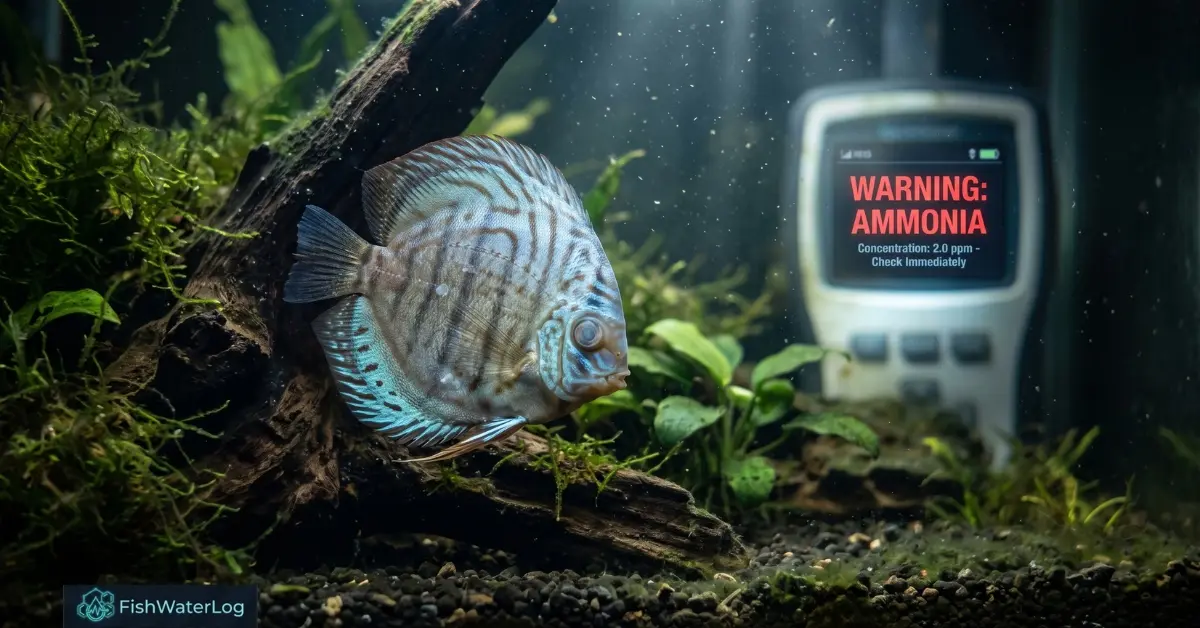
In the controlled environment of a captive aquatic ecosystem, maintaining biological equilibrium is exceptionally delicate. Deviations from optimal environmental, social, or water chemistry conditions force aquatic inhabitants to expend vital metabolic reserves simply to sustain baseline physiological homeostasis. From sudden thermal swings to continuous territorial aggression, captive fauna face persistent ambient stimuli. When these challenges surpass a specimen’s adaptive limits, the organism shifts from eustress—beneficial environmental stimulation that promotes natural foraging and breeding—into chronic physiological distress and allostatic overload. Recognizing the early symptoms of stress in freshwater fish is vital to halt this cascade before irreversible systemic harm occurs.
Stress in teleost fishes triggers a systemic biochemical pathway that fundamentally shifts metabolic priorities. Critical energy reserves are diverted away from somatic growth, reproductive development, and disease resistance, funneling instead toward immediate emergency escape responses. Prolonged exposure to deteriorating conditions depletes internal reserves and degrades cellular defenses, leaving the epidermal mucus layer vulnerable to opportunistic pathogens. Detecting these clinical signs early allows aquarists to stabilize the habitat, correct water quality parameters, and prevent secondary bacterial or parasitic infections from causing total population loss.
The Neuroendocrine Architecture of the Teleost Stress Response
Accurately identifying the visible symptoms of stress in freshwater fish requires understanding the internal physiological pathways that trigger them. The teleost stress response is coordinated by the hypothalamic-pituitary-interrenal (HPI) axis, which operates as the aquatic evolutionary counterpart to the mammalian HPA axis. When adverse conditions compromise the tank environment, this neuroendocrine pathway activates to sustain immediate survival.
The Hypothalamic-Pituitary-Interrenal (HPI) Axis Activation
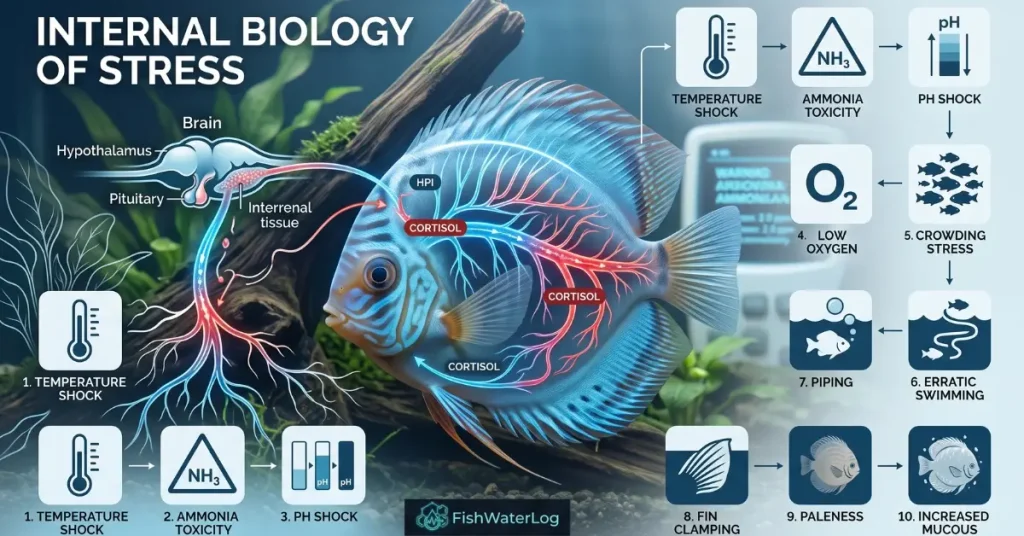
When an aquatic specimen detects an immediate threat—such as aggressive conspecifics, poor water parameters, or sudden handling—the brain initiates a primary molecular cascade. The hypothalamus releases corticotropin-releasing hormone (CRH) into circulation, prompting the anterior pituitary gland to secrete adrenocorticotropic hormone (ACTH). ACTH binds to melanocortin 2 receptors (MC2-R) within the interrenal cells of the head kidney, triggering the rapid secretion of circulating glucocorticoids alongside massive surges of catecholamines.
- Catecholamine Surge: The immediate release of adrenaline triggers the acute “fight or flight” response, mobilizing hepatic glycogen reserves to rapidly elevate blood glucose concentrations.
- Cardiorespiratory Acceleration: Heart rate, blood pressure, and opercular ventilation increase sharply, directing oxygenated blood toward primary locomotion muscles to facilitate rapid escape.
Cortisol Markers and Osmoregulatory Failure
Cortisol serves as the principal glucocorticoid governing the systemic stress response in teleost fish. Under baseline conditions, circulating cortisol supports energy balance by promoting gluconeogenesis during short-term challenges. However, persistent exposure to unmitigated physical or social stressors causes baseline cortisol markers to remain chronically elevated, leading to severe physiological dysfunction:
- Disruption of Branchial Epithelia: Sustained hypercortisolemia alters the permeability of delicate gill tissues and inhibits the active transport of essential sodium and potassium ions by suppressing Na+/K+-ATPase pumps within branchial ionocytes.
- Hydromineral Imbalance: Because freshwater teleosts exist in an environment hyperosmotic to their bodily fluids, loss of branchial integrity forces excessive water into the bloodstream while vital electrolytes leach into the surrounding water column.
- Systemic Exhaustion: The organism must expend tremendous metabolic energy simply to maintain fluid balance and excrete excess water, rapidly depleting the physiological reserves necessary to resist disease.
10 Common Symptoms of Stress in Freshwater Fish
When chronic allostatic load overwhelms the neuroendocrine system, internal physiological distress quickly translates into outward clinical and behavioral indicators. Regularly evaluating your aquatic livestock allows you to catch adverse changes before irreversible morbidity occurs. Below are the primary symptoms of stress in freshwater fish, detailing the biological mechanisms driving each manifestation:
1. Erratic Swimming and Sudden Darting
Healthy teleosts maintain controlled, fluid movements using their paired and median fins for hydrodynamic stabilization. In contrast, sudden frantic darting, collision with glass walls, or disoriented spiral swimming indicates acute neurological and physiological trauma. This behavior is frequently driven by adrenaline surges following severe thermal shock, sudden illumination changes, or localized chemical burns from unneutralized chlorine and heavy metals.
2. Atypical Hiding, Lethargy, and Social Withdrawal
While nocturnal and benthic species naturally take cover, open-water swimmers retreating into corners or resting motionless along the substrate signal severe distress. Sustained activation of the HPI axis eventually depletes hepatic glycogen reserves, leaving the animal unable to muster the metabolic energy needed for standard locomotion. A complete lack of responsiveness to visual feeding cues is a hallmark of systemic shock.
3. Anorexia and Feeding Cessation
Healthy aquatic organisms possess an opportunistic feeding drive. A sudden refusal to accept food, or spitting out previously accepted pellets, is one of the most reliable early warnings of physiological decline. Elevated cortisol markers actively suppress appetite centers in the brain, creating a hazardous metabolic deficit where the fish requires energy to heal but refuses the nutrients necessary to survive.
4. Fin Clamping
Fin clamping occurs when a fish holds its dorsal, caudal, and pectoral fins tightly pinned against its body rather than displaying them fully erect. This posture is a direct response to physical discomfort and declining water conditions. By minimizing surface area contact with a hostile tank environment, the specimen attempts to reduce branchial and epidermal irritation caused by fluctuating pH, temperature drops, or early ectoparasitic attachment.
5. Hyperventilation and Rapid Gill Movement
Rapid, labored flaring of the operculum (gill covers) points to acute respiratory distress. While hyperventilation can result from elevated metabolic rates under stress, it most frequently signals direct damage to the branchial apparatus. Unbound ammonia causes chemical hyperplasia of delicate gill lamellae, which thickens the blood-water barrier and forces the specimen to ventilate at an accelerated rate to maintain minimal blood oxygenation.
To relieve severe branchial distress and oxygen depletion, increase surface turbulence by installing an efficient aquarium air pump to maximize gas diffusion without adding unnecessary noise stress to the tank.
6. Chromatic Alterations: Color Fading or Darkening
Dermal chromatophores govern pigment dispersal and are modulated directly by the sympathetic nervous system and circulating hormones. Chronic distress often causes vibrant species like Discus, Oscars, and African Cichlids to turn pale, dull, or washed out due to melanophore aggregation. Conversely, systemic organ failure or severe internal pain can trigger erratic, abnormal hyper-pigmentation or localized darkening.
7. Surface Piping and Gasping
Gathering at the water surface to rapidly ingest the thin layer of air-water interface is termed “piping”. While often mistaken for simple low dissolved oxygen, it is frequently caused by toxic nitrite accumulation. Nitrite diffuses across the gills and oxidizes functional ferrous hemoglobin into methemoglobin, creating brown blood disease and severely impairing oxygen transport across all vital organs.
While surface gasping often indicates nitrite-induced brown blood disease, verifying hypoxic conditions through precise aquarium dissolved oxygen monitoring confirms whether gas exchange failure is systemic or environmental.
8. Flashing and Substrate Rubbing
Flashing describes an erratic movement where a fish rapidly dives toward the substrate, rocks, or hardscape, aggressively scratching its lateral flanks or operculum. This mechanical action is an attempt to dislodge physical irritants, including protozoan ectoparasites like Ichthyophthirius multifiliis (Ich), or to relieve stinging sensations caused by acute pH crashes and micro-spikes of unionized ammonia.
9. Aggression and Social Disruption
Suboptimal spatial geometry, barren layouts, and overstocked conditions disrupt stable social hierarchies. Sustained environmental stress elevates baseline aggression, transforming compatible species into hyper-territorial bullies that relentlessly pursue subordinates. The resulting social intimidation imposes chronic allostatic load onto subordinate fish, leading to severe immunological suppression and premature mortality.
Incompatible tank mates, or previously peaceful fish, may begin to relentlessly pursue, fin-nip, or violently bully subordinate individuals; reviewing a detailed freshwater aquarium fish compatibility guide is essential to prevent territorial friction and social stress.
10. Epidermal Lesions and Mucosal Degradation
The teleost epidermal mucus coat serves as the primary barrier against opportunistic aquatic pathogens, containing lysozymes, antibodies, and antimicrobial peptides. Protracted hypercortisolemia breaks down this mucosal layer faster than it can be resynthesized. Visible signs of compromised physical barriers include cloudy patches, fraying fins, open red lesions, and secondary fungal saprolegniasis outbreaks.
If continuous flashing damages the dermal layer and invites secondary fungal or bacterial outbreaks, isolate affected specimens immediately following proven clinical fish disease protocols and targeted quarantine treatments.
Environmental Triggers: The Dynamics of the Tank Environment
The vast majority of physiological disorders and clinical manifestations observed in captive teleosts stem directly from instability within the closed aquatic habitat. While wild riverine systems benefit from continuous volumetric turnover and natural buffering, captive setups require deliberate mechanical and biological intervention to preserve equilibrium. Understanding the root environmental triggers of the teleost stress response allows hobbyists to prevent allostatic overload before visible symptoms of stress in freshwater fish emerge.
The Nitrogen Cycle and Chemical Toxicity
Water quality serves as the primary environmental pillar dictating teleost health. In an enclosed biological filter, organic waste—including metabolic end-products, uneaten feed, and detritus—undergoes ammonification, generating toxic chemical compounds:
- Ammonia (NH3 / NH4+): Highly lethal to aquatic life even at sub-clinical concentrations. In poorly cycled setups, free unionized ammonia rapidly accumulates, chemically scorching delicate gill lamellae, destroying protective mucus coatings, and inducing severe respiratory failure.
- Nitrite (NO2-): The secondary byproduct generated by ammonia-oxidizing bacteria. Nitrite diffuses across the branchial epithelium directly into the bloodstream, oxidizing ferrous hemoglobin into methemoglobin and precipitating brown blood disease.
- Nitrate (NO3-): The end product of biological nitrification. While substantially less acute than ammonia, chronic exposure to elevated nitrate levels (>20–40 ppm) exerts continuous allostatic strain, suppresses immune competency, stunts growth rates, and triggers sustained cortisol markers.
Establishing an unbroken nitrifying autotrophic colony through solid aquarium nitrogen cycle biofiltration ensures that deadly unionized ammonia and nitrite do not accumulate to trigger allostatic failure.
Physical Parameters: Temperature and pH Instability
Freshwater teleosts are poikilothermic organisms whose metabolic rate, immune function, and digestive kinetics depend entirely on ambient thermal stability. Rapid thermal swings exceeding 2°C to 3°C within a single diurnal cycle induce acute thermal shock, paralyzing cellular defenses and compromising enzymatic pathways.
Concurrently, erratic swings in water chemistry disrupt fundamental ionoregulation. In aquariums with insufficient Carbonate Hardness (KH), organic acids produced through nitrification rapidly deplete the water’s natural buffering capacity. When KH drops below critical thresholds (under 4 dKH), the system becomes vulnerable to catastrophic pH crashes, inflicting severe chemical burns across the skin, scales, and delicate gill membranes.
Because sudden thermal swings rapidly paralyze the teleost immune system, implementing dual-stage aquarium heater controller redundancy prevents catastrophic equipment failures and lethal temperature shocks.
Habitat Configuration and Spatial Stressors
Physical habitat design directly influences teleost psychological and behavioral stability. A barren, stark, or overly exposed tank environment deprives fish of environmental complexity, leaving them in a perpetual state of perceived predation and social insecurity. Submerged driftwood, structured rockwork, and dense vegetation create essential visual breaks and territorial boundaries. For extensive guidance on structuring proper benthic layers to prevent anaerobic gas pockets and substrate-induced stress, optimizing this setup requires reviewing a comprehensive substrate for planted tanks guide. Aligning substrate texture and swimming space with species-specific evolutionary adaptations eliminates chronic behavioral distress and territorial friction.
Advanced Biomarkers and Undocumented Stressors
Conventional aquarium literature often limits diagnostic guidance to basic liquid test kits and overt behavioral signs. However, modern aquaculture proteomics, endocrinology, and veterinary telemetry unveil deeper, multi-receptor biochemical interactions that occur long before clinical manifestations become apparent. As detailed in peer-reviewed physiological research on teleost behavioral stress responses, utilizing behavioral anomalies serves as a primary, non-invasive early-warning system for identifying aquatic distress before cellular collapse occurs. Evaluating these undocumented pathways allows hobbyists to intercept chronic allostatic load well before visible symptoms of stress in freshwater fish turn fatal.
Scale Cortisol as a Historical Biomarker for Chronic Stress
Historically, researchers and aquatic veterinarians relied on plasma cortisol concentrations to quantify the teleost stress response. However, physical capture, netting, and venipuncture act as profound acute stressors, skewing circulating plasma metrics almost instantaneously.
Cutting-edge conservation physiology emphasizes scale cortisol analysis as an exceptional, non-invasive diagnostic alternative. Much like mammalian hair sequesters circulating hormones, teleost ontogenetic scales continuously incorporate circulating steroids over extended periods:
- Long-Term Stress Archiving: Scale matrices provide a stable, retrospective biochemical record of chronic allostatic load spanning weeks or months without the distortion of acute netting trauma.
- Chemical Stability: In vitro experiments utilizing the Arrhenius equation confirm that scale cortisol markers resist thermal degradation up to 50°C and remain extractable from archival scale samples stored for decades.
The Role of 11-Deoxycorticosterone (DOC) and Mineralocorticoid Receptors
While cortisol has long been considered the unilateral corticosteroid in teleosts, comparative transcriptomics reveals that 11-deoxycorticosterone (DOC) plays a fundamental role in teleost survival. Unlike terrestrial mammals, teleosts lack aldosterone synthase and cannot produce aldosterone to modulate mineralocorticoid pathways.
Instead, during acute hydromineral disturbances or severe osmoregulatory failure, DOC is synthesized and circulates to bind mineralocorticoid receptors (MRs) located within the gill epithelia. This specialized activation directly regulates epithelial sodium and chloride channel permeability, showing that teleosts employ a nuanced, multi-receptor endocrine system to preserve cellular equilibrium under adverse environmental shifts.
Cellular Stressomes and Heat Shock Proteins (HSP70)
At the subcellular level, proteotoxic trauma triggers the expression of molecular chaperones, most notably Heat Shock Protein 70 (HSP70). Environmental insults such as rapid temperature swings, transportation confinement, or heavy metal contamination risk protein unfolding and intracellular aggregation.
The fish rapidly activates its “stressome,” producing HSP70 to bind nascent polypeptide chains, refold damaged proteins, and maintain intracellular structural stability. Elevating cellular HSP70 serves as a sub-lethal molecular warning sign that physiological boundaries are compromised, manifesting hours or days before fin clamping, gasping, or epidermal ulcerations appear.
Dyadic Cortisol Coregulation in Social Fishes
In social and schooling species, stress does not function as an isolated individual phenomenon. Endocrinological studies on gregarious fishes (such as the three-spined stickleback) demonstrate clear cortisol coregulation. In an enclosed tank environment, the physiological stress response of one panicked individual actively stimulates HPI axis activation in adjacent shoal mates. Maintaining natural schooling densities and species compatibility is therefore not merely an aesthetic choice, but a biological prerequisite to prevent population-wide hormonal cascade spikes.
Nutritional Physiology and Oxidative Stress
Nutritional composition significantly influences teleost resilience against environmental fluctuations. Commercial diets overloaded with crude proteins and dense energy sources, yet deficient in functional dietary fiber, induce severe hepatic lipidosis and early renal exhaustion.
A lack of essential micronutrients—particularly ascorbic acid (Vitamin C, a potent free-radical scavenger)—fosters chronic oxidative stress at the mitochondrial level. Supplying species-appropriate, cold-extruded formulations with balanced energy-to-fiber ratios preserves gut mucosal integrity, decreases oxidative markers, and bolsters systemic resistance against secondary opportunistic infections.
Diagnostic Framework and Remediation Strategies
When external symptoms of stress in freshwater fish become visible, prompt, methodical intervention is critical to halt systemic allostatic overload. Blindly administering chemical medications without identifying the root vector degrades water parameters and accelerates organ failure. Implementing a targeted diagnostic workflow ensures you isolate the precise biological, chemical, or physical stressor impacting the tank environment.
Step-by-Step Diagnostic Protocol
- Immediate Water Quality Profiling: Visual water clarity is deceptive; deadly chemical shifts often occur in pristine, transparent water. Use calibrated liquid reagent titration kits rather than test strips to measure Total Ammonia Nitrogen (target: 0.0 ppm), Nitrite (target: 0.0 ppm), Nitrate (target: <20 ppm), pH stability, and General Hardness (GH). If symptoms of surface piping appear alongside a sudden biofilter collapse, rapid emergency intervention is vital; for a detailed recovery protocol, consult the fix nitrogen cycle crash framework.
- Behavioral and Clinical Auditing: Systematically map outward behaviors. Distinguish between respiratory distress (surface piping, rapid opercular flaring), epidermal irritation (flashing against hardscape), and systemic depression (fin clamping, atypical hiding, or complete anorexia).
- Life-Support Hardware Audit: Calibrate digital heating systems to verify temperatures have not spiked or plunged past safe physiological limits. Inspect canister and hang-on-back filtration units for mechanical impaction, reduced flow rates, or biological matrix sterilization caused by inadvertent tap water exposure.
Table 1: Symptom-to-Vector Mapping and Emergency Action Plan
| Clinical Symptom | Primary Suspected Vector | Immediate Intervention Protocol |
|---|---|---|
| Gasping at Surface / Rapid Gill Movement | Ammonia surge, Nitrite poisoning, Hypoxia | Execute an immediate 50% water change; increase aeration and surface agitation; dose a heavy-duty water conditioner. |
| Flashing / Substrate Rubbing | Parasitic infection (Ich/Flukes), Acidic chemical burn | Test pH and ammonia immediately; inspect epidermis for trophont cysts; prepare a separate hospital quarantine tank. |
| Clamped Fins / Extreme Lethargy | Thermal shock, Subdued chronic stress | Verify heater calibration; test full water chemistry panel; dim lighting to downregulate nervous excitation. |
| Color Loss / Washed-Out Appearance | Nutritional deficiency, Persistent social intimidation | Isolate aggressive tank mates; reintroduce species-appropriate nutrition; stabilize baseline water parameters. |
| Erratic Darting / Spiral Swimming | Acute toxic exposure (Chlorine, Heavy metals) | Dose a metal-neutralizing conditioner immediately; ensure incoming tap water is fully dechlorinated before addition. |
Advanced Remediation and Prophylactic Treatments
When tests reveal significant chemical toxicity, immediate dilution using temperature-matched, dechlorinated partial water changes is the safest method to reduce toxin concentrations without shocking the inhabitants. Follow water changes with targeted therapeutic measures to stabilize compromised biological barriers:
- Colloidal Slime Coat Protectors: Formulations supplemented with Polyvinylpyrrolidone (PVP) significantly promote epidermal mucus regeneration, accelerating wound healing and barrier restoration across abraded fin margins and scale beds.
- Prophylactic Osmoregulatory Support: For salt-tolerant community species, adding pharmaceutical-grade non-iodized aquarium salt (1 to 3 grams per liter) elevates ambient ionic concentration, minimizing the osmotic pressure gradient across the gills and freeing metabolic energy previously tied up in ion conservation.
- Nutritional Modulators: Supplementing holding containers or transition feed with water-soluble Vitamin C (ascorbic acid, ~200 mg/L) and taurine acts as an antioxidant cushion, downregulating intracellular HSP70 surges and suppressing acute cortisol markers.
- Photoperiod Suppression and Fasting: Turn off all intense aquarium lighting for 24 to 48 hours to minimize external optical stimuli. Cease all broadcast feeding for 48 hours to minimize postprandial oxygen consumption and eliminate post-feeding ammonia excretion in compromised setups.
Preventing chronic allostatic overload long-term relies on scheduled partial dilution protocols outlined in our routine aquarium water maintenance framework to keep chemical parameters permanently stable.
Conclusion
The long-term physiological vitality of a captive aquatic ecosystem is intrinsically linked to the delicate biological balance of its inhabitants. Physiological stress in freshwater teleosts is not an abstract concept; it is an exacting neuroendocrine chain reaction governed by the HPI axis. When adverse conditions compromise the tank environment, chronic elevation of cortisol markers, the mobilization of 11-deoxycorticosterone (DOC), and the cellular synthesis of HSP70 stressomes place heavy allostatic strain on the organism.
By learning to recognize the 10 common symptoms of stress in freshwater fish—from the subtle onset of fin clamping and feeding cessation to severe manifestations like surface piping, erratic darting, and epidermal lesions—aquarists can intervene before systemic collapse occurs. Preserving strict water quality parameters within the nitrogen cycle, configuring the habitat to match species-specific behavioral biology, and responding rapidly with targeted, clinical remediation protocols form the foundation of advanced, responsible aquatic husbandry.
Frequently Asked Questions (FAQs)
Can a freshwater fish fully recover from a prolonged period of chronic stress?
Yes, freshwater teleosts possess remarkable regenerative and physiological adaptation capabilities. Once the primary chemical, physical, or social stressor is permanently resolved, the HPI axis gradually downregulates, returning plasma cortisol levels to a safe baseline. The epidermal mucosal barrier will regenerate and normal immune competency will resume, provided secondary bacterial or fungal infections have not inflicted irreversible organ necrosis or branchial damage.
Why are my fish exhibiting severe hiding behaviors and lethargy even though water test kits show perfect parameters?
Pristine chemical water parameters represent only one dimension of a balanced aquatic habitat. An open or barren tank configuration lacking dense vegetation, root structures, or rocky caverns induces spatial vulnerability and chronic predation anxiety. Furthermore, social subordination from hyper-aggressive tank mates or excessively intense, unshaded lighting can trigger constant stress pathways and severe hiding behavior regardless of water purity.
How rapidly does a biological filtration crash become lethal to aquarium fish?
A biological filtration failure can turn dangerous within a matter of hours. In the absence of an established autotrophic biofilm to process metabolic waste, free ammonia surges rapidly with every feeding and subsequent excretion. This spike chemically burns delicate gill lamellae, quickly causing severe respiratory gasping, erratic swimming, and metabolic collapse.
Does the addition of aquarium salt actually help stressed freshwater fish?
In specific situations, yes. Adding pharmaceutical-grade non-iodized aquarium salt increases ambient ionic density, narrowing the osmotic gradient between the fish’s internal tissues and surrounding water. This significantly reduces the metabolic energy the fish must spend on branchial ionoregulation. Furthermore, ambient chloride ions directly outcompete nitrite ions at the gill membrane, physically preventing the development of methemoglobinemia (brown blood disease). However, salt must be used cautiously, as scaleless benthic species, certain soft-water tetras, and live aquatic plants are sensitive to elevated salinity.

3 thoughts on “10 Symptoms of Stress in Freshwater Fish & How to Stop Them”