Hafiz Nauman Baig is a doctoral researcher in Zoology (Fisheries & Aquaculture) at Quaid-i-Azam University, Islamabad, specializing in aquatic ecosystem chemistry and telemetry. Contact: nbaig.32411003@zoo.qau.edu.pk.
In the discipline of advanced aquatic ecosystem management, achieving absolute chemical, biological, and environmental stability remains the paramount objective. Historically, monitoring nitrogenous compounds, thermal gradients, and potential hydrogen (pH) constituted the baseline of water quality management. However, the critical limiting factor for cellular respiration in any closed ecosystem is dissolved oxygen (DO). Integrating an advanced … Read more
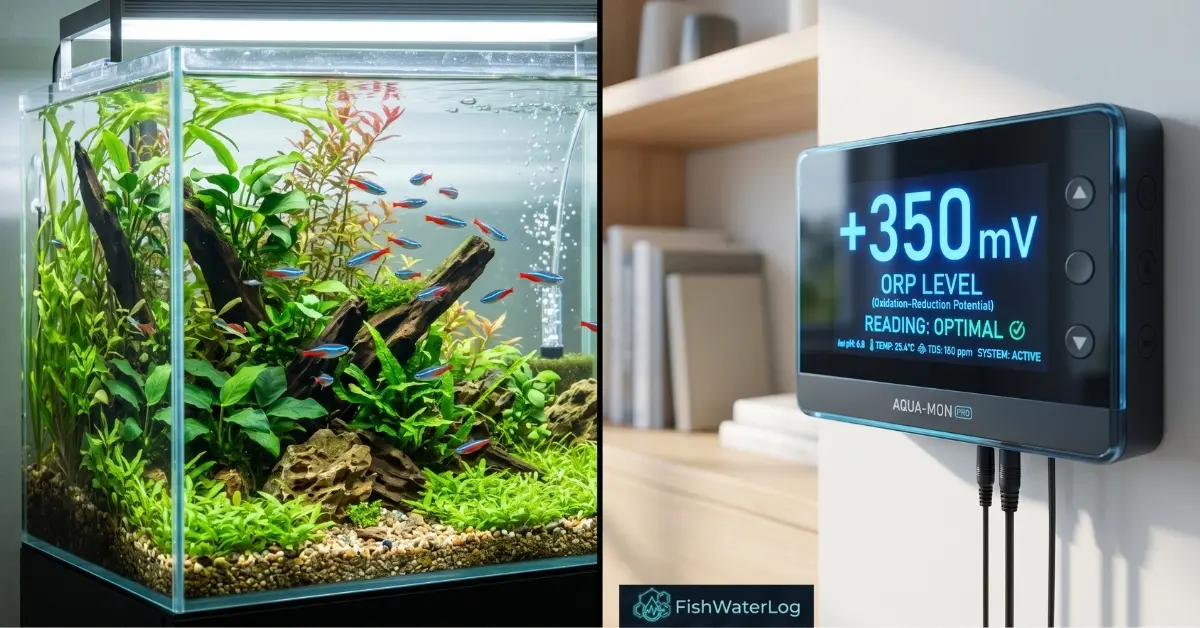
The analysis of aquatic environments has evolved significantly from sporadic chemical reagent testing to continuous, high-resolution electrochemical monitoring. Central to this technological paradigm shift is the aquarium redox potential, a fundamental metric that quantifies the thermodynamic tendency of a water column to either acquire or donate electrons. Measured in millivolts (mV), the oxidation reduction potential … Read more
The subject of this comprehensive botanical analysis is Anubias barteri var. nana, an incredibly resilient, slow-growing aquatic perennial belonging to the family Araceae. This taxonomic classification places the species in direct relation to prominent terrestrial and hemiepiphytic aroids frequently cultivated as houseplants, such as Philodendron, Monstera, and Spathiphyllum. Endemic almost exclusively to the wet tropical … Read more
The integration of automated hydro-mechanical systems into aquatic husbandry represents a critical evolution from manual maintenance to precise environmental control. Historically, the discourse surrounding advanced telemetry, environmental probes, and automated dosing has been overwhelmingly directed toward marine reef aquariums where salinity swings prove immediately fatal. Consequently, automated fluid management remains largely overlooked in non-marine ecosystems, … Read more
The transition from a low-technology aquatic environment to a high-intensity planted ecosystem fundamentally shifts the limiting factors of biological growth. Aquatic flora rely entirely on the surrounding water column to supply the necessary elements for photosynthesis. While intense illumination provides the photonic energy required to split water molecules, the subsequent dark reactions—specifically the Calvin-Benson cycle—demand … Read more
The successful cultivation of submerged vascular plants within the boundaries of a closed thermodynamic system—colloquially known as a planted aquarium—requires an uncompromising adherence to the physical and biochemical laws governing aquatic horticulture. Historically, the aquatic hobbyist community has operated on a foundation of anecdotal evidence, subjective visual assessments, and scientifically obsolete measurement frameworks. This reliance … Read more
Dwarf freshwater shrimp, most notably Neocaridina davidi (colloquially recognized as the Cherry Shrimp), represent a massive, highly engaged sub-niche within modern aquariculture. Prized for their prolific breeding capabilities, vibrant phenotypic coloration, and unsurpassed efficacy as detritivores, these invertebrates have fundamentally transformed the freshwater aquarium hobby. However, beneath their apparent adaptability lies a remarkably complex physiological … Read more
Learning how to clean aquarium gravel correctly is essential for maintaining the biological equilibrium, water clarity, and long-term health of an enclosed aquatic environment. In closed systems, the sustained stability of the habitat depends fundamentally on the meticulous management of the benthic zone—the lowest substrate level where waste accumulates. Historically, early aquatic husbandry treated the … Read more
Within the discipline of freshwater aquatic botany and aquascaping, the bottom material of an aquarium represents far more than a decorative anchor. The substrate for planted tanks serves as the biochemical engine of the entire closed ecosystem. It binds essential nutrients within the reach of the rhizosphere, provides the vast microscopic surface area necessary for … Read more
Maintaining a thriving, closed-loop aquatic ecosystem is an exercise in applied biochemistry and fluid dynamics. For the professional aquarist and the dedicated hobbyist, the ultimate visual metric of a balanced system is the presence of undeniably clear aquarium water. Quick Setup: The Best Filter Media Configuration for Crystal-Clear Water If you want to eliminate cloudiness … Read more